



Strategy
Farmer Boys Built a CTV Campaign Around One Creator’s Jingle. Salad Sales Rose 20%

Farmer Boys built its summer CTV commercial from a single creator’s jingle about a salad. The 45-year-old Southern California restaurant chain didn’t use a film crew or a studio shoot. Chopped Cobb Salad sales rose 20% against the pre-campaign baseline.
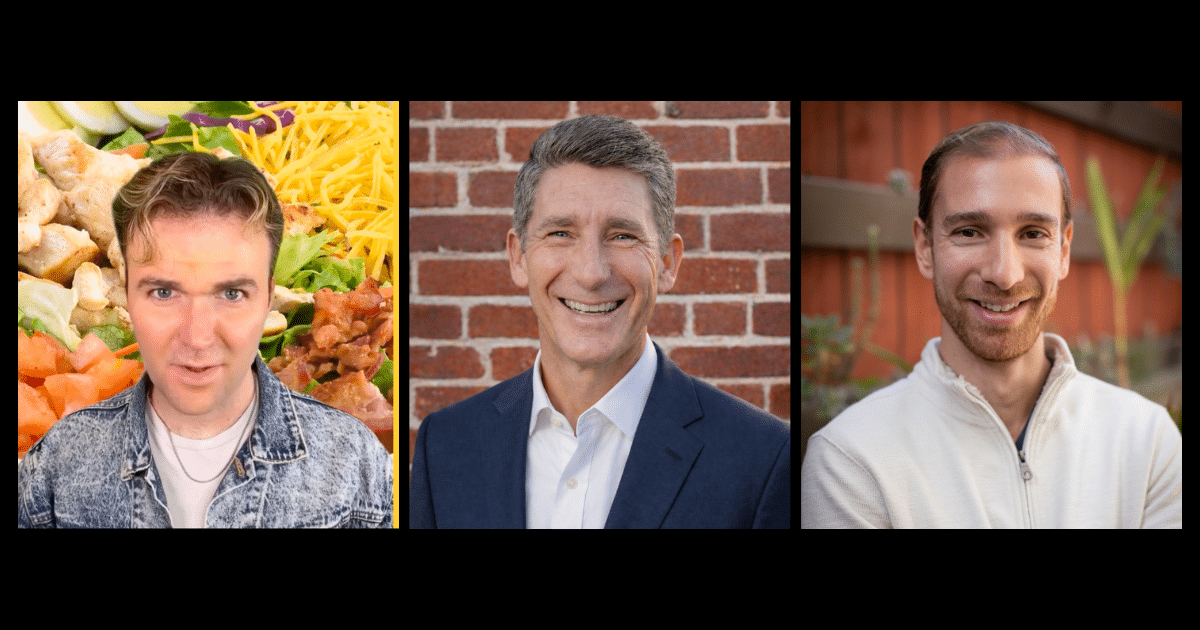
The Farmer Boys marketing team, led by Mark Hardison, who joined the brand as CMO in February after 22 years at El Pollo Loco, was running its most ambitious creator campaign to date, significantly expanding the role of creator content across its marketing. His agency of choice was Linqia, an independent influencer marketing company. The creator whose jingle drove the spot was Scott Frenzel, a comedian and content creator. His vertical TikTok about the Farmer’s Chopped Cobb Salad was native enough to perform as organic content and structured well enough to anchor a connected television buy.
“You don’t have to use creators to replace your advertising,” Mark says. “You can use creators to enhance your advertising and paid approach.”
Keith Bendes, Linqia’s Chief Strategy Officer, has spent seven years at the agency encouraging brands to adopt that same mindset: influencer content is not just a mechanism for organic social distribution, but a production pipeline for a brand’s broader media needs.
“ROI has been the number-one challenge for brands with creator marketing,” Keith says. “How they use this content to be a pipeline for broader content needs is a huge part of our mission.”
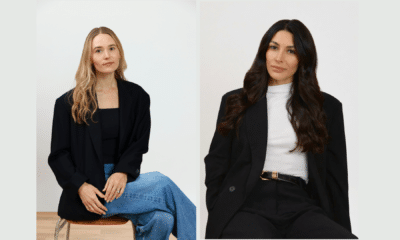
HEADSHOTS OF KEITH AND HARDISON
Designed Before the Creator Was Booked
The conventional path for creator content into broadcast advertising runs in one direction: an organic post performs well, usage rights get negotiated after the fact, and adaptation begins with whatever the creator happened to produce. Farmer Boys built its campaign the other way.
“From the beginning, we knew that we wanted to create content that could be repurposed into our paid media strategy,” Mark says. The brief for the Chopped Cobb Salad campaign made CTV repurposing an explicit requirement, not an aspirational outcome. That decision settled the usage rights question before filming started and shaped how Linqia briefed Scott.
Keith says upfront intention is the most important variable in whether creator-to-CTV conversion actually works. “A lot of brands, if it’s an afterthought, they’re not designing for it in the beginning,” he says. Brands that skip this step often watch strong creator content stall inside their own organizations, caught between influencer teams, paid media departments, and creative approvals that were never aligned from the start. “It can kind of die on the vine because there’s not that process of saying, ‘Are all these stakeholders on board?’” Keith says.
At Farmer Boys, the internal approval chain for the CTV spot ran through three people on the client side. Mark had the final sign-off.
Three Formats, One Approach
Not all creator-to-CTV conversions require the same creative investment. Keith describes three formats currently in market. The most common keeps the original 9:16 vertical frame centered on a 16:9 screen and fills the surrounding space with a mirrored or blurred version of the same image. A second variation designs custom side panels around that same centered vertical frame. The third, which Farmer Boys used, treats the full widescreen canvas as the actual creative surface.
“You are actually utilizing your full 16:9 space,” Keith says. That means animations, motion graphics, and additional footage integrated around the creator’s original content, not just arranged beside it. He describes this as the most production-intensive of the three approaches and the one most likely to produce a result that reads as a real commercial rather than a TikTok inserted into a broadcast environment.
For the Farmer Boys spot, Linqia’s post-production team incorporated studio footage from the brand’s existing CTV library. Mark says the suggestion to pull from that library came from Linqia during editing. “It was a great way to utilize those assets from our library and give them a nice fresh update,” he says.
Linqia completed the initial post-production conversion in under a week, followed by additional rounds of edits.
One Video, No Room for Error
Standard practice for creator-to-broadcast work involves stitching content from multiple creators, which gives editors flexibility: if one piece doesn’t cut cleanly to a usable length, less of it gets used, and more from another is substituted. The Farmer Boys CTV spot rested entirely on a single creator’s output.
“The most challenging here was having one video,” Keith says. “If we didn’t have brand assets to include, it definitely would have been even more challenging.” The brand B-roll reduced the production exposure, but Scott’s original content had to hold on its own.
It did. Mark says the jingle registered on one viewing. “We knew right away when we were humming the jingle after seeing it just one time that this was going to be really good content,” he says, describing the earworm quality he had hoped the campaign would produce.
Keith attributes the organic performance to the same trait that made the adaptation viable: the branded post was indistinguishable in style from Scott’s regular output. “If you look at the last 30 posts that Scott did and you look at this post, you wouldn’t see, really, a deviation from his core style,” Keith says. “The more native something feels in a brand integration, the better it’s going to perform.”
The Instinct Brands Are Trained to Override
Mark’s position on creator content repurposed into CTV, before seeing previous Linqia work, was doubt. “I was really skeptical of this kind of repurposing of vertical content and putting it into the wide format just because it sometimes feels very cheap,” he says. Seeing what a well-executed conversion could look like changed his view.
The more persistent creative tension ran in a different direction. Marketers running paid media are trained to lead with the brand early. The Farmer Boys campaign did the opposite: Scott’s jingle and personality came first, with the brand and the $9.99 salad-and-drink offer positioned later in the spot. “Our instinct as clients often is to get the brand up early,” Mark says. “But we found that there was a nice balance between making sure you’re engaged in the jingle and then you’re kind of tailored to who the brand is.”
Keith credits the campaign’s performance partly to the brand’s willingness to hold that instinct back. “Being comfortable without having as much control creatively as previously is important for brands these days,” he says. “Nothing felt overly constructed creatively through the entire process.”
He notes this is not how most brands are built to operate. His own background was in traditional brand marketing, where creative control is a standard expectation, and letting go of it still requires a deliberate decision.
Usage Rights Are No Longer a Negotiation
The campaign’s architecture depended on a decision settled before Scott filmed anything: CTV usage rights were included in his original contract. “CTV is almost always built in because CTV is a digital channel,” Keith says, distinguishing it from traditional over-the-air television rights, which are typically negotiated separately and after content already exists.
That built-in expectation is evident in how Linqia structures creator deals. The company rarely signs creator contracts without any usage rights, Keith notes, given how much value brands derive from distributing creator content beyond the creator’s native channel. The value exchange works in both directions: creators benefit from the exposure paid amplification provides, and brands access content that carries further than a single organic post.
For brands that haven’t updated their contracting approach, Keith’s position is direct: “Usage rights is everything. It really is everything.”
Creator Content as Production Infrastructure
Farmer Boys plans to run another campaign in the same format within weeks. “You’ll see more from Farmer Boys coming up,” Mark says.
The 20% lift in Farmer’s Chopped Cobb Salad sales that the campaign drove against its pre-advertising baseline exceeded the brand’s expectations. Mark describes the cost structure as “a bit of investment over what we would normally pay for a CTV piece of content,” but notes that creator fees, organic reach, and the eventual broadcast asset were part of a single transaction, not separate line items competing for the same budget.
Keith’s broader argument is about volume. “You need more content than you’ve ever needed before,” he says, “but you’re certainly not getting more budget than you’ve ever had.” Creator content, when designed from the brief stage to function as a paid media asset, is one answer to that constraint.
The Farmer Boys case does not argue for eliminating traditional production. It argues for a different source of raw material. “That idea can come from a phone or from a production crew of 16 in a studio,” Mark says. “It is nice to know that there are thousands and thousands of creators out there that could fit the bill for a strategic brief.”
Subscribe to Our Newsletter
Check Out Our Podcast