


Strategy
Donut Media’s Partnerships Chief Amanda Klein on What Marketers Still Get Wrong About Buying YouTube

Donut Media has spent more than a decade building one of YouTube’s most recognized automotive channels. The harder challenge, according to its Head of Brand Partnerships, Amanda Klein, is convincing advertisers that what they think they know about buying creator content is probably wrong.
“YouTube is still the Wild West for a lot of blue-chip brands that are not accustomed to spending in this way,” Amanda says. “We are often educating them on both the offering and the process.”
Los Angeles-based Donut Media, which sits within Recurrent Ventures, a media portfolio company focused on male enthusiast audiences, has operated on YouTube for over a decade with a cast of hosts spanning automotive content, social platforms, podcasting, and in-person events. The audience is 95% male, and its brand partnerships reflect that specificity, from automobile insurance and tires to performance parts.
Amanda came to this work through luxury fashion wholesale, where she led U.S. wholesale for Giorgio Armani menswear, calling on buyers at Nordstrom, Saks Fifth Avenue, and Neiman Marcus. The through-line, she says, has nothing to do with cars or suits. “I’ve never been the target audience of the thing I’m selling,” she says. “But I can be an expert in the brand.”
When Brands Think YouTube Is Plug-and-Play
The most common mistake Amanda encounters isn’t a mismatch in creative direction. It’s a more fundamental unfamiliarity: many blue-chip brands arrive without a working understanding of what YouTube is as a media channel.
“Most commonly, brands lack even an initial familiarity with how to work on YouTube,” she says. They don’t know what types of inventory exist beyond a standard branded segment. They’re unfamiliar with production timelines, feedback rounds, or how approvals work inside a creator-native production. And they haven’t yet mapped their traditional media-buying instincts to a platform where audience expectations operate differently.
Beneath that tactical unfamiliarity sits a broader strategic misread. According to Amanda, many brands approach YouTube with a test-and-fund mentality: allocate a modest budget across several creators, measure performance, scale what converts. She doesn’t dismiss the logic for every objective, but argues it bypasses a more substantive category of opportunity.
“There is a whole world of opportunity on YouTube,” she says, “with contextual content and brand alignment, with series sponsorship, almost like in the TV space, for more sophisticated creators.”
A Brand Brief Is a Starting Point, Not a Finished Order
When a brand submits a brief to Donut, the creative team takes it back to the drawing board before anything goes into production.
“We ingest a brief, and it’s on us to come back with a concept that takes the core elements, checks the boxes for what the brand needs to see, but makes it entertaining and educational so that people will actually want to watch it,” she says.
That translation process runs in multiple directions simultaneously. Amanda’s team educates the brand on what resonates with a YouTube-native audience, educates the internal production team on why certain brand requirements matter, and finds angles that introduce the brand compellingly to viewers deeply embedded in car culture.
“There will be concessions,” she says. “But there’s an education component on all sides.”
Part of that education involves the mechanics of production itself. Donut follows defined timelines, structured rounds of feedback, and specific approval windows. Brands accustomed to traditional media production sometimes need to relearn what an approval means when the underlying creative is platform-native rather than developed through an outside agency.
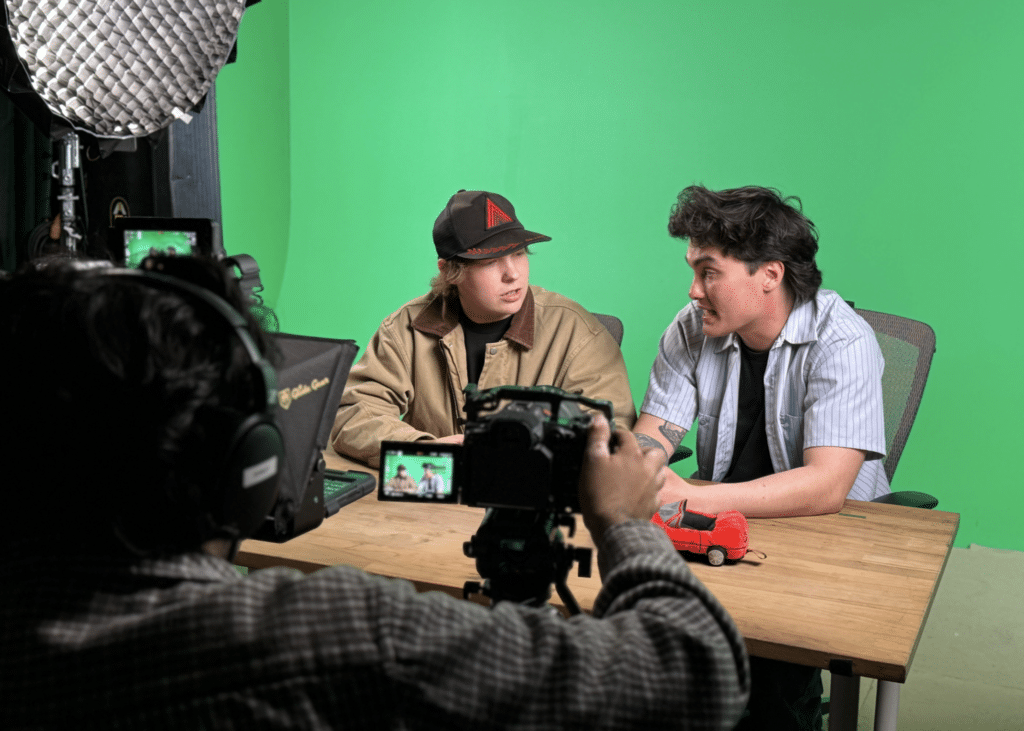
Photo: Donut’s behind-the-scenes process
Editorial Integrity After the Budget Is Signed
One persistent critique of creator brand partnerships holds that any advertising money in a production eventually compromises it. Amanda pushes back directly.
Donut separates editorial production from the branded component at the contract level. Brands receive approval rights over the branded segment specifically, not over the content surrounding it. She points to “HiLow,” Donut’s recurring series testing whether expensive automotive parts outperform cheap ones, as an illustration.
Allstate, an insurance company, has presented the series for several years. “The way we integrate Allstate is through a combination of organic integration,” Amanda explains. “For example, we did drag racing, and they had their beacon symbol on the drag strip Christmas tree.” That organic placement sits inside editorial content and requires sign-off only for accurate logo representation. A separate branded cutaway, contextually related but filmed distinctly, is where the brand’s formal feedback and approval rights apply.
“We allow for the brand’s approvals and feedback on that piece of content only,” she says.
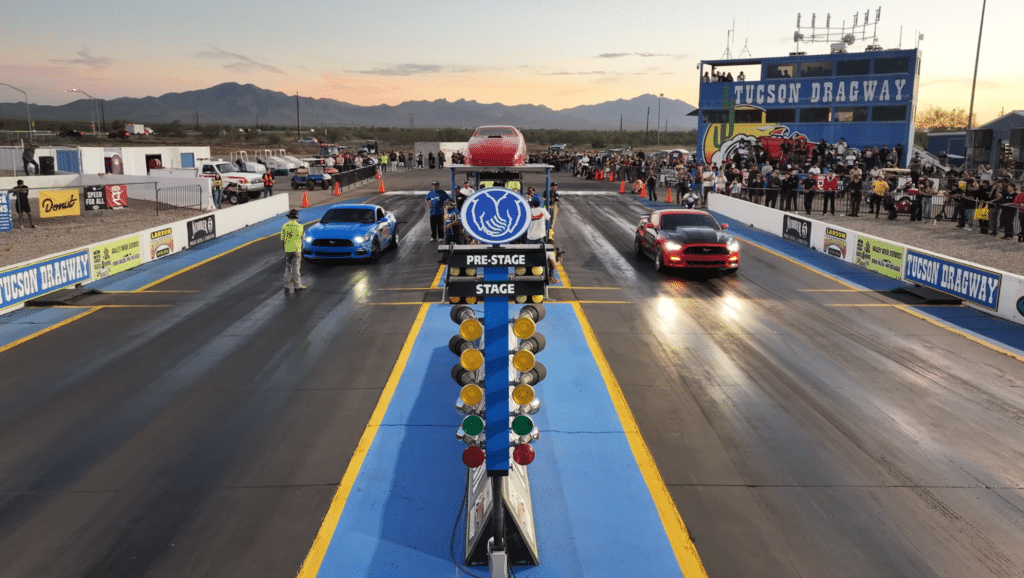
Photo: Allstate Beacon
Beyond standard branded segments, Donut’s offerings can include pre-roll positions populated by the channel’s own talent rather than brand-provided creative, short-form cut-downs, native short-form content, podcast placements, asset licensing, IRL event integrations, and title sponsorships of full video series. Amanda describes these as 360 media plans, structures she compares to television-era sponsorship deals more than to standard digital advertising buys.
Success on YouTube Lives in the Comments
Once a video goes live, Amanda monitors the comment section as closely as the view count.
The comment she’s looking for describes a viewer who says they normally skip branded segments but stayed through this one. Viewers who specifically call out the branded integration positively are the clearest signal that an integration worked, that it extended the viewer’s experience rather than interrupting it. Making a sponsor part of the content rather than a break from it is the hardest thing to pull off in creator advertising, and the one Amanda says Donut is built to do.
Across the full measurement stack, the team tracks view duration and retention through the branded portion of the video, total views and impressions across platforms, and lower-funnel metrics like clicks and conversions that brands report from their own analytics when those are part of the stated objectives.
“If we can make brands cool,” Amanda says, “we’ve done our job.”
The NASCAR Model: Long-Term Partners Over One-Off Tests
Donut’s most structurally distinctive approach is its treatment of repeat brand relationships. The channel operates, as Amanda puts it, “like a NASCAR team in market,” taking on official partners in exclusive categories rather than rotating sponsors across individual videos.
Allstate just renewed as Donut’s official insurance partner for a third year. Hankook Tires is entering its third year as the official tire partner. These arrangements, Amanda argues, don’t just serve brand awareness. They build audience trust that single-placement sponsorships can’t replicate.

The case for long-term commitment is partly supported by Donut’s own research. A study the company conducted in Q4 2025, surveying its audience directly, pointed to sustained brand-creator relationships as the primary signal of endorsement credibility among viewers.
“Don’t expect the utmost return by just testing for a month or two months with a creator and moving on,” Amanda says. She argues there is a longer tail on YouTube ROI that compounds only if a brand invests consistently rather than rotating through the platform on short cycles.
Where the Deals Go From Here
Amanda represented the full Recurrent portfolio at Cannes Lions this year, an expanded remit beyond Donut specifically. She held meetings across three categories of prospective partners: brand teams, agencies managing advertiser budgets across multiple clients, and co-production partners exploring ways to extend Donut’s distribution into areas it doesn’t currently reach. The most productive conversations happened without slides and without the inboxes everyone was mentally managing back home.
“Everyone went into Cannes just with the sense of, ‘Let’s be creative, let’s discuss what the blue-sky ideas are,'” she says. “That was really fruitful for thinking in new ways about how to incorporate different aspects of our portfolio.”
Whether advertiser enthusiasm from Cannes is translating into actual budget movement is a question Amanda answers without equivocation.
“Absolutely, it’s real money,” she says. “We’re already seeing it even prior to Cannes, and even more so, I’m confident, coming out of Cannes.”
Five years out, she expects the creative ceiling to rise for brands willing to commit rather than test: new formats, co-productions, “more organic brand integration that feels less like an ad over time, but delivers what the brand needs to see and what the audience wants to experience.”
Subscribe to Our Newsletter
Check Out Our Podcast