Strategy
Former Sky and Fox Sports Executives Launch Jupiter Festival to Debate the Future of Content

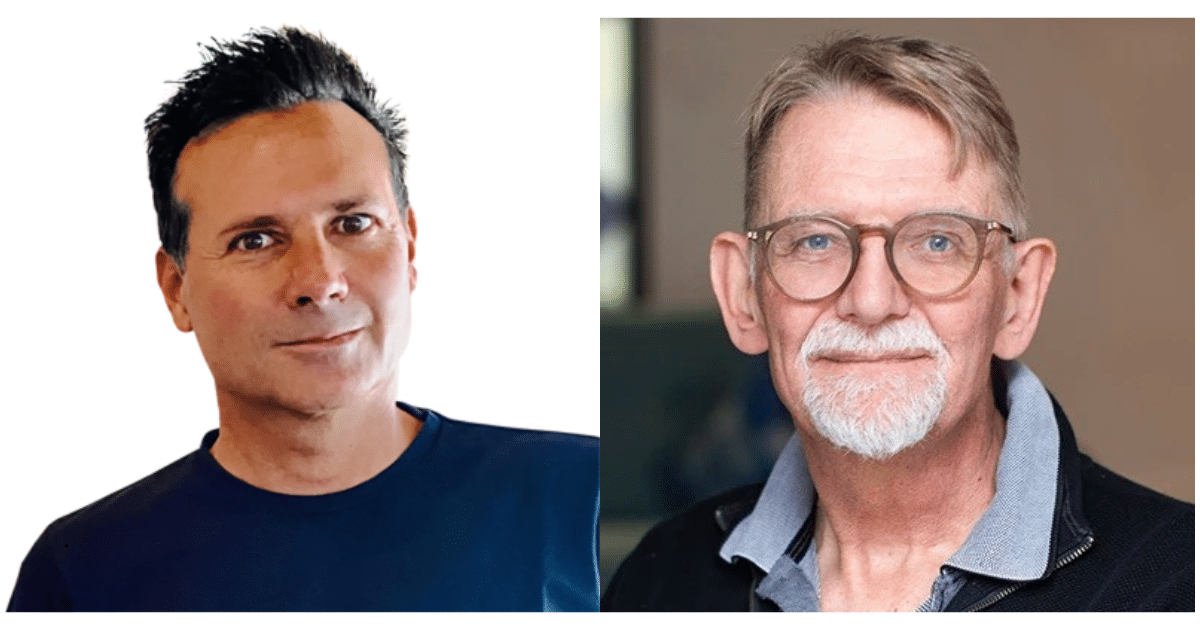
William Mellis and Eric Markgraf have each spent decades inside the media industry as senior executives. In October, they are asking a cross-section of its leaders to spend four days in Miami debating a single question: What is the future of content?
That question is the organizing principle behind Jupiter Festival Miami, a new business gathering scheduled for October 6-9, 2026, at the Miami Beach Convention Center. The festival has secured BCG as a sponsor, the Interactive Advertising Bureau as a founding partner, and MCH Group, the parent company of Art Basel, as a founding partner. The event is targeting 5,000 attendees and representation from 90 countries for its inaugural edition.
It is not designed as a trade show or an awards ceremony. William and Eric describe it as a business festival, built for the senior decision-makers who set content strategy. “The minute you ask [what the future of content is], it’s not an easy one to answer,” William says of the festival’s framing. “It’s an easy question to ask. And then it creates this, ‘I need to engage with this, because I’m in the content business.'”
William, a co-founder and CEO of Jupiter Festival, held executive roles at Sky UK and Sky Italia during the Murdoch era, spent nearly a decade as a managing director at consultancy Alvarez & Marsal, and later served as Chief Strategy Officer at Ascential, the company behind Cannes Lions, where he also helped lead the post-COVID revival of fintech conference Money20/20.
Eric, Jupiter Festival’s Chief Creative & Content Officer, spent five years at Nike overseeing basketball, golf, and Olympics advertising, working with the likes of Michael Jordan and Tiger Woods, then led Fox Sports marketing across its full channel portfolio for 12 years before serving as COO of global agency Spark44 and spending four and a half years teaching sports marketing at USC’s Annenberg School.
When William began assessing the events market with a view to building something new, he found the senior-level, content-focused business forum he was looking for was absent. Adjacent events operated in related territory, he says, but with “very different purposes and very different types of agenda.” Many, he notes, had stopped drawing senior people.
One Question, Deliberately Unanswered
Jupiter Festival’s six content themes span artificial intelligence, branded entertainment, sports & fandom, the Creator Economy, content distribution, and what the team calls the attention economy. All orbit the central question, which William and Eric describe as a strategic opening rather than a prompt with a definitive answer.
“Everybody just gets what that is,” Eric says. “It’s a single mission statement. We’re not all over the place.”
The appeal to early speakers and partners, Eric says, was partly that the festival made no claim to have solved the problem it poses. “The future of content, everybody just gets it,” he says. “They don’t have all the answers. And so everybody we talked to was willing to come.”
William frames the intended outcome in terms of what attendees carry home. “We want them to come away with a handful of new ideas that they need to explore,” he says, “and hopefully half a dozen new connections that will be of value to them.”
Brands in the Content Business, Whether They Chose To Be or Not
One of the event’s central arguments concerns brands, and both founders state it directly.
“Gone are the days when you can just be a CMO and make a 30-second commercial,” Eric says. “You have to think way outside the box to get your message across.”
William frames it structurally. Media is fragmented to the point where purchased reach no longer reliably delivers results on its own. “Anybody who claims they can get their message across in the five seconds of digital, I think, is probably deluded,” he says. “It’s got a role. But if I want to get my brand known and I want to get engagement, I’ve got to produce content.”
Eric draws a line from that reality to brands that have already absorbed it. Films like “Barbie” and “F1” and the success of the LEGO franchise point to what happens when large companies treat narrative ownership as a core function rather than a side project. “More and more companies are starting their own internal studios,” he says. “They feel that they know their brand better than anybody else.”
The pattern, he suggests, has an older precedent. Brands are returning to something like the Hallmark Hall of Fame model, where the sponsor controlled the story rather than purchased space around someone else’s. The difference is the scale of fragmentation that makes it necessary now.
From Network Control to Fan-Built Audience
Both founders point to fandom as the organizing concept of the next media phase. The word is intentional, and William ties it directly to sports.
“The new word is fandom,” he says. “You have to create fans. And that’s where sports have been particularly strong. But then you’re seeing sports extending themselves and recognizing that they are brands, that they can go further than just the arena.”
The Creator Economy fits within the same frame. Talent no longer has to rely on a channel to find its audience. “The fans are finding them,” William says. “And the rules of the game are changing rapidly.” AI adds a further layer of disruption. “That’s just another overlay on top of all of this,” he says.
Jupiter Festival’s confirmed speaker lineup includes Fox One CEO Pete Distad, Tribeca Enterprises CEO Rebecca Glashow, Whalar Group co-CEO Neil Waller, media analyst Evan Shapiro, and McDonald’s Vice President of Marketing Elizabeth Campbell, among others. The selection reflects the festival’s interest in putting people from different parts of the content ecosystem in the same room.
One Stage, One Conversation
Jupiter Festival’s format is a reaction to what the founders describe as a recurring problem at large-scale industry events.
“We’ve been to a lot of events over the years, and sometimes they just become too confusing,” Eric says. “There are so many stages and so many people that you just can’t keep track of anything anymore.”
The festival has a single main stage and a few adjacent stages with no overlapping programming. The physical environment is configured, Eric says, for sitting around, bumping into people, and having a coffee without being overwhelmed. William positions it explicitly against the trade show model. “It’s at the opposite end of the spectrum from a trade show,” he says. “This is more than a conference because we’re embracing networking.”
Eric’s benchmark for the inaugural edition is direct. “I simply said I want people to say, I want to come back next year,” he says. “If someone says that, then we win.”
What Early Partners Saw in a First-Time Event
The festival’s institutional backing came together over its first year and, according to Eric, has generated momentum in the market. BCG committed as founding sponsor, IAB, one of the largest digital advertising associations in the United States, came on as founding partner, and MCH Group brings event infrastructure and international networks to a first-time gathering.
IAB’s involvement reflects the festival’s interest in the accountability and policy layer of the content economy, a dimension Eric says IAB has not previously entered in this form. Cannes Lions holds an affiliate partnership, situating Jupiter Festival near but distinct from the creativity industry’s best-known annual forum.
“We were at Cannes Lions this year, and people were talking about Jupiter Festival,” Eric says. “It was shocking to us in a sense. But it just sort of builds word of mouth.”
Miami First, Then Wherever the Industry Wants to Go
William and Eric are already contracted for Miami in 2027. Longer-term, the founders describe possible European and Asian editions as considerations rather than plans.
“Let’s just get this event underway and make it a phenomenal success,” William says. “And then we’ll see what we do next.”
The global dimension matters to William beyond logistics. Content, he argues, no longer operates within national borders the way legacy media assumed it would. YouTube’s reach in the United Kingdom in January surpassed that of the BBC, a shift he says the industry has not fully absorbed. “We want a LATAM representation at the show and representation from every region,” he says, “because we think that makes it a much more cosmopolitan kind of vibe.”
For Eric, the ambition comes back to the industry. “We are in it to really help the industry move forward,” he says. “If our festival starts to actually bring companies together and bring part of the development of the future of content, then I think we have done a great service to people in this business.”
Jupiter Festival Miami runs October 6-9, 2026, at the Miami Beach Convention Center; passes and information are available at jupiter-miami.com.
Subscribe to Our Newsletter
Check Out Our Podcast