






Strategy
What a Former TikTok Shop Manager Learned From $14M in Live Sales

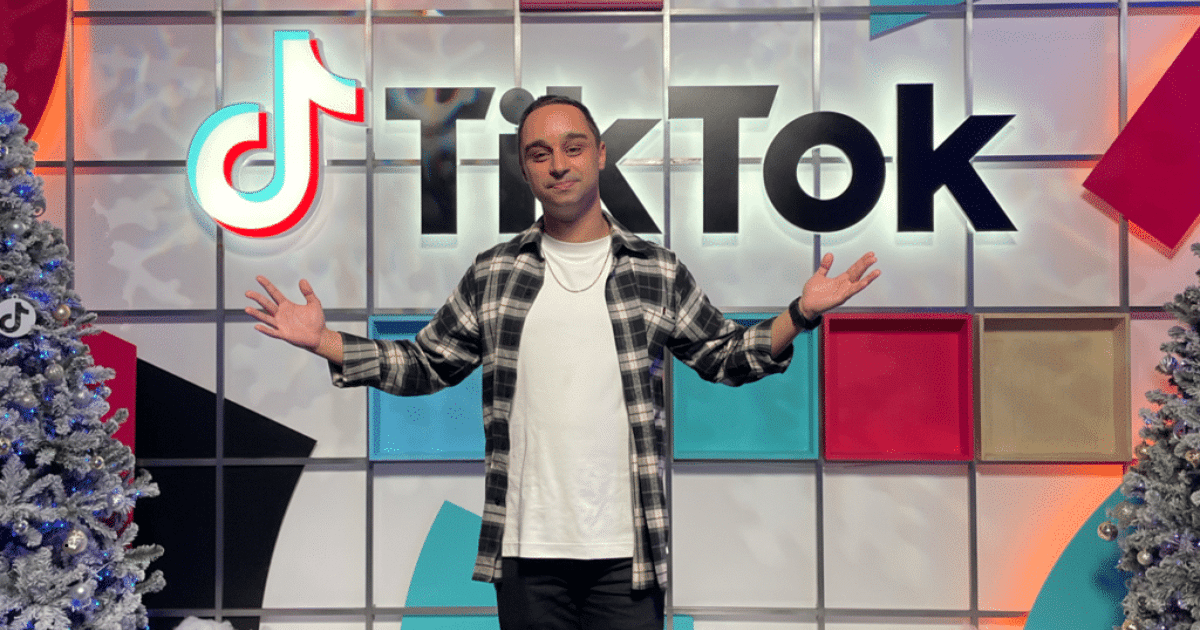
Live shopping on TikTok has moved from novelty to an established commercial channel. But according to Jason Termechi, who helped generate more than $14 million in live gross merchandise value as a Live Seller Account Manager at TikTok Shop, most brands are still approaching it the wrong way.
For nearly 18 months at TikTok, Jason managed more than 30 fashion and small-to-medium-sized business sellers, overseeing daily broadcasts and multi-hour mega lives. He left the company in October 2025 to launch a Los Angeles-based consultancy after concluding that demand for hands-on live commerce expertise extended well beyond TikTok’s own account management capacity. His central argument is that successful live shopping depends far less on production quality than on preparation: product selection, pricing strategy, promotion, scripting, and the performance data that shapes every subsequent decision.
“Right now, there are not a lot of people who do even TikTok Shop as a consultant,” Jason says. “For Live, it’s even less.”
As TikTok Live becomes a more established sales channel, many brands are still learning the operational fundamentals. Jason now advises companies on the full architecture of a live shopping operation, from building a TikTok Shop before the first broadcast to interpreting the metrics that determine whether a session is actually driving commercial results.
His career spans content creation and brand partnerships, a creator partnerships role at BIGO, where he ran early live shopping pilots before in-platform purchasing existed, live creator programs at Amazon Live, and TikTok Shop. Those experiences have left him skeptical of how many brands approach live commerce and convinced that the biggest competitive advantage isn’t a more elaborate production but a better-prepared operation.
Live Commerce Is Growing Faster Than the Expertise to Support It
When Jason joined BIGO in 2020, live shopping in the U.S. meant displaying a product on screen and directing viewers to a website to complete a purchase. In-platform conversions didn’t exist. At Amazon, he found a team that, in his view, wasn’t thinking at the scale the format demanded. TikTok gave him the full picture of what live commerce could become.
The reference point he returns to is China. He visited in January 2026 and came back with a specific comparison: roughly 50% of purchases made through TikTok/Douyin in China occur via live stream, against approximately 20% in the U.S. at the time of his visit. He acknowledges the figures may have shifted and that structural differences, including higher host costs and a consumer base still building comfort with the format, mean the U.S. market may not reach Chinese penetration levels. But the direction is consistent.
“I think we are closing the distance,” Jason says. “I just don’t think people’s consumer habits are there yet.”
TikTok’s internal bandwidth reinforces the opening for independent operators. The platform, Jason says, doesn’t have enough account managers to meaningfully support the volume of sellers on it. For brands needing hands-on live strategy, the alternatives include a live studio charging $10,000 to $20,000, or working through it alone. His consultancy sits between those two.

Most Brands Should Establish Their TikTok Shop Before Going Live
The first question Jason puts to any brand wanting to launch TikTok Live is whether they have built a functioning TikTok Shop first. Often, they want to launch both simultaneously.
“I’m not someone who’s going to just say you should go live for the sake of going live,” Jason says, adding that brands that launch prematurely and fail rarely revisit the format.
The algorithm explains why sequence matters. TikTok’s live system learns who a brand’s customer is through purchase history, shop score, and product reviews. A brand with no sales record is asking the system to surface it to buyers before it has demonstrated any ability to serve them. Jason points to a specific illustration: Kylie Jenner’s brand launched TikTok Shop and Live simultaneously and was drawing between 10 and 20 viewers per session. If a brand with that name recognition can’t build live traffic by launching both channels at once, the implications for brands with smaller existing footprints are clear.
The current platform environment sharpens the problem. TikTok is currently prioritizing auction-based sellers in live traffic distribution. Auction sellers convert faster, which signals quality to the algorithm. A new brand running flash sales competes for the same traffic against sellers the algorithm has already identified as efficient, starting from a meaningful disadvantage.
“How do we reduce the barrier for someone to purchase something?” Jason says. “You get a proven track record of sales.”
The Metric That Separates an Efficient Live From One That Just Ran Long
Jason’s operational framework centers on a specific data hierarchy. GMV and hourly GMV provide an initial read on performance. The metric he prioritizes is GPM, or gross merchandise value per thousand impressions. A GPM above six indicates that a session is converting efficiently and that the primary need is more traffic, not a strategy change.
Additional metrics provide context. Tap-through rate indicates whether a live setup is compelling viewers to enter the stream, though Jason notes that what constitutes a strong rate varies by category. Watch duration signals to the algorithm whether content is worth distributing more broadly. Follow rate and click-to-order rate help determine whether viewers are ultimately converting into customers.
“If it’s above a six, we did well,” Jason says. “That tells us we’re efficient and we just need more traffic.”
Production quality is the last variable he adjusts, not the first. A recent client audit revealed a below-average tap-through rate for that brand’s category. Only after identifying the issue in the data did he recommend redesigning the live set, presenting examples of higher-performing configurations and outlining what a more effective setup could look like.
“Every decision that I tell a brand to make is based on the data,” he says. “I’m not going to make that suggestion without seeing the metric.”
How a $180,000 Fashion Live Gets Built
Jason’s primary case study is a 10-hour session for Colombian shapewear brand Noely Fajas that generated more than $180,000, a result he describes as the largest fashion live of 2025. The number came from a specific discount architecture and weeks of coordinated preparation, not from production scale or celebrity reach.
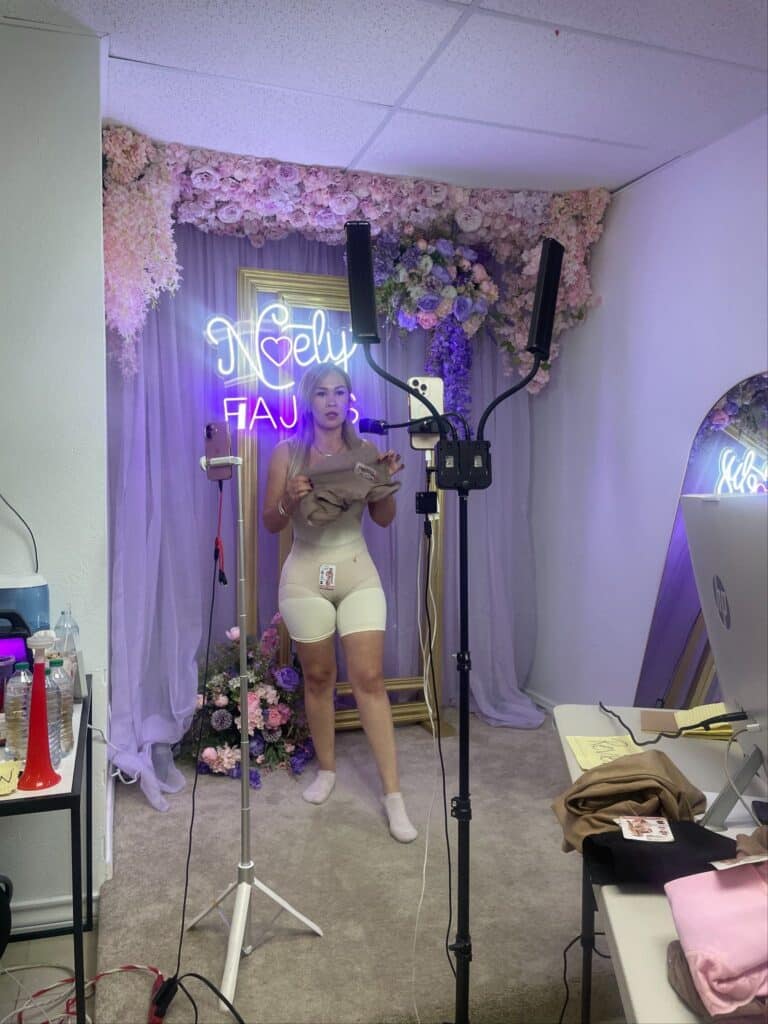
The mechanism was bundles priced at a higher initial point, sold through flash sales, and layered with coupons, which drove average order value and hourly GMV. The brand generated several thousand live registrations through weeks of pre-promotion. TikTok provided coupon resources and traffic support for the session, an allocation that requires meeting platform prerequisites. The live set was designed to feel distinct from daily broadcasts: a different environment, new product arrivals, guest appearances.
“What separates the mega live from their daily lives is that they’re constantly posting and promoting it,” Jason says.
A mega live, by his definition, generally runs around 12 hours or longer, with rotating hosts to sustain energy. What the case study doesn’t capture is the operational reality of a session that length: hosts who lose momentum during slow periods, improvised moments to sustain engagement when sales stall, real-time adjustments to product mix and scripting. Jason was present for many of those sessions, feeding information to hosts and delivering pep talks during lulls. He wore shapewear himself at one point to maintain engagement during a slow stretch.
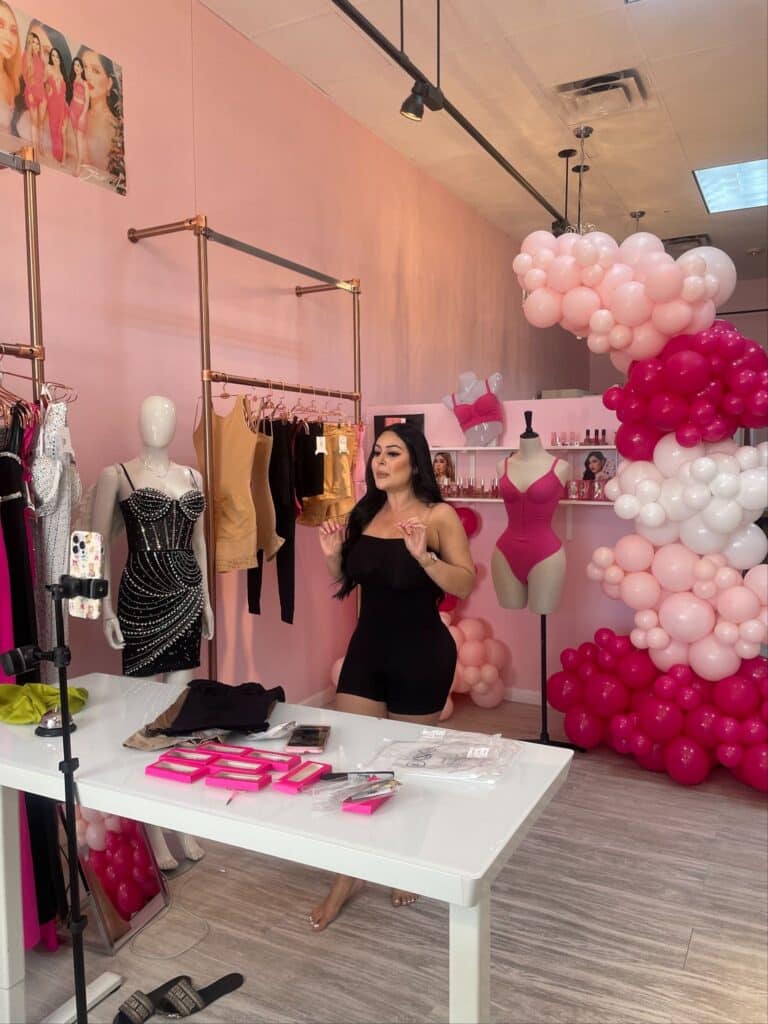
Noely Fajas has since surpassed that $180,000 figure threefold, according to Jason. He attributes that trajectory to the compounding effect of a well-built live operation: reviews accumulate, the algorithm calibrates to the brand’s customer base, and each session starts from a stronger foundation than the last.
Why Creators Staying Away From Shoppable Content Are Running Out of Time
Alongside his live commerce work, Jason tracks a divide in how brand partnerships will be evaluated. A cohort of creators who built their businesses on Instagram brand deals is resisting shoppable content, and he believes the ROI calculus will move against them.
Brands assessing creator partnerships will increasingly compare what a traditional brand deal delivers to what a creator who can also drive affiliate GMV, tag products, and host live sessions delivers. Jason has spoken with at least one creator making high income from brand deals who sees no reason to engage shoppable formats. He expects that position to become harder to hold.
“At some point, his hand will be forced where he’s going to have to put a link on his videos,” Jason says. His advice for creators making the move is to work vertically: fewer brand relationships built across more touchpoints rather than a wide spread of one-off engagements.
What Live Shopping Looks Like in Two Years
Jason’s near-term forecast for TikTok Live is specific: the first $2 to $2.5 million single-session broadcast within two years, building on what he describes as an already-demonstrated million-dollar live event. He expects the share of TikTok purchases occurring through live to grow from roughly 20% to between 30% and 50% over the same period.
He is more cautious about auction formats, currently the platform’s priority, remaining a long-term fixture. Large brands entering live will move slowly, constrained by compliance requirements and organizational friction that smaller sellers don’t carry.
For brands and creators still weighing whether the operational investment is worth it, his advice is direct.
“Just start,” Jason says. “Give it a try, really learn it, and then evaluate whether it’s the right fit. Work up to a bigger production from there.”
Subscribe to Our Newsletter
Check Out Our Podcast