




Agency
Avenue Z’s Jonathan Snow: TikTok Shop’s Best Customers Never Show Up in Its P&L

Jonathan Snow wants brands to stop treating TikTok Shop‘s profit-and-loss statement as the final word on performance. As co-founder of Avenue Z, a Miami-based performance marketing agency managing a reported $100+ million in annual digital media spend, he has built his practice on an argument the e-commerce industry has been slow to accept: TikTok Shop’s commercial value extends well beyond the transactions it directly records.
“If you think about it as ‘dollar in, dollar out’ and just TikTok Shop, ignoring everything else, then you’re really selling the channel short,” he says.
Avenue Z, which formed in its current structure after acquiring Jonathan’s previous firm in early 2023, sits in the top five for GMV under management on TikTok Shop and recently achieved Platinum Partner status. Jonathan’s case for the platform is not abstract. It is built on how his clients’ revenue actually behaves.
The Upper Funnel That Never Had a Name
Jonathan’s reading of TikTok Shop starts with a structural point about consumer discovery. A buyer who encounters a product through an affiliate creator on TikTok rarely converts on the platform. They search on Google. They check Amazon. They walk into a Sephora and recognize the brand from three clips they absorbed earlier that week.
“I call it the upper funnel that never existed before,” Jonathan says. “The brands are now able to seed thousands of products over the course of a couple of months and on an ongoing basis. They don’t have to pay any of these influencers for the content.”
TikTok’s affiliate marketplace, which Jonathan estimates at roughly two million influencers, operates on a commission-only basis. Brands provide free product samples. Creators post. Sales that occur on Amazon, on the brand’s DTC (direct-to-consumer) site, or at retail never appear in TikTok Shop’s reporting. Sephora has publicly reported triple-digit halo effects on its own sales attributable to brands’ TikTok Shop activity, Jonathan notes.
“Just because people are in Sephora and then when they actually recognize a brand that they saw on a few different TikToks, they’re going to choose that brand over the other brand that they’ve never seen before,” he says.
AI Search Is Already Capturing Demand TikTok Shop Created
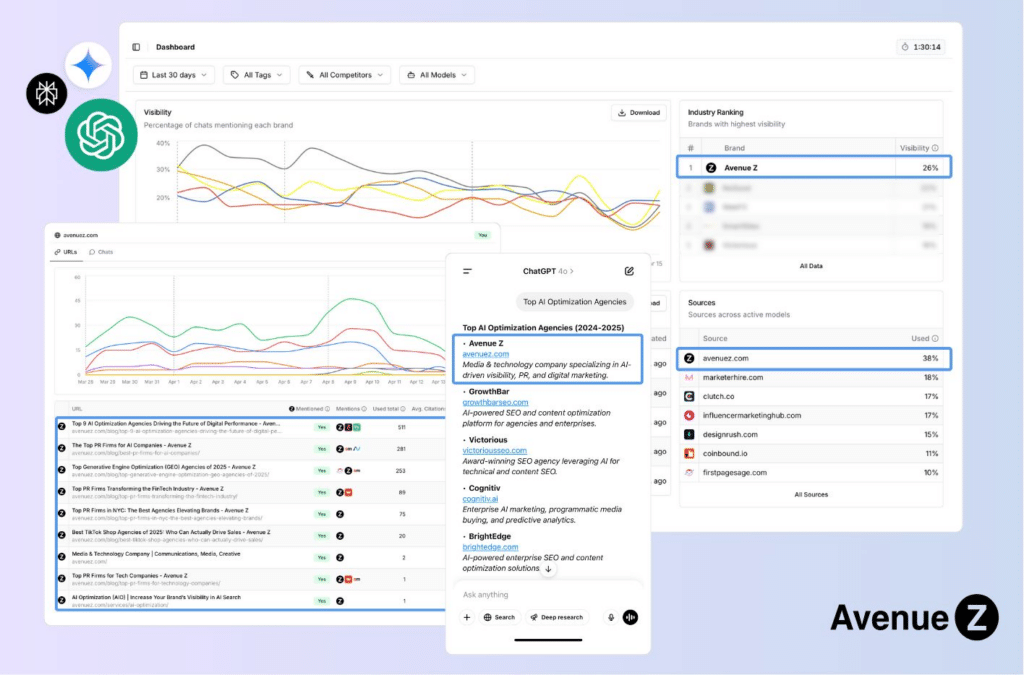
The same logic that makes TikTok Shop’s Amazon halo effects invisible to most brand P&Ls is playing out in AI-powered search. As Jonathan notes, consumers researching products through tools like ChatGPT and Perplexity are formulating queries that would never surface in traditional Google searches, and those conversations are capturing demand the platform helped create well before any click reaches a brand’s site.
“You’re having a whole new conversation that never would have happened on Google,” he says. “People use AI search LLMs for their own product research. It’s more upper funnel than a Google search.”
Source: @avenuez_network
Where a Google user might type “best sunglasses for summer,” the same person on Perplexity might ask for sunglasses with UV protection suited to beach running, a query too long-tail to return meaningful results on traditional search. Brands whose product pages are not structured for that kind of question are invisible in those results.
Jonathan’s prescription involves extending SEO strategy to include what he calls AEO, or answer engine optimization. That means ensuring product catalog descriptions contain the specific, niche descriptors that LLMs draw on when answering long-tail queries. It also means treating PR and third-party editorial coverage as a ranking input, since LLMs frequently cite external listicles and reviews rather than brand-owned pages. “You have to reverse engineer that in your content strategy moving forward,” he says.
Follower Count Is the Wrong Screening Metric
Avenue Z’s creator vetting process begins with a data layer most agencies skip. Before any creator is activated, Jonathan’s team runs competitive analysis through tools like Kalodata, examining category revenue over 30, 90, and 180-day windows. The goal is to identify not just which creators are generating volume, but which content formats and personas are converting in a given product category.
“We actually don’t care about follower count at all,” Jonathan says. “What we’ll look at mostly is GMV. How much GMV have they produced … lifetime and in the last 30 days? And then also, what is their post rate? What are the chances that if we ship them a free product, they’re actually going to post?”
Avenue Z targets what TikTok’s internal tiering classifies as Level 2 creators and above, meaning those who have generated at least $5,000 in lifetime GMV. Jonathan is direct about the return differential. “The average revenue per video that you get from those higher-level creators is light-years ahead of what you get with level one and level two.”
Five Lottery Tickets Instead of One
Platinum Partner status opens access to the top thousand creators in TikTok’s affiliate ecosystem, which Jonathan describes as the most commercially productive pool on the platform and the most unreachable through generic outreach.
“Their DMs are flooded. They don’t even look at their DMs because of that,” he says. TikTok facilitates introductions to those creators exclusively for top-tier agency partners.
That access is enabling Avenue Z’s larger product bet: an omnichannel creator network designed to distribute content across all the platforms where any given influencer maintains a presence, not just the one where they are most active. “Why would that creator not also be posting on Instagram, Snapchat, YouTube, and Facebook?” Jonathan says. “They might even go viral more and get more reach on one of those other platforms.”

His reasoning rests on the algorithmic volatility of modern content distribution. “Every single piece of organic content that gets posted, anything can get infinite reach, doesn’t matter on your follower count,” he says. “Why not just increase your number of lottery tickets, five tickets instead of one, every single time?”
Avenue Z is building what it calls social graphs on each creator, mapping their cross-platform presence, then running paid amplification on whichever surfaces generate the strongest return.
The Root Cause Analysis Most Brands Skip
Jonathan’s clearest frustration with how brands operate on TikTok Shop is not in setup or creator selection. It is in what happens after something works. Most brands treat a viral moment as an endpoint rather than a data point.
“There really should be a root cause analysis,” he says. “Anytime something really takes off, whether it’s an ad, whether it’s an organic post that went viral, whether it was an influencer, they have to really tear it down and understand why this happened and how they can recreate it.”
For brands with a TikTok Shop budget and no system connecting it to the rest of their commerce stack, Jonathan points to three practical starting points:
- Post-purchase surveys that add TikTok as an attribution option alongside Google and Amazon;
- Media mix modeling tools like Prescient AI that can measure TikTok’s impact on Amazon and DTC revenue simultaneously;
- A native Shopify integration that syncs TikTok Shop orders to determine whether buyers are new or returning customers.
The Affiliate Model Is Becoming the Default
In the near future, Jonathan expects the shift from paid upfront creator placements to affiliate-based compensation to accelerate. Meta’s recent expansion of affiliate linking to organic Instagram Reels, allowing creators to earn commission on sales from unpaid content, is one signal. A paid amplification layer equivalent to TikTok’s GMV Max, Jonathan says, is coming to Meta imminently.
“The focus on affiliate outreach through influencers rather than that upfront pay for post model, that’s pretty much here,” he says. “It’s getting rolled out slowly.”
The harder operational challenge, in his view, is closing the handoff between creator discovery and paid amplification. Every step of a creator program, from outreach through product seeding, content briefing, posting, and media buying, represents a point where value can be lost before any ad spend gets placed.
“All the effort previously in that journey of getting the creator goes to waste if it doesn’t end up with ad spend behind it in the end,” Jonathan says, adding that Avenue Z is building workflow automation to connect those steps.
In ten years, Jonathan says he wants Avenue Z to be “the go-to partner to grow your brand online, whether it’s revenue or reputation or a mixture of both.”
Subscribe to Our Newsletter
Check Out Our Podcast