






Platform
Instagram Re-Enters Creator Affiliate Commerce Years After Rivals Built Lead

While TikTok Shop processed more than $33 billion in global GMV in 2024, LTK facilitated over $6 billion in annual consumer sales, and ShopMy reached a $1.5 billion valuation, Instagram remained on the sidelines of an affiliate commerce market it
had largely exited in 2022.
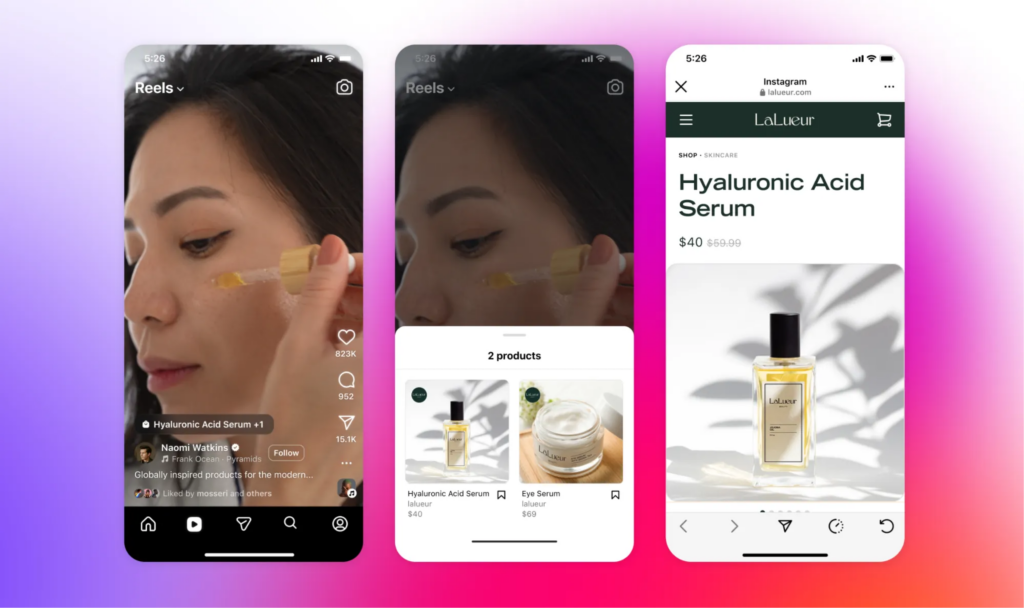
In late March 2026, the platform moved back in. Instagram Head Adam Mosseri announced that creators can now tag affiliate products directly in Reels and earn commissions when viewers purchase through their content. At Shoptalk Spring, Meta’s Head of Global Business, Nicola Mendelsohn, declared that “the era of link in bio is finally over.”
How Instagram Left the Market
Instagram’s retreat from commerce between 2022 and 2025 gave competitors the runway to build deeply entrenched positions. The platform shut down its first native affiliate program in August 2022, citing that it was “not turnkey” and created too many setup barriers for creators.
A key structural flaw contributed to that failure: creators in the program could not tag products outside of it, effectively penalizing participation. One creator industry executive told Digiday at the time: “If the ease of use isn’t there and there’s not a definitive payoff, [creators are] just not going to do it.”
The rollbacks continued. Instagram removed its dedicated Shop tab from navigation in January 2023 and ended live shopping in March of that year. In January 2025, it shut down a program that paid creators for ads placed on their profiles. Each reversal narrowed creator trust and gave rival platforms more time to sign on brands, onboard creators, and normalize affiliate commerce behavior with their audiences.
The Lead Instagram Is Chasing
TikTok Shop generated $33.2 billion in global GMV in 2024 and is projected to reach approximately $66.2 billion in 2025. More than 100,000 creators actively participate in TikTok Shop’s affiliate program, and TikTok affiliate links achieve a 5.2% engagement rate, around 160% higher than Instagram’s rate for affiliate links. Research across 52 e-commerce brands found that TikTok Shop averaged a 4.7% conversion rate, compared with Instagram Shopping’s 2.3%.
A structural difference reinforces TikTok Shop’s conversion advantage: the platform completes transactions within the app, compressing discovery, creator content, and checkout into a single session. Instagram’s new feature redirects buyers to the brand’s app or website to complete purchases, reintroducing the friction social commerce was designed to eliminate.
LTK and ShopMy have built comparable moats through creator ownership: both platforms offer creator-controlled storefronts, cross-platform linking, and transparent analytics. ShopMy reported 200% year-over-year revenue growth and profitability since 2024.
How the New Feature Works
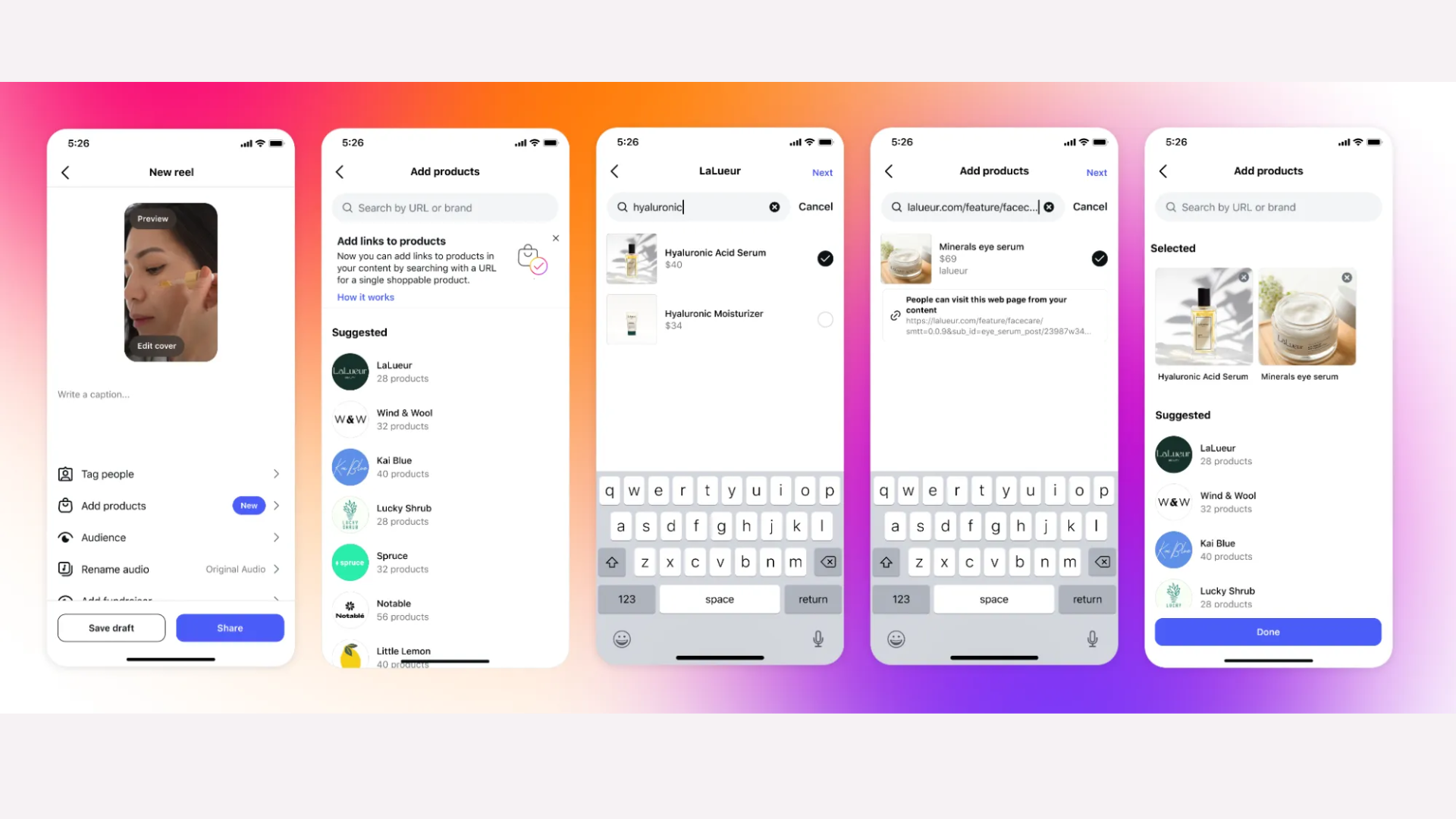
Creators add up to 30 products to a single Reel through a new “Add Products” option in the share screen, either by pasting a URL or searching a brand’s verified Meta commerce catalog. Tagged items appear as floating bubbles that viewers tap to complete purchases on the brand’s app or website. Brands can set commission rates through Meta’s Commerce Manager or by connecting existing affiliate programs from networks including Impact, Rakuten, and Shopify Collabs, removing the need to rebuild existing infrastructure.
The rollout covers the United States, Brazil, India, Indonesia, and Thailand, with expansion planned to all 22 Instagram commerce markets. Meta has also added Amazon, Shopee, eBay, and Temu as direct affiliate partners on Facebook, with similar expansion to Instagram planned.
Unlike the 2021 program, creators can paste any affiliate URL directly, including links from LTK or ShopMy, as long as the product appears in Meta’s commerce catalog.
A Trust Deficit to Overcome
The relaunch arrived weeks after a controversy that put creator trust in Instagram directly at issue. In February 2026, Instagram tested “Shop the Look,” an AI-powered feature that automatically tagged products in creators’ posts using visual recognition, without creator consent.
Fashion creator Julia Berolzheimer, who has more than one million followers, publicly wrote that the feature was “linking people to cheap knockoffs and random items from brands I’ve never heard of, attached to my image, under my name.”
Megan Vasquez, Influencer Strategy Director at GRIN, described the structural concern: “The platform is intercepting that with its own links, its own lookalikes, and its own suggestions. It’s positioning itself between creator influence and creator monetization.”
According to a 2025 LTK report, 84% of respondents said they trust brands more when creators demonstrate and review products, while creator recommendations rank among the most trusted sources for Gen Z and Millennials.
What Instagram Has to Work With
Despite its late return, Instagram brings considerable distribution to the effort. Instagram has a global user base in the billions and has previously said more than 130 million users tap on shoppable posts each month.
Influencer Marketing spend on Instagram is projected to reach $3.17 billion in 2025, a 43.4% increase from 2024, and Reels now carry 53% of all Instagram ads while accounting for 46% of all time spent on the platform in the U.S.
The feature’s compatibility with existing affiliate networks removes the exclusivity flaw that undermined the 2021 program. Instagram also offers a “Trial Reels” feature that lets eligible creators test Reels with non-followers before wider publication, helping evaluate content performance. TikTok does not currently offer a directly equivalent creator-controlled feature.
Subscribe to Our Newsletter
Check Out Our Podcast