
Talent Collectives
Inside Mom 2.0 Summit 2026: Ownership, AI, and the Creator Economy’s Next Phase

Parenting creators were the first to prove that personal storytelling could generate real commercial value online. Nearly two decades later, the community that built the Creator Economy is now being asked to become something new: operators, founders, executives. The 2026 Mom 2.0 Summit, running April 16-18 in Austin, is built around that transition.
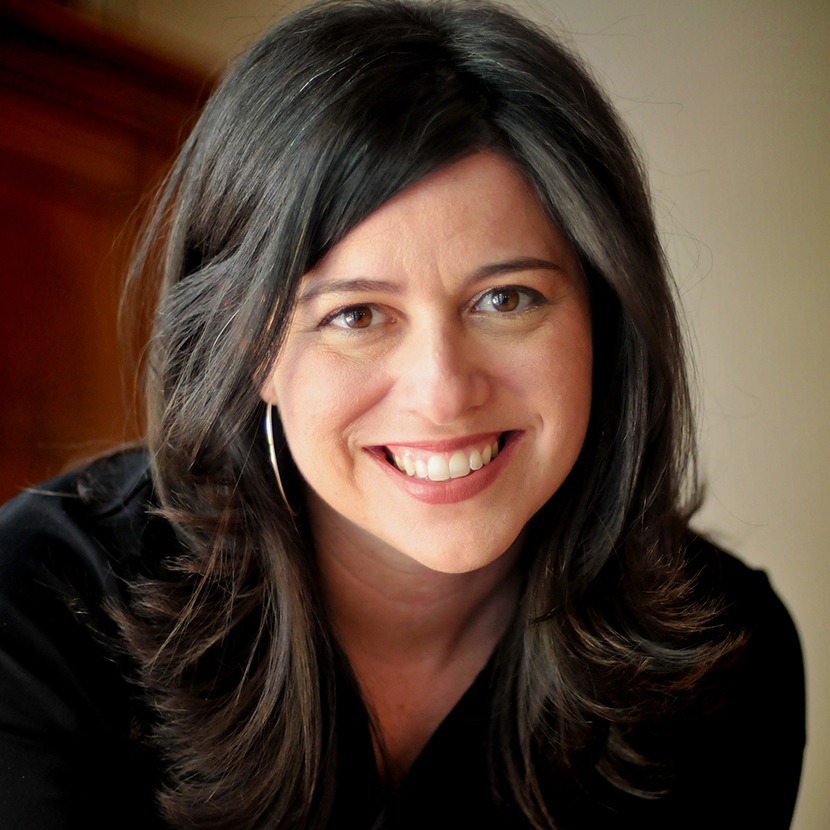
Laura Mayes has watched that transformation unfold in real time. As co-founder and VP of Influencer Programming and Relations at Mom 2.0, she has spent the past 18 years building one of the Creator Economy’s most durable community gatherings. When she and Carrie Pacini hosted the first Summit in 2009, it was a small gathering of women building blogs. The 2026 edition, the 18th Summit, takes place at the JW Marriott in Austin with a lineup that reflects how much the audience has changed.
“We always say the mom creators gave birth to the influencer industry,” Laura says. “They built communities rooted in trust, consistency, and lived experience, long before there were monetization frameworks or platforms designed to support them.”
What she is seeing now is something different. Parenting creators are no longer just focused on brand deals. They are building products, launching companies, and thinking in terms of ownership. That mindset shift shapes the 2026 programming in ways that distinguish it from anything the Summit has done before.
The 4 Shifts Driving This Year’s Agenda
Laura identifies four forces currently reshaping the parenting creator space, and each maps directly onto the 2026 program.
The most notable is what she calls the shift from sharing to building. “Parenting creators are still rooted in storytelling, but they are increasingly focused on what they are building beyond that content,” she says. “That shift is changing how they make decisions, how they lead, and how they define success.” Sessions on business model diversification, ownership strategy, and scaling beyond brand deals address this directly, including a session by Dr. Stacey Freeman on building sustainable creator businesses and a breakdown of six distinct business models creators should understand by Wise Women’s Council founder Sarah K Peck.
Sustainability is the second pressure point. Burnout, income stability, and platform dependence have become central business questions. “The constant need to produce content, adapt to algorithm changes, and stay relevant is pushing people to rethink how they structure their work,” Laura explains. The Summit addresses this through sessions on mental health in digital spaces and on nervous system regulation, featuring talks from psychologists and clinicians alongside creators who have navigated these topics publicly.
The third shift involves privacy and consent, a tension that has cycled through this community since 2005. As children grow old enough to have opinions about their own digital presence, parenting creators are re-evaluating how much of their families they make public. Sessions on managing social media as a family brand and on media messaging around motherhood engage directly with this.
Finally, AI. Multiple sessions address artificial intelligence specifically from the parenting-creator vantage point, including “Mothering the Machine,” a panel on how moms can shape the future of AI tools, and a talk by CNN Senior Product Leader Upasna Gautam on raising children in an AI-shaped world.
“These are no longer separate conversations,” Laura says. “Creators are navigating all of it at the same time.”
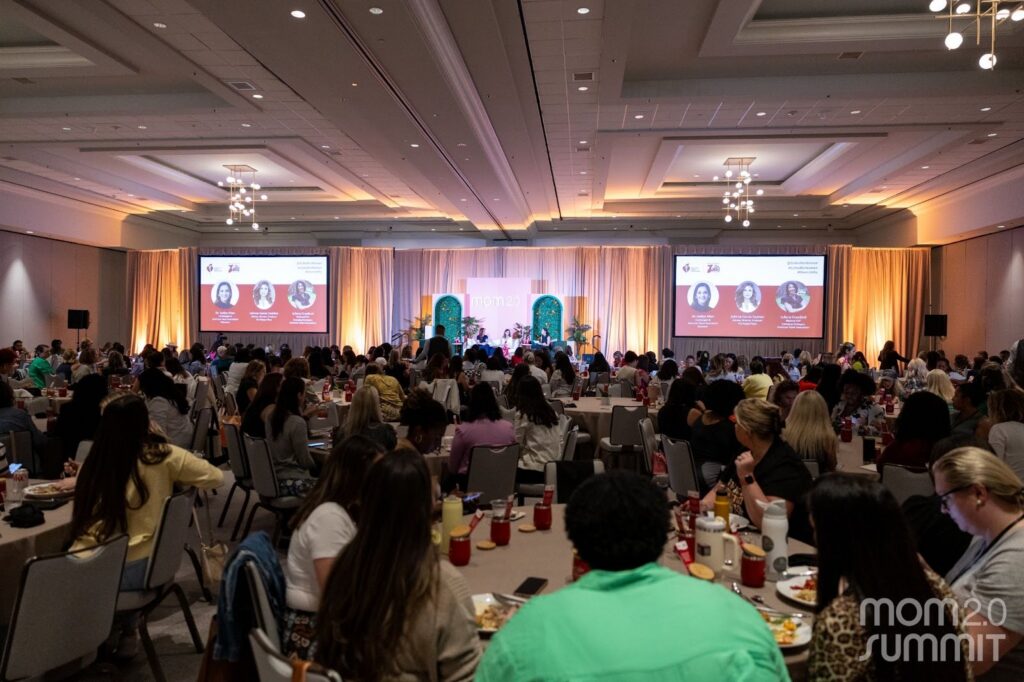
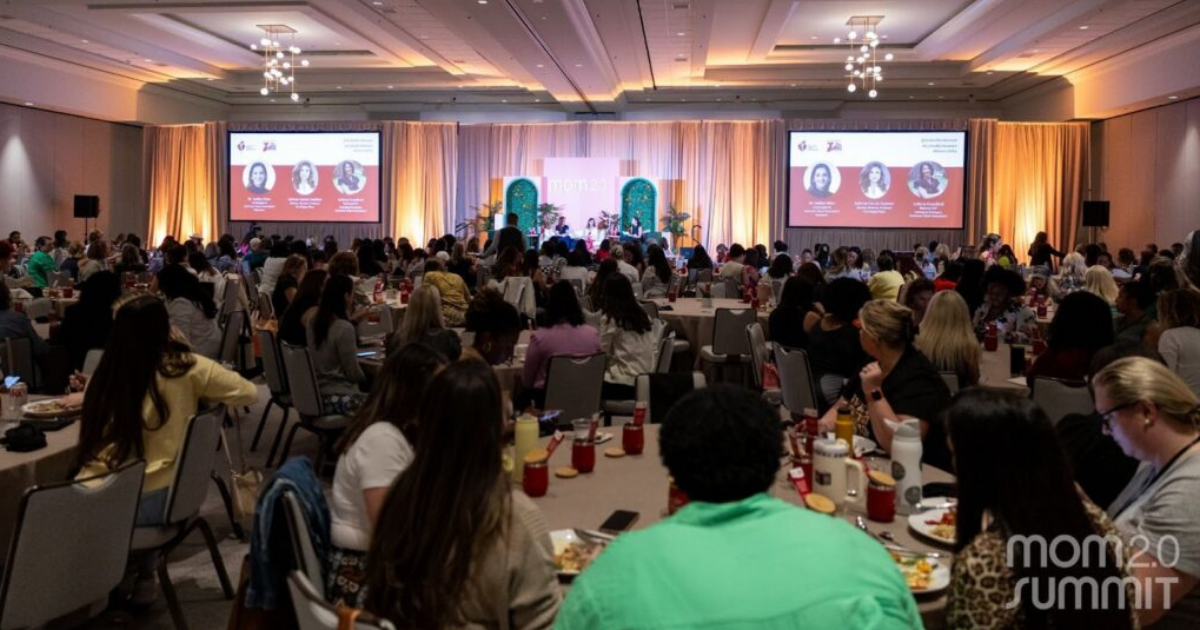
Photo: Mom 2.0 Summit 2025
Source: Mom 2.0
The Keynote Lineup Reflects a Broader Definition of Leadership
The mainstage roster for 2026 is deliberately cross-sector. Dr. Becky Kennedy, a clinical psychologist, CEO of Good Inside, and one of the most widely followed parenting voices online, opens as the keynote speaker.
Jennie Garth, actress, author, and podcast host, and Sheinelle Jones, co-host of “Today with Jenna and Sheinelle” on NBC, follow as mainstage keynotes.
Featured mainstage sessions include Julie Rice, who co-founded SoulCycle and currently serves as Chief Experience Officer at WeightWatchers, speaking on community and brand building. Emily Oster, Brown University economics professor and founder of ParentData, whose data-driven approach to parenting decisions has built a substantial creator-adjacent following, also appears on the mainstage.
The programming logic, Laura explains, is a sequence rather than a menu. Connection is prioritized on the first day because people need to feel grounded before they can engage with more challenging material. Inspiration and learning come next. Integration, which Laura defines as understanding how to carry insights forward sustainably, closes the arc.
“We wanted to reflect the full picture of what creators are managing right now,” she says. “That includes business building, personal wellbeing, and the responsibility that comes with having a platform.”
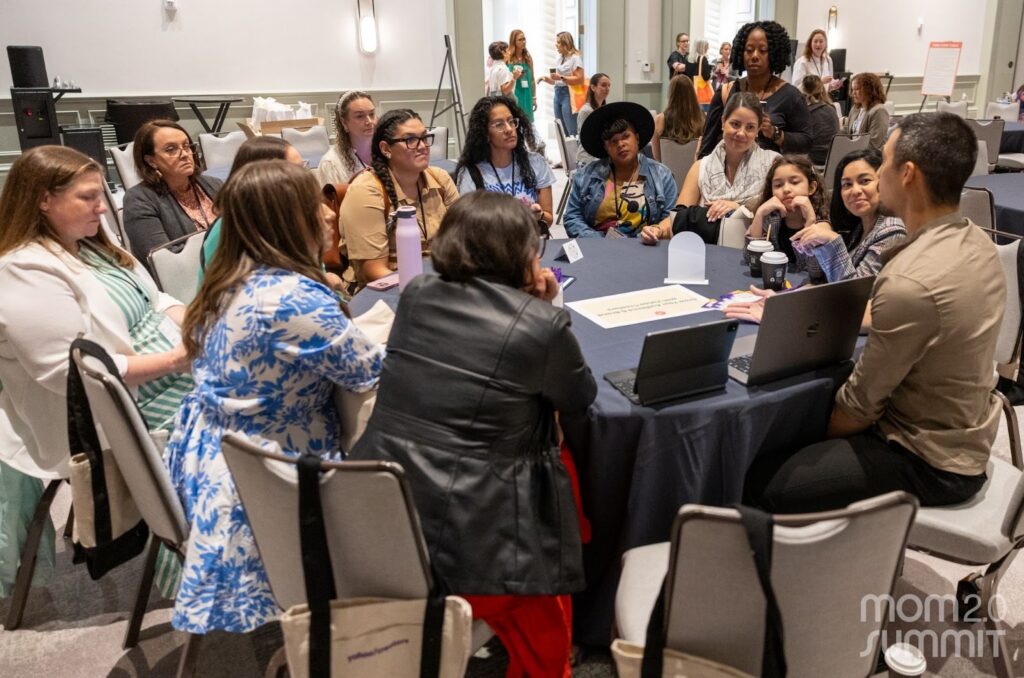
Photo: Mom 2.0 Summit 2025
Source: Mom 2.0
Practical Sessions Target the Gaps Creators Are Actively Asking About
Beyond the mainstage, the 2026 program packs practical instruction into shorter formats. Shauna Hollinger, Creator Education Manager at Mavely, leads a session on how affiliate marketing opens doors to larger brand deals and better rates. Ashley Braswell and Elizabeth Craig, co-founders of After Organic, cover how to use Meta ads to scale affiliate revenue. Nate Coughran of Cookie Finance addresses tax strategy for content creators.
Brand partnership sessions approach the topic from both sides of the table. Holly Hill and Kelley Cochran, VP and Marketing Director respectively at stroller brand Zoe, present “The 5-Second Test: Would a Brand Hire You?”, offering a direct look at what brands are actually evaluating when selecting creator partners. Dani Morin, a baby registry creator with 900,000 followers, covers brand pitching, media kits, and creative content strategy.
Speaker selection follows a specific standard. “Our highest value: speakers who will give real numbers, real tips, and real actionable next steps,” Laura says. Each speaker has under 30 minutes, a constraint designed to keep sessions focused and practical.
The smaller roundtable discussions serve a different function. “The main stage sets the tone, but the smaller settings allow people to process, ask questions, and apply ideas to their own work,” Laura notes. “That is often where the most meaningful connections are made.”
Why the Room Matters as Much as the Stage
The Summit’s cross-sector structure, mixing creators with brand marketers, media executives, and entrepreneurs, is intentional. Laura’s argument is that the gaps between those groups are exactly where problems and opportunities concentrate.
“Creators want more transparency and better partnerships. Brands want more effective and measurable collaboration. Media companies are navigating how creators fit into their models,” she says. “When those groups are in the same room, the conversation becomes more direct. People can ask better questions, challenge assumptions, and build relationships that are grounded in understanding rather than guesswork.”
She believes such positioning distinguishes Mom 2.0 from both pure creator conferences and pure marketing industry events. It is not designed exclusively for either audience, which creates friction by design. The tension between what creators need and what brands want is part of what makes the conversations productive.
“We are not just reflecting the industry, we are helping shape the conversation around leadership, ownership, and sustainability, particularly through the lens of parenting and identity,” Laura says.
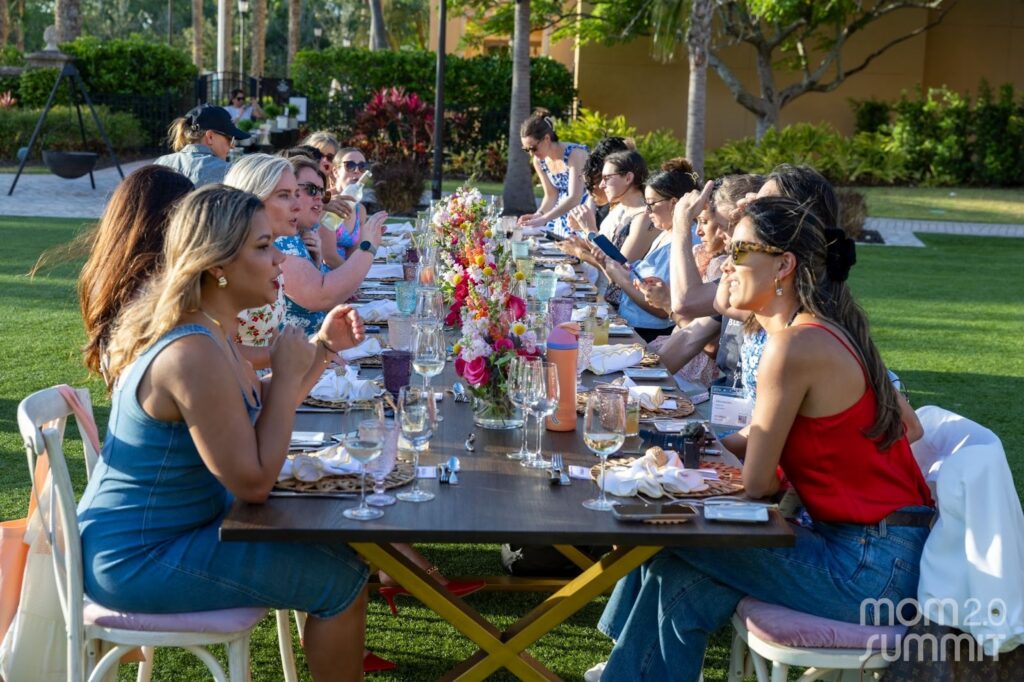
Photo: Mom 2.0 Summit 2025
Source: Mom 2.0
The Biggest Shift Has Already Started
If there is a single conversation Laura wants the 2026 Summit to advance, it is the one about what creators are building beyond their content. The broader Creator Economy is arriving at conclusions this community reached years ago: that trust is the business model, that longevity requires adaptability, and that ownership is the only real hedge against platform risk.
“In the next three to five years, creators and brands will overlap even more,” she predicts. “Creators are becoming full-scale media companies, building products, IP, and communities.” That convergence is already visible in the 2026 speaker roster, which includes creators who have launched products, brands that have hired creators as executives, and entrepreneurs who operate across both categories.
“The goal is alignment,” Laura says. “We want people to leave with a stronger sense of direction, a deeper understanding of the industry, a stronger network, and a better understanding of how to navigate the next phase of their work.”
The Mom 2.0 Summit takes place April 16-18, 2026, at the JW Marriott Austin. Tickets and full schedule information are available at mom2.com.
Subscribe to Our Newsletter
Check Out Our Podcast