





Brand
How Thai Randolph’s NILE & Co. Aims to Build Legacy Brands From Creator Influence

The Creator Economy has proven it can build attention quickly. Thai Randolph is betting the next test is whether that attention can be turned into consumer brands with staying power.
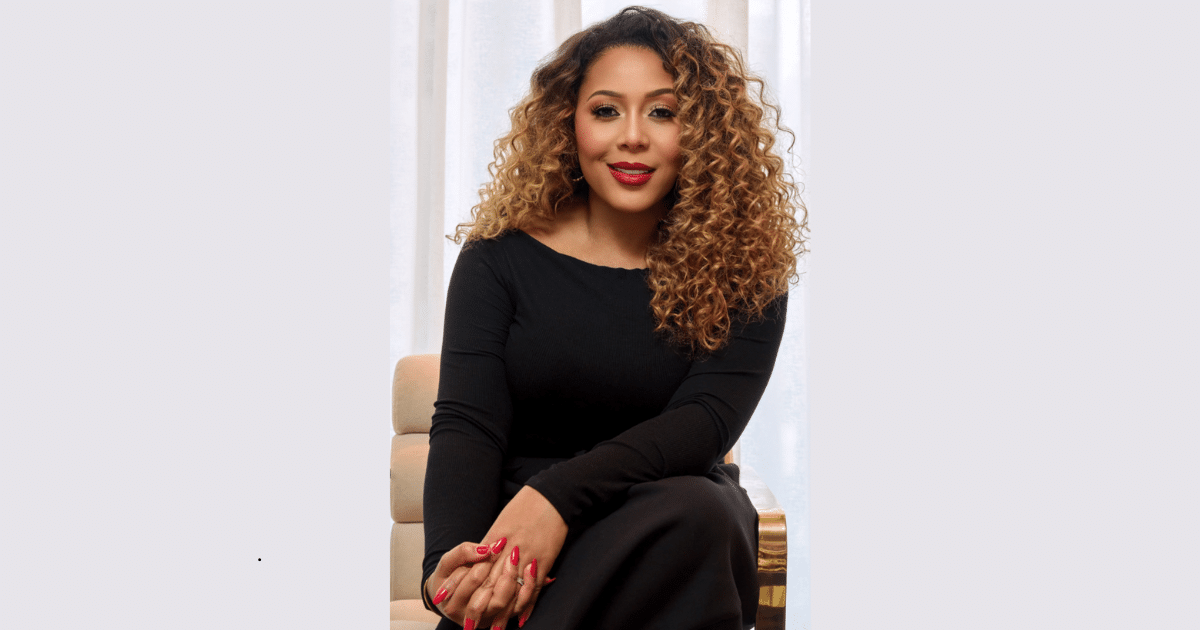
Thai, the former CEO of Hartbeat and a two-decade veteran of advertising, entertainment, and big tech, founded NILE & Co. in January 2026 as a Los Angeles-based brand and IP platform targeting women ages 25 to 45. The company’s name stands for “Narrative, Influence, Legacy, and Enterprise.”
NILE operates through a build, buy, and partner model, co-founding brands with creators and athletes as equity partners, acquiring IP with dormant audience potential, and working alongside corporations as an operating and commercialization partner.
Its launch is anchored by the acquisition of “As/Is” and “Goodful” from BuzzFeed, two brands with a combined following of 40 million across social platforms, both relaunching under NILE in summer 2026.
“Storytelling and influence are the two major drivers of modern commerce,” Thai says. “Where the stories live and who holds the influence may shift, but I’ve spent my entire career right at that intersection.”
Buying What BuzzFeed Left Behind
The “As/Is” and “Goodful” deal drew attention for its price as much as its logic. The two properties, which together have accumulated more than five billion lifetime content views and a decade of first-party consumer data, were acquired as distressed assets. For Thai, the price was a consideration, but not the driving factor.
“Our focus from an acquisition perspective is brand and IP,” she says. “This was an asset purchase. The brands, the IP, even the seed of the initial promise for both of those brands.”
“Goodful,” originally a wellness platform built around the idea of filling up on what’s good rather than achieving wellness by subtraction, was attractive for its cultural timing as much as its history. “As/Is,” launched as a body positivity platform, is being repositioned as what Thai describes as a whole-life platform for high-performing women, athletes, founders, and executives.
The acquisition was less about inheriting an audience and more about acquiring proven cultural architecture. “This wasn’t about, ‘Let’s just go collect audience,'” Thai explains. “We had a lot of historical data about how this consumer had behaved and the content she had engaged with. The real insight was: there is IP and brand value here that through our system and through new creator partnerships could be more timely now than when it was first imagined.”
Alongside the two owned brands, NILE struck a commercial partnership with BuzzFeed identity brands Cocoa Butter, Pero Like, and A*Pop, extending its consumer reach to more than 50 million.
The Case for Her
NILE’s consumer focus is explicit. The company targets women across three categories it views as structurally undercapitalized: wealth, wellness, and women’s sports. Women drive 85% of all consumer purchasing decisions and are projected to control roughly $34 trillion in investable assets by 2030, according to McKinsey & Company. Women’s sports, meanwhile, has seen TV viewership grow 131% year over year.
Thai makes clear this isn’t simply market sizing. “I’m her,” she says. “And I think finally there has just been a real necessity to do so. This consumer is rejecting business as usual. That, to me, has been the big shift. Because the math has been there for a while. What’s actually shifted is the engagement mechanisms.”
She argues that creators, not traditional media companies, have led that shift. “When it’s one to many, when you’re sitting in front of a television, and there’s just a spot, you sort of take what is given to you,” Thai says. “Now we’re in constant conversation, and women are leading this conversation in the Creator Economy.”
Endorsement, Equity, Enterprise
NILE’s operating model diverges from the standard creator partnership in one critical structural respect: creators enter as equity holders, not endorsers.
Thai describes the relationship along a spectrum she has developed over years of creator-facing work. “Endorsement is, kind of, table stakes,” she says. “Equity is: I want upside in the thing that I do. And enterprise is: let’s build this together.”
The distinction matters for how partnerships function in practice. Endorsements can be authentic, she notes, but they remain transactional. Equity changes the incentive structure. “You’re really trying to build the brand in the long term,” Thai says. “That’s a real relationship. And you really want to be in partnership.”
She points to Rock the Bells, the hip-hop culture brand LL Cool J founded, as an example of the enterprise tier in action. NILE is not building the company, but bringing its platform infrastructure to an existing enterprise as an operating and commercialization partner.
Where Brand-Creator Partnerships Break
Thai is direct about the most common failure point in creator-brand relationships. “It’s misaligned incentives,” she says. “And that doesn’t mean everyone wants ownership. If you’re going to get into an enterprise-building relationship with a creator, this needs to be someone who has a deeply entrepreneurial will and is going to prioritize it.”
The misalignment runs in both directions. Brands face board-level pressure on ROI. Creators face audience-level pressure on authenticity. Neither is wrong, but left unmanaged, they produce the friction that kills viable partnerships.
“A creator will often say, ‘I know that this is the brief, but if I say it to my audience in this way, it’s not going to land,'” Thai says. “There needs to be more time for alignment. It’s a real relationship, and when it becomes ‘set it and forget it,’ that’s when those partnerships break down.”
The solution, she argues, requires bidirectional education. Creators need to understand brand economics and how investors make decisions. Institutional partners need to remember that a creator’s authenticity with their audience is precisely what they paid for.
The Problem Nobody Has Cracked
Thai believes the Creator Economy has not yet solved one foundational challenge: building brands that endure across decades rather than cycles.
“When we think about iconic brand houses or CPG portfolios, there is an arc across values and sustained commitment to the consumer and infrastructure that expands and can go through cycles,” she says. “What are the new rules of legacy brand building in the Creator Economy? That’s what we’re all still trying to crack the code on.”
NILE’s answer is a platform designed around infrastructure permanence rather than individual creator continuity. Thai’s framing, developed during her years at Hartbeat, centers on reducing what she calls “key-man dependency.” Creators are the engine. The machine, however, should not require them to pedal it every single day.
“How do you make this systemic?” she asks. “So the brand can make money beyond your pure sweat equity on it. That’s important for everybody in the ecosystem. Scalability, longevity, and ultimately legacy.”
A Chorus of Voices
NILE is positioning itself as a platform that institutional investors, legacy brands, and creators with enterprise ambitions should all be tracking. Thai is explicit about the company’s audience: investors seeking the next major Creator Economy opportunity, creators looking for genuine operating partners, and legacy brands searching for a scalable framework to build with creators rather than simply buy from them.
The “As/Is” and “Goodful” relaunches arrive this summer. Additional acquisitions are expected to follow.
“For so long, from a programming perspective, there was only one idea of what it meant to be a modern woman. One expression of wealth and wealth-building,” Thai says. “The marketplace could only hold one version of her in its head. I’m excited to help contribute to a much more differentiated spectrum of women doing things their own way and owning everything they want to pursue. The great tragedy would be if there were only one story.”
Subscribe to Our Newsletter
Check Out Our Podcast