





Influencer
How Phaith Montoya Turned Rock Bottom Into a Mental Health Movement

In 2020, Phaith Montoya was newly graduated, newly single, newly jobless, and newly alone in a city she had just moved to. She decided to shave her head. Not at a salon, but on camera, with her four and six-year-old cousins holding the scissors.
The resulting footage was not polished. There was no aesthetic lighting, no curated backdrop, no reveal music. There was just a 22-year-old woman in a bathroom, shedding years of accumulated damage along with every strand. The first week after the video was posted to TikTok, it got 20,000 views. The second week, 500,000.
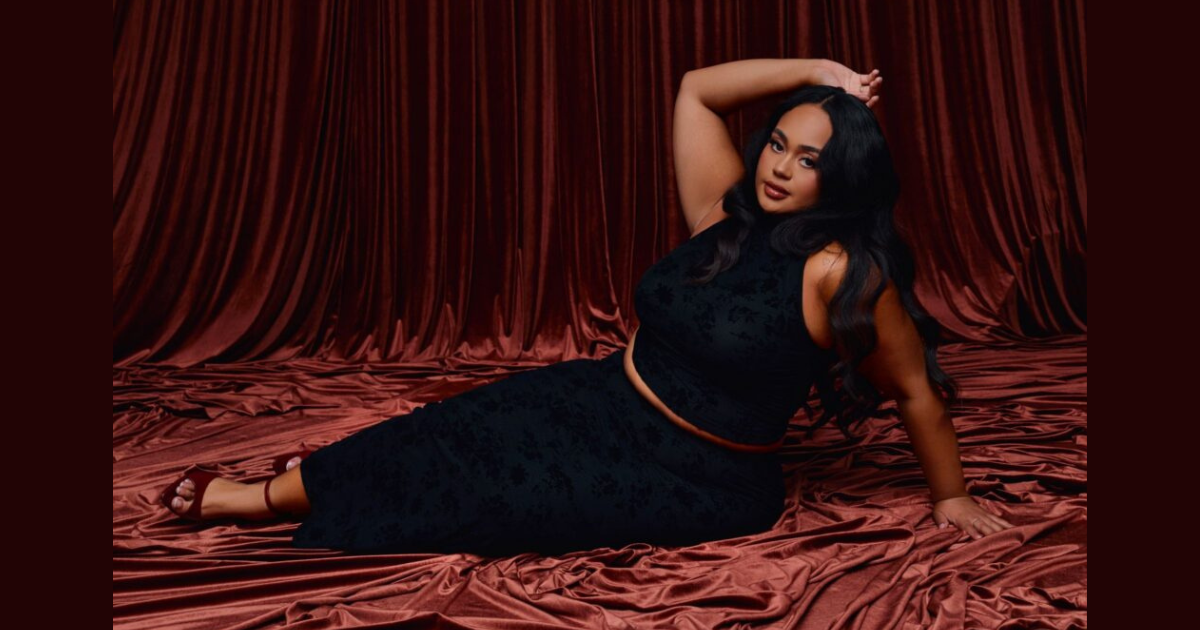
Today, Phaith Montoya reaches approximately 4 million people across Instagram, TikTok, YouTube, and Snapchat as a beauty & lifestyle creator, body image advocate, and NAMI ambassador, the National Alliance on Mental Illness. Her content spans fashion, beauty, and mental health, anchored in a psychology degree from Florida State University and a willingness to say out loud what many of her followers have never heard said at all. Her work has been covered in Forbes, Parade, NBC News, Ebony, and on “The Tamron Hall Show.”
The throughline across all of it is the same principle that made a bathroom video go viral. “I just uttered my truth,” she says, “and people followed because they felt that.”
When the World Shut Down, She Had Nothing Left to Lose
Phaith had moved from Florida to New Jersey with a plan. She had just finished her degree in psychology and biochemistry at Florida State, was studying for her MCAT, and was substitute teaching to cover her expenses while preparing for medical school applications. Then COVID arrived and took most of it with it.
The job ended because you cannot substitute teach from home. A relationship ended, too. She was in New Jersey with almost no friends and a future that no longer looked like anything she had planned. “I just felt like I was rock bottom,” she says. “I didn’t know what else to do.”
What she did next, she describes, without apology, as “a crash out.” She had always wanted to shave her head. The instinct struck. “I need it off my head. I need it gone,” she says. She let her young cousins grab the scissors. She did not care how it looked or turned out.
The shave was not just about the hair. Her teenage years had been marked by anger, an autoimmune disorder that caused weight gain, and a body that drew unsolicited commentary from the time she was a child. The hair had absorbed all of it.
“I felt like it was my chance to just start over and let go of that and shed all those years of damage and pain,” she says. “I always tell people there’s a before I shaved my head and an after, because I completely am like a new person. It was a metamorphosis of sorts.”
She Documented It for Herself. Millions Were Watching.
Phaith did not post the shave as a brand moment. She posted it because she could not find what she was looking for. Searching for hair growth timelines online, every video jumped too quickly, organized by day or by month, skipping the slow week-by-week change she wanted to track. She identified a gap and filled it herself, filming her head each week with no makeup, no consistent setting, and no particular production value.
“My lack of expectation kept it really real and raw,” she says. Within eight months, the series had reached 100 million views, and she had 1 million followers. She did not, notably, quit teaching. “People were just like, ‘Wow, you’re still teaching?'” she says. “And I’m like, ‘Yes.’”

Photo credits: SHEIN
What the videos demanded of her was a particular kind of consistency, not polished consistency, but honest consistency. Women in the tri-state area began approaching her with their heads shaved, showing her hair they had grown in parallel with hers. Plus-size women specifically told her they had taken that step because of her.
“I know what it’s like showing up in society in a bigger body and how we’re already really ostracized because of it,” she says. “If you had told me that first time I uploaded a video that would be the impact it would have had, I would be like, you’re joking. There’s no way.”
She did not take her first brand deal until she had 1 million followers. She did not leave teaching until she had 2 million.
Twenty Years Without a Diagnosis, Then Everything Made Sense
For Phaith, the psychology degree was always personal, even before she had words for why. Studying conditions in college that resonated with her own inner experience, she eventually sought out the school psychologist. The diagnosis that followed, depression and binge eating disorder, arrived with a complicated kind of relief.
“It was bittersweet,” she says, “because it just saddened me to know that I lived with this for so long, like 20 years, and I had no idea.”
The sadness was not only for herself. Coming from a lower-income background where mental health resources were rarely available, she understood exactly how many women who looked like her had never, and would never, have access to the same conversation. “The amount of women and people of color that are like me, that are going to have to continuously live this experience without ever knowing they are going through this,” she says.
When she began posting “day in my life with high functioning depression” videos, she knew it would invite scrutiny. Her platform by that point was built on fashion and lifestyle. But the response removed any hesitation. “Women were telling me, ‘Phaith, because of you, I got diagnosed. Phaith, because of you, I got medicated. Phaith, because of you, I’m in therapy,'” she says. “And mostly the people that were telling me that were Black and Brown women.”
She recently made one of those videos again, two years after stopping, aware that her life now looks different from her earlier circumstances and that the gap would attract criticism. More women responded to say they had finally reached their dream jobs, their dream apartments, and that the depression was still there. “That only reignited my hope,” she says.
She Spent a Decade Chasing Thinness. Then She Let It Go.
“Fat” was, for a long time, the word Phaith could not shake. She counted calories. She worked out to compensate for what she had eaten. She had binge eating episodes alone. “It was my kryptonite, truly,” she says. “I thought this was going to be the bane of my existence for the rest of my life.”
The shift came not from a single moment but from years of therapy, her psychology background, and a growing network of fat-positive creators who were doing publicly what she had been doing privately. When she started posting about fatphobia, including her own internalized version of it, she was still learning in real time. Seeing her audience receive it with openness gave her permission to go further.
“Once I was freed from caring whether I was fat or skinny, life just got so much better,” she says. “I started chasing my dreams. I started getting everything I wanted because our bodies are not the bane of our existence.”
She recently posted that she is at peace being 200 pounds forever. “If that’s my ministry,” she says, “that’s my ministry.” She is clear, however, that internal freedom does not erase external reality. “I might be free internally, but externally there’s still a fight to be fought.”
The body she once catalogued for its failures, she now describes in entirely different terms. “These arms help me hug my mom,” she says. “How could I be so nasty and mean to arms that carried me through this life?”
Her Brand Deal List Starts With Size Inclusivity
Phaith’s non-negotiables in partnerships are an extension of her advocacy rather than a separate category. Products that do not actually work get declined regardless of the check. Brands that extend sizing only to a large get declined. Brands running messaging around “getting your summer body ready” get declined. “I cannot present to my audience clothing that I know the minute they click on the link, they’re going to be disappointed,” she says.
The NAMI ambassadorship follows the same logic. Representation at the source of the conversation, she argues, is what breaks generational cycles of undiagnosed illness in communities that have been trained to treat suffering as a personality trait. “I feel as though I broke that cycle in my family,” she says.
The Girl From 2020 Would Be Absolutely Gagged
Phaith now lives with her mother in a house she bought. Her mother no longer has to work. That outcome, more than the platform, more than the press coverage, is what she returns to when she traces the distance between 2020 and now. “This is everything my younger self could have ever wanted,” the influencer says.
Her college psychiatrist once told her she had never seen anyone fight for their life as hard as Phaith had. Phaith’s response was genuine confusion. She had not thought of it as fighting. What she had been doing was something quieter and more stubborn than that, and it remains her only real advice.
“Keep going,” she says. “It seems like really simple words, but sometimes it just takes you to the next day. And not giving up and just putting one foot in front of the other is so important, and it seems so insignificant and small. But it’s what brought me to completely changing my life.”
Cover photo credits: SHEIN
Subscribe to Our Newsletter
Check Out Our Podcast