



Strategy
Why TikTok Shop Is Exposing the Brand Fundamentals Amazon Could Hide

Should a brand launch on TikTok Shop or Amazon, or both? A year ago, that question had an obvious answer. Today it doesn’t, and the brands most likely to get it wrong are the ones importing assumptions from whichever platform they already know.
Thomas Baker spent nearly 20 years in digital marketing before launching FordeBaker, a UK-based marketplace agency, in 2020. He built his Amazon expertise brand-side first, running e-commerce for a consumer startup and expanding it across the UK, Europe, and the U.S. before concluding that the external support he needed didn’t exist. The agency he built to fill that gap now manages storefronts across Amazon, TikTok Shop, and Walmart for consumer brands in multiple markets. TikTok Shop entered the picture 18 months ago, and Thomas has spent that time applying hard-won Amazon experience to a platform that operates by different rules.
“There’s a question now that’s never been a conversation before,” Thomas says. “It’s always been, ‘You’ve always got to be on Amazon.’ That’s changed.”
TikTok Shop and Amazon Serve Different Customers at Different Moments
The structural difference between the two platforms is not primarily about audience demographics or content format. According to Thomas, it is about where the customer is in their relationship to the product when they encounter it.
Amazon is a search engine for commerce. Customers arrive with intent, knowing broadly what they want and needing to be persuaded that a specific product is the right one. TikTok creates demand that didn’t exist at the moment a user opened the app. The platform is entertainment-first; the purchase follows the content.
Thomas previously advised DIY and furniture clients to stay off TikTok Shop entirely. He no longer holds that view. “Why would anyone be buying a bed frame on TikTok Shop? But that’s changing so quickly,” he says. “There’s a much wider range of brands that can go onto the platform now. We can’t have a fixed mindset.”
For most consumer product brands, his current default is to do both, but to weight the budget toward TikTok. “If all of your budget was in Amazon, of course, the audience is there. But you’re missing out,” Thomas says. “You’re missing out on the injection of customers that TikTok can do. And certain categories on Amazon are just incredibly expensive to compete in.”
Follower Count Is a Weak Signal for Sales Performance
The affiliate model most brands bring to TikTok Shop borrows logic from traditional Influencer Marketing: find someone with a large following, send product, wait for sales. Thomas argues this is the wrong model and that most brands find out the hard way.
“It’s not about influencers that are pseudo-celebrities with lots of followers,” he says. “That’s not going to drive sales on TikTok Shop. It gives you some big numbers for impressions and reach. But it doesn’t drive the sell-through.”
He describes a conversation with a brand whose influencer agency had proposed a creator program with a budget of roughly $140,000. The CEO asked for basic performance projections. The agency couldn’t answer. “The pricing of influencers is not transparent,” Thomas says. “No one really knows how much influencers cost or should cost. And there’s no performance element to it.”
The creators who actually move product on TikTok Shop, in Thomas’s view, are not influencers in the traditional sense. They are smaller, commission-motivated sellers who understand how the platform’s algorithm rewards certain content behaviors. “They’re just people who understand how to sell and are attracted by the commission model of TikTok Shop,” he says. “It’s more and more about that sort of long tail of creators.”
Instagram Content Fails on TikTok for Operational, Not Aesthetic, Reasons
A recurring pattern Thomas observes is brands that perform well on Instagram assuming their existing content will translate. It doesn’t, and the reason runs deeper than visual style.
“There are some brands that are very strong on Instagram. They go, ‘Oh, we’re really good on Instagram,’ and they are. But it’s too glossy, it’s too perfect for TikTok,” Thomas says. “I don’t mean make poor quality videos. I just mean it’s more authentic, more raw.”
The operational difference is more than just tone. Amazon is systematic and planned. TikTok requires a different working cadence: immediate collaboration, reactive optimization, and constant new content generation for paid placements. “Amazon, we can sort of plan everything out. TikTok, we’re very reactive to what’s happening,” Thomas explains.
For many brands, TikTok also demands a cultural shift: putting human faces on the company. Thomas notes that most founders didn’t build businesses to promote themselves. On TikTok, that reluctance is a competitive disadvantage. “You’ve got to find that voice for the brand in a way that’s native to the platform,” he says.
Subscription Discounts at Maximum Rate Attract the Wrong Customers
When TikTok Shop launched subscriptions, brands defaulted to the most aggressive discount rates available. Thomas’s Amazon experience told him that approach creates a specific and predictable problem.
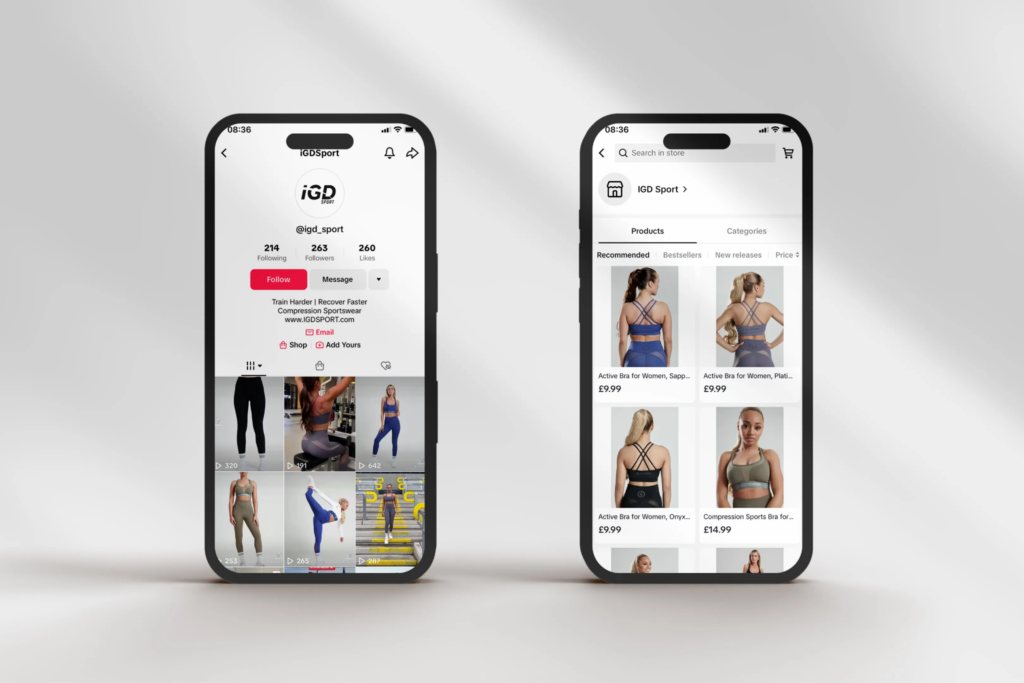
Image source: FordeBaker
“People will subscribe to something on their first purchase and then immediately delete the subscription afterwards,” he says. “That will always happen.” The problem compounds when brands offer the maximum discount rate, which attracts far more first-time cancellers without proportionately improving genuine retention.
Reducing the subscription discount from its ceiling to a more moderate level, Thomas says, cuts the cancellation rate without meaningfully hurting top-line performance. “It might mean slightly lower top-line growth, but ultimately it’s a much healthier balance.”
The principle applies beyond subscriptions. “There’s an instinct to just offer the world because that’s the best way to acquire new customers,” Thomas says. “But businesses have to be really careful about going too far with that, particularly on TikTok.”
TikTok Is Creating a Two-Way Street Between Digital and Physical Retail
Walk past a major beauty retailer in a UK shopping mall, Thomas says, and you’ll see shelves organized around products that went viral on TikTok, with displays referencing the platform directly. Retailers are reacting to social-driven foot traffic by reorganizing physical space around what the algorithm surfaced.
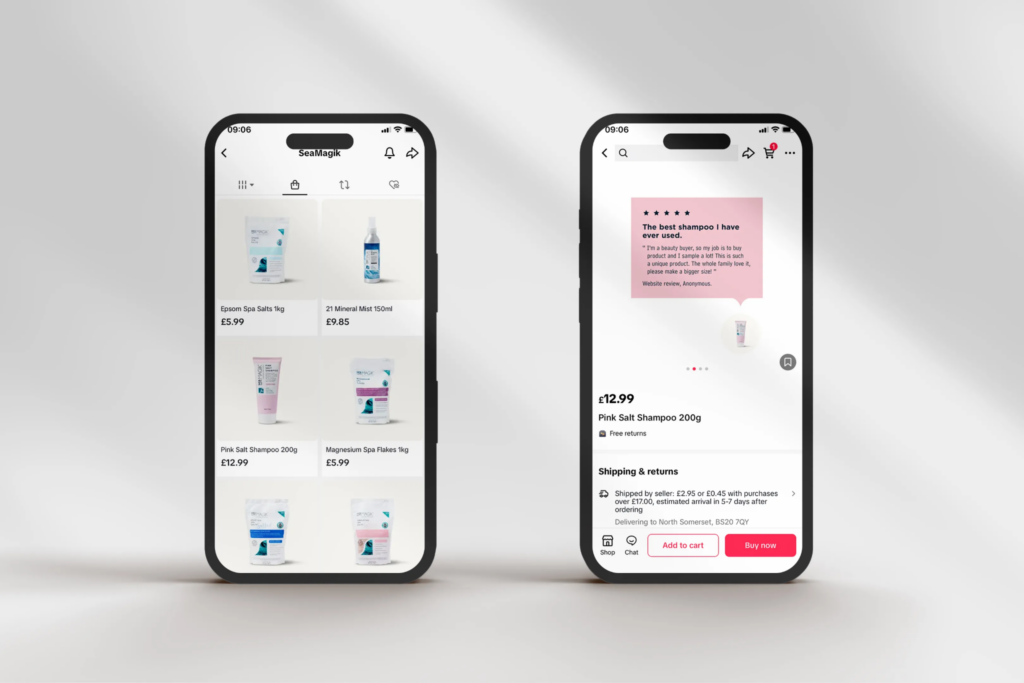
Image source: FordeBaker
Thomas sees the relationship running in both directions. Retailers that build TikTok Shop presence gain something individual brands struggle to sustain: an endless range of products suited to the live shopping format. “A brand might have 30 SKUs or whatever. They’ve got to be really creative to carry live shopping through,” he says. “Whereas a retailer has thousands. They could be doing live shopping 24/7.”
He frames this as one of the few structural reversals in a decade of e-commerce history that has consistently favored direct-to-consumer brands. “Most of the history of e-commerce has been favoring the D2C brand model,” Thomas says. “This is actually going, ‘oh, hang on a second.’ It might be one of the few areas where retailers actually have a bit of an advantage.”
The Brands That Win Have a Tribe, Not Just a Product
When Thomas maps successful brands against those that stall, the differentiating variable isn’t budget or category. It’s whether the brand has a position that means something specific to a specific group of people.
He points to the supplement sector as a case study. The underlying formulations are often identical across competing products. What separates breakout brands is not the product itself but the identity it carries. “It comes down to: who is their tribe? Who are they for, or who are they against?” Thomas says.
Liquid Death, he notes, is effectively water in a can. Its growth is not a product story. It’s a positioning story rooted in a specific cultural identity that a particular audience finds worth paying for and worth sharing. “There’s something there that people will latch on to,” Thomas says.
He applies the same logic as a filter before onboarding new clients. In saturated categories like supplements on TikTok Shop, Thomas tells some brands the window has passed. “If you’re just another basic fruit gummy gut health brand, there’s got to be something different,” he says. “There’s a million and one of them.”
Amazon Won’t Win in Social Commerce, and Meta May Not Go Far Enough
As Amazon and Meta both pursue social commerce features, Thomas applies a consistent filter: is the capability native to what the platform actually is, or is it a product team hitting a feature target?
On Amazon, he is skeptical. The company has run social-adjacent experiments, including brand-following features and Amazon Posts, for years without committing to them. “It’s really hard for Amazon to make a success of social commerce because it’s not in their DNA as a business,” Thomas says. “Social media elements in e-commerce are much harder than e-commerce elements in social media. Which is obviously what TikTok has done.”
Meta, he watches with more interest but the same caution. The company has recently re-entered conversations about creator monetization tools, but Thomas is waiting to see whether it builds a complete commerce infrastructure or adds features without committing to the full solution. “The big thing for me is, ‘Is it true to the platform, or is it just some kind of product manager who’s got a target to hit?’” he asks.
FordeBaker’s near-term focus is on connecting the marketplaces it already manages into a coherent attribution picture, helping brands understand budget allocation and what their combined marketplace activity is actually building.
“How do businesses get the most out of those marketplaces? What’s the right mix for them, and how do they measure those things?” Thomas says. “That’s where we’re going with it.”
Subscribe to Our Newsletter
Check Out Our Podcast