






Influencer
How Ninjon Turned Miniature Painters’ Color Problem Into a Creator-Led Product

Color choice is one of the most persistent friction points in miniature painting. For years, Jon Ninas solved it the way many hobbyists do: by searching online for inspiration, saving images, and trying to translate someone else’s palette into the paints already sitting on his desk.
The process worked until it didn’t. As algorithms pushed him toward increasingly familiar visual references, Jon began seeing the same kinds of color combinations repeat. The missing piece, he believed, was not another inspiration board. It was a practical reference system that could move painters from a visual idea to a usable paint selection.
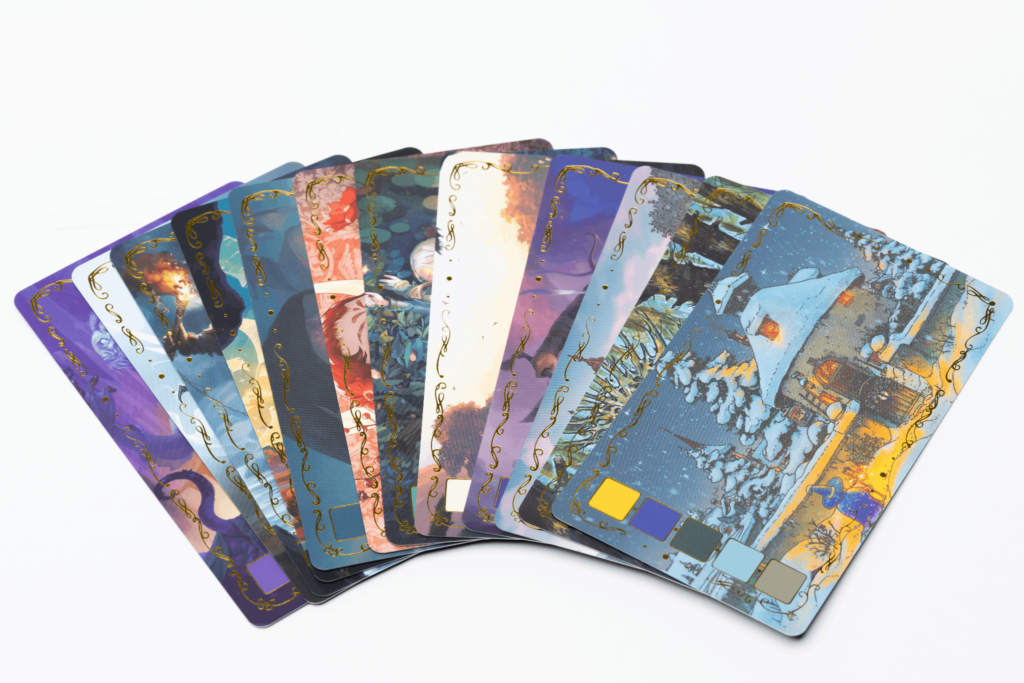
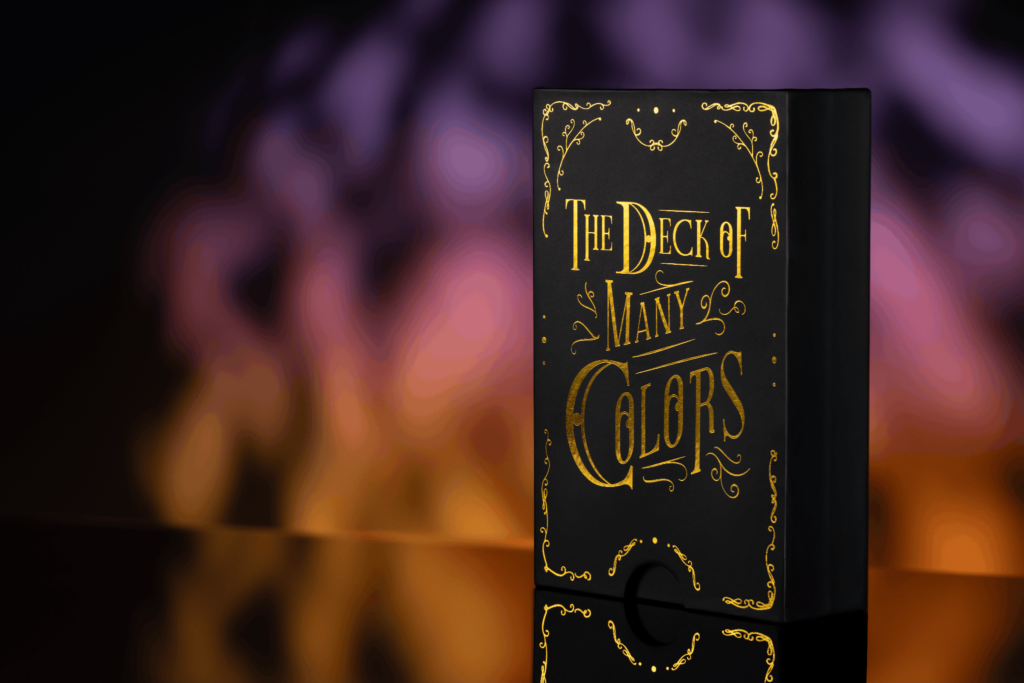
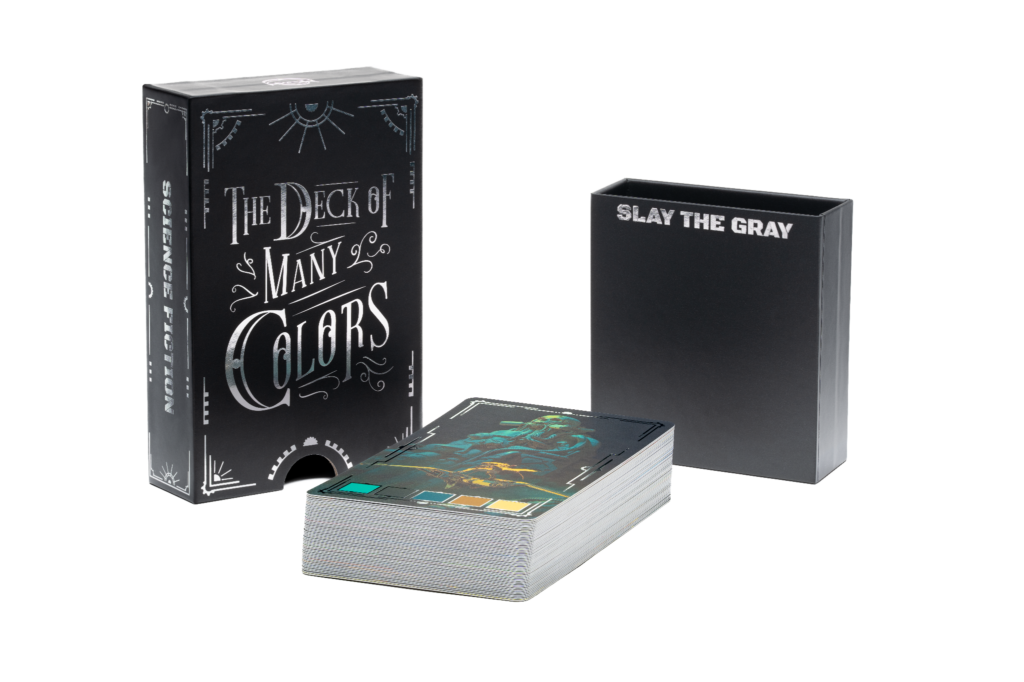
Jon, the creator behind the miniature painting YouTube channel “Ninjon,” turned that problem into The Deck of Many Colors, a physical reference deck built for all kinds of creative activity – from Warhammer, Dungeons & Dragons, and the broader tabletop hobby space, to illustrators, tattoo artists, graphic designers, and anyone working with color, including color-blind artists looking for a more structured reference system.
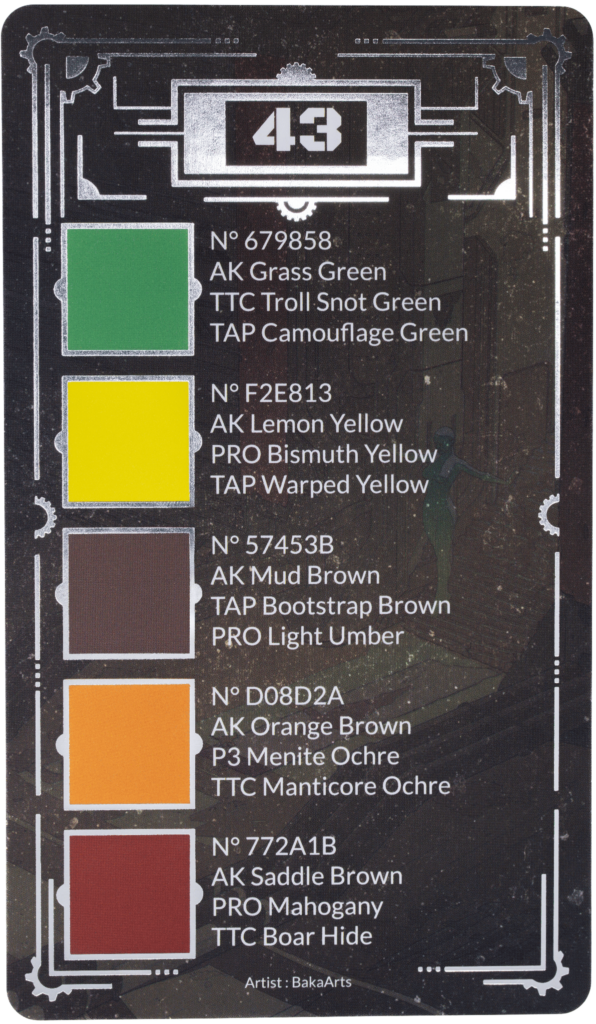
Launched for preorder in August 2025, the product pairs fantasy and science fiction artwork with five-color palettes, hex codes, and hand-matched paint recommendations across five brands.
“I want this to exist because I want to use it all the time,” Jon says.
The Problem With the Algorithm as an Inspiration Engine
The idea behind The Deck of Many Colors is simple. Miniature painters, most of whom never studied color theory formally, regularly struggle to choose palettes that hold together visually. Jon’s answer for years was to go looking for inspiration from traditional 2D artists whose work demonstrated what unusual color combinations could achieve. The problem was that the internet kept steering him toward the same sources.
“The Internet algorithm pushes you into the things that you like to look at,” he says. “I found myself more and more being pushed towards the same kind of thing when I was doing my searches. The artwork all started to look the same.”
He wanted something that fit the science fiction and fantasy aesthetic of miniature painting, whilst offering a more challenging and inspiring approach to colour, alongside a practical way to identify which paints could recreate a given scheme. That gap, between inspiration and actionable execution, is what The Deck of Many Colors was designed to close.
The cards work as both a visual prompt and a practical guide: pull a random card, read the swatches and paint names on the back, and go straight into a project with less second-guessing. “We go into a project with more confidence,” Jon says. “We can reference artwork and say, I feel like it’s going to come together because it looked like it came together in the artwork that inspires me.”
18 Months, 100 Cards, 1,500 Paints
The product took roughly 18 months from concept to production sample. Jon partnered with Ziggurat XYZ, a talent management company, early in the process after realizing the scope of what physical manufacturing actually required.
“I work 60 hours a week just to run my YouTube channel by myself,” he says. “I feel like it’s possible I could have made this by myself. It would have taken me a decade.”
The most time-intensive part was the paint matching. Each of the 100 cards features five color swatches, and each swatch needs three corresponding paint names across five major brands. That totaled 1,500 individual color matches, all done by Jon personally, testing each paint on a palette against the artwork. “It was a lot of late nights of staring at all my paints and testing them out on the palette, making sure I got the exact colors or as close to match as possible, as the artist did,” he says.
Preorder revenue, which came in well above initial expectations, went directly back into the product. Jon upgraded from digital foiling to hot stamp foiling, requiring a custom metal die for each side of every card and box. He increased the card stock thickness to 400 g/m2 and moved to the most expensive matte soft touch finish available, a velvet texture that prevents glare under painting lights without dulling the colors.
“Each card now costs a lot more money to make,” he says. “But it feels like paper velvet.”
No AI, Named Artists, and the Contract That Made It Real
The no-AI policy on The Deck of Many Colors became a defining feature of the product, and it was harder to enforce than Jon anticipated. The challenge was not bad actors misrepresenting themselves outright, but the ambiguity around partial AI use.
“I found some amazing artworks, and then I realized, ‘Oh no, they had some use of AI in their artwork,’” Jon says.
His response was to build a formal declaration into the licensing contract that each artist signed, confirming no AI was used in any capacity. He also structured individual conversations with every artist around that question before any agreement was reached. The community reinforced the stakes.
At NOVA Open 2025, where Jon brought proof-of-concept cards to gather feedback, one piece of artwork drew comments from attendees who said it appeared likely to include AI-generated elements. The reaction became a turning point. Jon says the episode reinforced how strict the artist-vetting process needed to be before any of the final 100 artworks entered production. It also shaped the product’s external communication, illustrating something he had already been betting on: in a hobby community that prizes craft and authenticity, any ambiguity gets surfaced fast.
“It helped me structure the conversations that I had with artists,” he says. “But it also helped me with what’s on the boxes themselves and marketing communication – it became a high priority.”
Every card credits the contributing artist by name and social handle. Jon built a catalog page on his website linking to each artist’s full portfolio. He paid artists for work they had already created. “They were like, ‘Oh, wow, you want to pay me for something that I already did?’” he recalls.
Of roughly 500 to 600 works initially reviewed, 100 made the final cut across 31 artists, selected for color variety, stylistic range, and a verified human hand behind every brushstroke.
Selling Something That Has No Precedent
Launching a preorder for a product category that does not exist creates a specific communication problem. Jon could not point to a comparable item and say, “This is like that, only better.” He had to build the case entirely from his own story.
“I was scared that I wasn’t going to be able to accurately communicate the value of this,” he says. “Because I’m so excited about it. And that’s what I had to lean on – my story of how we got here.”
He avoided crowdfunding platforms like Kickstarter or BackerKit, wanting the process streamlined and the pricing as direct as possible. The preorder ran through his own website, with Patreon supporters getting 24-hour early access before the public launch video went live on YouTube.
As Jon shares, the response outpaced expectations: nearly half of the 13,500 units sold to date were purchased within the first 40 days, funding the material upgrades. It also confirmed the core premise of the whole venture: years of showing the community his actual process, sharing setbacks alongside progress, had built the kind of trust that converts to transactions.
“The more that you can listen to that community, the more that you share the good and the bad and the ugly of your journey, the more people will feel connected to you,” Jon says. “Don’t feel bad about taking a leap and asking for their help when they want to help you.”
What It Looks Like When a Creator Builds Something Real
The Deck of Many Colors is now in conversations with wholesale distributors. Jon’s reasoning for pursuing retail placement reflects the same logic that drove every other decision on this project. Physical hobby stores are not run by corporations. They are run by passionate owners serving local communities, and getting the cards onto those shelves means customers who might never encounter the product online can hold it in their hands and understand immediately what it is.
That tangibility, the experience of the product in hand, is something Jon keeps returning to. It is why he chose hot stamp foiling over digital. Why he increased the card stock. Why he spent 18 months on a product that a less patient approach could have released in six. The Deck of Many Colors is scheduled to ship to preorder customers in Q2/Q3 2026, and Jon’s benchmark for whether it worked is not the revenue or the reviews.
“I am now most confident that they are going to open the box and say, ‘Wow, amazing,’” he says.
The question the project ultimately answers is, what happens when a creator stops explaining what they wish existed and just builds it? For Jon, the answer involved 1,500 paint swatches, 31 artists, a hot stamp-foiled box, and a community that was paying close enough attention to flag a single ambiguous artwork at a convention. That scrutiny, he says, is not a liability. It is proof that the audience is real.
“To have created something new that didn’t exist before is a wonderful thing. People shouldn’t be afraid to challenge themselves and be creatively ambitious, because more often than not, others will see value in what you’re trying to achieve.” Jon is already planning the next phase of The Deck of Many Colors. Two additional themed decks are now in early development, with the search for artists already underway.
While the themes themselves are still under wraps, the next pair will continue the fantasy/sci-fi split established by the first two decks, but will be darker, grittier, and slightly more horror-inspired. The goal is for each deck to feel distinct, with new foil treatments and borders, while still complementing the wider collectible series.
Photo credits: Ellie Spohr
Subscribe to Our Newsletter
Check Out Our Podcast