







Influencer
From MAC Counter to Times Square: Inside Marjan Tabibzada’s Creator Business Built on Trust

When Marjan Tabibzada’s manager called her during breakfast on a brand trip, she was sitting with other creators and trying not to react. The news was a potential Times Square billboard deal with Tutor.
“Internally, I was freaking out, but externally, I was like, ‘I have to be really calm about this,’” she recalls. A week later, she flew to New York City, filmed during the day, returned at night to see the billboard lit up, and stayed in front of it as long as she could.
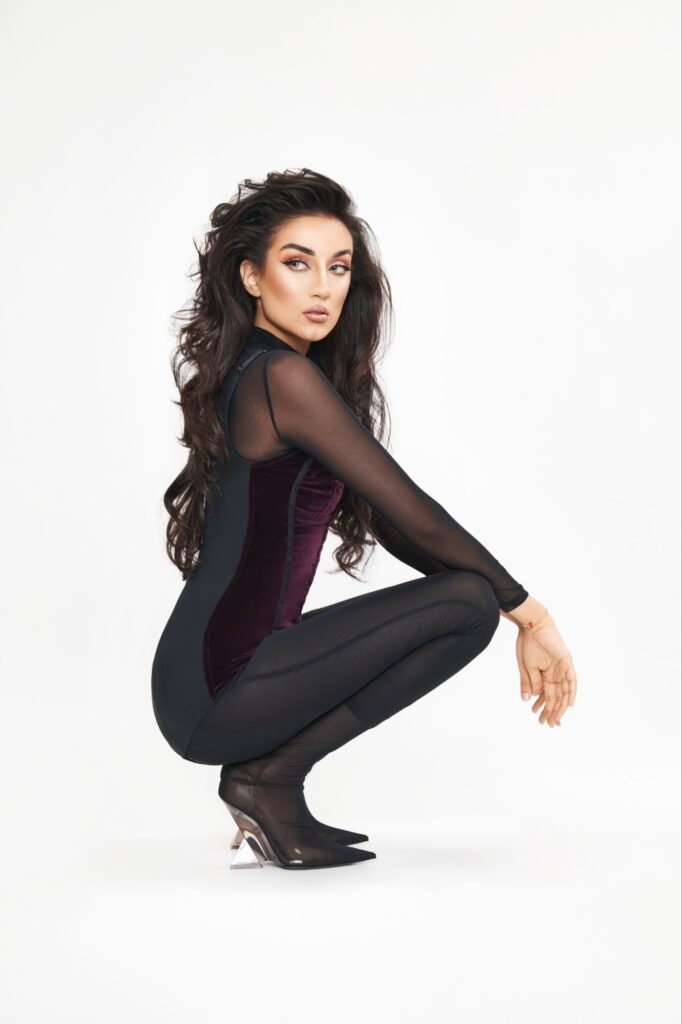
The moment was a public milestone for a creator business that began more than a decade earlier at a MAC counter. Marjan, the Afghan-American beauty, fashion, and lifestyle creator behind YoungCouture, now has more than 7 million followers across TikTok, Instagram, and YouTube and has worked with Estée Lauder, Armani, and Dermalogica. But her career has been built less on scale alone than on product fluency, audience trust, and a willingness to reject brand work that does not match what her followers expect.
“When I first started posting, nobody really viewed creators as businesses,” she says. “Now, creators are launching brands, driving billion-dollar sales, landing magazine covers, and being on the face of a Times Square billboard. It’s become an entire ecosystem.”
The Counter That Built the Creator
After graduating high school, Marjan enrolled at California State University, Northridge to study business marketing and applied to MAC Cosmetics to cover her bills.
MAC, she says, was “the dream makeup job that every girl dreams of out of high school.” She landed it. What followed was a dual education: artistry and consumer psychology at the counter, brand positioning and audience strategy in the classroom. “I took the artistry and education side of it and really wanted to show my talent, and then I took the marketing side of it that I learned in school, and I really just put them together.”
The MAC years produced something harder to teach: product fluency deep enough to anchor a decade of brand partnerships. Marjan knows why Estée Lauder Double Wear is a wedding-day foundation and why Armani Luminous Silk works for a working mom on the go. That specificity is now the standard she applies to every inbound deal.
She tests every product on herself before committing. A recent experience reinforced why. A skincare brand that had launched with a prominent creator sent her product for review. She posted positively, then broke out badly.
“To this day, I am struggling with my skin,” she says. She cancelled the planned giveaway and posted her skin up close, acne and texture visible. “I think transparency is a big thing for me,” she says. “I would never want any of my followers to deal with that.”
Figuring It Out Without a Template
Marjan launched YoungCouture at what she calls “the simpler times,” a period before agencies, rate cards, or influencer contracts existed in any standardized form. “There was nothing,” she says. “I had to figure out everything on my own because back then, nobody was teaching you anything.”
She learned to negotiate, read contracts, interpret analytics, manage audience retention, and keep producing content, all simultaneously. A marketing degree from CSUN, she notes, is very different from social media marketing. The gap had to be closed manually, deal by deal.
The recognition that this was a career came gradually. Brand deals arrived with increasing frequency after graduation. TikTok emerged as a serious platform. She was posting daily, and opportunities were compounding. “That’s when I was like, ‘Okay, this is definitely more than just creating content,’” she says.
Today, Marjan works with a manager, agent, and PR team. Her advice to creators who want to scale is direct: “You need a proper team. You need a manager, you need an agent, you need PR, because these are the people that really help with the brand and the business.”
When the Brief Gets in the Way of the Video
One of Marjan’s sharpest observations about working with brands has nothing to do with pricing. It has to do with what happens when a brief is over-controlled. Brands send scripts loaded with required ingredients, claims, and talking points. The result is content that performs well on paper and badly in practice. “When it’s too ad-like, your followers know that,” she says. “They skip right over the video.”
She offers a recent example. A brand-paid video she posted received around 1,000 views. She took a separate clip from the same footage, one that felt more organic to her, posted it on Instagram without any paid arrangement, and it hit over 50,000 views in an hour.
The difference was not the platform or the audience. One felt like a recommendation. The other felt like a commercial. “That’s something where brands need to work on a little bit,” she says. “Let’s listen to what the influencer thinks.”
According to Marjan, the problem is not that brands want results. It is that they sometimes optimize for compliance over authenticity, and audiences have developed the reflex to scroll past anything that reads like a transaction.
The Millions of Views Brands Are Not Buying
Marjan’s Eid get-ready-with-me videos get millions of views. Her Henna Night content does the same. Cultural moments tied to her Afghan heritage consistently outperform much of what brands pay to appear in. Yet, no brand has ever partnered with her around those specific moments. “I 100% think that brands are missing that by far,” she says. “There’s a huge gap.”
The business case is not subtle. Middle Eastern, Central Asian, and South Asian women are deeply engaged with beauty and fashion content. Marjan grew up watching her mother, a cosmetologist, move through the world in full hair, makeup, and fashion.
That inheritance, she argues, is shared across a large, high-intent consumer demographic that brands are currently reaching around rather than through. She sees the gap beginning to close, but slowly. “If brands were to open up that door,” she says, “I think it would blow up.”
A Business Built to Outlast Any One Platform
The TikTok ban concerns changed how Marjan thinks about distribution. When the platform’s future grew uncertain, she had already crossed one million followers on each of her major platforms.
The redundancy was not purely strategic at the time. It became the strategy. “If, God forbid, TikTok got banned or whatever, it’s okay because we have Instagram,” she says. “If both of those got banned, we have YouTube still.” She now recommends the same approach to every creator she advises: repost on every platform and see how it performs.
Her Amazon storefront operates under a different logic than social commerce. It is entirely recommendation-driven, a direct answer to the question her audience asks constantly: what do you actually use? Foundation favorites, Korean skincare, vitamins.
She sees Amazon and social commerce serving genuinely different purposes. TikTok Shop is improving in product quality, she notes, but still struggles with the same problem as over-scripted brand content. Too much of it reads as an ad. Audiences scroll past it.
What Longevity Actually Looks Like
A decade in, Marjan does not define sustainability through follower counts or revenue metrics. She defines it through creativity. She wakes up in the middle of the night to write down video ideas rather than lose them by morning. She says she has “just touched the surface” of what YoungCouture can become. When Brides magazine and Vogue both approached her around her wedding, she chose Brides because they committed without conditions. The decision mattered less than the principle: she moves toward the people who show up ready.
What she wants YoungCouture to mean in another decade is specific: “longevity and trust in an industry that changes so constantly.” She entered an ecosystem where creators were dismissed as hobbyists. She operates in one where luxury brands build global campaigns around them. The shift is real. What has not shifted enough, in her view, is whose stories get centered in that ecosystem.
“I hope I really help to make space for women, more diverse creators, and more authenticity in an industry that sometimes just rewards the opposite,” she says.
Photo credits: Arthur Gareev
Subscribe to Our Newsletter
Check Out Our Podcast