Strategy
How Tinder Canada Turned the Anxiety of ‘Hey’ Into a Creator Campaign

Tinder Canada had a problem anyone who has opened a dating app will recognize: nobody knew what to say after matching. Building a campaign around that anxiety, in under six weeks, with eight creators and a dual paid-organic strategy, was the bet AntiSocial made when Tinder decided to scale a planned social tentpole into a full spring campaign.
“It Starts With a Sign” launched in early April to promote Tinder’s Astrology Mode, a feature that lets users display their astrological signs and compatibility data inside the app. Tinder launched the feature globally in late March, but in Canada, Caitlin Benn, the brand’s Senior Marketing Manager, saw an opportunity to anchor a full spring campaign around it rather than treat it as a minor product update.
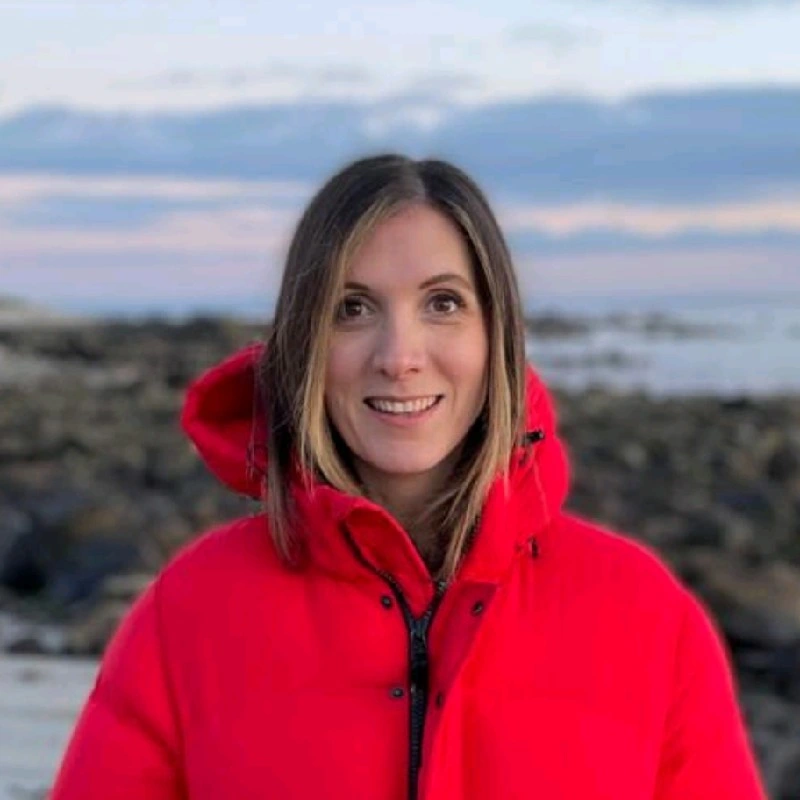
Photo: Caitlin Benn
The campaign wasn’t originally conceived at that scale. “It was supposed to be more of a small social tentpole,” Caitlin says. “Then we decided to put all of our eggs in the astrology mode basket.” From that pivot to launch was roughly a month and a half.
Sara Sabzehzar, Group Strategy Director at AntiSocial, a Thinkingbox company based in Los Angeles, led creative strategy alongside Caitlin. Together, they built a framework that divided work between branded paid assets and eight Canadian creators, each assigned a specific audience role. That structure, and the insight underneath it, distinguishes the campaign from a standard feature launch.

Photo: Sara Sabzehzar
The Insight That Unlocked the Campaign
The creative team didn’t start with astrology. It started with a word.
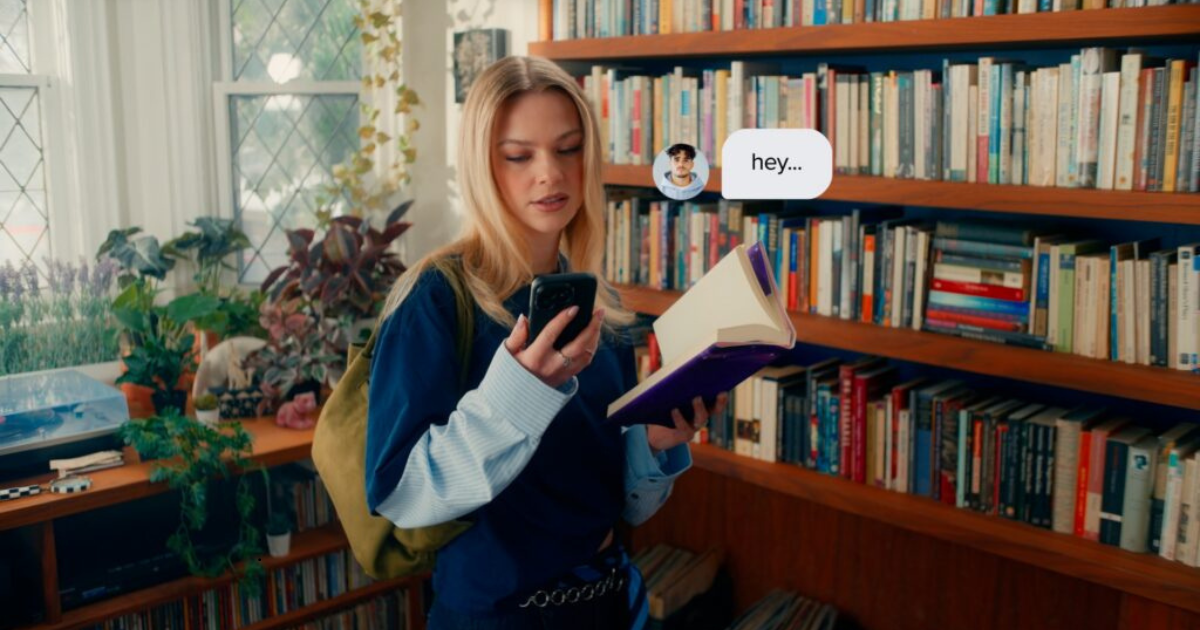
“Do I say ‘Hey?’ Or when you just get back a ‘Hey,’ where do you go from there?” Sara recalls. “Everyone in the room felt it.”
That collective recognition became the campaign’s foundation. Astrology Mode was positioned not as a novelty but as a solution to a problem already baked into how Gen Z approaches dating apps. The feature offers conversation starters grounded in compatibility, giving users something more substantive than a one-word opener.
The team validated the instinct through social listening, pulling from Reddit threads, tweets, TikTok comments, and in-app behavioral data. “We looked at how and where our audience was using the app, their interests, how they spend time,” Sara explains. “Everything in the campaign, like the wine bar, the library, the gym, had to feel authentic to their experiences.”
For Caitlin, the insight also served a larger strategic purpose. Tinder Canada has spent the past year working to shift the brand’s perception away from a hookup platform and toward a product that reflects how Gen Z actually thinks about dating. “Showing that evolution of product is so important in our marketing,” she says. “It’s about rebuilding product love.”
Hook and Deep Dive: The Paid-Organic Framework
With the insight locked, AntiSocial built a content strategy around a division Sara and Caitlin describe as the “Hook and Deep Dive.” Branded paid assets handled the hook. Creators handled everything else.
“In a paid environment, you only have people’s attention for three to six seconds,” Caitlin explains. “You can’t go too deep. It’s really about trying to hook them with the emotion.”
Paid executions were built around the anxiety of the opening message, including visual scenarios capturing the dread of an unanswered “Hey.” Creators, by contrast, handled longer, more anecdotal storytelling that demonstrated the feature’s value in ways branded content couldn’t sustain.
“We give them the ‘what,’ and we leave the ‘how to’ to them,” Caitlin says. “If you tell an influencer exactly what to do, you’re guaranteed to have content that’s not going to land.”
In practice, that meant briefing creators on the feature’s mechanics and tone guidelines, then asking them to interact with Astrology Mode before developing any concepts. “You have to live and breathe the product to really think about the various ways you can bring the story to life,” Caitlin notes.

Casting the Tinder Troop
One of the campaign’s most deliberate structural choices was how creators were cast. AntiSocial approached the eight-creator roster as a “troop,” a friend group of distinct archetypes rather than interchangeable brand voices.
The cast was built around five roles: the bestie (a creator who feels like a real-life friend), the ranter (someone who articulates what everyone is already thinking), the North Star goals creator (an older, wiser voice the audience trusts), the jester (levity and entertainment), and the Internet boyfriend (a male creator the audience is already crushing on).
“We wanted a range, not a sea of sameness,” Sara explains. “Each creator speaks to their audience in a unique way.”

Diversity of background was equally deliberate. “Diversity of storytelling and representation are always top of mind,” Caitlin says. “And Canadian, of course. That’s very important for us.” The campaign worked with creators Sahar Dahi, Cassies Books, Lucas Lopez, and Kenzie Phillips for the launch wave, with four additional creators rolling out week by week.
The staggering was intentional. The first wave went live before branded paid assets, priming audiences through trusted voices. “You don’t want to come in cold,” Caitlin says. “The creators warmed up the audience. Then the brand assets followed.”
Pulling It Together in Six Weeks
The campaign’s biggest operational challenge wasn’t creative. It was time.
“We always wish we had more time on campaigns,” Caitlin says, a sentiment Sara echoes immediately. From the pivot decision to launch was just over a month.
The parallel path of branded and creator content running simultaneously created execution pressure, because both tracks required distinct review stages across a lean client-side team and a distributed agency. AntiSocial’s process of reviewing creator content before bringing it to Caitlin compressed the approval chain. The upfront brief did most of the heavy lifting.
“The stronger that initial brief, the less of an issue you have throughout,” Caitlin explains. “If you get everyone’s alignment early and make the do’s and don’ts very clear, what comes after is more creative refinement than course corrections.”
One consistent guardrail from AntiSocial’s team: no creator content could suggest the feature filters users by sign, or include commentary that put down specific signs. “People have very specific feelings about signs,” Sara notes. “That was a watch out from the start.”

What the Numbers Said
On the organic side, the campaign generated over 770,000 influencer impressions and more than 24,000 engagements, according to Caitlin and Sara. Community managers tracking comment sentiment flagged reactions, including “I’m back on Tinder again” and “Wait, I love this new feature,” which Caitlin points to as evidence that the campaign moved beyond brand awareness into active reconsideration.
Attribution, both acknowledge, remains imperfect. “There’s no perfect attribution,” Caitlin says. “You rely on an amalgamation of tools: platform analytics, internal incremental modeling, and social listening. You piece together the full picture.”
The team used Sprout Social and Pendulum for sentiment tracking alongside internal modeling, measuring lift in positive Tinder mentions and organic commentary about Astrology Mode, not just raw impressions.
One complicating factor: Easter fell earlier in 2026 than the prior year, creating noise in year-over-year comparisons during the campaign window. Because overt marketing campaigns in Canada only launched in 2025, there is limited baseline data to compare against. “Timing can make things a little noisy when it comes to seasonality and holidays,” Caitlin says.
The Lean-Team Lesson
“It Starts With a Sign” also illustrates something broader about how Influencer Marketing is being restructured inside brand organizations with limited internal capacity. Tinder Canada launched its dedicated marketing function just over a year ago, with Caitlin joining as the team came online. That lean structure changes what the agency relationship has to look like.
“When you’re a small team in a new market, you have no choice but to rely on your agency partners to act as an in-house team,” Caitlin says. “They have to feel like they’re in-house, even though they’re out of house.”
For Sara, the campaign’s outcome reflects what a fully integrated client-agency model can unlock. “We also work on their always-on content, so we can look at everything holistically,” she says. “The campaign opportunities are more interesting when you can see the full picture.”
If they ran the campaign again, both would ask for more time and a more deliberate answer to the content-mix question: how much high-fidelity branded production versus lower-fidelity creator output is right for a campaign built on a relatable, human insight. That question, Sara suggests, is the next frontier.
For now, the campaign marks a progression in Tinder Canada’s longer effort to close the distance between the product’s reputation and its reality.
“It doesn’t feel like introducing something new,” Caitlin says. “It feels like showing Gen Z that Tinder gets how they want to date.”
Subscribe to Our Newsletter
Check Out Our Podcast