





Influencer
Danny & Zach Guarino on Building ‘The Bread Basket’ Into a Multiplatform Sports Media Brand

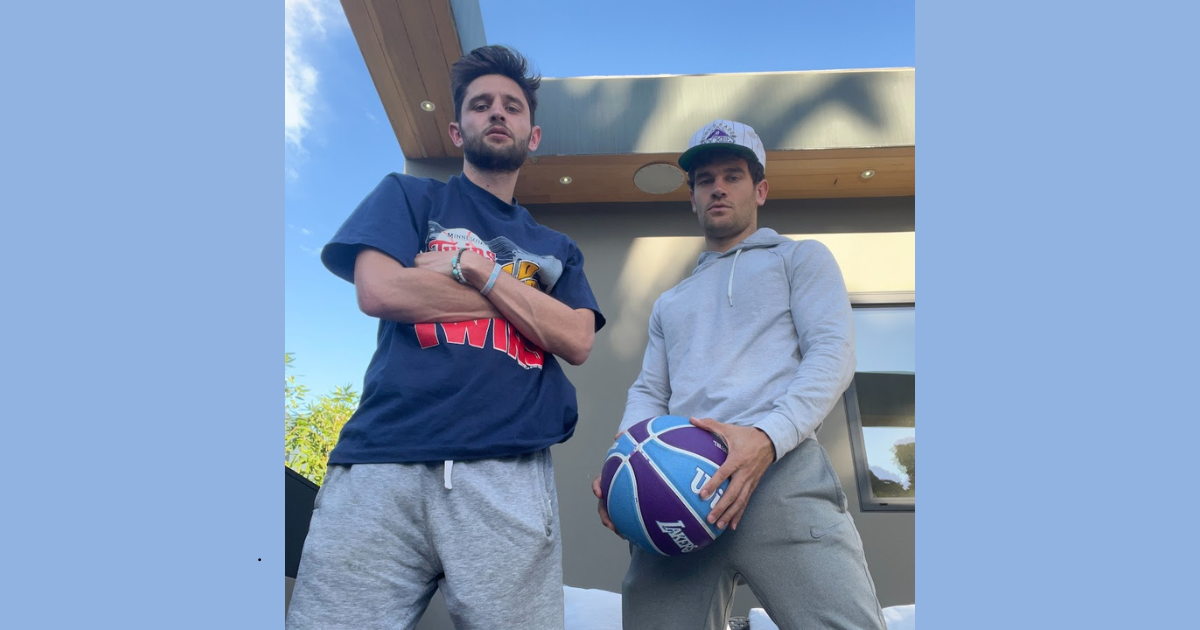
Danny and Zach Guarino were seven years old when they decided they would do something together in California. They did not know what. They just knew it would happen.
Two decades later, the brothers are in Santa Monica, building “The Bread Basket,” a comedy and sports content brand that has accumulated more than five million followers across platforms, landed a PEOPLE Magazine “Creators of the Year” recognition, and drawn brand partnerships with ESPN, DraftKings, Verizon, Corona, Toyota, and Meta Oakley, the last of which brought them to the 2026 Super Bowl as media partners.
Their guest list has included Broncos quarterback Bo Nix, former Denver Nuggets player Richard Jefferson, U.S. Men’s National Team soccer star Christian Pulisic, and Nick Jonas.
None of it, Danny insists, was built on a strategy. It was built on brothers being exactly who they are. “We’re just being who we’ve been our whole lives,” he says.
From GarageBand to Five Million Followers
“The Bread Basket” did not begin with a content plan. It began with a GarageBand recording session that no one ever heard.
The Bread Basket Podcast: Episode 1
Growing up in Denver, Danny and Zach recorded fake radio shows while playing video games together, never published, just for themselves. The instinct to create was always there, even when the format was not. Danny relocated first, joining a content house in California with early solo traction. The pivot to a joint project came without ceremony. “One day we were like, let’s just film a podcast episode,” he recalls. “There was no, really, even lead-up to it.”
The first episode stayed unpublished. They spent two months refining the format, then produced a draft video that took off. Three months after launching in earnest, the channel started breaking through.
Danny describes “The Bread Basket” through three pillars: brothers being brothers, sports but not sports, and community-driven content. The show is not sports broadcasting. It is comedy that uses sports as its raw material, closer in spirit to a locker room argument than a highlight reel. “We didn’t actually watch that many games growing up,” Danny says. “It’s less about actual sports and more just the community of what it’s like to be on a team, that type of banter.”
The Comment Section as Co-Creator
What distinguishes “The Bread Basket” among sports and entertainment content is not the topics. It is what happens after the video ends.
Danny describes the comment section as a second show. Viewers do not just watch; they argue, correct, post their own lists, and drag debates out across hundreds of replies. A video about which chicken wing you pick first can generate genuine indignation. He traces the dynamic back to a tweet he cites often: someone posts a picture of the sky, declares it is not blue, and a million people respond to correct them. “People will talk about anything,” he says. “And I think that’s kind of where we thrive.”
The community did not emerge from a calculated engagement strategy. Danny and Zach credit their audience for taking their naturally inviting energy and running with it. “It’s one thing to have a follower count,” Danny says, “but having that engagement and that community is like, everything.”
The practical outcome, according to the brothers, is brand trust that translates directly to how sponsorships land. When “The Bread Basket” presents a partnership, the audience reception tends to be supportive rather than suspicious. “It feels like we have trust and they’re receptive to it,” Danny says. “I think it could go the other way a lot of times where people feel like you’re selling out, but it’s not like that for us.”
Plugging Into the Moment Without Chasing It
Sports and entertainment content lives or dies on timing, but Danny and Zach’s editorial philosophy is counterintuitive: they do not follow trends.
“We’re really just going to talk about what we’re interested in,” Zach says. “We talk about the Denver Nuggets a lot, and that is not a big market team. We should be talking about the Lakers, but we just talk about what we’re interested in.”
What makes this sustainable is a library of reusable formats. One recurring format, “Connect Five,” builds a game around connecting five numbers to a celebrity or athlete. When LeBron James dominates the news cycle, he goes in the center, and the format runs itself. “You can just plug somebody into the concept you already have,” Zach explains. Their editor in Croatia turns around cuts overnight, so whatever they film today is live tomorrow. The system absorbs the news cycle without being driven by it.
Brand integrations follow the same filtering logic. “I think you’ve got to solve the problem before you sign the deals,” Zach says. If a pitch does not fit naturally into what they are already doing, they pass. Once a contract is signed, the room for recalibration shrinks. The filtering happens before the ink dries.
Keeping High-Profile Guests Human
Every guest “The Bread Basket” has hosted either reached out first or was already following the channel. Danny says that self-selection matters more than most booking strategies. “They’re going to know kind of what our show is all about,” he says. “So that makes it very easy to integrate them.”
The format does not change for famous guests. No softened questions, no departure from the games and drafts the audience expects. The value proposition is precisely the absence of the standard celebrity interview. “It’s the same type of questions, and they have to give a very PR answer, and they answer the same thing,” Danny says. “So I think it’s refreshing for them to just laugh and hang out with the boys.”
Bo Nix worked especially well because he arrived as a genuine fan. “He fully got into it,” Danny says. “People love to see that side of high-profile people.” Early on, that ease had to be earned. Nick Jonas was a turning point. “We were so nervous,” Danny admits. Enough of those experiences eventually reframe the dynamic entirely. “Now you just know that they’re just regular people, so you can just be yourself.”
What Brands Keep Getting Wrong
Danny has a pointed diagnosis of where creator-brand relationships typically break down. He understands the structural tension: deals carry bullet points that have to be hit. But the failure mode is when hitting those bullet points strips out the quality that made the audience trust the creator in the first place.
“Why do these creators resonate so well with their community? You have to make sure you keep that vibe in the piece of content,” he says. “If that’s lost, then that’s when it doesn’t work.”
Scripted delivery undermines both the product and the relationship. “The more scripted, the worse it does,” Danny says. The broader point extends beyond any single deal.
In a space where every athlete, media company, and podcast competes for the same audience, Danny is direct about what cuts through. “You can get influence, but you don’t want to fully copy somebody’s flow because you can’t be as good as they are at being them,” he says. “We’re fully just playing our game.”
Winning the 90% of Days Nobody Sees
The Super Bowl with Meta Oakley. Paddleball with Tom Holland. Bo Nix in the studio. These are the moments that define the brand publicly. Danny is straightforward about how unrepresentative they are of the actual job.
“Those are the top 10% of days,” he says. “It’s just winning the 90% of days that are boring, or you just have to keep moving forward.” Being your own boss with no salary sounds like freedom from the outside. From the inside, it requires showing up and being yourself every day without a guarantee. “We’re just so tapped into what we want to be doing that it’s just fun,” Zach says. “I don’t really feel any pressure.”
That comfort with failure is equally deliberate. They try things constantly, and some land badly. “There’s probably a video we’ll put up today that we think is going to do well that’ll do really bad,” Danny says. “Getting to that space as quickly as you can is really valuable, because then you’re not being held back by the fear of messing something up.”
For two brothers who recorded fake radio shows on GarageBand as kids, the distance between that bedroom and the Super Bowl media floor is the whole story. Danny’s explanation for how they got there is the same one he gives for everything else about “The Bread Basket.”
“It’s that much cooler doing it with a family member,” he says. “I think that’s a really rare thing that we get to do together.”
Subscribe to Our Newsletter
Check Out Our Podcast