






Agency
Social First, Commerce Second: Chad Hetherington’s Bet That TikTok Shop Is This Decade’s Amazon

Commerce channels rarely look inevitable at first. Amazon’s marketplace model spent years moving from one online retail option among many to default retail infrastructure. TikTok Shop is now its own acceleration curve, generating an estimated $64 billion in global GMV in 2025, up from less than $1 billion four years earlier.
Chad Hetherington, who built and sold one of the industry’s early omnichannel commerce agencies, believes that brands that sit this shift out will spend the next decade catching up.
In March 2026, two social commerce agencies, Orca and Sapphire Studios, merged under a single banner: third. The name was intentional. Chad, who sold The Stable to Accenture in 2022 and now serves as CEO of the combined company, frames the commerce market as having moved through three distinct eras. Brick-and-mortar retail was the first. E-commerce, led by Amazon and Shopify, was the second. Social-first, platform-native commerce is the third.
“I called it ‘third’ because we say we’re built for the third era of commerce,” Chad says. “Social first, commerce second.”
Based in Los Angeles, with studios in Mexico City and offices across Chicago, Minneapolis, and London, third provides an integrated suite of services spanning platform strategy, shoppable livestreams, performance creative, and creator and affiliate commerce, primarily for brands navigating TikTok Shop. The combined entity employs nearly 100 people, drawing on Orca’s deep relationships with beauty and consumer brands and Sapphire Studios’ data-driven creative engine.
A Decade of Commerce in Three Chapters
Chad’s conviction that commerce is undergoing a structural shift did not emerge from a spreadsheet. It came from watching his kids.
After leaving Accenture, he spent three years observing how a younger generation discovers and buys products, tracking how much of that behavior now runs through TikTok, Roblox, and other platform-native environments. A moment crystallized his thesis: his youngest son, on the drive to school one morning, knew every word to a newly released Snoop Dogg album. When Chad asked how, the answer was a Roblox concert series the artist had run three weeks before the album dropped.
“Not just brands, but entertainers, creators, sports, and media companies are going to market differently than what they traditionally had,” Chad says.
That observation reinforced his view that brand discovery has moved off shelves and out of search results and into social environments where content, community, and transaction increasingly share the same surface. Chad sees TikTok Shop’s trajectory as evidence of early-stage growth rather than saturation.
“If this is 2010 and we’re talking about Amazon, we’re still just scratching the surface,” he says.
The 90% Problem
Among the brands Chad has spoken with since launching third in late March, roughly 10% have activated TikTok Shop and found their rhythm. The remaining 90% are watching from the sidelines, uncertain whether entering the channel will grow their business or pull revenue away from existing streams.

Photo: Orca Team
“They have their brand handle, they are pushing their brand content, they’re putting some paid media in, they’re doing maybe some UGC content,” Chad says. “But from a commerce perspective, they’re not fully utilizing it yet.”
The hesitation, according to him, is not irrational. Brands are weighing whether a TikTok Shop investment will attract new customers or simply redirect buyers away from Amazon, their own direct-to-consumer sites, or retail partners. For most, the calculus is still unsettled.
Chad argues there is still time and that the cost of waiting another year is manageable for many brands. He is equally deliberate about avoiding what he calls a “repeatable” playbook, a service posture where every client receives the same prescribed approach.
“Every brand is different, and their position in the market is different, their customer is different,” he says. “So, therefore, their strategy is different.”
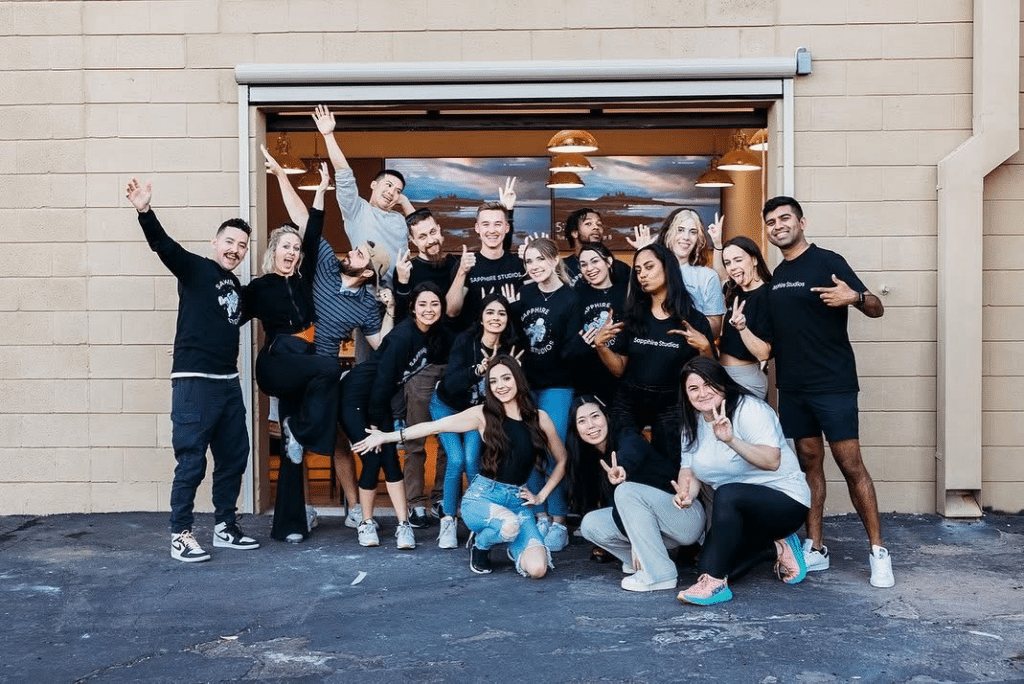
Photo: Sapphire Team
Live as the Core Infrastructure
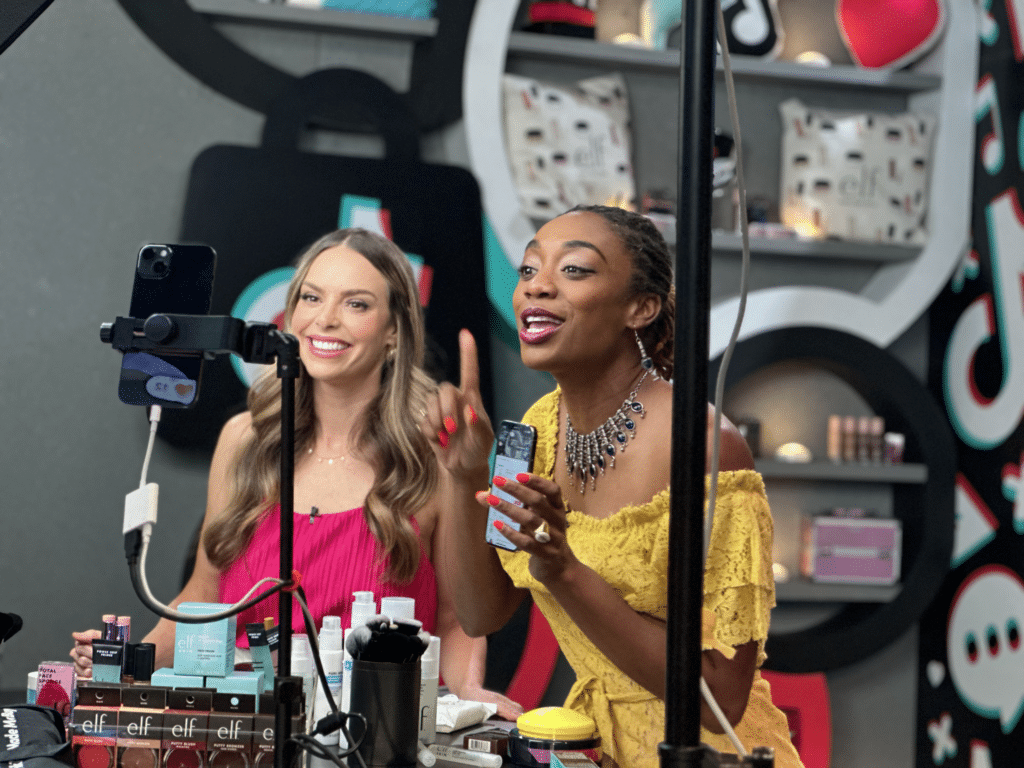
Where third has made its most notable operational investment is in livestreaming. The company runs 14 production studios, eight in Los Angeles and six in Mexico City, producing live commerce broadcasts on behalf of brands daily.
Live is not a peripheral feature of the social commerce opportunity. It is, in Chad’s framing, where the channel’s ceiling is highest. He draws a direct line to QVC, which built a multi-billion-dollar retail format around televised, real-time product demonstration, and argues that TikTok Live is the same mechanism operating on a larger, younger audience base.
“You’re bringing that platform, that experience into a new platform where there’s lots of eyeballs,” he says.
Beyond live, third’s service stack covers back-end commerce operations, including merchandising, inventory strategy, forecasting, and reporting, alongside creator and affiliate programs and performance creative through Sapphire Studios’ content engine. The stated goal is to position third as a growth partner rather than a vendor, with outcomes that tie agency performance to client results.
Where Creators Fit the Equation
Creators are not a secondary consideration in the social commerce stack. For most brands, they are the primary mechanism by which products reach consumers on TikTok, whether through affiliate posts, livestream hosting, or user-generated content fed into paid media.

third approaches creator matching through two tracks. Sapphire Studios’ creative engine pulls data from ad accounts and TikTok analytics to identify which creators align with a brand’s performance targets. Orca’s team contributes direct relationships built over years of working with creators across beauty and consumer categories.
“There’s a bit of the human element and a bit of the technical element right now on how we’re doing it,” Chad says.
The creator population entering social commerce is expanding faster than the infrastructure for evaluating it. According to Chad, beauty dominated TikTok Shop’s early category mix, but food and beverage, home, pet, and electronics brands are now entering the channel, broadening the range of creator profiles that matter for brand performance.
The Open Question on AI Hosts
The most unresolved question facing live commerce, in Chad’s view, is whether AI-generated hosts can eventually replace human ones.
He points to the emergence of synthetic video tools, noting that a continuous feed of AI-generated content tends to erode viewer attention. Whether that same fatigue applies in a transactional live commerce setting, where the host is responding to comments, handling objections, and building real-time rapport, remains an open question.
“If an AI livestream host is producing content and it’s engaging and they’re connecting with people who are writing in, almost like customer service, then I can see it sticking,” Chad says. “But I could also see the negative side of it.”
For now, third is not building around synthetic hosts. Its live infrastructure is staffed, studio-based, and human-led.
Platform-First, Then Everywhere Else
The company’s current concentration is TikTok, but the strategy is designed to move with wherever brands prioritize commerce. Chad identifies Amazon Live, YouTube Shopping, Whatnot, and eBay Live as adjacent channels that may become material depending on where consumer behavior shifts.
What will not change, he argues, is the underlying premise: that social-native selling compresses the distance between brands and consumers in ways that eventually reshape product development, not just distribution. Brands that build tight, data-rich connections to their customers through social commerce will start making product decisions based on what those channels are telling them in real time.
“If they have such tight connections with their audience, tighter than they’ve ever been before, what does that mean for that company in terms of what they’re going to build going forward?” Chad asks.
The answer to that question, in Chad’s framing, will define the next decade of commerce. “Things will happen faster than ever before,” he says. “That’s the third era.”
Subscribe to Our Newsletter
Check Out Our Podcast