



Agency
Boundless MGMT’s Alex Blair: TikTok Shop’s Success Stories Are Not The Reality For Most Brands

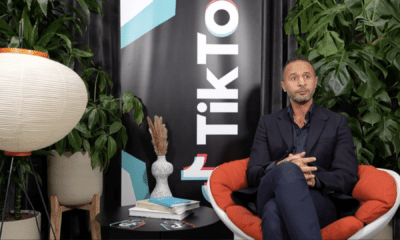
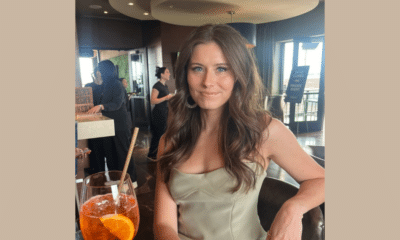
Alex Blair, founder of Boundless MGMT, runs a management agency built largely on TikTok Shop. He advises caution to many prospective clients who express an interest in the platform.
“There have been many times I’ve had calls with people and just said you shouldn’t do TikTok Shop, because I know they’d more than likely lose money,” Alex says.
Alex founded Boundless MGMT in 2020, out of Birmingham, England, after building multiple e-commerce brands that ran almost entirely on influencer-driven traffic. The agency has since worked with brands and creators across TikTok, YouTube, Instagram, and podcasting, and reports having driven more than £30 million in TikTok Shop sales to date, with beauty and fashion brands making up the bulk of the client list.
“We’d rather give them honest advice on how to grow revenue and maximize profit than sell them something that isn’t right for them,” Alex says of brands who approach Boundless assuming TikTok Shop is their answer.
That selectivity, he argues, is less a marketing line than an operating principle, one that shapes which brands Boundless takes on, how it sources creators, and where it is now putting its own resources.
“TikTok Shop is now becoming a platform where only a very small number of companies can thrive,” Alex says.
Working Backward From The Brand, Not The Creator Roster
Boundless maintains a managed roster of more than 150 creators and a wider application-based network that has grown past 10,000, built up over years of campaign work and gifting outreach. Alex is explicit that neither list determines who gets matched to a brief.
“Even with that network, we still believe every campaign deserves its own creator selection process,” he says. “Just because someone is in the network doesn’t automatically mean they’re the right fit for a particular brand.”
That extends to how Boundless sources talent for a brand with no prior campaign history. Alex says the agency avoids influencer marketplace tools in favor of manual outreach, arguing that data-driven platforms optimize for volume over fit. Instead, he looks at adjacent, similarly priced brands rather than direct competitors.
“If we were fortunate enough to work with a brand such as Bentley, I wouldn’t suggest creators who’ve posted about Rolls-Royce,” he says. “I’d suggest creators who’ve worked with adjacent brands and services, Emirates Business Class, Rolex, Prada, etc.”
The logic, he says, is that an agency’s value should sit on the brand side of the relationship, not the creator side. “Why restrict yourself to a roster of 50?” he asks, arguing that a fixed talent list narrows an agency’s options more than it helps a client.
Kärcher And The Case For Higher-Ticket Products On TikTok Shop
Boundless has worked with Kärcher over a long stretch of the home appliance brand’s TikTok Shop history. Alex says the account is one of the agency’s strongest performers and a useful counterpoint to how the platform is generally perceived.
“I think there’s still a misconception that TikTok Shop only works for cheap impulse purchases,” Alex says. “We’ve found that’s simply not true.”
Kärcher’s results, he says, came from treating creator selection as a judgment call rather than a numbers exercise. The agency looked for people who suited the brand and could build trust with an audience, an approach Alex calls the “eye test.”
“Instead of just chasing creators who looked like sales machines, we looked for creators who genuinely suited the brand and could build trust with the audience,” he says.
Higher-ticket products, in his view, can work on TikTok Shop if they carry strong perceived value and sit correctly within their niche, a case he says Kärcher has helped him make internally and to prospective clients.
TikTok Shop’s Economics Are Growing More Top-Heavy
Alex’s reservations about TikTok Shop extend beyond client fit to how the platform itself is structured. He argues that sales volume is increasingly concentrated among a small number of large brands and top-earning affiliates, leaving little room in between.
“The GMV is too concentrated amongst the top businesses and the top creators on there,” he says. “There’s not a very big middle, and that’s a concern.”
He also points to how TikTok Shop reports performance, specifically the blending of organic and paid sales inside the same GMV Max ad tools Boundless manages for clients. “The way that they blend the organic sales with what’s been spent on ads is very murky,” he says. “I don’t like that.”
Combined with the unpredictability of viral spikes, which he says complicates stock forecasting for brands that suddenly sell out, Alex sees a platform whose current incentives work against the smaller businesses that built its early momentum.
Betting On YouTube And AI Creators Next
As TikTok Shop narrows its addressable client base, Boundless is shifting attention toward YouTube, a platform Alex describes as underused by brands relative to its intent-driven search traffic. He points to a search like “best supplement for sleep” as an example of high-intent demand that most brands aren’t building strategy around.
“There’s a missing piece for a lot of brands in trust-based industries,” he says.
He argues long-form content builds durable trust and keeps generating value in Google search long after a short-form post disappears, though he notes YouTube creators are typically more selective about which brands they’ll work with.
Alex is also exploring AI-generated creator content, primarily as a solution to a distribution problem rather than a cost-cutting one. For brands selling higher-ticket items such as mattresses or patio furniture, sending out physical samples at scale is often impractical. “You could mobilize a thousand AI creators to make content that way,” he says, “and I think AI content done right can be good for brands.”
The Next Fight Is Over How Creators Get Paid
Alex’s broader complaint about the industry centers on pricing and payment terms, an area he argues has barely changed despite the volume of money now moving through creator deals. He objects to flat-rate pricing that ignores brand size or niche, to usage-rights fees charged before a brand has seen the content, and to a practice he calls “bizarre”: agencies charging brands for organic boosting that, in his view, without an additional payment to the creator, is one of the mutually beneficial structures in paid campaigns.
“I’ve always believed creator rates should be much more dynamic than they are now,” he says. “The standard DM asking, ‘What’s your rate?’ is fundamentally flawed.”
He is equally critical of standard payment terms. “Net 30 and Net 60 just don’t feel fair,” he says. “Creators shouldn’t be waiting months to get paid.”
That frustration has pushed Alex into a second venture, Briefbond, launched in April 2026 to build contracts and payment infrastructure for creator deals, including a rate calculator meant to price a brief on its specifics rather than a flat card. For now, Alex frames the gap in blunt terms.
“There’s going to be so many people that earn a living from content creation now,” he says. “You need something that protects your payment, that protects your rights, that makes it easy to get a contract. I think it really needs it.”
Subscribe to Our Newsletter
Check Out Our Podcast