






Agency
The Influencer Channel You Can’t Rush: How Superbloom’s Lily Comba Turned Brand-Side Experience Into an Agency Edge

Lily Comba spent nearly a decade running influencer programs from inside consumer brands before she built an agency from the outside. The result is Superbloom, a Chicago-based Influencer Marketing firm she founded in 2023 with a thesis shaped by what the industry kept getting wrong.
Lily’s background is atypical for an agency founder. She spent close to four years at Thrive Market, one of the earliest adopters of Influencer Marketing in the health and wellness space, before moving to Seed Health, where she built and scaled an influencer program that, according to her, spent roughly $20 million and generated an estimated $100 million in return.
“I started an agency with no agency experience, and that’s been our biggest advantage,” Lily says. “We know what happens under the hood.”
That insider fluency is the core of Superbloom’s value proposition. The agency, which keeps both its team and client roster small, has operated on inbound referrals alone since launch. It focuses on what Lily describes as “creator-led growth”: influencer programs designed to drive measurable new customer acquisition, not just impressions.
“I like to joke that I’m a growth marketer disguised as an influencer marketer,” she says.
The Brand-Side Advantage
Rather than simply selling access, Lily’s pitch is something closer to organizational translation.
“We know the types of KPIs your head of growth is going to be asking for from an influencer program,” she says. “We know the worries a co-founder or CEO might have. We know how organic social, CRM, or SMS teams may want to use influencer content.”
The agency serves two types of brands: those that have never run influencer programs and are building from scratch, and those that have tested the channel but haven’t been able to scale it. In both cases, the starting point is identifying where influencer fits within the brand’s broader marketing architecture, not just which creators to book.
The practical implication is that Superbloom operates less like a vendor and more like a marketing team, one that already knows the internal language of growth. “We know how to identify where gaps within an organization can be and how an influencer channel can potentially fill those gaps,” Lily says.

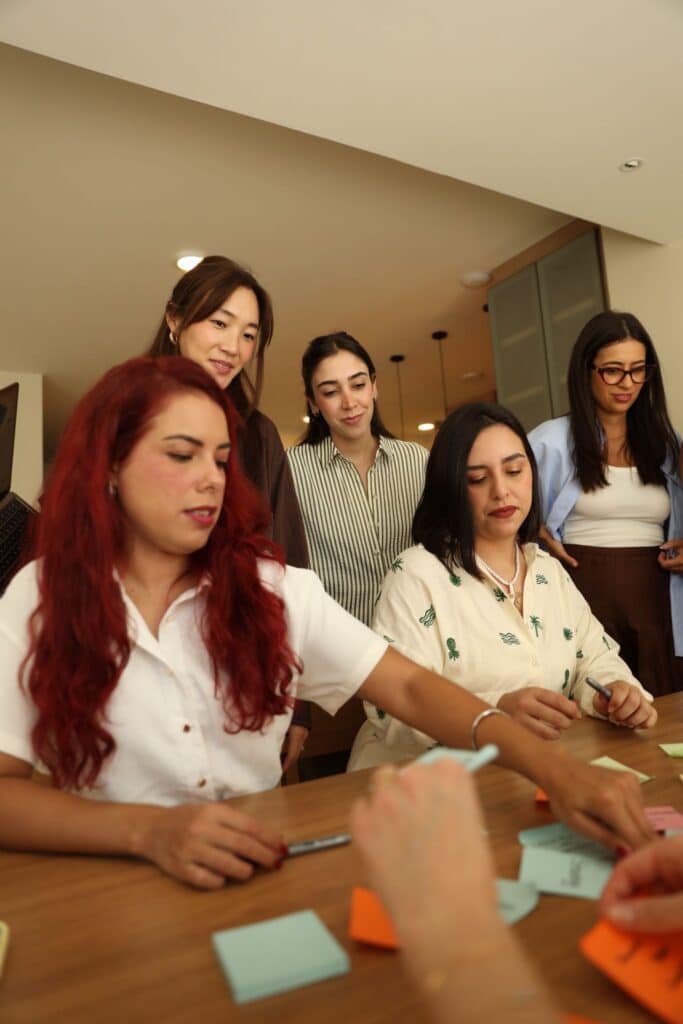
Photo: The Superbloom team
One-Off Campaigns Rarely Work Anymore
Perhaps Lily’s sharpest critique of how brands currently approach Influencer Marketing is their reliance on single-post activations.
“One-off campaigns literally never work,” she says. “Very rarely do they work. Because of the competitive landscape, these one-offs just don’t convert like they used to.”
Her reasoning is structural. Audiences now encounter dozens of influencer posts daily, most featuring products from brands they’ve never heard of. A single mention, however authentic, is rarely enough to generate conversion at a meaningful scale. Multiple touchpoints are necessary for a creator to establish the credibility required to drive purchase behavior.
“An influencer has to organically feature your product, talk directly about it, and really make it obvious that it’s a core part of their day-to-day life,” she says. “Without that authenticity, everyone’s going to see through the campaign.”
Lily acknowledges that long-term commitments make brands nervous, but points to cancellation clauses as a structural safeguard. “If the content is bad, they’re driving zero results, you cancel,” she says. “There’s really only benefit when you’re structuring deals in a way that helps the influencer and your brand break through the noise.”
The Right Creator Is Already Loyal to Your Brand
One of Lily’s recurring arguments is that brands consistently overlook the obvious when searching for influencer partners.
“Nine times out of ten, the right person is literally right in front of you,” she says. “You don’t always have to go searching.”
Her logic applies at every tier. When brands approach her hoping to anchor campaigns around high-profile names, she pushes back unless the creator already has a genuine relationship with the product. She points to Jones Road Beauty, a Superbloom client that named influencer Emily DiDonato its “Chief Blush Officer” after DiDonato was already publicly known for her affinity for the brand’s Miracle Balm. The appointment led to a co-created product, the Blushing Stick.

Photo: Emily DiDonato
The same logic guided Superbloom’s work on “The B is for Bobbie: Feeding with Confidence” campaign, which began after Cardi B reached out to the brand directly. Superbloom built out a second wave of creator activations around the launch, in addition to selecting four influencers for the campaign with Cardi B to represent different communities of parents.
“It was a performance campaign, but a human-first creative approach,” Lily says.
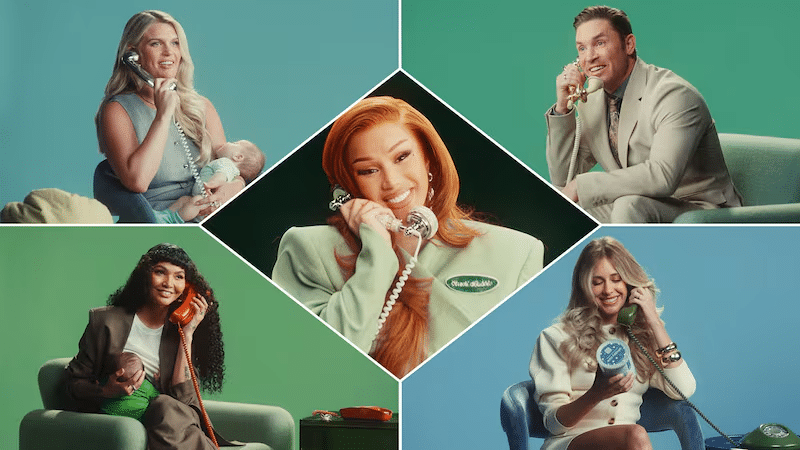
Photo: “The B is for Bobbie: Feeding with Confidence”
Why AI Has No Place in the Creative Brief
As generative AI accelerates its adoption across marketing workflows, Lily has drawn a firm line.
“The first creative decision we make is to not use AI,” she says. “I’ve seen some brands relying way too much on AI to draft their creative briefs, and it’s painfully obvious and really bad.”
The reasoning is practical rather than philosophical. Influencer campaigns depend on an alignment between the brand’s story and the creator’s story, and that alignment, Lily argues, requires human judgment. Her team’s creative process begins by identifying the connective thread between brand identity and creator identity, using that intersection to develop a brief that feels specific to both parties.
“What is connecting those two entities? Right there is how you come up with the creative approach that influencers should take,” she says.
The process takes longer than templating a prompt. But Lily is clear about the tradeoff: AI-generated briefs produce campaigns that underperform, and creators can tell the difference. “Great marketing comes from great people,” she says. “It does not come from robots.”
Building the Accelerator for Brands That Aren’t Ready
Not every brand arrives at Superbloom ready for full agency services. For those at an earlier stage, Lily built the “Superbloom Accelerator,” a six-to-eight-week training program that trains brand-side teams through the agency’s methodology.
“I’m allergic to gatekeeping,” she says. “So many excellent marketers think their strategies are proprietary. The more successful people are in the Creator Economy, the more everybody benefits.”
The Accelerator is designed for brands that have recently hired junior influencer staff without senior leadership to guide them. Lily leads the sessions herself, covering sourcing, vetting, negotiating, contract terms, creative briefing, reporting, and scaling. The goal is not to convert participants into Superbloom retainer clients, but to give in-house teams the framework to run programs independently.
“We empower your team in their understanding of the performance influencer approach,” she says. “Then we set you free.”
What’s Next for Superbloom
As Superbloom approaches its third anniversary, Lily is focused on expanding two areas of the business.
The first is whitelisting, or partnership ads: in the past, Superbloom handed off organic influencer content to separate paid media agencies for amplification. The agency is now running those paid placements internally.
“We want to make sure we’re really owning end-to-end influencer performance for our brands,” she says.
The second is events. Lily sees live brand experiences as an emerging requirement for brands trying to build sustained creator communities, not just individual campaign relationships. Superbloom plans to produce a branded event in summer 2026.
“In order for a brand to be successful, it needs to have an ecosystem,” she says. “The true manifestation of a brand environment is to bring it to life.”
For Lily, both moves reflect a consistent operating thesis: that Influencer Marketing is most powerful when treated as a multi-channel, relationship-based discipline rather than a media-buying line item. The agencies best positioned to serve brands in that model are those that have lived inside the problem they’re now solving.
“Legitimizing the influencer channel,” she says, “is the biggest influence the Creator Economy can have.”
Subscribe to Our Newsletter
Check Out Our Podcast