




Influencer
Consciously Kay on Turning a Decade of Brand Loyalty Into a Sprout Living Partnership

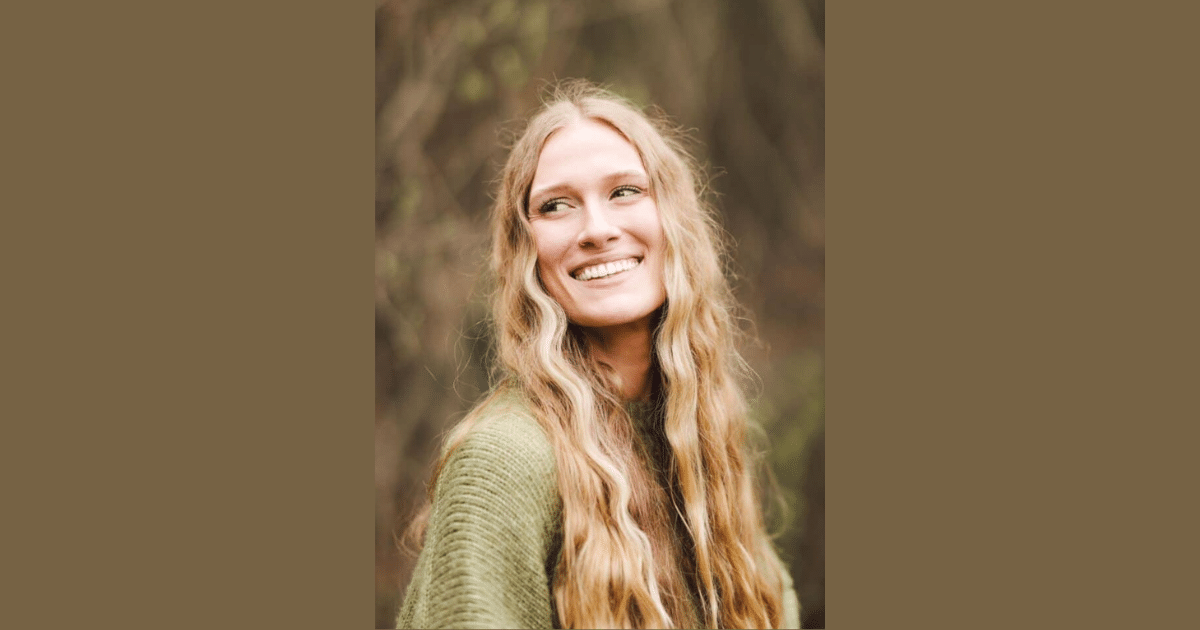
In a college argumentative writing class, Kayla Varney was assigned to argue a position she did not hold. She argued in favor of veganism. By the end of the paper, she had convinced herself. That accidental conversion, born from research she never planned to do, set the foundation for a brand that now reaches hundreds of thousands of people across TikTok and Instagram and has produced a co-branded product with one of her favorite companies.
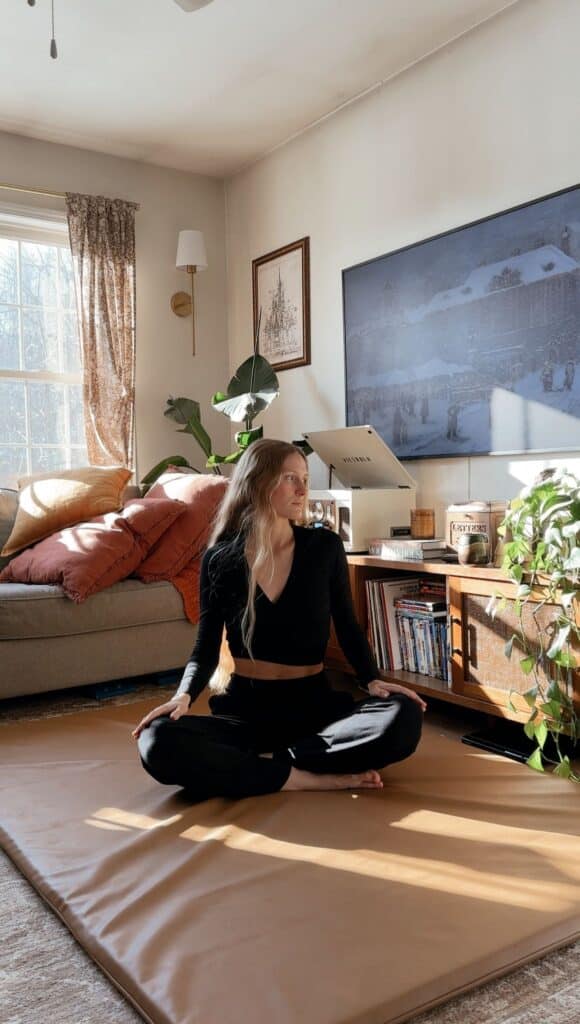
Kayla is the creator behind “Consciously Kay,” a platform built around what she describes as conscious living in a way that is balanced and relatable. Certified in holistic nutrition and a mother of two, Kayla has spent more than a decade developing an audience anchored not in aesthetics or algorithms but in the kind of trust that accumulates slowly, through consistency, connection, and a refusal to promote what she does not personally believe in.
This year, that trust produced something new: Colorfuel Calm by Consciously Kay, a co-branded magnesium powder with Sprout Living, the wellness brand she first tried at 18 and has used ever since.
“I still pinch myself daily that I’ve been able to create this life for myself and my family,” she says. “Having a brand that I admire so much choose to work with me is so incredible.”
The Decade-Long Overnight Success
Kayla started her Instagram in 2014, initially as a way to connect with other vegans because none of her college friends lived that way. The early content was simple: smoothie bowls, raw vegan recipes, and a creative outlet with no commercial ambition.
“It was really just a hobby for a lot of years,” she says. The platform grew gradually, and then stalled, and then grew again, but the idea of content creation as a career remained a distant fantasy rather than a plan.
The shift came in two stages. The first was personal: Kayla had her son during COVID-19, and social media became a lifeline for connection during a year of quarantine. “Social media was really helpful,” she says. “Such a bright side for me is just being able to meet and connect with people all over the world.”
The second stage was professional: TikTok found her. Or, more accurately, her videos about healthy product alternatives found an audience she had not anticipated.
“I had quite a few videos go viral talking about products that I don’t use and what I use instead,” she says. “A lot of times it’s don’t eat this, don’t do this,” she says. “But then there’s no, ‘and this is why, do this instead.'” That structure, explanation paired with an alternative, became her signature. It still drives her Instagram growth today.
The transition from hobby to business was not gradual so much as sudden. Management reached out. Brands started sending contracts. Her husband left his job to help with the kids full-time. “When I signed with my management company, Odyssey Entertainment Group, and I started getting these consistent real contracts and jobs, I realized, ‘Wow, this is a real job,’” she says.
She created an LLC and hired an accountant. The pipe dream became a business.
Holistic Nutrition and the Privilege Problem
Kayla holds a certification in holistic nutrition, a credential that informs her content but that she is careful not to misrepresent.
Holistic nutrition, she explains, is widely misunderstood as an ideology of natural-only remedies. “It’s not just your diet or just exercise,” she says. “It’s stress, it’s lifestyle, it’s community.”
That expanded definition has guided her editorial direction over the past few years. Kayla’s early content focused on supplements and dietary choices, the kind of advice that assumes access, time, and financial flexibility.
As the political conversation around health and wellness has intensified, she has moved away from prescriptive content and toward something more contextual. “There’s a privilege when it comes to health and wellness,” she says. “It’s not as easy as to say you just need discipline and organic produce.”
The wellness space, she observes, has fractured along political lines, with some voices acknowledging systemic barriers to health and others dismissing them. Kayla attempts to hold a middle position: sharing what works for her without implying it works universally. “I do my best to stay non-judgmental because I understand that everybody’s coming from a different place,” she says, “and I do my best to educate without shaming.”
Turning Down Money to Keep Trust
Kayla is currently in an Amazon-free year, a personal and public commitment to avoid supporting the company that she believes doesn’t “look out for the good of humanity.”
When a brand recently offered her a deal contingent on promoting through Amazon, she declined. “It has definitely affected my income,” she says. “But it makes me feel good that I’m not willing to take money over sticking to my values.”
The financial risk is real. Kayla does not minimize it. But she frames it as a long-term brand calculation rather than a sacrifice. Her audience has followed her long enough to know who she is.
She believes that a post promoting Amazon would register as incongruent and that her followers would notice. “If I were to come on there and say go buy this on Amazon, it would clearly be for the money,” she says. “And that’s just not who I am.”
She applies the same logic to all brand partnerships, requiring personal use of any product before agreeing to promote it. Management handles the negotiations, which she credits with protecting her from early mistakes she cannot fully undo. Before she had representation, she accepted contracts without fully reading them. “There are multiple videos that I kind of accidentally signed over full-term rights to that I still see as ads years later,” she says.
The lesson stuck. “Know your value and worth,” she advises, “or have somebody in your corner that knows your worth and knows how to protect you legally.”

What a Good Partnership Actually Looks Like
Creative freedom is Kayla’s first requirement for any brand collaboration. A brand that has watched her content and trusts her to translate a product for her own audience will outperform a brand that sends a script.
“If you’re choosing to work with a creator, it’s probably because of the community they’ve built,” she says. “I think it’s important to trust a creator to know what their audience will relate to and enjoy.”
That principle, straightforward in theory, is frequently violated in practice. Kayla has encountered briefs heavy with bullet points, brands that want specific phrases used, and partners who request messaging she does not believe or has not verified. Her response in those situations is not confrontation but negotiation, handled by her manager, grounded in her own clarity about what she will and will not say. “I will never say something that I don’t agree with, or I don’t feel aligns with me,” she says.
She also distinguishes between brand partnerships and something more permanent: her name on a product. The Sprout Living collaboration is the first time Consciously Kay has appeared as a co-creator rather than a promoter, and the distinction matters to her.
“Sometimes when you tell people you’re an influencer, they laugh,” she says. “And that’s okay. I totally get it. But it made me feel like, wow, this is real. This is my name on something. How special.”
The Product That Started at 18
Sprout Living was the first protein powder Kayla ever tried, discovered at 18 at the beginning of her health journey. She was not especially educated about supplements then, and she did not choose the brand strategically. She simply stumbled onto it.
“I feel very lucky that I just happened to stumble upon such a fantastic brand,” she says. “They have stayed true to themselves in a world where trends are always changing, and that means a lot to me as a consumer.”
When the idea of a co-branded product came up in conversations with her management, Sprout Living was her immediate first choice. The pitch was simple: she loved their products, she had used them for years, and she wanted to create a magnesium powder because magnesium had helped her through periods of stress and sleep difficulty.
“It can be incredibly hard to sleep when your mind is always racing, and that’s what I was regularly going through,” she says. The product, designed for stress and sleep support, was developed to be versatile, drinkable hot or cold, useful mid-day or at night.
The development process was smoother than she expected, in part because her non-negotiables overlapped with the brand’s defaults. Simple ingredients and quality magnesium, both items she flagged upfront, were already built into Sprout Living’s approach. “How easy it was to agree on most things,” she says, “is why the partnership was so perfect.”
Consistency Over Noise
Twelve years into creating content, Kayla’s clearest lesson is about patience. She used to delete posts that underperformed, embarrassed by the low view counts. She no longer does.
“Even if you’re posting something that people don’t care about yet, maybe it will do well later on,” she says. “You have to give people a chance to find you and connect with you.”
The broader arc of her career mirrors that advice. The audience she built did not come from a single viral moment or a calculated pivot. It came from a decade of showing up with the same values, in the same voice, across a format that kept shifting under her. TikTok changed the scale. The Sprout Living partnership changed what creation can look like. But the thing she keeps returning to has not changed since 2014: she posts what she actually believes.
For creators dealing with brand offers and platform pressure, she offers the same advice she would give herself at the beginning. “Stay true to yourself,” she says. “Whoever that is, is what’s going to work best for you. Cut out the noise and be yourself.”
And for the brands on the other side of those negotiations: “Trust your creators to be creative, because you want to work with them for a reason, and they have grown a following for a reason.”
Subscribe to Our Newsletter
Check Out Our Podcast