





Agency
The Creator Economy Keeps Adding Tools – The Influencer Marketing Factory Keeps Finding the Same Gap

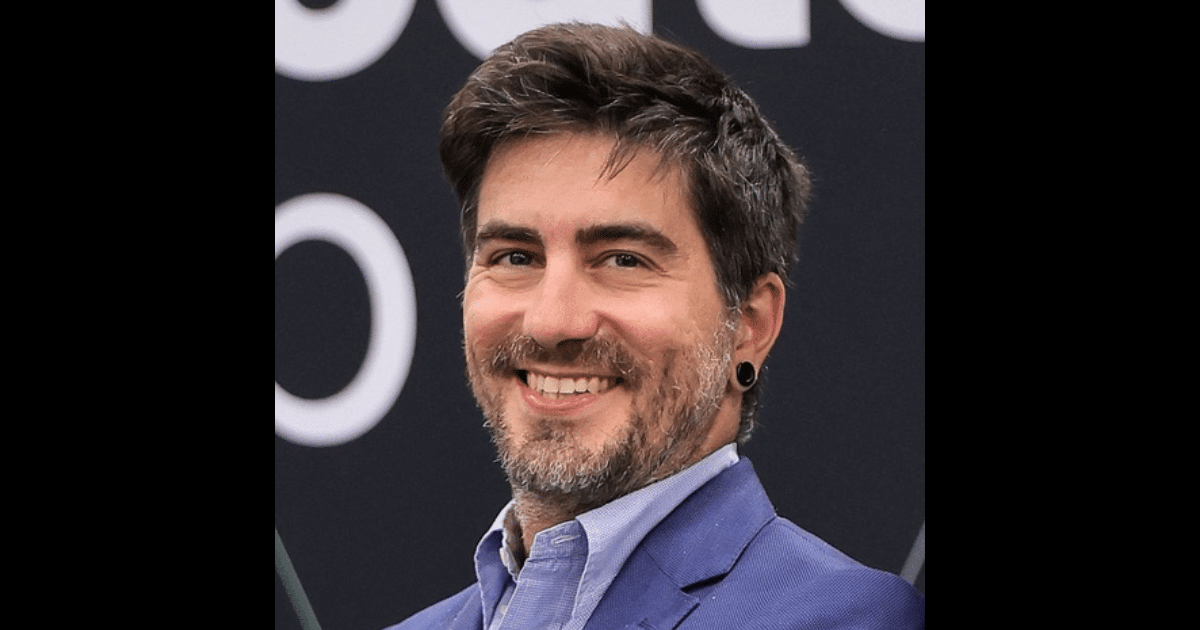
Brands are consolidating their creator budgets under fewer agencies, demanding a single point of contact for organic campaigns, paid amplification, and TikTok Shop. Alessandro Bogliari, co-founder and CEO of The Influencer Marketing Factory (IMF), has spent the past year closing that consolidation. His warning to the agencies competing for the same mandates is pointed.
AI won’t win it for them.
Founded in 2018 with $1,500, and now with offices in both Miami and New York, IMF runs creator-led campaigns across TikTok, Instagram, and YouTube for clients including Google, Meta, Hyundai, Coinbase, F45, Rakuten, Kimberly-Clark, and Square, among others. Over seven years, Alessandro has added paid media amplification and TikTok Shop management to the agency’s original organic offering. None of it, he argues, changes what the business actually runs on.
“The Creator Economy is a people business,” Alessandro says. “I said this 10 years ago, I’m saying this now. I’m saying this in 10 years.”
That conviction, maintained through TikTok’s rise, the influencer data bubble, and now the generative AI wave, is the organizing logic of everything IMF has built.
From One Line Item to the Whole Budget
The clearest evidence of how much the category has professionalized is where the money is going. Three years ago, Alessandro says, most clients came to IMF with organic influencer budgets; paid media was a separate line handled by separate agencies. That structure has largely collapsed.
“Around 90% of our clients are giving us paid media budget to boost,” he says. “And almost every client doubled at least their budget for paid media amplification.”
The driver is accountability. As brands moved from five-figure test campaigns to seven-digit annual commitments, the metrics conversation shifted entirely. CMOs stopped asking about views and began asking about gross merchandise value, app installs, and customer acquisition cost.
That seriousness has also changed how brands structure the agency relationship. Rather than managing separate vendors for organic, paid amplification, and commerce, more clients are consolidating under a single point of contact. IMF has positioned itself for that consolidation, taking on agency-of-record (AOR) status for several large brands.
“The client says: I don’t want to talk with a TikTok Shop agency, a paid media agency, and an Influencer Marketing agency,” Alessandro explains. “Can you become the AOR (Agency of Record) for anything related to the Creator Economy?”
TikTok Shop Changes the Operational Math
TikTok Shop represents one of the most operationally distinct additions to IMF’s offering. The agency was involved from the beta period, and the workflow looks nothing like traditional influencer campaigns.
Scale is the central challenge. Where an organic campaign might involve a curated group of a dozen creators, TikTok Shop programs require managing hundreds or thousands of affiliates simultaneously.
“It’s a number game,” Alessandro says. “Some will bring very little, some others will bring a lot. But it’s one of those very time-consuming types of work.”
The commercial model reflects that operational weight. IMF charges a fixed management fee alongside a revenue share on gross merchandise value, aligning agency incentives with client outcomes.
What makes the integrated model valuable, Alessandro argues, is the feedback loop it creates across channels. When a TikTok Shop affiliate produces content that converts well, that finding informs the paid amplification strategy. When A/B testing in paid reveals a particular format outperforming others, affiliates are steered toward similar content. The three channels stop operating in isolation.
AI Done Right Versus AI Slop
Alessandro uses AI daily. He cites Claude, Perplexity, and Canva as tools his team uses for workflow optimization, pricing analysis, and drafting communications. His critique is not of the tools. It’s of the narrative that the tools eliminate the need for judgment.
The use case he points to as genuinely transformative is influencer discovery. Traditional keyword-based searches relied on creators having explicitly labeled themselves in bios and captions. Visual AI analysis changes that.
“If I’m looking for a mom of two kids and the AI can recognize from the last 30 pictures that there are consistently two kids in the photos, I can find her,” Alessandro says. “You still need to double-check manually, but the discovery is dramatically improved.”
What AI cannot do, in his view, is handle anything requiring contextual judgment: detecting humor, navigating tone, managing exceptions to a contract, or being present on a client call where real-time thinking is expected. He points to the proliferation of AI-generated content as a direct threat to campaign quality.
“AI can only give you a copy of a copy of an existing concept,” he says. “In one year, all the campaigns are going to look the same.”
The operational risk he identifies is “AI slop”: agencies using generative tools to speed up output without verifying that the output is coherent or accurate. “Some agencies are going to lose a lot of clients because of AI slop,” Alessandro says. “And other clients that don’t integrate it properly are going to be too slow. You need the balance.”
Creators Know What They’re Worth. That’s a Problem and an Opportunity.
Creator sophistication has risen alongside brand budgets, and Alessandro sees both sides of the development. Creators now routinely retain lawyers, negotiate media rights separately from content fees, and push back on exclusivity clauses that were routinely accepted a few years ago.
“There are a lot of people doing educational videos for creators to educate them on how to defend themselves, on how to negotiate better,” Alessandro says.
The same ecosystem has introduced a distortion, however. Some of that content, he argues, gives creators rate benchmarks disconnected from market reality, leading to compensation demands that cost them the deals they are trying to improve.
“Maybe a creator checks a video where they say you should ask this amount, and they go ask an amount that doesn’t make sense,” Alessandro notes. “Now they might lose the brand deal or credibility in the space because of it.”
The net effect is a more complex negotiation environment, one that Alessandro says requires experienced mediation on both sides of the table.
Big Brand Names Don’t Guarantee Smart Campaigns
Brand name, Alessandro argues, is a poor proxy for campaign quality. Some of his most direct observations are aimed at large companies whose internal approval processes systematically undermine the format they are spending heavily to deploy.
“By the time you want to go live with something, the trend is already over,” he says of campaigns that require multiple sign-off layers.
The traits he associates with effective brand partners have less to do with size than with operating posture. They give creative latitude, pay on time, and treat the agency relationship as a collaboration. “There are big brands that are taking Influencer Marketing seriously; they give you a blank canvas, they trust you,” Alessandro says. “And then there are big brands that just because they have a name, it doesn’t mean that they are taking Influencer Marketing seriously.”
He also identifies post-campaign analysis as a dividing line between brands that improve over time and those that don’t. “Not many brand marketers are actually analyzing what happened, what the influencers brought, what the comments said,” Alessandro says. “The postmortem analysis of campaigns is quite crucial.”
Staying Ahead Without Losing the Thread
Alessandro’s 2026 roadmap centers on a single operational tension: absorbing AI into the agency’s workflows without diluting the judgment that clients are actually paying for.
His next area of active interest is TikTok LIVE, which he has been tracking in China and other markets and expects to develop commercially in the West. The approach mirrors how IMF entered TikTok Shop: early involvement while the operational model is still forming, before most competitors have built meaningful competency.
The broader challenge he describes applies to the entire category. AI has conditioned clients to expect faster turnaround, but faster output still requires human review.
“It’s going to be a year of optimizing everything possible, giving that standard of quality that our clients expect from us,” Alessandro says. “That is going to be the challenge not only for us, but for any agency out there.”
For Alessandro, the answer loops back to the thesis he started with. The Creator Economy has added budgets, tools, and platforms. What it hasn’t produced is a substitute for the human capacity to read a room, manage an exception, and tell the difference between content that connects and content that merely performs well in a prompt.
“The human component, the brainstorming, the understanding,” he says. “That is the main component that makes the difference.”
Subscribe to Our Newsletter
Check Out Our Podcast