


Influencer
Sixteen Years, One Mission: How Dzung Lewis Built Honeysuckle Into a Food Brand That Lasts

In 2009, Dzung Lewis was sitting at a corporate finance desk she hated, quietly catering parties on the weekends and dreaming about a cooking show. When her then-boyfriend pointed out that YouTube had just started taking off, she uploaded ten episodes and kept her day job. Three years later, the company let her go. She never looked back.
Today, Dzung is the creator and host of Honeysuckle, a food and lifestyle brand with more than three million followers across platforms, a published cookbook, and a growing catalog of series built around the kind of curiosity that keeps audiences coming back. The channel, which she runs alongside her husband, has transitioned from polished kitchen tutorials into something more expansive: a family-friendly food entertainment destination where viral TikTok dishes get tested, strange regional specialties get recreated, and a nine-year-old girl watches her mother’s videos and then raids the kitchen to try the recipes herself.
The daughter of Vietnamese immigrants who pushed her toward business school over culinary school, Dzung spent years in finance before pivoting fully to content. That background, she argues, is not incidental to her success.
“Understanding your analytics and the back end of what information it tells you is probably the most important part to content creation that a lot of people don’t notice,” she says. Sixteen years into building Honeysuckle, she still pulls up YouTube Studio to study retention curves, click-through rates, and the exact second an audience stops watching.
The Layoff That Launched a Career
Dzung did not quit finance to chase a dream. The decision was made for her. After uploading a handful of early YouTube videos in 2009, the demands of her corporate job made consistency impossible. Then, in 2012, downsizing cut her loose.
“I didn’t immediately look for a job,” she says. “I just kind of started uploading YouTube videos, and it went from there.” Her first video back was a Strawberry Lemonade, chosen simply because it sounded good. French macarons followed, hit around a hundred thousand views, and confirmed something was working.
The moment it stopped feeling like a hobby came when Bon Appétit reached out, pregnant with her first child, and flew her to One World Trade Center in NYC to film a series with cruise line Princess Cruises.
There was a full crew, a director, hair, makeup, and wardrobe. “It felt so professional, so real,” she says. “I’m like, ‘Whoa, living my dream.’” She held onto part-time work until 2018, then finally committed fully after relocating to Los Angeles, where Tastemade and a growing list of brand partners made the window feel too clear to ignore.
When the Channel Died and What She Did Next
By her own account, Honeysuckle essentially died a few years ago. Videos that used to pull 50,000 to 100,000 views fell below 10,000. The format that had built her audience had run its course.
“People weren’t interested in those ideas anymore,” Dzung says. “They wanted more entertaining videos. They wanted something different. And I had already been doing that for over 12 years at that point, and it was getting old.” She had also missed the TikTok window, watching short-form video take over the market while she tried to figure out how to translate her long-form sensibility into something that could hold attention in under a minute.
Her answer was to stop protecting the format. She launched series, allowed room for experimental videos, and moved toward content driven by curiosity rather than instruction.
The result? Once she committed to YouTube Shorts and TikTok with daily repetition and analytics-informed iteration, she grew to a million subscribers and hit one billion views on Shorts within a year. “I don’t hold on to a certain type of video long because once it gets too saturated, people start making the same videos,” she says. “I’m kind of on to the next.”

Finance Brain, Creator Instincts
Rather than only tracking views, Dzung also tracks where viewers leave. She monitors average view duration, retention drop-off points, click-through rates on thumbnails, and which video converts new viewers into subscribers.
“A video takes a week to produce,” she says, “but the data lives on forever.”
That analytical precision runs parallel to the creative side of the business. When a format starts performing, she studies what drove it. When engagement dips, she treats it as a signal rather than a disappointment. The “5 Levels of Mall Food” video, a departure from her kitchen setup into a roving food-testing format, came directly from noticing that audiences responded when she was out and about. She is now building more of those, refining the storytelling with each iteration.
For the operational side of the business, she works with a manager at Night Media who handles deal negotiations and back-end logistics. “I’m terrible at negotiating,” Dzung admits. “When a brand comes through, and they want to negotiate deals, I just kind of freeze up. It’s just not my department.”
The division of labor lets her stay focused on the creative and analytical work she actually excels at, which she argues is the strongest case any creator can make for getting representation early.
How Brand Deals Actually Changed
In the early days of brand partnerships, Dzung followed scripts. The result was content that didn’t sound like her, placed inside videos that were supposed to feel like her. “I was just doing what the brands wanted,” she says. “It didn’t feel like it was my voice.”
The shift has been gradual but real. She now integrates sponsors mid-recipe, weaving the message into whatever is already happening on screen. One Liquid I.V. read happened while she was standing in line for a roller coaster at Disneyland, and she finished the tag as the ride slowed down. “Sometimes the viewers would be like, ‘That was a seamless integration,’” she says. “‘I hate ads, but that was just too good.’”
Her advice to brands is direct: alignment matters more than reach. Mismatched partnerships read as cash grabs to audiences who have spent years building trust with a creator. “It doesn’t help the creator, and it doesn’t help the brand either,” she says.
For creators on the other side of those conversations, the principle holds. “Keep your audience top of mind because you spent years building trust with them. They know when things are not authentic, and they will call you out for it.”
Building Something That Lives Off-Platform
“The Honeysuckle Cookbook,” published in 2020, arrived at an unusual moment. Families were home, cooking more than they had in years, and a physical object that extended the channel’s energy into the kitchen felt like exactly the right thing. Dzung spent two years developing recipes, drawing heavily from the food she had encountered in Los Angeles before she moved away.
“The food in LA is like the best that I’ve ever experienced,” she says. “I still dream about certain dishes.” Recreating a braised short rib from Koreatown for a cookbook audience who might never visit the restaurant is, in her view, part of the same mission that drives the channel: making food approachable, aspirational, and worth trying at home.
The same philosophy applies to community events. Last year, she filmed a video built around her viewers’ dream lunches and got them involved in the content itself. Fans she meets ask to appear in videos. The channel is expanding outward from the screen, which she sees as essential to building something durable.
“Extending the brand outside of the YouTube screen and meeting them in person is very impactful,” she says. “It helps me understand who the viewers are and build a better, stronger community.”
The Mission Comes Home
When Dzung launched Honeysuckle, her stated mission was to inspire young women to use food and lifestyle choices to build creativity, confidence, and community. She wrote that without children. Now, she has a nine-year-old who watches her videos, then disappears into the kitchen to try the recipes alone or asks her mother to help.
It traces back further than that. Growing up, Dzung and her grandmother would watch Saturday morning cooking shows on PBS together, and afterward her grandmother would try to recreate what they had seen. She was exposed to duck l’orange and cow tongue before most children her age had ventured past chicken nuggets. “Being open to trying new things, I think, is really important,” she says.
For 2026, Dzung’s focus is on getting out of the kitchen more, telling richer stories about the why behind recipes, and continuing to develop the format before it gets old again. The goal, as it has always been, is to stay curious long enough to keep the audience curious too.
“I hope Honeysuckle becomes a brand that they will kind of remember and look for,” she says, “the same way that I am inspired by Ina Garten or Martha Stewart.”
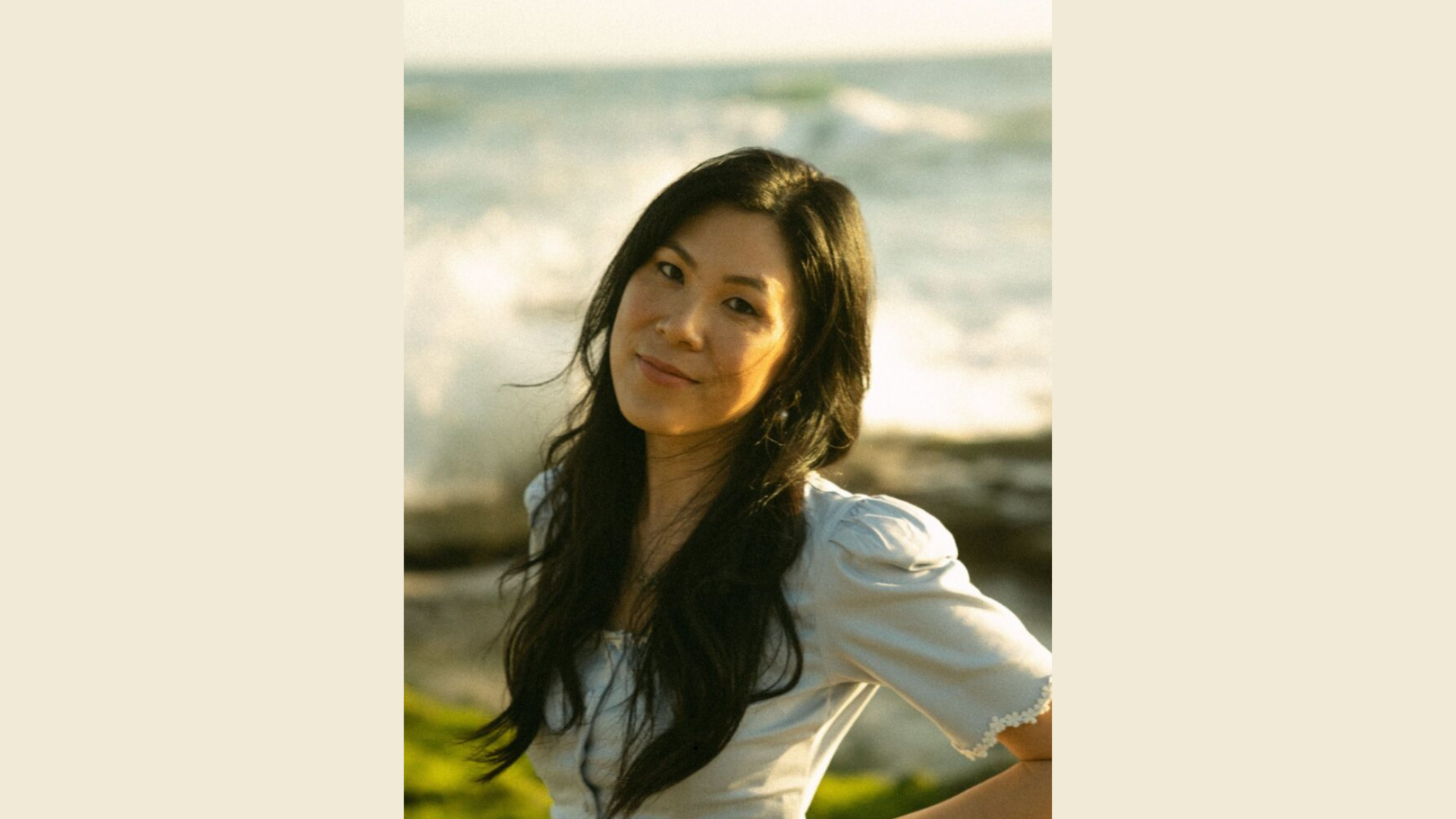
Photo credit: Esther Brown
Subscribe to Our Newsletter
Check Out Our Podcast