



Talent Collectives
FiveTwoNine’s Creator Fund Is Bringing Missing Creator Economy Voices to Advertising’s Grand Stage

For years, Cannes Lions has declared itself the home of creativity. But when Becky Owen looked around the festival grounds, she counted the creators: mostly men, mostly celebrities, and mostly unrepresentative of the industry they were there to celebrate.
“The only creators I could see there were the top 1% who were basically celebrities at this point,” says Becky, CMO of Creator Marketing agency Billion Dollar Boy and founder of FiveTwoNine. “And there wasn’t a real element of diversity either.”
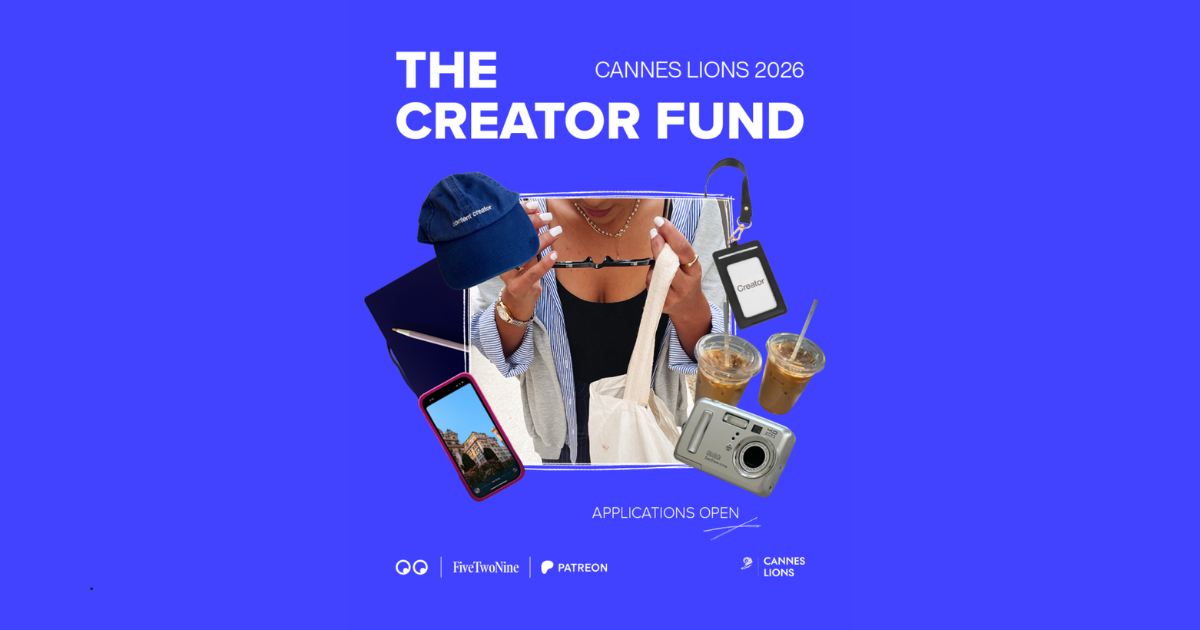
That observation became the foundation for The Creator Fund, an access program FiveTwoNine launched in 2025 to bring emerging creators into advertising’s most high-profile events. Now in its second year, the Creator Fund for Cannes Lions has grown from 100 applications to more than 300, selecting 20 creators per cohort through a juried process that evaluates diversity, entrepreneurial potential, and creative point of view. This year’s initiative was sponsored by Patreon, signaling industry recognition of a problem the fund was built to solve.
FiveTwoNine, founded in 2024 within the Billion Dollar Boy Group, operates as a creator community and research platform with 3,700 global members. For Becky, the Creator Fund is its most visible proof of concept: a mechanism for getting creators into rooms they have historically been excluded from, not because they lack talent, but because they lack access.
“The Creator Economy has democratized advertising,” Becky says. “Anyone with a phone and a passion can build a voice and have a career. But if Cannes is supposed to show us what the advertising industry is, let’s have the right people there.”
Why Cannes, and Not Some Other Industry Event
The Creator Fund could have targeted VidCon, Advertising Week, or any number of creator-adjacent events. Cannes Lions was a deliberate choice, rooted in who actually attends.
“All of the CMOs go to Cannes,” Becky explains. “There are very few events where CMOs will clear their calendar and en masse descend for a week, from the U.S. and the UK.”

That concentration of decision-makers changes what is possible for an emerging creator. Rather than attending to learn or network with peers, fund recipients have an opportunity to get a coffee with the senior marketing leaders who control the brand budgets that can transform a creator’s career. Becky says the fund coaches creators specifically on how to make that happen. “We help them meet the brands so that they can genuinely meet the people that are going to push their careers forward.”
There is also a cultural dimension. Cannes Lions attendees, in Becky’s reading, arrive ready to be impressed. “The mindset of people there, they’re really open to understand, explore, meet new connections, learn,” she notes. “That receptivity makes it a more fertile environment than events where attendees are primarily there to listen to panels.”
Emerging, Not Established: Who the Fund Is Actually For
The fund’s criteria were intentionally narrow. To qualify, creators needed at least 20,000 followers on their primary platform, consistent posting habits, and a clear creative point of view visible on their channel. The application required a video submission explaining why the creator wants to attend, a design that filtered out those treating the fund as a free trip.
That 20,000 threshold, Becky says, was not arbitrary. “Once you hit 20,000 followers as a creator, something shifts in your mindset. They’re suddenly excited and open to opportunity.” Below that level, creators are often still uncertain whether the work can become a career.
What the fund was explicitly not designed for was creators who had already arrived. The target cohort has “some success” but still needs, as Becky puts it, a “helping hand into the right room.” One 2026 winner, Fahim Mannan, exemplifies this profile: he had accumulated 24 million TikTok views in seven months through storytelling about underrepresented communities and described himself as unsure what to do with the traction he had built. “I just want someone to help me,” Becky says, paraphrasing his application. “That is who we’re here for.”
When the first year’s submissions closed, Becky admits she panicked. “I was scared creators wouldn’t want to come, that maybe the industry would think I’m crazy,” she says.
Watching the application videos settled it. “Every creator has to submit a video as to why, and when I started watching those videos and hearing from these amazing creators, that was when I was like, ‘Okay, yeah’ …”
Applications Tripled. The Gap the Numbers Reveal.
The jump from 100 to more than 300 applications between 2025 and 2026 reflects more than growing awareness of the fund. Becky reads it as evidence of a structural shift in how creators think about their role in the advertising industry.
“Creators have been passengers of the Creator Economy,” she says. “It’s been driven by platforms, brands, and agencies.”
The surge, in her reading, signals that creators are beginning to see themselves as participants in the decisions that shape the industry, not just recipients of deals handed down from above. “Now, creators are seeing that they can be influential in the decision-making arena, not just influential with their community, but upstream.”
The 2026 applicant pool also surprised Becky in a different way: it included creators with significantly larger followings than those who applied in year one. The pattern challenged a common assumption.
“Just because you have 500,000 followers, it might look like you’ve got it all down,” she says. “But actually, when you hear them, they’re like, ‘I’m doing this, I’m so passionate, I’ve just given up my job, I’m really scared.’”
The problem, she argues, is industrywide: “We’ve actually ignored a lot of these creators and have not wanted to give them the support they need when actually they do.”
The Judging Process: Diversity Is Designed In, Not Added Later
The fund’s selection involved 16 judges from platforms, brands, creators, and major industry players. Each evaluated a cross-section of applicants across four dimensions: entrepreneurial spirit, creativity, passion, and whether an event like Cannes Lions could help them grow their career. Scores from one to ten generated a ranked list.
That list was then reviewed manually to ensure the final 20 reflected genuine diversity across format, platform, geography, race, and gender. The process was explicitly not hands-off. Judges were required to submit written justifications for each creator they recommended.
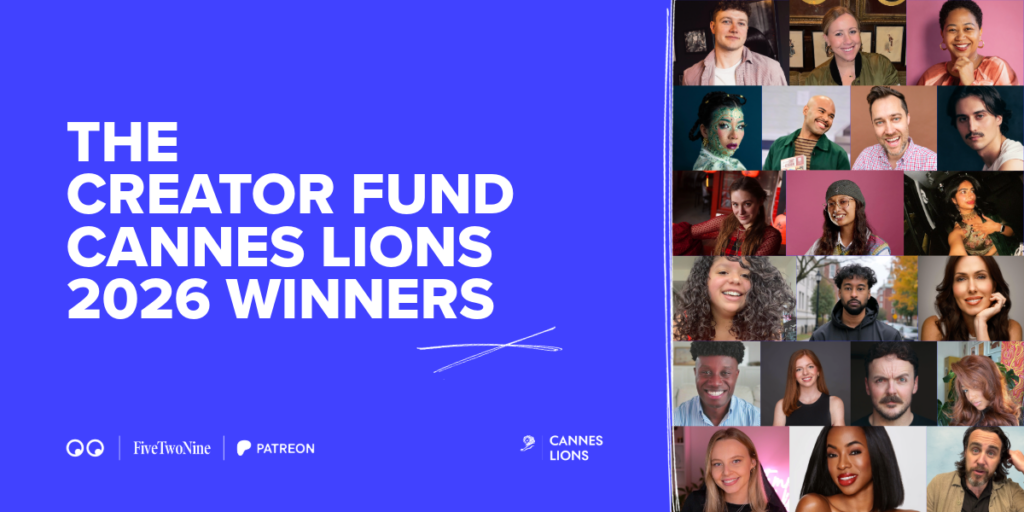
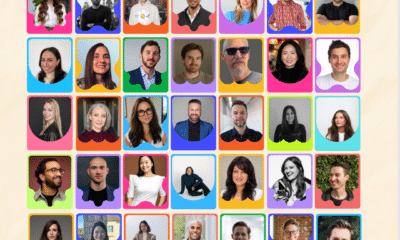
The 2026 cohort reflects that mandate, spanning filmmakers, beauty educators, and comedy sketch creators. Among others, it also includes Iván Fernández González, a fashion creator using genderless style, Sabina Trojanova, a travel storyteller focused on decolonizing tourism, Emma Nicole, a gaming creator who founded a social cataloguing app called Playnist, and Mariana Antaya, an AI and machine learning creator who translates complex technology for general audiences.
“It really feels varied,” Becky says. “A real slice of the Creator Economy.”
From Access Program to Incubator
The immediate value the fund delivers, according to participants from its first year, was consistent: “getting to speak to the people, getting into the rooms, getting those events where someone’s going to tell us what to do or share insight and intelligence,” Becky says. The long-term ambition goes further.
“My dream is that it will eventually turn into a proper incubation program,” Becky says. This year’s programming moves in that direction. A BBC Talent Works breakfast connects the cohort’s scriptwriters and comedy creators to broadcast infrastructure most digital-native creators never encounter early in their careers. A rooftop networking event places recipients in front of brand partners and industry leaders. A Patreon-hosted happy hour rounds out a structured week designed to compress years of relationship-building into a few days.
The core problem the fund addresses, she argues, runs deeper than any single event. Creators struggle not because their content lacks quality, but because they do not know how to treat what they do as a business. “Their identity and their personal concept of who they are is so meshed with what they’re doing on their platform,” she says. “What they need help with is: I know this could be a business, I’m seeing other people do it. What should I prioritize? How do I approach this?”
For Becky, The Creator Fund is ultimately an argument about where the advertising industry’s future leadership comes from. “These are the people that you should be paying attention to,” she says. “They’re the future leaders. Join the mission.”
Subscribe to Our Newsletter
Check Out Our Podcast