




Agency
How The Arab Influencer Agency Is Consolidating The MENA Creator Economy


The Middle East and North Africa (MENA) influencer marketing industry has historically been fragmented, with individual managers often operating through little more than Gmail accounts. Could a unified approach transform the entire MENA creator economy and consolidate this massive yet divided market?
Imane Hmile, as the founder and CEO of The Arab Influencer Agency, has taken on this daunting task. Established in October 2022, the agency operates with a focus on Dubai for Gulf countries and Casablanca for North Africa. Her company aims to provide centralized infrastructure in a market previously characterized by inconsistency, connecting brands with influencers across the regions.
“When I went to Dubai, I was dealing with managers who didn’t even have websites, but managed huge stars,” Imane says. “Companies don’t have time to call different agents and negotiate prices from $10,000 down to $2,000. That’s why I started the Arab Influencer Agency.”
Imane entered the MENA creator economy as a seasoned marketing professional. After completing her master’s degree in marketing science from Tilburg University, she founded The Marketing Boutique in 2008, a full-service agency in the Netherlands. When influencer marketing emerged as a significant channel, she recognized both its potential and its problems.
“I wanted to include influencer marketing in my mix, but it wasn’t organized,” she explains. “As a marketer, you need insights. But they didn’t share insights; everyone was just asking for a price.” This frustration led her to establish the Dutch Influencer Agency in March 2021, initially to serve her own marketing clients.
The pivot toward the MENA region came unexpectedly. “A client said, ‘This is cool, but you have to do it back home, in Morocco,'” Imane recalls. Her exploration of the Moroccan market revealed the same disorganization she had experienced in Europe, but with an important distinction: creator audiences weren’t limited to national boundaries.
“I saw they had followers from Morocco, Algeria, Saudi Arabia, Dubai, Qatar,” she says. This cross-border reach sparked a key insight: “That’s why I didn’t start in Morocco, but took on the whole MENA region. They all speak the same language.”
The Marketer’s Approach to Talent Management
What distinguishes the Arab Influencer Agency is Imane’s marketer-first methodology. Unlike traditional talent managers focused on bookings and fees, her approach centers on marketing strategy and measurable outcomes.
“What makes me different, not just in MENA but in Europe, is that we are marketers,” Imane emphasizes. “I think exactly like my client. It’s always a marketing manager needing an influencer.”
This perspective guides client interactions. “Most competitors just ask, ‘You need an influencer? What’s your budget? $10,000? Done.’ I ask, ‘What’s your project? Your goal? What do you need?'”
This consultative approach sometimes means advising against high-budget collaborations that don’t align with objectives. “Sometimes they have $100k for one talent,” she says. “I suggest, ‘Don’t spend it all on one. Take seven talents instead. You’ll reach more people and split the budget effectively.'”
The agency’s business also extends to providing cross-cultural business intelligence. For international brands entering the MENA region, Imane helps them understand regional demographics.
“The UAE is 11% locals. Who are you targeting?” she asks. “Focus on locals? Do it in Arabic. Target the 90%? You need English.” This intelligence has helped clients, such as the Tokyo Tourism Board, understand travel patterns and preferences.

Transforming Regional Business Practices
Imane’s European business background has influenced not just what services the agency provides, but how. Her approach to pricing and transparency was a departure from regional norms.
“At first, I thought, ‘Wow, prices are so high. Why?'” she recalls. “Then I understood the local approach: start high, end at the negotiated price.”
This negotiation-heavy, haggling way of thinking conflicted with her direct methods. “In Scandinavia, we respect the given price. That’s it. Straightforward.”
Initially, Imane worried this cultural difference would be a challenge. “It took me a year to understand they like to play with prices,” she explains. But what could have been a liability became a differentiator. “At first I thought, ‘Oh my gosh, it’s going to be messy.’ But they appreciated my honesty and directness.”
Her insistence on insight transparency – requiring influencers to share demographics and engagement metrics – shifted regional norms. “If you want to earn money, you have to give me the insights,” she told resistant managers. “Want $50k for a collaboration? The company needs access to the data.”
Growth of Services and Market Impact
From Dubai and Casablanca, the agency serves tourism boards (including Japan, Russia, and Thailand), real estate developers, investment firms, government agencies, banks, fashion brands, and religious organizations, reflecting its adaptability to regional needs.
“We started with big talents, 1M+ followers,” Imane notes. But market demands led to diversification: “Last year we also worked with smaller talents, 100k-500k followers, and niche markets, like modest fashion.”
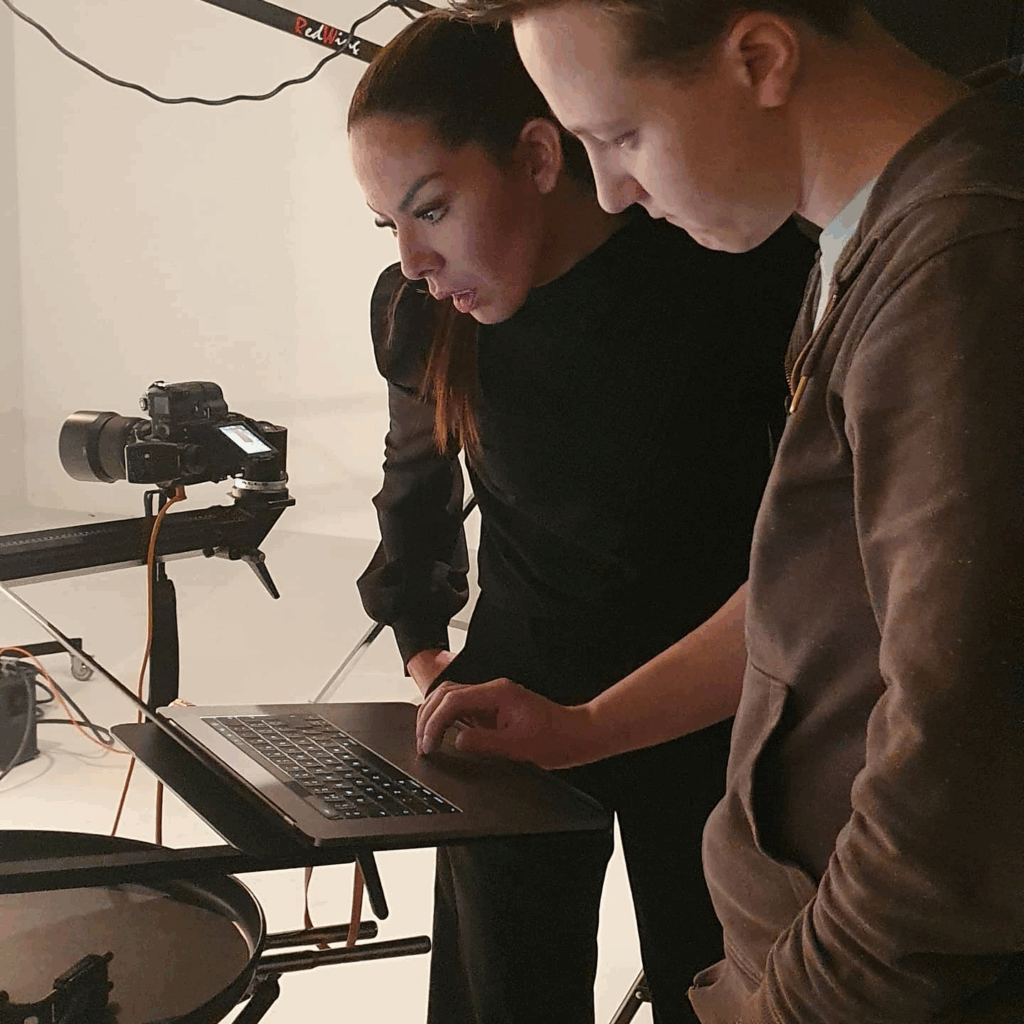
Beyond talent management, the agency expanded into content production and distribution. “Some brands say, ‘I need professional reels, drone shots.’ We provide photographers, videographers, full-service content,” Imane says.
“For a real estate project on Dubai’s Palm, an influencer posted on Snapchat and sold five villas worth $5 million each. I was in shock.”
This success elevated influencer status in MENA marketing. “In Arab countries, billboards feature influencers, not models,” she observes. “Brands use influencers as campaign faces; Steve Madden, Louis Vuitton, Chanel.”

Future Direction and Vision
Imane anticipates stricter regulations as the MENA creator economy matures. “Content creators will need licenses, making regulation easier,” she says. According to her, these barriers may reshape the market: “Smaller creators might quit due to licensing and rules. The professionals will remain.”
For the Arab Influencer Agency, this aligns with their strategy. Imane plans to take a deeper involvement in content creation. “We want to be part of the full-service concept,” she explains. “Creators have teams: makeup, hair, videography, photography, and scripts. We integrate into that.”
Throughout these changes, Imane emphasizes the importance of personal relationships. “We work personally with our talents,” she stresses. “They say talking with us feels like family. That’s essential to me.”
This balance of structure and connection forms the foundation of Imane’s vision. “We don’t work with talents just for numbers,” she concludes. “We need mutual understanding. Working with them is intense, involving daily communication and helping each other.”
Subscribe to Our Newsletter
Check Out Our Podcast