



Technology
Why Lickd Launched A Music Licensing Platform For Brands

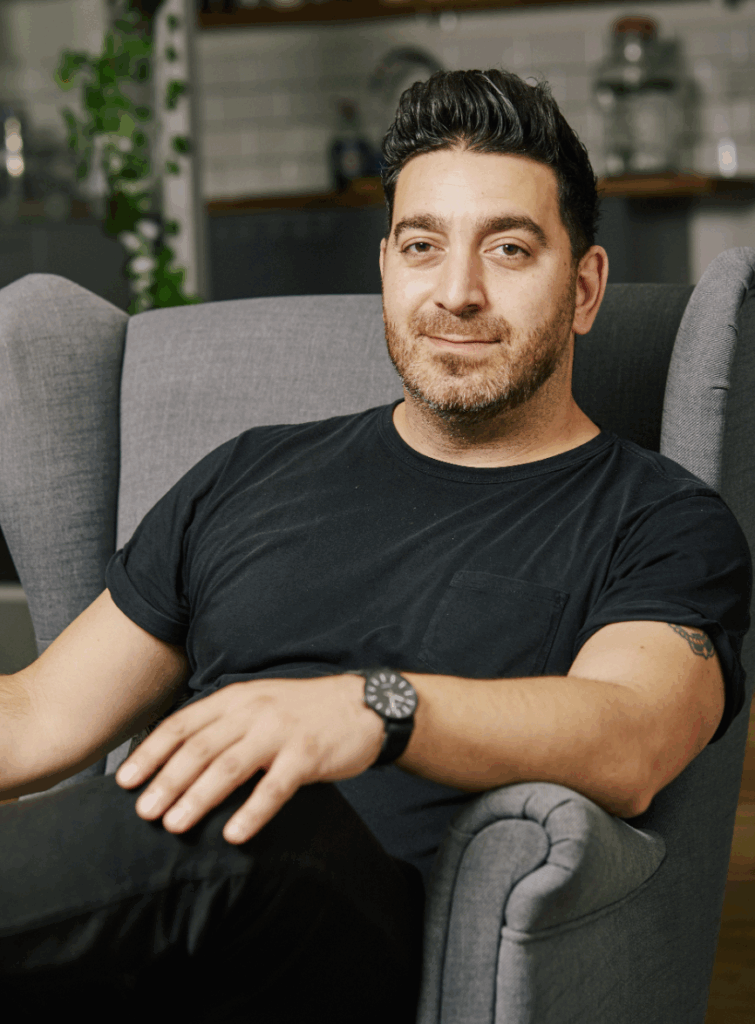
Paul Sampson, co-founder and CEO of UK-based music licensing platform Lickd, is tackling one of the biggest pain points in modern marketing: legally licensing mainstream music for brand campaigns across social platforms. With the launch of Lickd’s brand platform in May, Paul is bringing together major music labels, publishers, brands, and agencies to streamline a process that has historically been cumbersome, time-consuming, and fraught with legal risks.
Founded in November 2016, Lickd began as a music licensing platform for content creators, but Paul recognized early on that brands would soon face similar challenges. “When I first signed the major labels for the creator platform, I told them brands would have the same problems one day,” Paul recalls. His prediction has proven accurate, with major companies facing multi-million-dollar lawsuits for music copyright infringement in their social content.
As brands embrace creator-style content marketing, they face the impossibility of licensing commercial music at the pace required for modern social media campaigns. “Brands are now putting out three, four, five, six, sometimes 20 pieces of content a week,” Paul explains. “They can’t go through the traditional licensing process. It’s unwieldy, untenable, and not fit for purpose.”
According to Paul, the traditional music licensing process can take 4-12 weeks, which is manageable for film, TV, or traditional advertising with long lead times, but completely impractical for the quick content production cycles of TikTok, Instagram Reels, or YouTube Shorts. Brands that attempt to license commercial music often find themselves in a frustrating loop where they clear the master recording rights with a label, only to discover they must separately identify, contact, and negotiate with multiple publishers who control the songwriting rights.
“I’ve seen songs with 12, 13, 14 rights holders,” Paul notes. “You have to get responses and quotes from all of them, make sure payments align with ownership shares, then contract with each before going back to the label to close.”
This complexity explains why labels often report a zero percent closure rate on social media licensing requests. As one label executive told Paul, “We used to ignore brands and agencies when they came to us for social licenses, because it’s micro for us. It takes the same time to clear a 30-second TikTok post as a global TV commercial. One’s half a million dollars or five million dollars, and one’s a few grand.”
The consequences of this broken system have become increasingly severe, with major brands facing serious legal issues.
The Legal Stakes for Brands
In the United States, statutory damages for copyright infringement can range from $750 to $150,000 per infringement. “If you’re a brand and you post once and 10 creators also post with the same song, that’s 11 times $150,000 in one morning,” Paul explains.
These aren’t hypothetical risks. For instance, Marriott Hotels faced a $130 million lawsuit involving 950 alleged infringements. Furthermore, 14 NBA teams were sued by the music industry, with total lawsuits in the space exceeding $1 billion, according to Paul.
“You can’t proceed that way and think it’s viable,” Paul warns. “There’s been too much written about it to claim naivety now.”
These mounting legal threats created what Paul calls a “magic moment” when all parties recognized the need for a better solution. Labels and publishers were frustrated by their inability to capitalize on this growing market, while brands needed a safer, more efficient way to access commercial music.
Inside the Platform
Lickd’s solution leverages the company’s unique position and data advantages. “I know who publishes the major label’s music, but they don’t,” Paul says. This complete ownership data on 14 million songs (compared to just 1.5 million on their creator platform) enables Lickd to cross-reference and pre-clear tracks at scale.
The platform currently houses approximately 10,000 tracks with 2,000-5,000 new additions monthly. Users can browse by era, genre, mood, or theme, with pricing clearly indicated by a 3-tier pricing system that makes costs transparent and predictable.
When a brand identifies a song they want to use, they submit a request specifying the brand name, social handles, and a brief description of the creative concept. The standard license covers up to five short-form videos across TikTok, Instagram, Snapchat, and YouTube Shorts, with up to 60 seconds of the song, for a period of 12 months with worldwide rights.
The system also features an automated approval process. Rights holders receive immediate notification of requests through their own portal, where they can quickly review all relevant details. With all necessary information consolidated in one place, rights holders can make approval decisions quickly.
“In theory, if every rights holder was at their desk when you submitted, you could have all six approvals in minutes,” Paul says. More realistically, the platform has reduced the typical 12-week licensing timeline to a 24-72 hour turnaround commitment from participating rights holders.
The platform also addresses payment frictions by allowing brands to submit card details at the time of request, with payment processed only upon approval. Larger agencies or in-house teams can maintain a balance on the platform that debits automatically when licenses are approved.
Industry Partnerships and Early Success Stories
Paul reveals he has secured partnerships with the “top six publishers in the world” as well as Universal Music Group, the largest record label group, and BMG. According to him, other major labels are expected to join “imminently,” with contracts already agreed upon and in the final stages.
Although newly launched, the platform has already facilitated notable brand campaigns with pricing transparency, demonstrating the new market reality. Ray-Ban and Meta licensed Disclosure’s music for £4,800, while Therabody’s Theragun used Simple Minds’ “Don’t You Forget About Me” for £4,000. Nike has worked with the platform through influencer channel ‘Life on Film’, while creator Niko Omilana (Shades by Niko) from the Beta Squad used it for his brand launch.
L’Oréal Redken’s use of Disclosure’s “Tondo” demonstrates how mainstream artists previously out of reach for social campaigns are now accessible through the platform.
The Business Case: Beyond Legal Compliance
While avoiding lawsuits provides a compelling reason to use licensed music, Paul emphasizes that the business benefits extend far beyond legal compliance.
“In every media – broadcast, online, in-store, TV, cinema, film, and now social – mainstream music has outperformed independent or stock music by six-to-eight times in dwell time, brand recall, engagement, and purchase behavior,” he says.
This performance differential creates a clear business case for licensed music, particularly as social platforms increasingly prioritize engagement metrics. While marketing teams often focus on incremental improvements of a few percentage points, Paul believes many overlook music as a powerful tool for enhancing content performance.
“Everyone’s pitching 3%, 5%, 7% gains,” Paul observes. “No one’s considering music as the tool to get that.”
The historical barrier has been the painful licensing process rather than the cost itself. “I get why people avoided mainstream music; it took too long, the industry didn’t play ball,” Paul acknowledges. “Now it’s possible. You can increase content performance with better music.”
Expanding Capabilities and Addressing New Challenges
While looking ahead, Paul indicates several expansion opportunities for Lickd’s brand platform. Beyond incorporating all major label catalogs “within the next few months,” the company plans to expand beyond organic social content into paid social advertising.
This expansion presents additional complexities that Lickd is actively working to solve. While organic content is viewable worldwide (making global licensing sensible), paid social is targeted by geography, requiring more nuanced licensing structures.
“If I’m buying ad space, I’m buying it by geography,” Paul explains. “So we go from worldwide to where you’re spending. Someone might say the U.S. and Vietnam, which is cheaper than the U.S. and Europe.”
Similarly, advertising campaigns vary widely in duration, from two months to five years, each requiring different pricing considerations.
Paul also acknowledges the emerging challenge of AI-generated content, which can create seemingly high-production content with minimal resources. This blurs traditional distinctions between organic and paid content, requiring new frameworks for determining appropriate licensing fees.
“When you’ve got content that looks like it cost $5 million, the music industry wants to protect that revenue stream,” he says. “They can’t just let everything go for a pound.”
These ongoing discussions about “what the future is going to look like” position Lickd at the center of negotiations between music rights holders and brands. Paul envisions a “lower fee, higher volume” model, but acknowledges that determining the specifics requires continued collaboration across industries.
The implications extend beyond individual brands to the creator economy as a whole. As more brands legitimize their music usage, the entire ecosystem becomes more sustainable, with proper compensation flowing to artists and rights holders while creative options expand for marketers.
“The paradigm has shifted. Labels and publishers are now leaning into this space,” Paul concludes. “Whatever you thought was true about licensing music for social no longer applies.”
Checkout Our Latest Podcast