




Strategy
Creators As The New Store Associates: Why PACKFIRE & Popfly Built An Ambassador Program For Trust, Not ROI

PACKFIRE, an outdoor brand selling portable fire pits, began developing its creator strategy with no expectation of immediate conversions or short-term ROI. Instead, the company approached creator partnerships as infrastructure that needed to be established carefully before it could perform. That mindset shaped PACKFIRE’s decision to partner with Popfly, an outdoor-focused creator platform, in early 2026 to develop a structured influencer and ambassador program designed to scale trust, validation, and learning over time.

The partnership brings together three perspectives shaping the program’s direction: Mike Wallenfels, PACKFIRE’s strategic advisor with decades of experience in outdoor retail and brand building; Nazera Carlson Carpenter, who oversees the brand’s day-to-day marketing execution; and Andrew Riojas, who works with outdoor brands at Popfly to design creator and ambassador systems. Together, they are building a creator-led go-to-market approach intended to replace (or at least supplement) traditional retail and media pathways they believe no longer deliver the same level of trust or reach.
Rather than treating creators as a distribution channel, PACKFIRE views its ambassador program as a learning system that generates insight, content, and long-term relationships before it is expected to drive meaningful commercial outcomes.
Laying the Foundation Before Expecting Returns
For PACKFIRE, the starting point was recognizing what creator marketing could not realistically do in its earliest stages.
“We’re not seeing a flood of traffic from our initial seeding, and that’s okay,” Mike says. “What we’re doing right now is laying a foundation.”

Mike Wallenfels
That foundation includes building a base layer of creator-led content, validating the product, and providing visual proof that the brand exists beyond its own channels. Rather than judging early creator efforts by immediate sales impact, the team is focused on whether the right building blocks are in place ahead of the outdoor season.
“We know our real sales window starts later in the spring and summer,” Mike explains. “If we don’t spend the early months building credibility and content, we won’t be ready to capitalize when demand actually shows up.”
This framing runs counter to how many brands enter creator marketing, often under pressure to justify spend quickly. For PACKFIRE, the decision was intentional: establish credibility first, then layer in performance mechanics over time.
From Retail Floors to Creator Validation
Mike’s perspective is shaped by decades in traditional outdoor retail, where product discovery followed a familiar path.
“You made a product, you tried to win an Outside Magazine award, and you hoped a retailer would put it on a shelf,” he says. “If you were lucky, a knowledgeable salesperson would explain it to a customer.”
That system, he argues, no longer functions at scale. Specialty retail has contracted, in-store expertise has declined, and traditional media no longer plays the same role in product validation.
“The retail floor associate used to be the influencer,” Mike says. “That role has shifted.”
In its place, creators, particularly those on YouTube and long-form social platforms, have become the primary source of product education and trust, according to Mike. For complex or experiential products like PACKFIRE’s portable fire pits, that shift is especially pronounced.
“This is a hard product to explain in copy,” he adds. “Video validation from someone people trust matters far more than a static product description.”
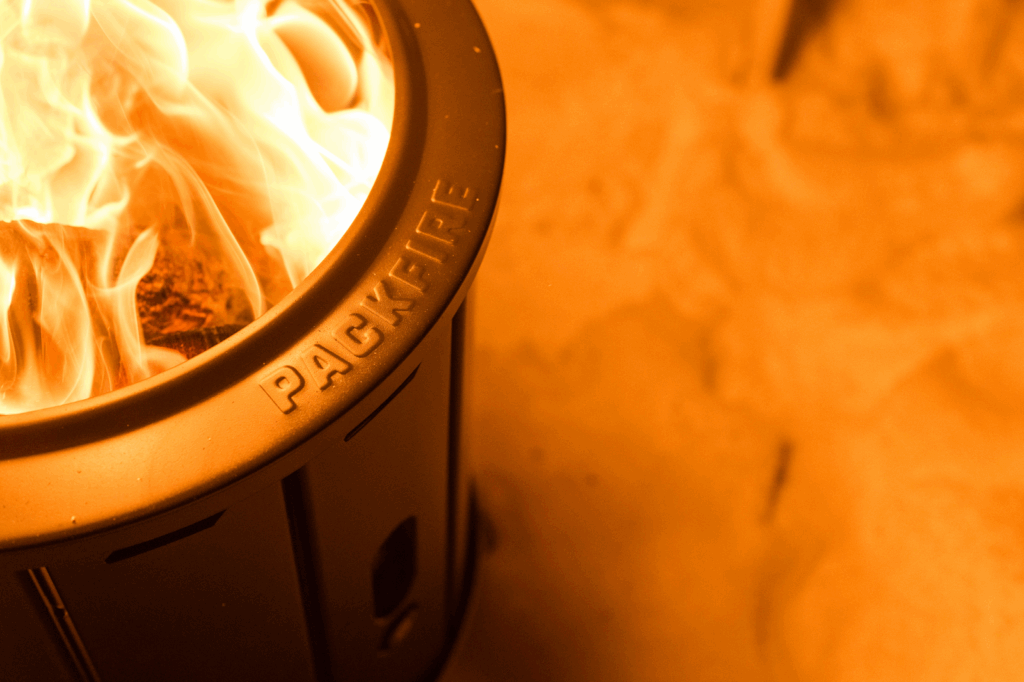
Photo credits: Joe Klementovich (@Klementovich)
Why Popfly Solved Time, Trust, and Scale
The move toward creators raised a practical question for PACKFIRE: how to execute without overwhelming a small team.
Nazera describes early attempts at creator outreach as deeply manual. “I was spending hours on social media just trying to figure out who might be right,” she says. “Then you have to message them, track responses, manage shipping, keep assets organized … it adds up fast.”
Discovery alone wasn’t the problem. Time, trust, and scalability were.
“We needed help finding creators, but we also needed structure,” Nazera explains. “We didn’t have the capacity to build all of that internally.”

Nazera Carlson Carpenter
Popfly addressed those needs by centralizing creator discovery, communication, submissions, and campaign logistics into a single workflow. For PACKFIRE, that meant less time spent managing spreadsheets and inboxes and more clarity around how creator efforts could compound over time.
“One of the biggest shifts was going from convincing creators to apply to creators raising their hand,” Mike says. “We ran a seeding campaign, had over a hundred creators apply, and we chose the ones that made sense.”
That shift changed the dynamic. Creators who opted in were already aligned with the product and lifestyle, reducing both risk and friction.
Creators as the New Retail Floor Associate
Across the partnership, one idea comes up repeatedly: creators now perform the function that retail once did.
“People are serious about the gear they buy,” Mike says. “They want to see it used by someone who actually lives that lifestyle.”
Andrew sees this daily from the creator side. “When an outdoor creator talks about a product, their audience is watching closely,” he says. “That trust is earned over time, and brands can’t shortcut it.”

Andrew Riojas
In this model, creators don’t just generate impressions – they educate, demonstrate, and contextualize products in real-world settings. For PACKFIRE, that includes everything from overlanding trips to vanlife setups to backyard use.
“The goal isn’t just reach,” Nazera adds. “It’s showing how the product fits into someone’s actual routine.”
Ambassador Programs as a Learning System
Rather than viewing ambassadors as a fixed roster or a simple payout mechanism, PACKFIRE treats its program as an ongoing learning loop.
“The difference between influencers and ambassadors is time,” Mike says. “Ambassadors are people we want to build with.”
Early seeding campaigns function as testing grounds. The brand evaluates not only content quality, but how creators communicate, how their audiences respond, and whether the partnership feels natural.
“We’re learning what type of content works on different platforms, which communities resonate, and what gaps we still have,” Nazera explains. “That informs what we do next.”
Andrew describes this as compounding value: “Each campaign makes the next one smarter. You’re not starting from zero every time.”
Over time, those insights shape seasonal planning, platform prioritization, and future product launches. Ambassador relationships also allow PACKFIRE to move faster by activating known partners rather than sourcing from scratch.
Not Just a Payout Model
While affiliate and compensation structures matter, they are not the starting point.
“Yes, creators need to be rewarded,” Mike says. “But if it’s only about a rate card, you miss the bigger picture.”
For PACKFIRE, the long-term goal is shared upside; creators benefit from the brand’s growth, and the brand benefits from creators’ credibility. That alignment, the team believes, is what turns one-off content into durable brand equity.
“We want creators who feel like partners, not vendors,” Nazera says.
Building Toward the Season Ahead
As PACKFIRE looks toward the peak outdoor season, success will be measured across multiple layers: content depth, creator relationships, audience trust and, eventually, conversions.
“We want to see transactions,” Mike says. “But we also want to see creators whose content becomes a reference point for the brand.”
For Popfly, the partnership follows a broader trend among outdoor brands shifting away from transactional influencer marketing toward systems that prioritize credibility and longevity.
“When brands and creators grow together, everyone wins,” Andrew says.
For PACKFIRE, that belief underpins the entire strategy: build the foundation first, let trust compound, and allow results to follow.
Cover photo: Carly Olsen (@carlyelise)
Subscribe to Our Newsletter
Check Out Our Podcast