



Strategy
How A Dark Comedy Film Became A Creator-Led Campaign: Inside D(e)AD’s Path To Global Scale

What does it look like when an independent film skips festivals, studios, and traditional distributors, and still finds a global audience willing to show up and pay?
D(e)AD, a semi-autobiographical dark comedy written by and starring Isabella Roland, moved into its digital release phase in late 2025 with a ticketed livestreaming event, following a limited run of in-person theatrical screenings. The livestream marked a pivotal moment in a campaign that had already challenged long-standing assumptions about how independent films are supposed to launch, extending the film’s reach beyond physical venues while preserving its event-driven approach.
The film did not debut at a major festival or secure a studio acquisition. Instead, its release unfolded through a sequence of staged moments – crowdfunding, live theatrical screenings, and a ticketed direct-to-consumer digital premiere – each designed to validate demand before expanding reach through subsequent distribution windows, including third-party streaming platforms.
At the center of that effort was Isabella (“Izzy”), a comedian and creator with a built-in digital following, and Laser Webber, a producer and audience-development specialist known for helping creators translate online fandom into direct financial support. He helped structure the campaign not as a single launch, but as a multi-phase release designed to test, deepen, and then scale audience engagement.
“People wanted to see this movie,” Laser says. “It didn’t make sense to wait years for a distributor when the audience was already there.”
They were joined by two key partners with distinct roles in the creator economy. Dynasty Typewriter, a Los Angeles-based comedy theater and production company, served as a cultural anchor and live-event hub, hosting early screenings and community-driven events. Kiswe, a live-streaming and direct-to-consumer technology company that powers ticketed events for creators, handled the infrastructure behind the film’s global digital premiere.
Rather than chasing institutional approval, D(e)AD followed a creator-led path rooted in audience ownership, eventization, and direct-to-fan distribution. The result is not just an unconventional film release, but a revealing case study in how creators are designing their own distribution playbooks, one intentional phase at a time.
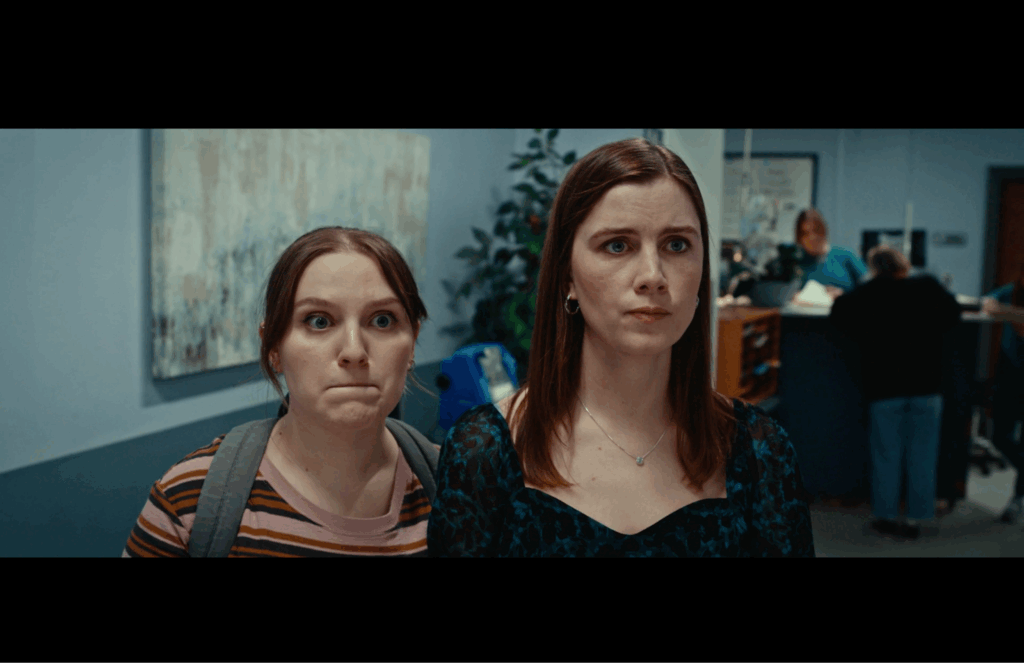
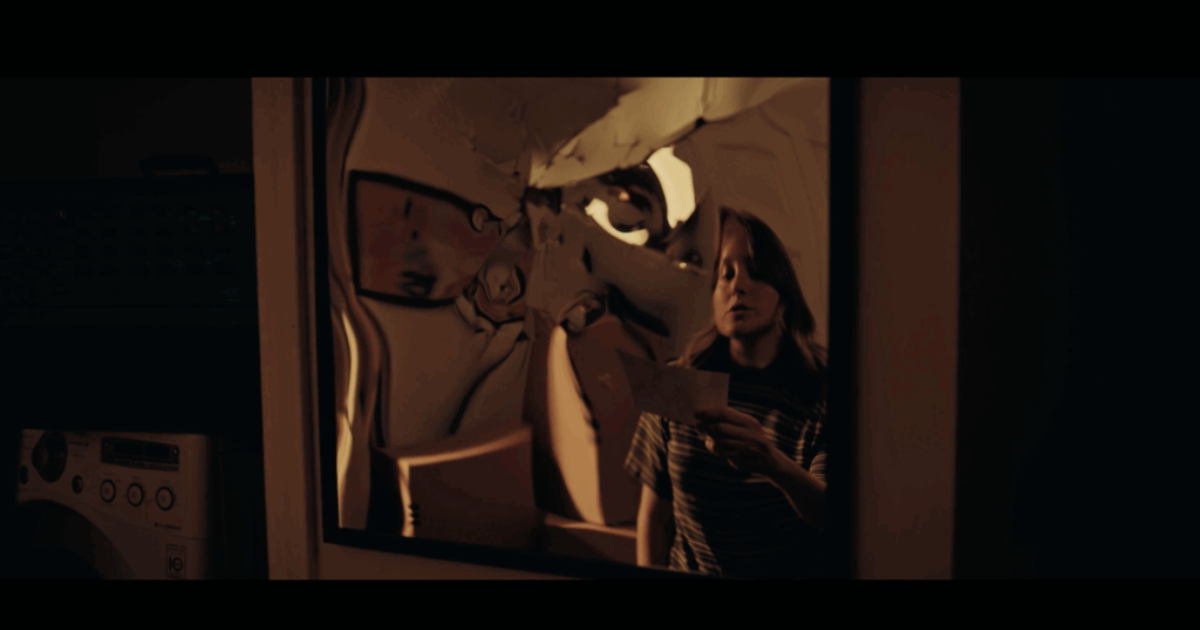
A Scene from D(e)AD
A Film Built for an Audience That Already Existed
D(e)AD began as an extremely independent project. Directed by TV show creator, actress, and writer Claudia Lonow, Isabella’s mother, the film blends dark comedy with family history, drawing directly from their lived experience. The production itself was self-funded, relying on contributions from family members involved in the project.
While the creative team initially hoped for a traditional indie trajectory (film festivals followed by distribution), that path was quickly abandoned due to early audience interest.
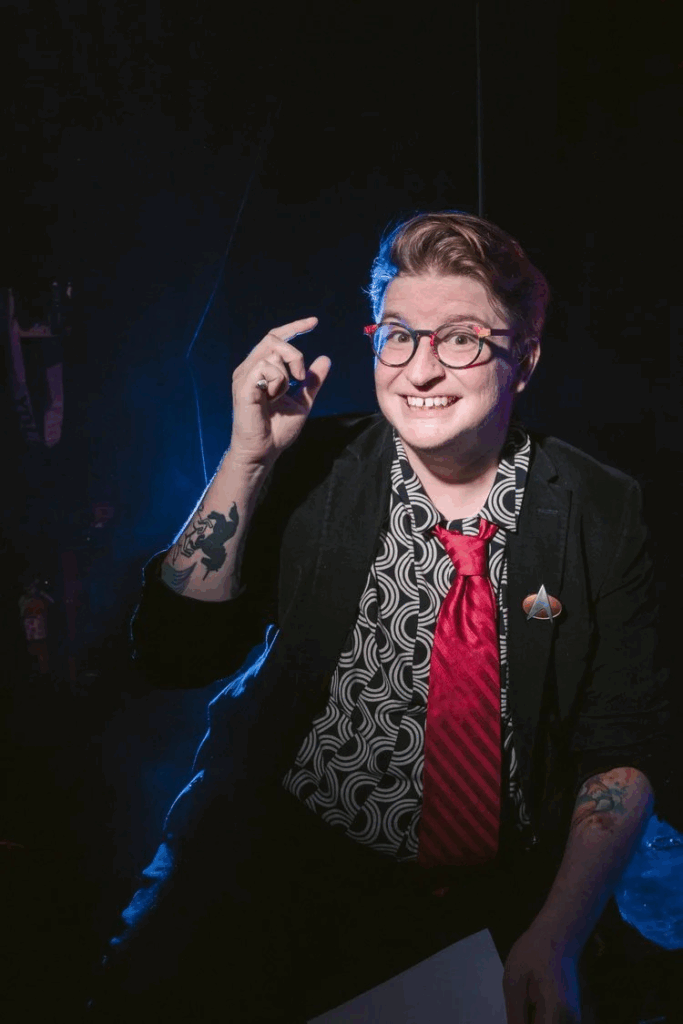
Laser Webber
To complete post-production, the team turned to crowdfunding, bringing in Laser to manage the campaign. His background spans comedy production, audience development, and large-scale crowdfunding efforts, and his approach was less about raising money in isolation than about confirming whether demand actually existed.
“What we needed before we launched the Kickstarter,” Laser says, “was to tell the story of this film the way we did; Izzy on social media, a newsletter, telling the story of her relationship with her dad, her relationship with writing and the industry, and getting thousands and thousands of her fans excited about this dream.”
That preparation proved decisive. As Laser reports, on the first day of the Kickstarter campaign, D(e)AD raised $118,000. By the end of the campaign, it reached 344% of its original goal.
The funding mattered, but the more important signal, according to Laser, was behavioral. Fans didn’t just donate. They demonstrated urgency, attention, and willingness to act.
For the team, that reframed what came next.
Crowdfunding as Demand Validation, Not Just Financing
In traditional film models, financing often precedes audience access. With D(e)AD, the sequence was reversed. The audience arrived first.
Laser credits much of the campaign’s success to infrastructure that existed outside of social platforms. While the cast had sizable followings on Instagram and YouTube, Laser emphasizes the importance of building an email list ahead of launch.
“People can’t click a link from Instagram, and they don’t want to,” he says. “Meta doesn’t want you leaving Instagram. So being able to have an email list that was fun to be part of made a huge difference. I think a full third of our money came straight from there.”
That distinction between reach and conversion shaped every phase of the campaign. Instead of assuming attention would automatically translate into sales, the team focused on reducing friction and making participation feel meaningful.
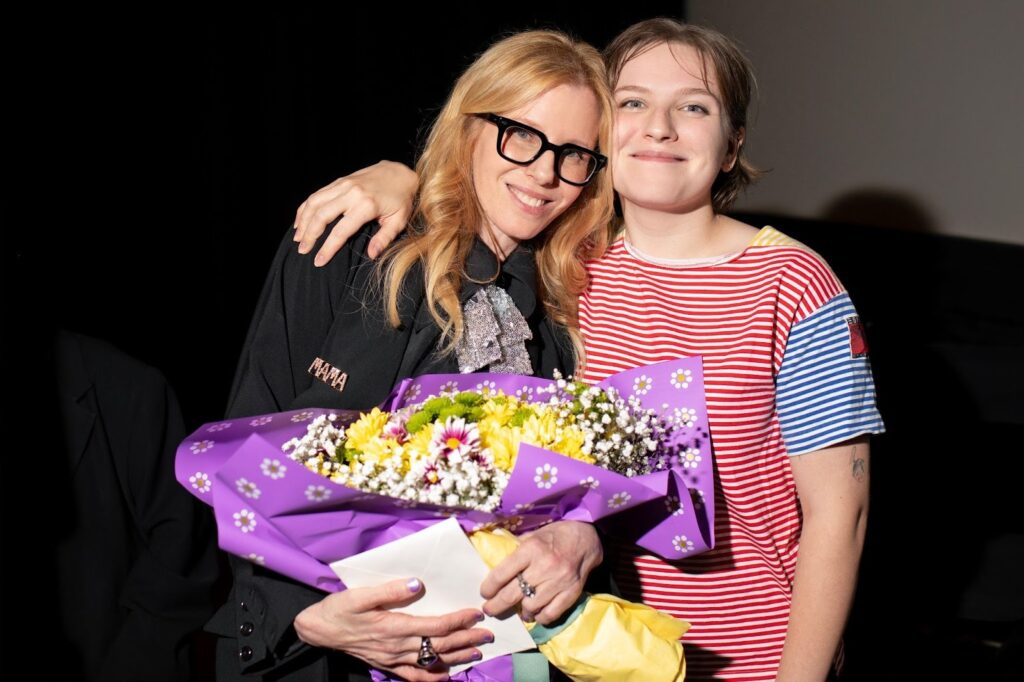
Claudia Lonow & Isabella Roland
For Isabella and Claudia, the early response also altered how they viewed the film’s future.
“I knew from the first screening that the movie played,” Claudia says. “We got laughs, we got tears. People came up to us afterward, telling us how much it affected them. I just felt if we could get it in front of our audience – really Isabella’s audience – the movie would work.”
That confidence opened the door to the next phase.
Why Live Screenings Came Before Streaming
After crowdfunding, D(e)AD did not move directly to digital platforms. Instead, the team leaned into live theatrical screenings, driven more by audience behavior than by tradition.
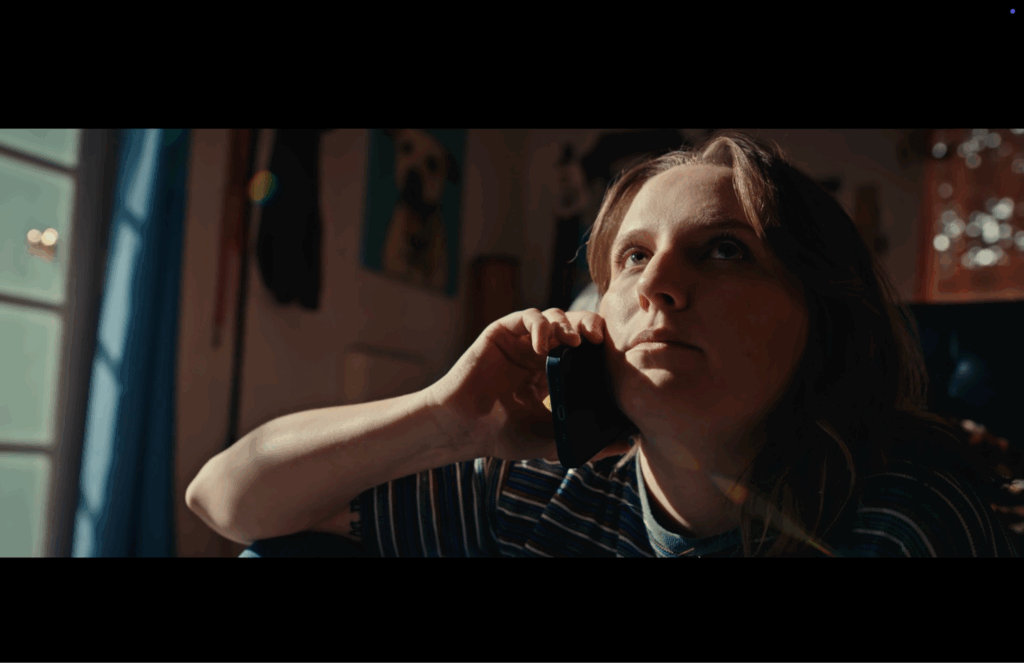
A Scene from D(e)AD
Initially, the plan was modest. Laser estimated the team might secure 10 to 15 screenings. What followed exceeded expectations.
He reveals that fans began asking why the film wasn’t showing in their cities. The team responded by putting up a simple Google Form and encouraging audiences to tag local theaters. More than 8,000 people submitted requests.
Ultimately, D(e)AD screened in more than 260 showings across roughly 100 theaters, many of them independent cinemas. Each screening was treated as an event, often featuring live or pre-recorded Q&As with the cast and creators.
“It wasn’t just showing in theaters,” Laser says. “It was one or two nights. Every screening had something special you only got if you were there.”
For the creators, those screenings did more than generate ticket sales. They created emotional feedback loops as fans met, asked questions, and shared personal stories that mirrored the film’s themes.
In cities like Austin and New York, audiences drove hours to attend. In some cases, Laser shares that the theater staff themselves were fans, offering impromptu hospitality to the cast. The screenings became community gatherings, not just viewings.
That sense of shared experience would later inform how the team approached streaming.
Dynasty Typewriter as a Cultural Anchor
A key partner throughout the campaign was Dynasty Typewriter, a Los Angeles-based comedy venue with deep ties to the creative community surrounding the film.

A Scene from D(e)AD
Dynasty hosted early screenings, live fundraising events during the Kickstarter phase, and later collaborated on the digital premiere. For the D(e)AD team, the venue offered something difficult to replicate elsewhere: cultural credibility paired with operational flexibility.
“Dynasty really understands the power of fandom and independent artists,” Laser says. “They were willing to screen the film in a world where a lot of indie theaters won’t touch something unless it’s won awards or gone through festivals.”
He credits Dynasty’s involvement with helping legitimize the project without requiring external validation. It also reinforced the campaign’s core principle: meet audiences where they already feel connected.
That principle carried over when streaming entered the picture.
Turning a Finished Film Into a Live Digital Event
By the time D(e)AD transitioned to streaming, the film already had momentum. What the team wanted was not passive on-demand availability, but an experience that preserved the energy of a premiere.
That goal led to Kiswe, a live streaming technology company best known for powering ticketed events across music, sports, and creator-led entertainment. Kiswe’s role was not to replace theatrical screenings, but to extend them.
“We’re an end-to-end streaming partner,” says Jake Nishimura, Kiswe’s VP of Marketing. “That means technology, ticketing, customer service, operations, and helping fill in gaps where our partners need support.”
For D(e)AD, Kiswe powered a branded direct-to-consumer destination hosted through Dynasty Typewriter. The digital premiere included live chat, real-time fan interaction, custom visual elements tied to the film, and upsell opportunities such as VIP after-show Q&As.
“It wasn’t a Kiswe-branded experience,” Jake says. “It was a D(e)AD experience. Our job is to disappear into the background and make it feel authentic to the fans.”
The premiere sold more than 3,500 tickets and generated over $50,000 in revenue, according to Kiswe. More importantly, Jake notes, it demonstrated that a pre-recorded film could still be “eventized,” i.e., watched together, discussed live, and monetized beyond a single ticket.
Distribution as a Sequence, Not a Moment
One of the clearest takeaways from the D(e)AD campaign is that each phase served a distinct purpose.

A Scene from D(e)AD
Crowdfunding validated demand and financed completion. Live screenings deepened emotional investment and surfaced geographic signals. Streaming expanded access while preserving community dynamics.
None of those phases replaced the others. Instead, they compounded.
“We could have gone straight from theaters to VOD (Video on Demand),” Laser points out. “But people like things to be an event. Even if they’re watching on a computer, they want a deadline, a moment.”
For Kiswe, the campaign reinforced a broader trend toward creator-led distribution models that sit between traditional theatrical releases and platform-driven streaming deals.
“There’s a wide space between brick-and-mortar theaters and major streaming platforms,” Jake says. “Direct-to-consumer digital distribution lives in that space.”
That middle ground is increasingly attractive to creators who already control audience relationships and want to maintain them.

Isabella Roland & Claudia Lonow
What the Campaign Model Reveals
The D(e)AD campaign highlights several dynamics shaping the creator economy beyond film.
First, audience ownership matters more than platform reach. Email lists, direct communication, and first-party data enabled each phase of the release.
Second, eventization increases value. Whether in theaters or online, framing content as a shared moment changed how audiences showed up and what they were willing to pay for.
Third, partners matter, but timing matters more. Dynasty Typewriter and Kiswe entered the campaign at different moments, each aligned to a specific need rather than a one-size-fits-all solution.
Finally, creators don’t need to wait for permission.
“People want to see art,” Laser says. “It seems silly to wait for approval when the audience is already there.”
D(e)AD is now available across multiple platforms, including Dynasty’s digital storefront and major transactional services. But for the team behind it, the campaign’s real success lies in its repeatability.
The infrastructure – audience-first, phased, and event-driven – is already in place for whatever comes next.
“We never had to compromise anything about the film,” Laser says. “Nobody gave notes. Nobody changed the story. Izzy and Claudia got to make the thing they wanted to make and then show it directly to the people who wanted to see it.”
Photo source: D(e)AD
Subscribe to Our Newsletter
Check Out Our Podcast