


Technology
From Music Marketing To Creator Infrastructure: Anthony Pisano’s Plan To Scale Performance At Game Over Media

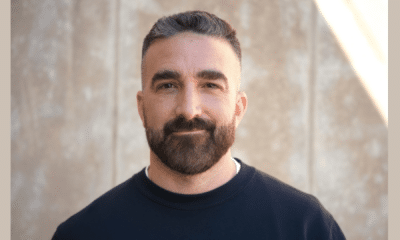
Anthony Pisano’s career grew closely alongside the creator economy. After more than a decade as a touring DJ and music producer, he moved into gaming-led creator marketing long before it became a mainstream strategy. Today, as founder of Game Over Media, Anthony is focused on solving what he sees as the sector’s next constraint: the lack of scalable infrastructure to manage creator discovery, content distribution, and performance measurement beyond one-off campaigns.

Founded in 2019 in Los Angeles, Game Over Media positions itself as a media, marketing, and technology company built around the convergence of gaming and music. Anthony argues that this convergence is now one of the most reliable pipelines for audience attention, particularly among Gen Z, and one that brands increasingly struggle to access efficiently.
“What we’re automating is not able to be done by a staff of humans,” he says, describing why the company has moved decisively into software.
That operational challenge of activating creators at scale, measuring outcomes, and reducing risk sits at the center of Game Over Media, and also reflects Anthony’s own path through the creator economy.
From Music to Gaming and the Business That Followed
Before founding Game Over Media, Anthony spent more than a decade in the music industry as a DJ and producer, touring globally, holding residencies at major nightclubs, and releasing music through labels, including Ultra Records and Sony.
“I had a DJ career producing for like 10, 15 years,” he says, describing a period defined by constant touring and festival appearances.
That experience took on new relevance after Anthony relocated to Los Angeles and began working out of a studio frequented by creators. One of those visitors was FaZe Clan member FaZe Blaze. Watching Blaze’s audience respond to music promotion challenged Anthony’s assumptions about distribution.
“I was looking at his fan base,” he recalls. “His audience at the time was extremely engaged.” Gaming – something Anthony had grown up with – suddenly emerged as a powerful channel for music discovery.
An early test confirmed the opportunity. Anthony released a track directly to Blaze’s YouTube audience, and it went viral. The result reframed how he thought about audience-building: if creators already commanded trust and attention at scale, music promotion did not need to rely solely on traditional industry pipelines.
Game Over Media emerged from that realization. The company initially operated as a marketing agency and talent management business focused on gaming creators, helping record labels distribute music through gaming audiences while expanding into brand activations across entertainment, sports, and consumer categories. Atlantic Records became an early anchor client, followed by work with major brands and platforms, including Amazon and Fortnite. During this phase, Game Over Media also managed up to 15 gaming creators, operated a content house in LA, and partnered with media companies such as TBS and Bleacher Report on original programming blending music and gaming culture.
The COVID-19 pandemic accelerated demand for digital-first marketing. As live events disappeared, labels and brands shifted budgets online. “Record labels and brands really didn’t have a choice but to market digitally,” Anthony says.
As the business expanded, the operational strain of running creator campaigns manually grew, prompting Anthony to step back from talent management and invest in software to scale what the company had been doing manually.
From Agency Services to Software Infrastructure
Over the past several years, Game Over Media has reoriented around GameTune, a platform designed to automate creator discovery, outreach, clipping, and performance measurement. The goal, Anthony explains, was to replicate what his team had been doing manually, only at scale.
“We used to do a lot of montage campaigns and a lot of activations on Twitch where we would create these moments,” he says, adding that the challenge came after those moments occurred. Clips needed to be distributed, creators needed to be coordinated, and brands needed proof of performance. GameTune was built to handle those workflows programmatically.
The platform allows brands to define campaign parameters (geography, audience interests, average viewership, timelines) and uses AI-driven tools to surface creator matches. Outreach, traditionally one of the most time-consuming steps in creator marketing, is handled through automated messaging systems.
“One of the biggest pain points in creator marketing currently is the amount of time it takes to do outreach, especially for large campaigns,” Anthony says.
Beyond discovery and outreach, GameTune focuses heavily on clipping, a fast-growing segment of the creator economy in which short-form content derived from longer streams is distributed across platforms at scale.
Performance as the Organizing Principle
Anthony is explicit about the shift he sees underway in brand-creator relationships. According to him, large creators and podcast personalities still command big budgets, but for most brands, performance-based systems are becoming more attractive than flat-fee influencer posts.
“It’s going to get harder and harder for companies to spend 10k, 20k, or 50k on just one creator,” Anthony says. In contrast, he adds, CPM-based (Cost per Mille) clipping campaigns “eliminate risk for the brands” by tying spend directly to delivery.
GameTune’s reporting infrastructure is built around that logic. The platform tracks impressions, views, hours watched, and engagement metrics, while also supporting smart links and mobile measurement partner integrations for upper and lower-funnel attribution. It also includes audience authenticity scoring, fake follower detection, and AI-generated brand safety reports that scan creator content for potential risks.
However, Anthony emphasizes that success still depends on the underlying product or content. “It really comes down to the song or the product. If the game is getting traction, we’ll see that in the results,” he says. Creator participation, he notes, becomes more organic when alignment is real.
GameTune has been in beta since November 2025 and is scheduled for a broader market launch in March 2026. For Anthony, that launch represents a shift from services-led growth to product-led scale. “Our number one priority is getting GameTune launched in March and scaling up from there,” he says.
Gaming, Music, and the Next Phase of In-Game Culture
While GameTune operates across platforms, Anthony remains focused on gaming as a cultural engine. He points to in-game concerts and activations on platforms like “Fortnite” and Roblox as evidence of where audience attention already lives.
“Over three million users will go to a concert in a day,” he says, describing the scale available to artists and brands willing to meet audiences inside games.
Moving forward, Anthony is particularly focused on the release of “Grand Theft Auto VI.” He views the title as a potential inflection point for music and gaming, given its historical integration of music, radio, and cultural storytelling. “It’s going to be the most relevant mix of entertainment, gaming, and music that we’ve seen yet,” he predicts.
For Game Over Media, these shifts reinforce the importance of infrastructure. As platforms fragment and content velocity increases, Anthony believes scalable systems will determine which companies can operate effectively.
As for his advice to brands planning their 2026 strategies, Anthony returns to the idea of engineered moments (what he calls “tempo moments”) designed to travel across platforms through clipping and amplification. The emphasis, he says, should be on systems that allow those moments to be repeated, measured, and optimized.
“The tools that we’re building right now are going to help a lot of different companies and a lot of different brands and creators,” Anthony says. “That’s what I’m excited to add to the space.”
Subscribe to Our Newsletter
Check Out Our Podcast