



Influencer
Beyond The Reveal: Kiara Tymec Breaks Down Her Workshop Content Business

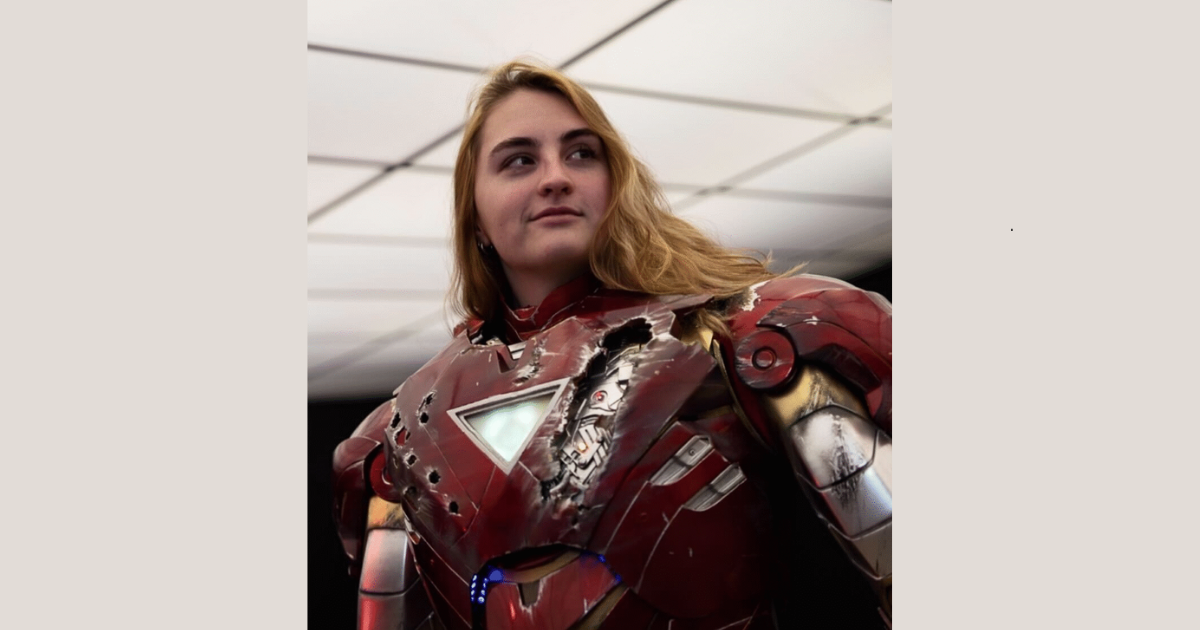
Kiara Tymec builds objects that most brands would consider unrealistic on a production timeline: functional Iron Man suits, animatronic robots, and large-scale replicas that blend fabrication, electronics, and design. Online, the results look seamless. Off-camera, the process is closer to controlled chaos.
“I’ll come up with an idea, and think, ‘Yeah, that sounds cool. I can do that in a month,’” Kiara says. “And then that idea slowly morphs into this giant boulder chasing me down a hill like I’m Indiana Jones.”
That tension between ambition and execution sits at the center of Kiara’s creator business. What began as a visually striking TikTok moment has since become increasingly YouTube-driven, with sponsorships, AdSense revenue, and a growing audience that follows her not for one-off spectacle, but for the reliability of what she can deliver under pressure.
From Visibility to Viability
Kiara had been posting her builds online for years before her breakthrough moment. Instagram, which she joined around 2017/18, primarily served as a platform to document work for friends and family. “It was just selfies and stuff,” she says. “And then occasionally I would be like, ‘Oh, here’s the thing I’m working on.’”
That slow accumulation of work mattered when TikTok entered the picture during the pandemic. Kiara posted a brief introduction focused on her Iron Man projects. “I was like, ‘Hey, I’m Kiara, and my only skill is building Iron Man suits,’” she says. The video spread quickly, picked up on Reddit, and caught the attention of established maker channels like “The Hacksmith.”
“I woke up to a new hundred thousand followers,” she says. “It wasn’t a ton, but it was a lot for me.”
The viral moment did more than add followers. It synchronized her platforms. Instagram traction accelerated. TikTok became a discovery engine. And for the first time, Kiara saw proof that large-scale builds could command sustained attention outside niche maker communities.
Avoiding the One-Project Trap
The Iron Man suit established Kiara’s credibility, but it also carried risk. “That was my brand,” she says. “I was the Iron Man suit girl.” She notes that leaning too hard into one format would have limited her future opportunities.
Her decision to rename her presence “Kiara’s Workshop” reflected a longer-term view. “I didn’t want to limit myself to cosplay or props or Iron Man suits or just one specific thing,” she says. “‘Workshop’ covered a large area of things.”
The flexibility allowed Kiara to broaden her content without alienating the audience that arrived for Marvel builds. Robots, Pokémon-inspired projects, and animatronics followed. The underlying promise remained consistent: she would attempt complex builds and document what it took to finish them.
The Shift to YouTube as a Business Engine
While TikTok and Instagram continued to drive reach, YouTube changed the economics of Kiara’s work. “Definitely YouTube and sponsors,” she says about revenue. “That’s my main thing now.”
Earlier in her career, income came primarily from short-form brand deals. Long-form YouTube content introduced steadier returns through AdSense and deeper integrations. That shift required structural changes to her workflow.
“I’ve developed an actual flow in my videos,” she says. “I have an editing style.” Where early content relied on montages and music, her YouTube work centers on narrative, pacing, and explanation.
Kiara handles editing herself, often compressing days of work into a single push. “I’ll sit down here for like eight hours and just crank it out.”
Her first major YouTube success, a Poké Ball build video that has surpassed 800,000 views, validated the platform as more than an experiment. “That was my first serious YouTube video,” she says, adding that it also made her more visible to management. “They saw that growth and thought it was very promising.”
Since 2024, Kiara has been partnered with talent management and creative agency Ziggurat XYZ.

Deadlines, Scope Creep, and Sponsor Reality
With monetization came pressure. Kiara describes herself as deadline-driven and anxious about letting partners down. “I always want to make sure I’m not pushing too much with the sponsors,” she says.
Brand expectations do not always align with production reality. “They sometimes think we can do things way faster than we actually can,” she says. One Transformers project allowed just 23 days for completion. Another partnership tied to “Alien: Romulus” gave her 11 days to sculpt a large-scale creature from the movie, but she still managed to complete and publish the video on time.
“All of my friends said no,” she says. “And I was like, ‘You know what, I’ll take it.’”
Those projects illustrate both the appeal and the risk of maker partnerships. Kiara thrives under pressure and enjoys these last-minute opportunities, but she also recognizes the limits. “Sometimes you have to say no,” she says. “Either you need an extension, or it’s just not happening.”

The Controlled Chaos Behind the Builds
Despite audience assumptions, Kiara does not follow a rigid production framework. “It’s a train wreck,” she says. Ideas begin as impulses, then expand. Research, reference images, materials, and 3D models follow. Problems emerge mid-build. Timelines compress.
“I usually finish the build like a week before the video’s due,” she says, noting the importance of stepping away before editing. “Otherwise, you go into it exhausted, and it’s hard to make it a good flowy video.”
That chaos is part of her appeal, but it also underscores the labor viewers rarely see. “People think it’s a lot easier than it actually is,” she says. “They forget about the part where you have to 3D model it first. That doesn’t just show up.”
Entertainment First
Kiara’s content balances accessibility with technical depth. She knows many viewers are there to watch, not always to learn. “Not everybody wants to learn,” she says. “So I try to make it beneficial for both parties.”
She references tools, components, and processes without turning videos into full tutorials. “If I really went into detail about everything I do, it would be like a two-hour-long video,” she says. Instead, she points viewers toward other creators for deeper instruction.
Short-form content plays a distinct role. “The reveal videos always perform really well,” she says. A single clip announcing a finished build often outperforms detailed follow-ups. One Magikarp reveal reached over 1.5 million views while showing very little.
“Usually if you say less, people are more interested,” she says.
As her audience grew, Kiara had to recalibrate her own standards. “Just getting something out there is better than doing nothing,” she says. Perfectionism, she realized, stalled momentum.
Posting early versions invites collaboration. “You get people in the comments trying to help you solve your problems,” she says. “It gives you an opportunity to improve.”

Community as the Real Metric
While views and subscribers matter operationally, Kiara measures success differently.
Messages from parents and young viewers stand out. “I have a lot of parents that follow me,” she says. “I’ll get DMs from dads saying they watch with their daughter and she wants to be like you.”
Moments of audience support carry more weight than analytics. “I got probably 500 DMs one time from people saying, ‘You inspire me so much,’” she says. “You can’t replace community with anything.”
What’s Next?
This year, Kiara plans to increase her YouTube output while maintaining the quality of her larger builds.
“I’m trying to find a good balance between one big build a month and maybe a couple smaller builds,” she says. She hopes to reach half a million subscribers and continue expanding her skill set.
Long-term forecasting is not her strength. “I’m really bad at looking into the future,” she says. Still, one goal remains consistent. “I hope in three years I’m still doing the same stuff I’m doing, but better.”
Subscribe to Our Newsletter
Check Out Our Podcast