





Influencer
From One Video a Day to a Nutrition Brand, Kay Dudley Is Turning Creator Trust Into a Business

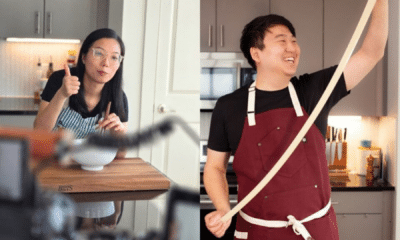
The conversation that sparked Kay Dudley’s brand began with a recipe. She had been making protein balls in batches for refrigeration, managing a postpartum lupus flare, and sharing the recipe online; her audience kept making them and messaging back to say so. Standing at the counter with her husband Taylor, she said what she had been thinking: they should build a product.
That conversation became HeyNu, a nutrition brand the couple runs alongside Kay and Tay, their family lifestyle account. Taylor serves as HeyNu’s CMO; Kay spent years as a dental professional before going full-time in content. From the outside, their operation looks like a prolific social media business. From the inside, it runs on defined working hours and a product philosophy rooted in Kay’s own experience.
“I am not somebody who will just slap my name on the product,” she says. “I’m very involved, and I want the brand to know that up front.”
The New Year’s Resolution That Became a Business
At the start of 2022, Kay and Taylor made a resolution: post one video every day for a year. There was no income target, no strategy. Taylor had always loved editing; Kay had followed early-era influencer content for years. They wanted a shared hobby. “We had no intentions of making this any way to make income or full time whatsoever,” Kay says.
Six months in, something shifted. Their first brand deal came roughly a year after they started and paid under $1,000, plus a product: a date-night kit that included a Fuji camera that printed vintage-looking photos. “I remember being more excited about the book and the camera than the money,” Taylor says.
The revenue came slowly; the business instinct arrived with it. What formalized things was Kay’s insistence that the work be treated as work. The morning huddle she runs at 9:30 every weekday came directly from her dental background, where the clinical team briefed on each patient’s case before the first appointment of the day. “I very much wanted us to be very serious about this and not just get to be unemployed, work at home, and make a video every day,” she says. “I wanted it to be a job.”
They now work Monday through Friday, employ a team, and film ahead to buffer against the days when Kay’s health makes production impossible.
Why Kay Won’t Just Put Her Name on a Product
Kay’s involvement in the collaboration with water bottle brand HydroJug shows what a partnership looks like when she controls the terms.
She reviews every stage of the design process: layouts, materials, photo editing, individual decorative details. “I’m very detailed, and I want every detail to be perfect,” she says. “If one of the decals on the hydro jug looks too big, I’m going to be like, ‘Yeah, let’s make that smaller.’ I’m there the entire process.”
The same standard governs which brand deals she accepts. Her test is a single question: would she tell her sister, her mother, her family to buy this? If the answer is no, the deal does not happen. She says she cannot recall a follower messaging to say a recommended product let them down. When she hosted a mechanic where fans commented on their purchases so she could refund a portion of orders, the response reflected something built over time. “I’ve built very good trust in my community,” she says, “and I think that comes down to the brands that I choose to work with.”
If a brand will not grant creative latitude, the partnership does not proceed. “If you’re not willing to meet us here, then we’re not going to advertise this,” Kay says. “We don’t just accept things for money.”
The Protein Balls That Became HeyNu
Kay’s protein bars were not the original concept. They were a practical substitution for something harder to manufacture at scale.
After her daughter’s birth, Kay’s lupus, which had produced symptoms before the pregnancy without yielding a formal diagnosis, became significantly more acute. She was nursing, managing the flare, and making her protein balls because they were quick, nutritious, and designed around the demands of breastfeeding.
“And at first I thought, let’s make a protein ball,” Kay says. “But those are a little bit harder. We looked into it. They’re harder to do than a protein bar.”
The resulting product is designed for inclusion across common dietary restrictions: plant-based, dairy-free, gluten-free. “I’m not vegan, but I want my bar to be vegan because there’s a lot of people that are,” Kay says. The design goal is to eliminate a trade-off she finds widespread in the nutrition category: healthy ingredients that sacrifice taste, or appealing products that sacrifice nutrition.
Taylor frames the protein bar as the first entry in a broader platform; HeyNu, short for “Hey Nutrition,” has early-stage plans for energy drinks and greens.
The Instagram Page She Never Meant to Grow
Kay runs two accounts, and the distinction matters commercially.
The Kay and Tay joint account has been their primary platform since 2022. Her personal Instagram predates the content career; she has maintained it for roughly 14 years and had no plan to develop it as a creator page. Followers found it on their own, and it grew to around 75,000 before she began treating it as a platform.
“I really wanted to have something that was my own,” she says. “I want to be known as Kay Dudley, and not just Kay and Tay.”
The accounts also draw different commercial categories. Her personal page attracts fashion, skincare, and beauty partnerships, categories that, she notes, tend to seek more specifically female-facing placements. Running both lets her serve brand categories the Kay and Tay account does not naturally attract without diluting its identity. Each functions as its own revenue channel.

Platform Revenue Is Not the Point
Kay points to two persistent misconceptions that follow creators at her level. The first is that the income cannot be real. The second is the opposite: that it arrives in volumes tied to video performance. “You make almost nothing from the actual videos,” Kay says. “And yeah, that’s a huge misconception.”
Brand partnerships are the primary income source, and the platform those partnerships run through has already shifted once in their career, from TikTok in 2022 and 2023 to Instagram and YouTube now. Taylor’s view is that the structural dynamic stays constant even as the surface changes. “Someone’s always going to want you to show their product to a lot of people,” he says. “It just depends on where they’re going to want you to show it.”
Both plan for an industry that will keep changing form. They invest rather than spend through the current moment.
What the Archive Is Really For
Kay and Taylor film enough daily life that their daughters will be able to scroll back through their own childhoods. Their older daughter, Ellie, approaching three, already has years of footage. Sutton, their infant, has her first taste of food on video.
Taylor’s vision for that record is direct: “Ellie can go back, and she can scroll to any given day and, assuming we filmed her on that day, she can see what she was doing ten years ago.” Kay’s runs deeper. She wants them to see the work, and what came against it, and the decision not to stop.
“I want them to see that we persevered through all the challenges that come with being a content creator online and all the hate and the judgment,” she says. “I do want them to see that we try really hard to give them this beautiful life, but also be respectful and humble at the same time.”
Kay Dudley is managed by Currents Management.
Subscribe to Our Newsletter
Check Out Our Podcast