

Influencer
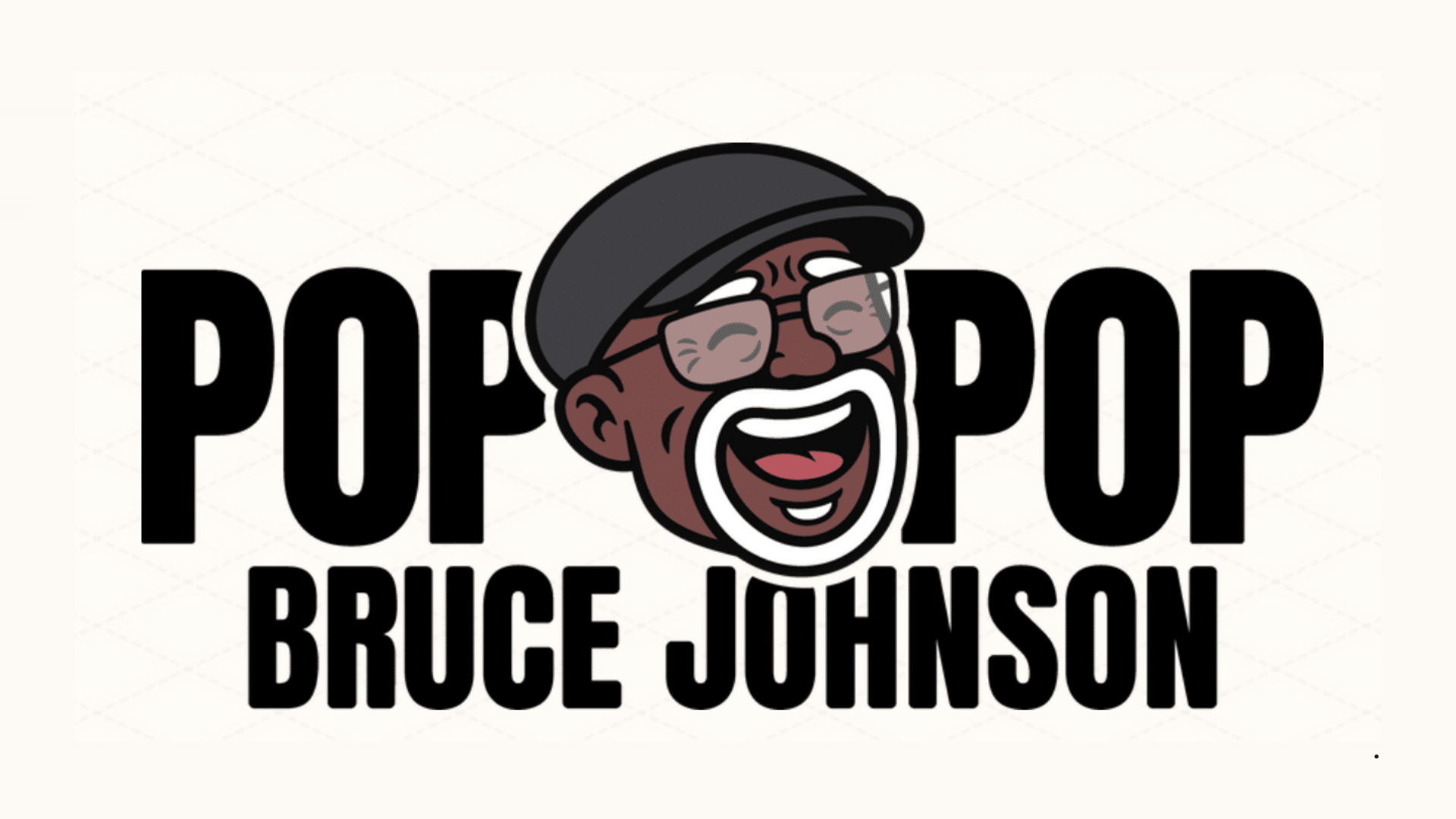
Meet Bruce ‘Pop Pop’ Johnson, the Grandfather the Internet Didn’t Know It Needed

Alexander, 39, portrays Bruce “Pop Pop” Johnson, a fictional grandfather character whom he built around a simple idea: “Have tea with [the audience].”
“Pop Pop” operates as a grandfather figure who leads with warmth and roots every decision in what he calls the “three E’s”: educate, enlighten, entertain. On TikTok, his audience has grown to 1.7 million followers, and on Instagram, it is approaching a million. The persona connects across demographics, generations, and backgrounds in a way that surprised Bruce when he first saw who was actually showing up. Behind the content, Alexander has built a business structure that includes brand deals, community grants, direct audience sessions, and an entertainment-industry pipeline to push toward streaming.
“I realized I was onto something,” Bruce says of the early wave of messages from followers telling him his words had changed something in their lives. “And it says a lot about people who actually just need that kind of comfort in their lives these days.”
There Was No Target Audience, Because the Audience Was Everybody
When Pop Pop began gaining traction, Bruce did not find the audience he expected, nor did he have one in mind.
“Whoever’s going to listen is going to listen,” he says. \What emerged was a diverse audience that defied standard categories, bringing together people across all backgrounds, identities, and cultures. The universality of the grandfather figure explained itself. “Everyone can connect to a grandpop, whether you know them or not,” he says. “There is no actual set market or audience because everyone has one.”
That insight shaped the language of the brand. The term “grandbabies” was chosen, with care for who it might exclude if handled wrong. “I know that I have grandbabies who don’t identify as a grandson or granddaughter,” Bruce explains. “I wanted to make sure that no matter who you were, you felt like you were a part of Pop’s grandbaby gang.” The label functions as a community signal as much as a content hook, and it travels across every platform Pop Pop appears on.
Bruce posts the same content across TikTok, Instagram, YouTube, and LinkedIn, trusting that the message does the work regardless of format. On LinkedIn, where professional audiences have engaged with his content in ways he did not anticipate, he offers a working explanation: corporate environments reward humanization precisely because they see so little of it. “It’s no longer about the business,” he says of the effect. “They see me as Pop, someone that they can be connected to.”
The Three E’s Are Not Just a Tagline
The framework governing Pop Pop’s content decisions did not emerge from a branding exercise. It came from how Bruce has always operated with his own family, and it applies as a filter to every commercial partnership he takes.
Educate, enlighten, entertain. When a brand approaches, the question is whether the partnership can meet one of the three. “Are we educating the grandbabies? Are we enlightening them? And are we entertaining them?” he says. In practice, that reframes the shape of sponsored content entirely. “It’s not me working with brands and saying, ‘Hey grandbabies, come buy this chocolate,’” Bruce explains. “Let’s go to the chocolate factory and learn how they make the chocolate. So we take a little adventure.”
The same restraint governs merchandise. “I’m definitely not one to say, ‘Hey, go buy my merch,’” he says. “I’m not really a salesy person.” For creators whose brand is built on warmth, the cost of a misaligned deal is the trust that makes the content work at all.
Rooms That Money Cannot Buy
Not every deal Bruce accepts comes with a check, and he has made that a part of the strategy.
For certain entertainment-industry collaborations, he has chosen access over payment and explained the reasoning plainly. “I don’t just look at getting paid,” he says. “You’re putting me in a room with the folks who, even if I charge you, it wouldn’t even amount to the same. You can’t pay me enough to be in the same room as Mark Wahlberg, to shake hands with Brad Pitt.” He places an interview with Allen Iverson in the same category, describing it as something no rate card could have valued appropriately. The calculation, as he frames it, is about where value actually compounds: inside rooms where connections are made, not on invoices where fees are capped.
CMG Talent, the management agency now representing him, has driven many of those placements. Their first notable contribution was a connection to the Roots Picnic in Philadelphia, where Bruce interviewed artists and entered the Live Nation Urban network. “Because I’m in the network now,” he says, “it’s allowed me to grow the places and the connections and the invites I have.” He’s set to travel to Los Angeles to interview Common, Public Enemy, and Patti LaBelle at a gala, a booking that traces directly back to that first introduction.
Alexander Runs the Business Behind Pop Pop
Alexander runs the business behind the Pop Pop character. Brand deals form the largest stream, with the majority paid at negotiated rates. Beyond those, the business draws on grant funding for community youth work, direct audience sessions that allow followers to book one-on-one time with Pop Pop, and merchandise that Bruce is careful not to oversell. The direct sessions are a case of Alexander’s design thinking in practice: they monetize the relationships the content builds rather than pulling away from them.
“The Grandbaby Town” experience represents the most ambitious of those community investments. The program takes young people out of classrooms and into museums and public spaces, teaching them about STEM, the history of hip-hop, and voting through interactive activities. Grant funding supports that community work. “Our goal is to help people,” Bruce says, “but you also gotta sustain the way that you help folks.”
What Brands That Skip Grandparents Are Walking Away From
Bruce took extended breaks from content during his creator career. Sometimes three years. Sometimes five.
“What I would have done differently is minimize the breaks I was taking,” he says now. “I know I would have been a little further ahead of where I wanted to be.” The time away was also clarifying, as stepping back gave him room to see more precisely where the work was meant to go.
The answer, increasingly, is streaming. Bruce is currently part of a TED Talks’ “Grown Crew Residency” that places creators inside a broader program addressing climate change, with three residency sessions already completed. He sees it as a proof of concept for a docu-series format: stories of people making the world better, delivered at a length short-form video does not allow. “What I’m doing with TED can help to elevate [the series] and show people, ‘Hey, this is the idea, this is the vision, how we can take this and scale it,’” he says. Netflix, Paramount, and Hulu are the intended destinations.
That ambition connects to a broader argument Bruce makes about who the Creator Economy has undervalued. “Grandparents play a huge role on social media, and we get overlooked,” he says. “But we’re the most trusted individuals you’ll see.” Brands that pass on older creators with loyal followings are, by his account, walking past something demographic targeting cannot manufacture.
“We’re just an amazing impact for all the grandbabies who either lost a grandparent who needs to find a sense of belonging and a sense of purpose,” he says. “And we provide that on social media.”
Subscribe to Our Newsletter
Check Out Our Podcast