







Influencer
Inside ProjectAir: How James Whomsley Built A YouTube Business By Pushing Engineering To Its Limits

James Whomsley did not study engineering at university. He studied history. He describes himself as “always a little bit behind with maths and sciences” at school, partly due to dyslexia.
Yet today, James runs “ProjectAir,” a YouTube channel with over 800,000 subscribers, multiple Guinness World Records, and a growing business built around large-scale, high-risk engineering projects.
“I was always really interested in science and engineering,” he says. “I was always building things.” That instinct, more than formal qualifications, ultimately shaped a career as a creator that now blends entertainment, education, sponsorship revenue, and physical products into a single operation.
From Cardboard and Craft Knives to Flying Machines
James grew up making things from Lego, cardboard, tape, and glue. He jokes about being banned from using craft knives as a child, before eventually being “allowed to use them again.” By his mid-teens, his interest in ‘creating’ narrowed into a specific obsession: model airplanes.
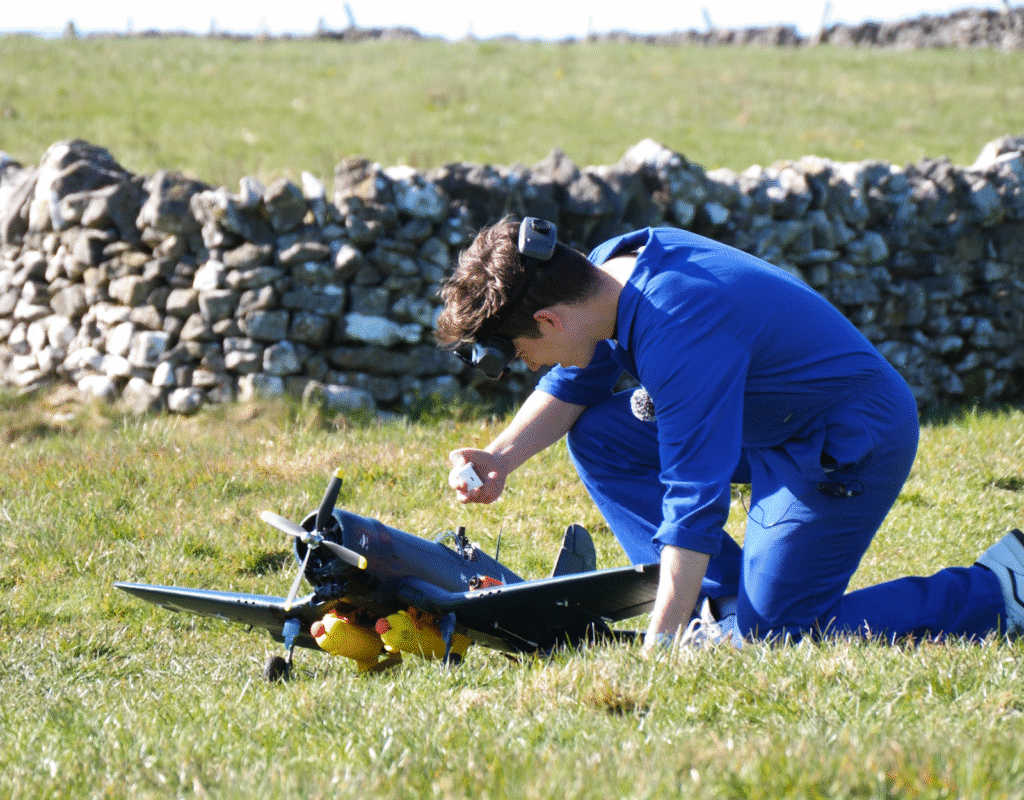
“That’s when I kind of learned how to do the engineering that is required to make something fly,” he says, pointing to concepts like center of gravity and center of pressure. He learned those principles not in a classroom, but online, using YouTube and forums to reverse-engineer how aircraft worked.
Despite that interest, James did not pursue an engineering degree. “I knew I couldn’t do the physics-y stuff,” he says.
Instead, he chose history so he could still attend university while continuing to build and experiment on his own time.
YouTube as a Career Target
After university, James’s ambition was not to work at a traditional engineering firm. “The company I really wanted to work for was a YouTube channel,” he says. That realization reframed YouTube from a hobby into a career objective.
He began producing videos around his remote-control aircraft hobby and eventually landed freelance work with “FliteTest,” a large aviation YouTube channel and media brand. He wrote articles, produced content, and gained experience at an existing creator-led company while continuing to grow his own channel in parallel.
At one point, “FliteTest” discussed relocating him from the UK to the U.S., but it never happened. “They never ended up hiring me properly. I was always just working freelance,” James says. That uncertainty pushed him to double down on his own channel rather than wait for a full-time role that might never materialize.
“I was like, ‘Actually, I think this is the way it’s going to go. I’m going to just become a proper YouTuber on my own.’”
The Long Road to Full-Time Creator
“ProjectAir” officially launched in 2017, but the path to sustainability was slow. For the first 12 months, the channel had fewer than 1,000 subscribers. Growth came from posting polished videos on niche model airplane forums, where most users were accustomed to raw clips rather than structured storytelling.
“If I posted a pretty well-made YouTube video, people would be likely to subscribe and come back for more,” James says.
Consistency followed. Early on, he committed to releasing at least one video every three to four weeks. A collaboration with another creator, who had around 100,000 subscribers, reinforced the importance of schedule discipline. “He said, ‘I post once a month on a Friday at 3 o’clock,’ and I thought, yep, I’m going to do exactly the same.”
By 2021, “ProjectAir” had grown enough for James to go full-time. He rented his workshop from a previous employer, turning it into both an office and a studio.
“That’s how it started,” he says. “Now we’re here.”
From Vlogs to Engineered Narratives
James has been uploading videos since 2007 or 2008, but he sees a clear shift in format over time. Early “ProjectAir” videos were more vlog-like, with handheld cameras and informal pacing. Today, the channel leans heavily into structured narratives with clear goals, obstacles, and outcomes.
“You’re gonna see this, and then we’re gonna solve these problems,” he says, describing the modern approach. He credits part of that shift to YouTube’s growth and the rise of TV-style viewing on smart televisions. Viewers now watch longer videos in living-room settings, which rewards traditional storytelling structures.
He also points to childhood influences such as Scrapheap Challenge. “We’ve got this problem, and now we need to solve it,” he says. “That might have come from that kind of TV.”
What has not changed is the core concept. “Every single one of my videos has to be a new project,” James says. “I’ve always wanted to do projects that have just been getting bigger and bigger over time.”
Engineering Content with Real Risk
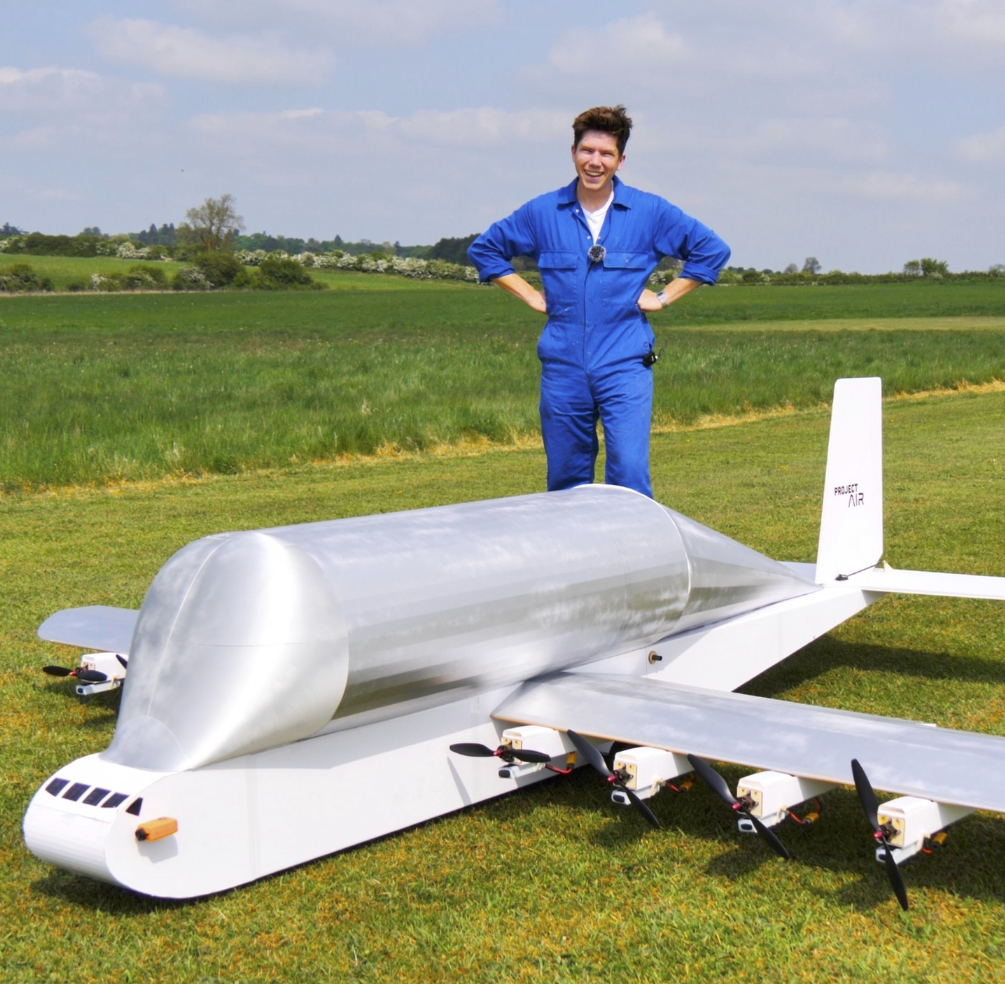
Each “ProjectAir” video takes roughly four weeks to produce, sometimes longer. Builds can span months and involve significant cost, materials, and labor. One of the channel’s most popular videos involved building a five-meter foam aircraft carrier over two to three months.
James evaluates ideas using what he describes as a mental Venn diagram: Has something like this worked before? Is it something he wants to build? Does it have a clear story and an achievable goal? Only ideas that sit in the overlap get greenlit.
Because the engineering is real, failure is a constant threat. “Things can go very wrong,” James says. A dramatic crash is not always good content. “If it just plows into the ground in a really lame way, it’s not satisfying.”
That risk peaks during the final testing window. “There’s a lot on the line when it comes to that third week,” James notes. Until recently, he also edited every video himself, adding further pressure.
Only this year did he begin onboarding a dedicated editor.
When Projects Fail and Stories Pivot
In case of failure, most projects are not abandoned, largely because of sponsor commitments and production costs. Instead, James adapts the narrative when things go wrong.
In his most recent video, a large aircraft repeatedly failed to take off. Rather than scrap it, he reframed the story. “I built smaller planes to get up to this plane,” he explains. “Let’s see at what point this concept doesn’t work.”
The smallest version succeeded. The larger ones did not. The video became an exploration of limits rather than a single win.
The most difficult build, he says, was a solar-powered airplane designed to stay airborne for hours. Weather issues in the UK, technical failures, and a final catastrophic crash destroyed months of work. “It just completely cut out in the sky and exploded into a million pieces.”
The experience reshaped his approach. “It taught me about expectations,” he says. “You have to run this like a TV studio and not back yourself into a corner where you’re panicking.”
Guinness World Records as Creative Fuel
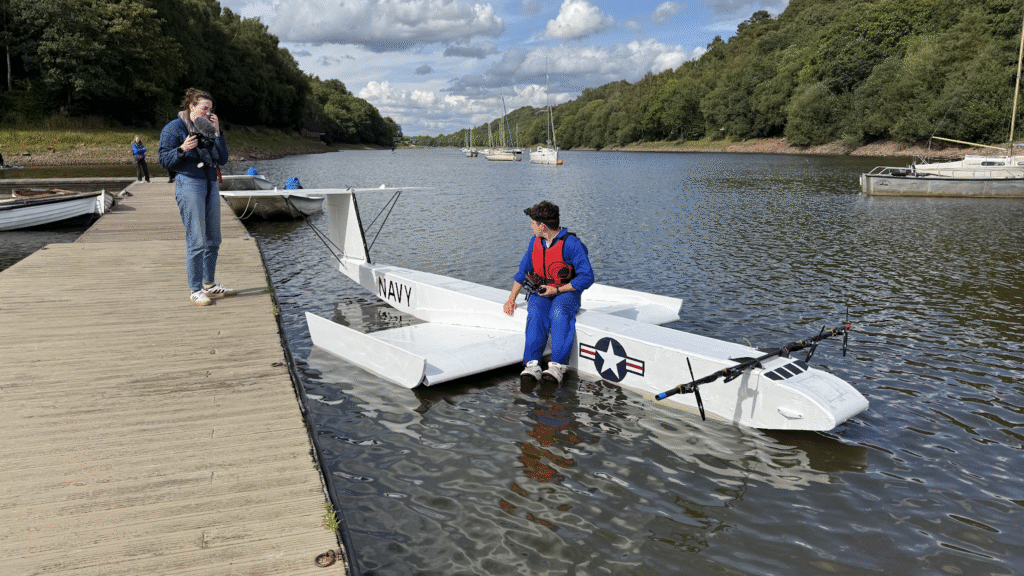
“ProjectAir” holds multiple Guinness World Records, including the largest remote-control aircraft carrier and the first RC [radio-controlled] takeoff and landing on such a carrier. James also holds records for a jet-powered RC car and a 20-foot-wingspan rocket plane.
The pursuit was not purely strategic. “I was always reading books about racing car drivers,” he says, referencing land and water speed record breaker Donald Campbell. “I got really hooked on the idea of pushing a machine to the absolute limit.”
Guinness recognition adds credibility and storytelling weight, but James sees it as something deeper. “It shows how far you can push your model plane,” he says. “Hopefully that comes through and inspires some kids to get into engineering.”
Revenue, Scale, and Sustainability
“ProjectAir’s” revenue currently comes primarily from AdSense and sponsorships. “Almost exclusively,” James says, with AdSense accounting for roughly 40% and sponsored integrations covering the rest. A second channel adds incremental income.
The next phase involves productization. James plans to launch beginner-friendly model airplane kits made from Depron foam, supported by tutorial content and one-to-one flight instruction videos. A soft launch is planned for early summer.
“There’s a big gap in the market,” he says, particularly for products tightly integrated with educational YouTube content. Long-term, he also envisions physical events and competitions that bring “ProjectAir” challenges into the real world.
Over the past six years, the channel has grown from an average of 50,000 views to over 1 million per video, during which time James partnered with talent management and creative agency Ziggurat XYZ.
Growth Without Chasing Numbers
Despite approaching one million subscribers, James says the feeling has not fundamentally changed since 50,000.
“I always just wanted to have 10,000 subscribers,” he says. Reaching that milestone meant any video could reach a meaningful audience.
Since then, scale has mattered more to him for impact than validation. “It’s cool to have your work seen by so many people,” he says, especially if it encourages others to build and experiment for themselves.
His advice to aspiring engineers is practical. Build physical things. Learn beyond academics. Use the internet aggressively. “Build those rockets, build those model planes,” he says. “You’ll learn a lot from it in a practical way.”
Moving forward, James’s ambition remains grounded. Bigger projects, broader reach, and more ways to participate, but without sacrificing enjoyment.
“At the end of the day,” he says, “it all comes down to just having fun and keeping it fun.”
Subscribe to Our Newsletter
Check Out Our Podcast