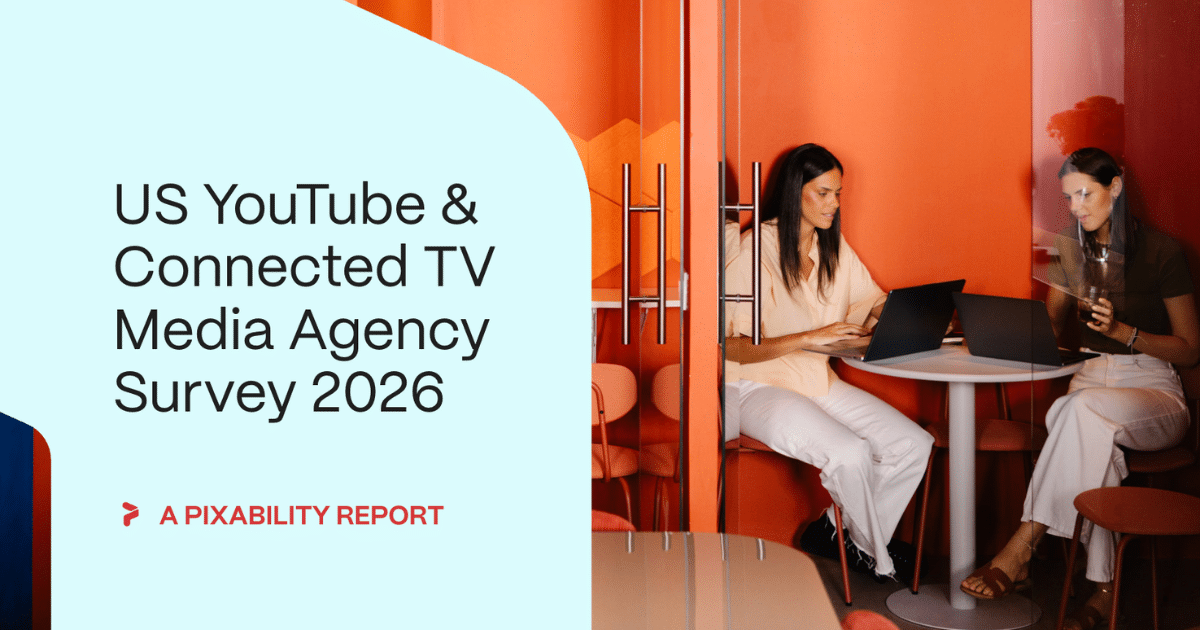
Media agencies are preparing to deepen their reliance on YouTube in 2026, as the platform’s role inside connected TV (CTV), social video, and performance media continues to blur traditional buying lines, according to new research from tech company Pixability.
A survey of 171 U.S.-based media agency professionals conducted in November 2025 found that 43% of respondents expect to increase YouTube advertising investment in 2026, even as questions about brand suitability and organizational ownership persist. Thirty-eight percent plan to maintain current spending levels, and only 4% anticipate decreases, down from 5% in 2025.
The findings point to a structural shift in which YouTube is no longer treated solely as a digital video channel, but as a hybrid platform spanning CTV reach, creator-driven content, and performance outcomes, forcing agencies to rethink how teams, budgets, and controls are organized.
Platform Spending Shifts Continue
YouTube and connected TV advertising grew in parallel in 2025, with 51% of agencies reporting increased YouTube spending and 52% reporting increased CTV investment. Traditional linear TV continued its decline, with 37% of agencies reducing spending and only 8% increasing allocations, compared to 13% the previous year.
Meta platforms showed modest growth, with 35% of agencies increasing investment, while TikTok spending remained relatively flat. The survey found 27% of agencies increased TikTok spending, 36% maintained levels, and 11% decreased investment. Notably, 25% of respondents indicated uncertainty about TikTok spending, which Pixability attributed to regulatory questions about the platform’s US operations.
“Going into 2026, US agencies and their brand partners are eagerly embracing YouTube as an important Connected TV platform, especially with the emergence of YouTube TV as a CTV powerhouse,” said Brian Banks, VP, Director of Digital Media Strategy at Davis Elen. “In addition to YouTube having the biggest reach on CTV of any streaming platform, it also has an unparalleled content library and robust audience affinity targeting that can serve as vital ingredients for any advertiser looking to engage consumers in their living rooms.”
Performance and Brand Safety Remain Top Priorities
Ad performance metrics ranked highest among agencies running YouTube campaigns, with a score of 4.52 on a five-point scale. Brand safety (4.51) and audience targeting (4.51) followed closely, indicating agencies balance performance objectives with content placement concerns.
The survey revealed agencies estimate 30% of campaign impressions would run on unsuitable content without third-party brand suitability measures, consistent with findings from UK agencies. This perception exists despite Google’s safety improvements to the platform.
When targeting adult audiences, agencies identified several content categories clients want to avoid: made-for-kids content (79%), content in non-target languages (73%), and content unsuitable for specific advertisers (73%). Completely unsafe content topped the list at 90%.
“The winning brands will be the ones that work with partners that have the deepest data so they can effectively reach the right audiences in the right context to drive the highest quality engagements,” said Jennifer Lee, Lead of Media Investments at IWG.
Third-Party Certification Grows in Importance
The percentage of agencies considering the YouTube Measurement Program (YTMP) certification important for third-party partners increased to 87% in 2025, up from 78% in 2024. Only 5% of agencies considered the certification unimportant.
Agencies identified several capabilities lacking in Google’s native platforms. Full campaign transparency ranked highest (4.47 on a five-point scale), followed by the ability to avoid unsafe or unsuitable content (4.40), access to benchmark data (4.14), and granular channel curation capabilities (4.13).
YouTube’s Expanding Role Complicates Agency Organization
The survey found 73% of agencies categorize YouTube as a standalone video platform, 63% consider it a connected TV platform, 50% view it as a social media platform, and 30% classify it as a direct response channel. This multifaceted positioning creates organizational challenges within agencies.
Currently, 33% of agencies organize CTV and linear TV teams separately, while 38% combine CTV and YouTube teams separately. However, agencies expect consolidation: 44% plan to merge CTV, YouTube, and TV teams in the near future, up from 33% currently.
“YouTube has become more than just a stand-alone video platform; it has become a leader in CTV viewership and now, with Shorts, an emerging leader in short-form social,” said Nicholas Boretti, SVP, Media at Digitas. “It’s critical for advertisers to find the best ways to leverage this platform in all of the ways it can drive outcomes for their brand.”
YouTube Shorts Adoption Accelerates
Agency plans to use YouTube Shorts in advertising strategies increased significantly, with 67% planning to include the short-form video format in 2026 campaigns, up from 50% in 2025. An additional 24% remained neutral, while only 7% indicated they would not use Shorts.
For YouTube on TV screens, 62% of agencies plan to include the placement in 2026 strategies, with 27% neutral and 9% declining. Agencies identified increased use of YouTube on TV screens for CTV campaigns as the biggest anticipated shift in 2026, with 69% of respondents highlighting this trend.
Other significant expected changes include: YouTube Shorts usage in social campaigns alongside Meta and TikTok (59%), AI agents transforming campaign management (48%), budget shifts from Google search to YouTube as AI search gains traction (45%), increased creator demand (39%), and more performance-focused YouTube campaigns (39%).
Content Quality Standards for CTV Campaigns
When running YouTube advertising as part of broader CTV campaigns, agencies showed strong preferences for specific content types. High-value creators with highly produced content received the highest acceptance at 51%, followed by TV broadcast content (45%) and TV-quality publisher content (45%).
Notably, only 7% of U.S. agency respondents believed no YouTube content should be included in CTV campaigns. However, U.S. agencies were more open to creator content than their UK counterparts, who favored traditional broadcast content more heavily.
Limited Integration Across YouTube Marketing Functions
The survey revealed significant gaps in cross-functional YouTube expertise within agencies. Among teams managing YouTube advertising, 53% reported no involvement in other YouTube marketing areas. Only 22% participated in creator influencer sponsorships, 24% handled YouTube channel management for clients, and 26% worked with YouTube insights providers. Just 5% engaged in all three additional areas.
Despite limited current integration, agencies recognized the value of connected strategies. When asked about aligning YouTube advertising with brands’ organic channel strategies, 55% of agencies reported already doing so, while 35% believed they should but had not implemented the integration. Similarly, 57% believed YouTube ad campaigns should align with creator campaigns, though 28% acknowledged doing so, while 15% did not see value in the alignment.
“Brands and agencies often make the mistake of thinking about YouTube as strictly an advertising platform,” said Chris Lastrapes, Executive Worldwide Film & Television Strategy and Marketing Consultant. “Today, the most successful brands are looking for ways to drive deep engagement with their audience by investing in their own YouTube channels, and agencies should be finding ways to help those strategies succeed.”
AI Adoption Remains Limited for Video Creative
Agencies have not yet widely adopted AI for video ad creative production. The survey found 44% of agencies reported no AI usage for video content generation. Among those using AI tools, AI-generated voiceover was most common (25%), followed by AI remixing of existing content (21%), text-to-video with graphics only (19%), AI script and storyboard generation (17%), and text-to-video with human characters (15%).
However, investment in AI infrastructure varied significantly by agency type. Among holding company agencies, 42% reported investing “very heavily” in AI transformation, compared to 14% of independent agencies. Conversely, 47% of independent agencies reported minimal AI investment, compared with 29% of holding company agencies.
Regarding AI-generated content on YouTube, 52% of agencies indicated they are comfortable running ads on high-quality AI content without misinformation, 14% accepted AI content that reaches target audiences regardless of quality, and 33% preferred avoiding AI-generated content entirely.
The report included responses from agency professionals across roles, with 34% identifying as media or account directors, 15% as planner-buyers, 13% as VP/EVP level, and 10% each as planners, buyers, and supervisors. The sample comprised 67% independent agencies and 33% holding-company agencies.
Dragomir is a Serbian freelance blog writer and translator. He is passionate about covering insightful stories and exploring topics such as influencer marketing, the creator economy, technology, business, and cyber fraud.
















Media agencies are preparing to deepen their reliance on YouTube in 2026, as the platform’s role inside connected TV (CTV), social video, and performance media continues to blur traditional buying lines, according to new research from tech company Pixability.
A survey of 171 U.S.-based media agency professionals conducted in November 2025 found that 43% of respondents expect to increase YouTube advertising investment in 2026, even as questions about brand suitability and organizational ownership persist. Thirty-eight percent plan to maintain current spending levels, and only 4% anticipate decreases, down from 5% in 2025.
The findings point to a structural shift in which YouTube is no longer treated solely as a digital video channel, but as a hybrid platform spanning CTV reach, creator-driven content, and performance outcomes, forcing agencies to rethink how teams, budgets, and controls are organized.
Platform Spending Shifts Continue
YouTube and connected TV advertising grew in parallel in 2025, with 51% of agencies reporting increased YouTube spending and 52% reporting increased CTV investment. Traditional linear TV continued its decline, with 37% of agencies reducing spending and only 8% increasing allocations, compared to 13% the previous year.
Meta platforms showed modest growth, with 35% of agencies increasing investment, while TikTok spending remained relatively flat. The survey found 27% of agencies increased TikTok spending, 36% maintained levels, and 11% decreased investment. Notably, 25% of respondents indicated uncertainty about TikTok spending, which Pixability attributed to regulatory questions about the platform’s US operations.
“Going into 2026, US agencies and their brand partners are eagerly embracing YouTube as an important Connected TV platform, especially with the emergence of YouTube TV as a CTV powerhouse,” said Brian Banks, VP, Director of Digital Media Strategy at Davis Elen. “In addition to YouTube having the biggest reach on CTV of any streaming platform, it also has an unparalleled content library and robust audience affinity targeting that can serve as vital ingredients for any advertiser looking to engage consumers in their living rooms.”
Performance and Brand Safety Remain Top Priorities
Ad performance metrics ranked highest among agencies running YouTube campaigns, with a score of 4.52 on a five-point scale. Brand safety (4.51) and audience targeting (4.51) followed closely, indicating agencies balance performance objectives with content placement concerns.
The survey revealed agencies estimate 30% of campaign impressions would run on unsuitable content without third-party brand suitability measures, consistent with findings from UK agencies. This perception exists despite Google’s safety improvements to the platform.
When targeting adult audiences, agencies identified several content categories clients want to avoid: made-for-kids content (79%), content in non-target languages (73%), and content unsuitable for specific advertisers (73%). Completely unsafe content topped the list at 90%.
“The winning brands will be the ones that work with partners that have the deepest data so they can effectively reach the right audiences in the right context to drive the highest quality engagements,” said Jennifer Lee, Lead of Media Investments at IWG.
Third-Party Certification Grows in Importance
The percentage of agencies considering the YouTube Measurement Program (YTMP) certification important for third-party partners increased to 87% in 2025, up from 78% in 2024. Only 5% of agencies considered the certification unimportant.
Agencies identified several capabilities lacking in Google’s native platforms. Full campaign transparency ranked highest (4.47 on a five-point scale), followed by the ability to avoid unsafe or unsuitable content (4.40), access to benchmark data (4.14), and granular channel curation capabilities (4.13).
YouTube’s Expanding Role Complicates Agency Organization
The survey found 73% of agencies categorize YouTube as a standalone video platform, 63% consider it a connected TV platform, 50% view it as a social media platform, and 30% classify it as a direct response channel. This multifaceted positioning creates organizational challenges within agencies.
Currently, 33% of agencies organize CTV and linear TV teams separately, while 38% combine CTV and YouTube teams separately. However, agencies expect consolidation: 44% plan to merge CTV, YouTube, and TV teams in the near future, up from 33% currently.
“YouTube has become more than just a stand-alone video platform; it has become a leader in CTV viewership and now, with Shorts, an emerging leader in short-form social,” said Nicholas Boretti, SVP, Media at Digitas. “It’s critical for advertisers to find the best ways to leverage this platform in all of the ways it can drive outcomes for their brand.”
YouTube Shorts Adoption Accelerates
Agency plans to use YouTube Shorts in advertising strategies increased significantly, with 67% planning to include the short-form video format in 2026 campaigns, up from 50% in 2025. An additional 24% remained neutral, while only 7% indicated they would not use Shorts.
For YouTube on TV screens, 62% of agencies plan to include the placement in 2026 strategies, with 27% neutral and 9% declining. Agencies identified increased use of YouTube on TV screens for CTV campaigns as the biggest anticipated shift in 2026, with 69% of respondents highlighting this trend.
Other significant expected changes include: YouTube Shorts usage in social campaigns alongside Meta and TikTok (59%), AI agents transforming campaign management (48%), budget shifts from Google search to YouTube as AI search gains traction (45%), increased creator demand (39%), and more performance-focused YouTube campaigns (39%).
Content Quality Standards for CTV Campaigns
When running YouTube advertising as part of broader CTV campaigns, agencies showed strong preferences for specific content types. High-value creators with highly produced content received the highest acceptance at 51%, followed by TV broadcast content (45%) and TV-quality publisher content (45%).
Notably, only 7% of U.S. agency respondents believed no YouTube content should be included in CTV campaigns. However, U.S. agencies were more open to creator content than their UK counterparts, who favored traditional broadcast content more heavily.
Limited Integration Across YouTube Marketing Functions
The survey revealed significant gaps in cross-functional YouTube expertise within agencies. Among teams managing YouTube advertising, 53% reported no involvement in other YouTube marketing areas. Only 22% participated in creator influencer sponsorships, 24% handled YouTube channel management for clients, and 26% worked with YouTube insights providers. Just 5% engaged in all three additional areas.
Despite limited current integration, agencies recognized the value of connected strategies. When asked about aligning YouTube advertising with brands’ organic channel strategies, 55% of agencies reported already doing so, while 35% believed they should but had not implemented the integration. Similarly, 57% believed YouTube ad campaigns should align with creator campaigns, though 28% acknowledged doing so, while 15% did not see value in the alignment.
“Brands and agencies often make the mistake of thinking about YouTube as strictly an advertising platform,” said Chris Lastrapes, Executive Worldwide Film & Television Strategy and Marketing Consultant. “Today, the most successful brands are looking for ways to drive deep engagement with their audience by investing in their own YouTube channels, and agencies should be finding ways to help those strategies succeed.”
AI Adoption Remains Limited for Video Creative
Agencies have not yet widely adopted AI for video ad creative production. The survey found 44% of agencies reported no AI usage for video content generation. Among those using AI tools, AI-generated voiceover was most common (25%), followed by AI remixing of existing content (21%), text-to-video with graphics only (19%), AI script and storyboard generation (17%), and text-to-video with human characters (15%).
However, investment in AI infrastructure varied significantly by agency type. Among holding company agencies, 42% reported investing “very heavily” in AI transformation, compared to 14% of independent agencies. Conversely, 47% of independent agencies reported minimal AI investment, compared with 29% of holding company agencies.
Regarding AI-generated content on YouTube, 52% of agencies indicated they are comfortable running ads on high-quality AI content without misinformation, 14% accepted AI content that reaches target audiences regardless of quality, and 33% preferred avoiding AI-generated content entirely.
The report included responses from agency professionals across roles, with 34% identifying as media or account directors, 15% as planner-buyers, 13% as VP/EVP level, and 10% each as planners, buyers, and supervisors. The sample comprised 67% independent agencies and 33% holding-company agencies.
Image source: Pixability
Get the full report here
Subscribe to Our Newsletter
Check Out Our Podcast