




Strategy
The 3-Billion-Impression Campaign That Kept Its Brand Name Hidden Until the Credits

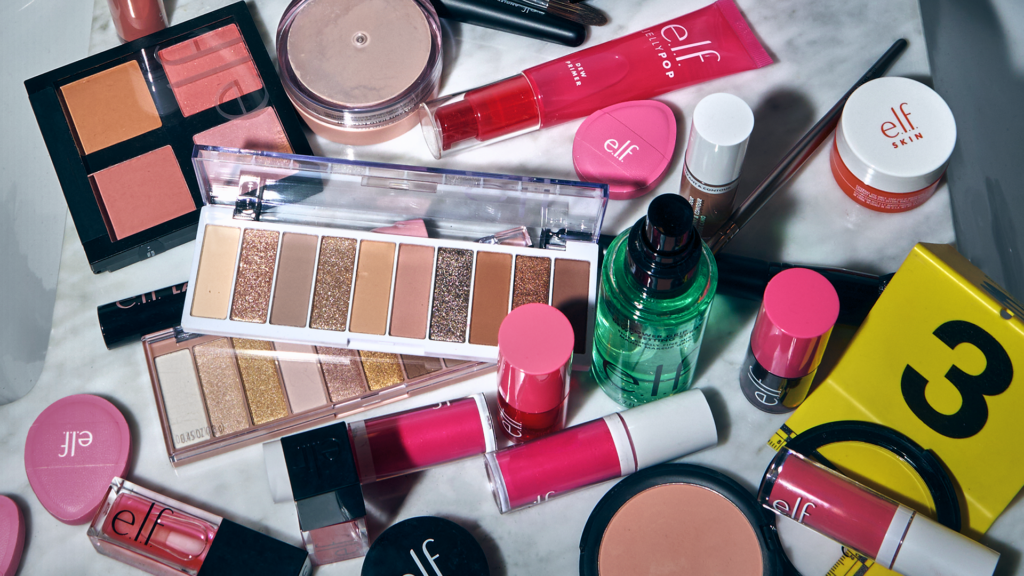
A cultural behavior millions of people live by, but rarely name: bathroom vanities overwhelmed with beauty products, sink space disputed between couples, roommates, and siblings, and relationships strained to the breaking point by it.
Movers+Shakers found it embedded in TikTok hashtags and built a nine-minute true crime mockumentary around it for e.l.f. Beauty.
The result was “Vanity Vandals,” a cinematic branded film that generated three billion press impressions, 40 million social views, and 92% positive sentiment, with fans demanding a sequel before the credits finished rolling. For most of its runtime, e.l.f.’s name does not appear. That was the point.
“Vanity Vandals” is the second installment in a creative universe e.l.f. Beauty has been building with social-first creative agency Movers+Shakers. The first, “Cosmetic Criminals,” debuted as a theatrical pre-roll ahead of the “Mean Girls” reboot in 2024. “Vanity Vandals,” which premiered at the TCL Chinese Theatre in Hollywood on March 31, escalated both the production ambition and the distribution strategy.
Caitlin Woods, who joined Movers+Shakers as Creative Director in May 2025 after years spanning Magnolia Network and branded production, directed the project. Justin Adelman, the agency’s Group Account Director for Brand Partnerships and the e.l.f. account lead, oversaw the client partnership. Laurie Lam, Chief Brand Officer at e.l.f. Beauty, shaped the brief from the brand side.
All three describe the campaign as a test of what entertainment-first marketing actually demands.
“Audiences want content that feels native to their conversations, humor, and obsessions versus something that feels like a branded interruption,” Laurie says. “That gave us the confidence to create content with virtually no distance between the community and the creative.”
The Vanity Insight Had to Be Undeniable Before Production Started
The campaign’s premise came from social listening after “Cosmetic Criminals,” which focused on intergenerational makeup theft within households. For the sequel, the team scanned TikTok. The hashtag #MakeupMess had accumulated over 115 million views. #MessySink and #MessyVanity added millions more. The pattern was consistent: couples, roommates, and siblings fighting for vanity space overrun with beauty products. When the team named the behavior in the room, the response was immediate.
“The minute we said it out loud, everyone started chiming in with deeply personal and hilarious anecdotes,” Caitlin says. Justin adds that he was probably the first to say it: “That’s my sister.”
The data confirmed the instinct. A survey finding that nearly one in five people have ended a relationship over their partner’s bathroom habits transformed a shared annoyance into a statistically verifiable social phenomenon. “It was a massive cultural tension disguised as an everyday habit,” Caitlin says.
The clutter also carried a specific brand implication. e.l.f.’s accessible price point means consumers can build large collections. An overrun vanity is not a problem to solve. Per Movers+Shakers’ own campaign framing, “the clutter was actually a signal of brand love and value positioning.”
Building the Sequel Without Repeating the Original
Caitlin describes the challenge of following a successful branded narrative as “SQL syndrome”: how do you honor the world you have built while establishing a fresh identity? “Vanity Vandals” solved that by evolving the nature of the crime. The original campaign was about theft, products taken and not returned. The second is about accumulation, products overtaking shared space not through malice but through affordability.
“Finding that exact pivot point, where it felt brand new yet comfortably familiar, required intense narrative precision,” Caitlin explains.
Laurie frames the two campaigns as chapters in an ongoing creative platform rather than standalone activations. “‘Cosmetic Criminals’ proved that cultural relevance doesn’t come from chasing trends but from being in lockstep with your community,” she says. “They’re chapters in a larger universe designed to keep audiences engaged across platforms, formats, and fandoms.”
Comedy Lives in Contrast
The true crime format was chosen for structural reasons. “Comedy really lives in contrast,” Caitlin says. “An overcrowded bathroom sink isn’t that serious. But by treating it with utmost gravity, using high production tropes of a prestige true crime documentary, we really turned this unserious issue into a comedic conversation. The seriousness of the format amplified the absurdity of the crime.”
Casting reinforced that logic. The campaign stars Phoebe Dynevor, known for her role as Daphne Bridgerton, as Maya, the ultimate Vanity Vandal, alongside Christina Chang as cosmetic profiler Dr. Erika Sparrow. Internet-native creators, The Goddess Boys, appear as themselves.
Laurie notes that both Dynevor and Chang were already present in organic conversations within the e.l.f. community before casting, making their involvement feel like discovery rather than booking.
Director Alexander Buono, with extensive mockumentary experience, oriented casting around a single tonal requirement. “You have to be so serious in something that truly is not serious at all,” Caitlin says. “Mastering that tone was the biggest piece we were looking for.”
Cinematic Production, Designed for a Phone Screen
The film runs nine minutes, was shot in 4K anamorphic, and premiered at a Hollywood cinema. It was designed, from the first day of scripting, to be watched on a phone.
The team did not write a film and then adapt it for social distribution. The entire campaign ecosystem was designed simultaneously, with every scene framed and paced for a small screen. “We didn’t try to make a TikTok ad,” Caitlin explains. “A Hollywood lens really just became a megaphone for a social truth.”
Success was measured not by passive reach but by earned attention: whether a modern audience would choose to sit through a nine-minute branded film and then comment with their own stories. The campaign recorded a 33% increase in watch time over “Cosmetic Criminals,” which was itself a high-performing piece.
The Campaign Was an Ecosystem, Not a Hero Video
The TCL Chinese Theatre premiere drew 500 influencers and fans to a black carpet event livestreamed on Twitch. Simultaneously, the team activated “e.l.f. UP!” again, a participation experience inside e.l.f.’s existing Roblox world, and launched the “Save Our Sink” contest, inviting community members to submit their own vanity crimes for a chance to win a Target gift card and an interior design consultation.
The film also appeared on Hulu and Disney. Contest submissions closed at the end of April, with winners to be announced.
“When you want to make a big wave, it requires more parts,” Justin says. “The sum of the tactics is what created that big wave.” The audience response confirmed the framework. Viewers did not comment on products. They confessed their own vanity vandalism publicly. “There was a lot of pride in people sharing,” Caitlin notes. “There’s a recurring comment: the makeup looks better when there’s a mess on the counter. It was like a badge of honor.”
Entertainment Cannot Carry a Product List
The campaign surfaces a specific argument about where entertainment-first marketing typically fails. “Brands often treat entertainment as the sugar to help the medicine of an ad go down,” Caitlin says. “They think if the first five seconds are funny, they can spend the next thirty seconds listing product benefits. True entertainment-first marketing requires radical bravery and commitment to the story entirely.”
That commitment meant e.l.f. telling the agency it did not want audiences to know the brand was behind the film until the end. “Entertainment is the main character,” Justin says. The orientation only holds when the brand-agency relationship supports it. “Every decision we made was in service of really good creative,” Justin notes. “We’re creative conspirators.”
Laurie frames the same principle from the brand side: cultural relevance requires building content with “virtually no distance between the community and the creative,” which means a brand willing to subordinate its own visibility to the audience’s experience.
The cosmetic crime universe is not finished. Comment sections on the film filled with demands for a sequel, a full season, a trilogy. Caitlin says there is “a lot cooking.”
“We were finally giving them a term and the tools to almost be their own detectives,” Justin says.
Subscribe to Our Newsletter
Check Out Our Podcast