




Tech
Cameo’s TikTok Partnership Targets the Gap Between Creator Fame and Creator Revenue

TikTok’s algorithm is optimized for one thing: keeping users inside the app. For Cameo, a marketplace built on the premise that internet fame consistently outpaces internet income, that design choice created a structural obstacle. A new integration announced in March is designed to fix that, and in doing so, tests whether the Creator Economy’s most persistent tension can be resolved at the source.
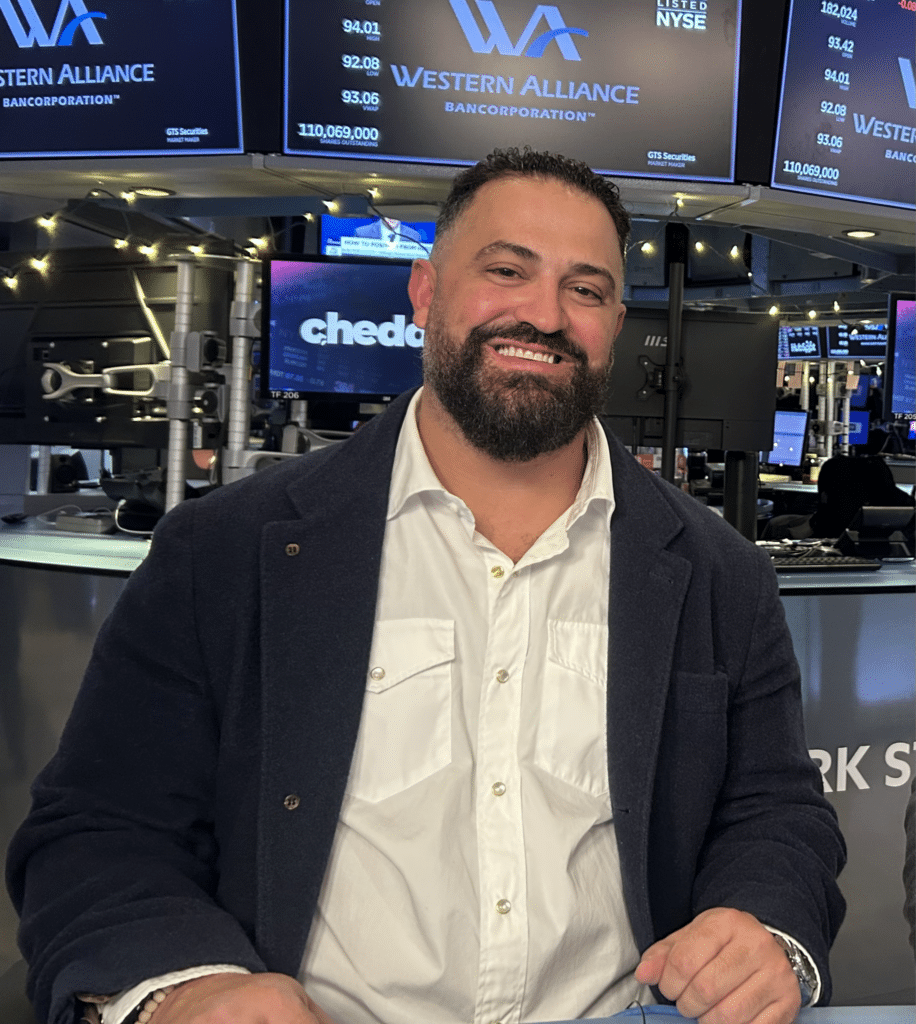
Steven Galanis, co-founder and CEO of Cameo, has been thinking about the fame-to-revenue gap since before the company launched. Cameo is a marketplace where fans book personalized video messages from more than 60,000 athletes, actors, and pop culture figures, turning the long tail of internet celebrity into a direct monetization channel. Launched in March 2017 and now approaching its 10th anniversary, the Chicago-based company has delivered more than 10 million personalized moments across a talent base spanning 180 countries.
The new TikTok partnership makes Cameo a launch partner of TikTok Minis, a feature functioning as a mini app store within TikTok. U.S.-based creators with more than 50,000 followers can now join Cameo’s marketplace without leaving TikTok and add direct booking links to their content, letting fans request personalized videos without switching apps.
“TikTok is where stars are born today,” Steven says. “The closer we can get to the source of so much of this, the better we can serve the creators and the fans that love them.”
The Three Bets Cameo Made in 2017
Cameo was built on three premises that Steven and his co-founders, Martin Blencowe and Devon Townsend, believed would need to hold for the business to scale.
First, the number of famous people was growing and would keep growing, a prediction that looks more accurate today, with roughly 200 million people now identifying as creators, up from 50 million when Cameo raised its last major financing round in 2020 and 2021.
Second, individual fame had achieved historically unprecedented reach. Steven uses footballer Lionel Messi’s Instagram story as his benchmark: a post promoting a smoothie brand can reach 600 million people, many times more than the audience that watched Michael Jordan’s famous 1998 NBA Finals game-winner.
The third thesis is more complicated. Social media had eliminated the one-hit wonder, transforming viral moments into permanent distribution channels. “Today, 15 minutes of fame actually can last 15 years,” Steven says, citing Lil Nas X as an example of an artist whose TikTok-era breakout became a permanent platform rather than a brief chart run. He contrasts that with the band Chumbawamba in 1999, which had one of the biggest songs in the world and then disappeared when radio stopped playing it.
Steven is candid that the algorithmic shift from follow-based to interest-based feeds has complicated that third premise. “As platforms shifted from a following base to an algorithmic base, this one might be less true,” he acknowledges. But for Cameo’s purposes, the first two bets remain intact and have only strengthened.
The Algorithm Was the Problem
Even as Cameo grew, TikTok’s architecture created a specific obstacle. Steven says the platform’s optimization for in-app engagement systematically reduced the reach of content that directed users elsewhere, including creators mentioning or linking to external platforms.
“Back in the day, somebody on TikTok might have said, ‘Hey, come and book me on Cameo,'” Steven explains. “But if the algorithms heard that, they would actually depress that and people wouldn’t see it.”
That dynamic sits at the center of what Steven frames as the Creator Economy’s structural contradiction. Platforms offer creators reach in exchange for content, but then build walls that make it harder to monetize that reach elsewhere. “The algorithms really punish content that links out,” he says.
The ad revenue that flows back to creators from platforms like TikTok, he argues, is rarely sufficient on its own. “For the vast majority of creators, it doesn’t pay the bills.”
The TikTok blackout in early 2025, when the platform went dark in the U.S. for roughly 24 hours, crystallized the risk for many in the Creator Economy. “Suddenly, you could have a hundred million followers on TikTok, and it just disappeared,” Steven says.
His standing advice to creators is to own their audience rather than rent it, which he defines as building monetization that does not depend on any single platform’s algorithm or content policies remaining consistent.
Inside the Deal
The partnership took more than 18 months to close. Its origin was not a top-down strategic initiative from either company. A member of TikTok’s partnerships team purchased a Cameo as a consumer, noticed how much smoother the experience was on platforms like Instagram compared to TikTok, and reached out to Cameo’s head of product. That initial conversation about improving Cameo sharing on TikTok eventually broadened into a structural integration.
“I always say we’re not in the booking business, we’re in the fulfillment business,” Steven says. That distinction complicated the engineering on both sides. Creators onboarding through TikTok’s flow still need to receive Cameo notifications, complete video requests, and operate within Cameo’s delivery infrastructure. Integrating that into TikTok’s system required iteration across two established code bases with different underlying assumptions.
The current scope is limited. The integration is U.S.-only and applies to creators with at least 50,000 followers. “Obviously, we’d like to broaden that out,” Steven says. “We have talent all over the world. We have customers all over the world.”
Why AI Makes the Partnership More Urgent
Cameo’s creators had their strongest year in 2025, a result that arrived alongside, and in part because of, the proliferation of AI-generated video tools. The flood of synthetic content that followed the broad rollout of tools like Sora has, somewhat paradoxically, raised the premium on the authentic personalized interactions that Cameo is built to deliver.
“There was this period where everyone’s feed just became AI slop,” Steven says. “I think people are always going to crave authenticity. In the world where we saw all this AI content coming so hard and so fast, it made people even more serious about trying to find authenticity or meaning in their content.”
That dynamic does not make Cameo immune to displacement. The company’s seasonal Santa Claus business, where performers charge roughly $25 for a personalized holiday video, faces genuine pressure from tools that can generate a custom Santa video instantly and free of charge. Steven acknowledges the risk plainly. “With Sora, you can literally say, ‘Hey, I want an Argentine Santa,’ and it’s $0, and it comes instantly,” he says. “I totally understand that.”
But AI-generated content flooding the feed and AI threatening specific Cameo categories are different problems with different implications. The first increases demand for human connection at the exact moment the TikTok integration makes it easier to access. The second is a pricing and product challenge for the lower end of Cameo’s catalog, not a structural threat to the marketplace.
For Steven, the two forces point in the same direction: reducing the friction between a fan discovering a creator and paying for a moment of genuine contact matters more, not less, as synthetic alternatives proliferate.
Closing the Distance
Nearly a decade after founding Cameo on the premise that internet fame was outpacing internet income, the TikTok partnership represents an attempt to close that gap at the platform level. If fans can move from watching a creator’s video to booking a personalized message without leaving the app, the primary barrier between fame and revenue shrinks to nearly zero.
Steven sees the same friction problem everywhere he looks next. The 2026 FIFA World Cup, hosted in the United States, Mexico, and Canada, presents Cameo with a moment-driven opportunity: a player who scores a decisive goal can become a national hero overnight, and Cameo wants to be positioned to convert that moment before it passes.
He is also prototyping AI-assisted real-time translation, which would allow a Spanish-speaking creator to receive a request in English, record in Spanish, and have the video returned to the fan in their own language.
“Imagine a world where Messi could get a request in English, read it in Spanish, record the video in Spanish, but it comes back to the customer in English or Japanese or French,” Steven says, stopping short of a commitment. “No guarantees that we would do that or that the technology is ready, but that’s some of the cool stuff my team has been prototyping.”
The through-line across all of it is the same principle Cameo was founded on. “Every Cameo is a commercial for the next one,” Steven says. “Now, the creator could literally post the link right there.” The TikTok integration is one link in that chain. The question Steven is building toward is how many more links the chain can hold.
Subscribe to Our Newsletter
Check Out Our Podcast