Tech
Streamlabs’ Ashay Urs Explains How ‘Network Boost’ Helps IRL Creators Stay Live Without Bonding Hardware

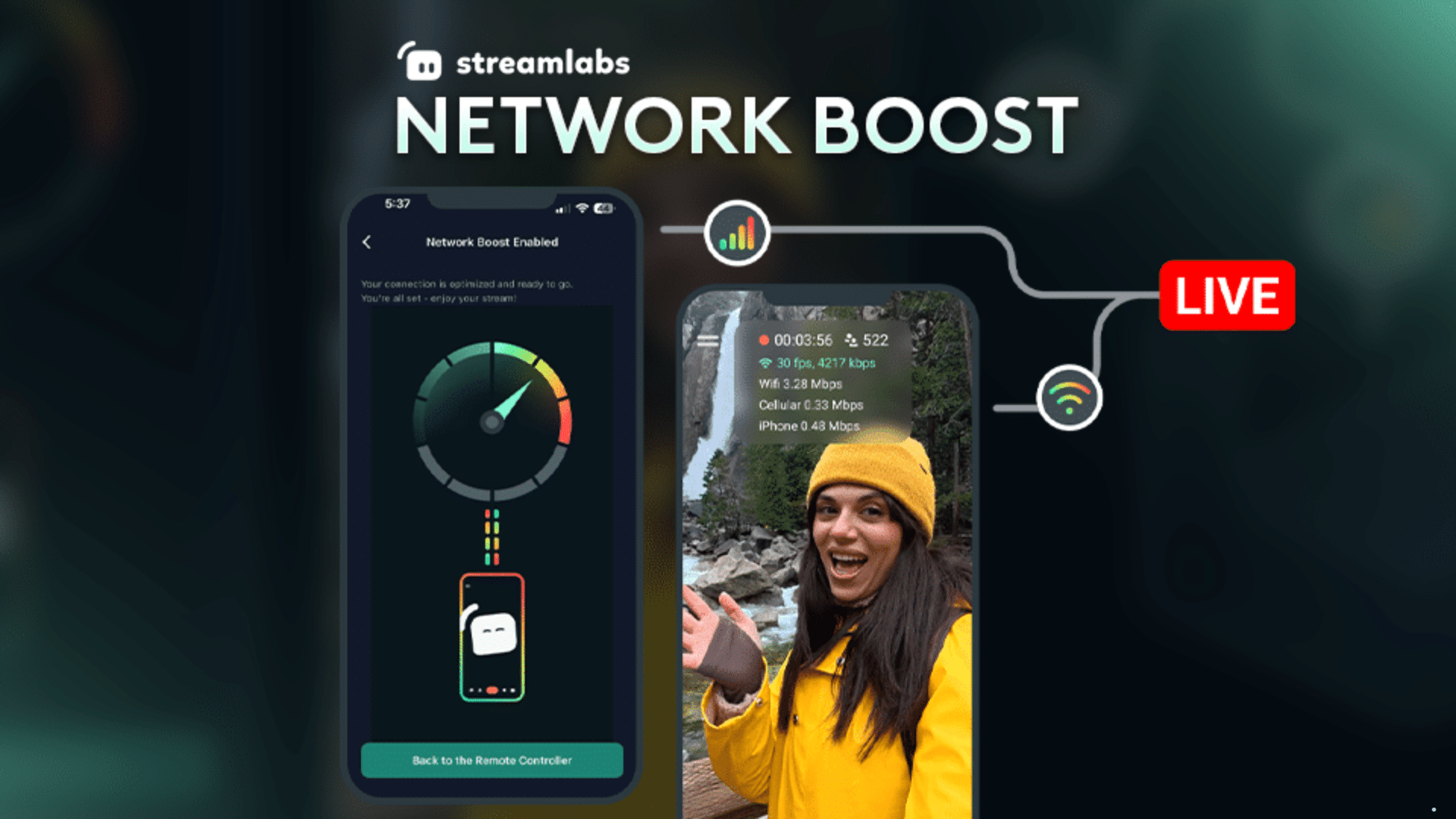
IRL streaming on Twitch grew nearly 85% over the past year to almost 400 million hours watched, but reliable connectivity has not kept pace, according to Streamlabs. The company is betting creators do not need broadcast-grade bonding hardware, which can run into the tens of thousands of dollars, to stay live. Their answer is Network Boost, a feature for its Streamlabs Ultra subscribers that combines WiFi with multiple cellular connections from phones creators already own.
Ashray Urs, Head of Streamlabs at Logitech G, built the feature around a single finding from the company’s own creator surveys. “Having reliable connectivity is the number-one concern that people have when it comes to IRL streaming,” he says.
Network Boost pairs the phone running the broadcast with a second device, an older phone or a friend’s phone, connected through the Streamlabs Controller app while the primary stream runs on Streamlabs Mobile. Both devices send test packets back and forth so the system can compare signal strength in real time. “At any given point in time, we’re making sure your stream is running on the best connection available to you,” Ashray says. Creators can add up to five relay devices at once, plus a stable WiFi connection where one exists, and Ashray says even a single extra connection on top of a primary signal can meaningfully cut down on outright drops.
The professional alternative already exists, Ashray notes, but it was not built for this use case. “We see the top streamers leveraging hardware solutions that were really built for reporters and journalists in areas where connectivity is very questionable,” he says, pointing to the broadcast rigs some IRL streamers have adopted despite the mismatch. Those setups can run close to $30,000, a price Ashray compares to buying a car. “It’s not for me,” he says.

A Dropped Stream Has A Real Cost Attached To It
The stakes are highest when a stream is tied to a brand deal, Ashray says, since sponsorships often carry “very specific timing because of the nature of a product launch or a wider marketing campaign.” Missing that window costs more than the missed views. “You’re not generating new subs and tips, and in-platform monetization, when you’re no longer streaming,” he says.
Streamlabs already offers a fallback called disconnect protection, which posts a warning screen instead of cutting the broadcast the moment a connection drops. Ashray describes it as a last resort rather than a fix. “That’s a much stronger final line of defense than just ending the stream,” he says.
Network Boost is designed to cut down on how often that fallback gets triggered in the first place, not to replace it, since a stream that ends outright sends viewers straight to someone else’s.
Streamlabs Says Its Fee Still Beats What Hardware Costs
Network Boost is not free. It sits inside the Streamlabs Ultra subscription, which raises the obvious question of whether Streamlabs is just moving the cost from hardware to software rather than removing it. Ashray argues the comparison should be made against the full cost of a bonding setup, not against zero, since software bonding still requires cloud infrastructure to process the signal, which is why every solution carries an ongoing cost.
“Even with those hardware solutions, you end up having to pay for software, and you end up having to pay quite a lot more for software than what we’re charging with Ultra,” Ashray says.
Network Boost runs on the same server infrastructure Streamlabs already built for its multi-streaming service, which is what lets the company fold the feature into a subscription rather than charge for it separately.
Streamlabs Is Betting IRL Keeps Growing, Just Not In A Straight Line
Ashray does not expect the category’s growth to be linear. IRL still over-indexes on viewership relative to how many creators are actually making that kind of content, he says, which he reads as room for more streamers to enter without saturating the audience. He also points to the anticipated fall release of “Grand Theft Auto VI” as likely to pull attention back toward gaming streams, even as he maintains IRL is “definitely here to stay” as its own category.
Streamlabs plans to announce additional IRL-focused features at Logitech G Play on September 23, Ashray says. Network Boost follows Stream Shift, the tool Streamlabs introduced at TwitchCon San Diego last October that lets creators move a broadcast between desktop and mobile mid-stream, and Ashray frames both as steps in a longer sequence rather than a finished product.
“This IRL journey has been super interesting to watch,” he says. “It’s one of our biggest steps, I think, in helping the IRL streamer.”
Subscribe to Our Newsletter
Check Out Our Podcast