OpenAI has entered a new phase of AI content development with its Sora app, a social platform powered by the company’s latest video generation model which allows users to create and share hyperrealistic AI videos featuring themselves. Since its September 30 launch, the invite-only iOS app has climbed to the top of Apple’s App Store charts while simultaneously raising significant concerns about copyright infringement and the future of human creativity.
According to OpenAI’s announcement, Sora 2 represents “the GPT-3.5 moment for video,” with capabilities far exceeding those of previous models, including synchronized dialogue, sound effects, and the ability to generate physically accurate scenes, such as “backflips on a paddleboard” or “Olympic gymnastics routines.” The platform’s “cameos” feature, which lets users insert themselves into AI-generated scenarios after a one-time identity verification, has become the app’s central draw.
However, the platform is already drawing legal scrutiny as users create videos featuring copyrighted characters from popular franchises, such as “SpongeBob SquarePants” and “Pokémon.” One video reportedly shows OpenAI CEO Sam Altman standing among Pokémon characters saying, “I hope Nintendo doesn’t sue us.” In response, OpenAI told CNBC that it will “work with rights holders to block characters from Sora at their request and respond to takedown requests,” according to company spokesperson Varun Shetty.
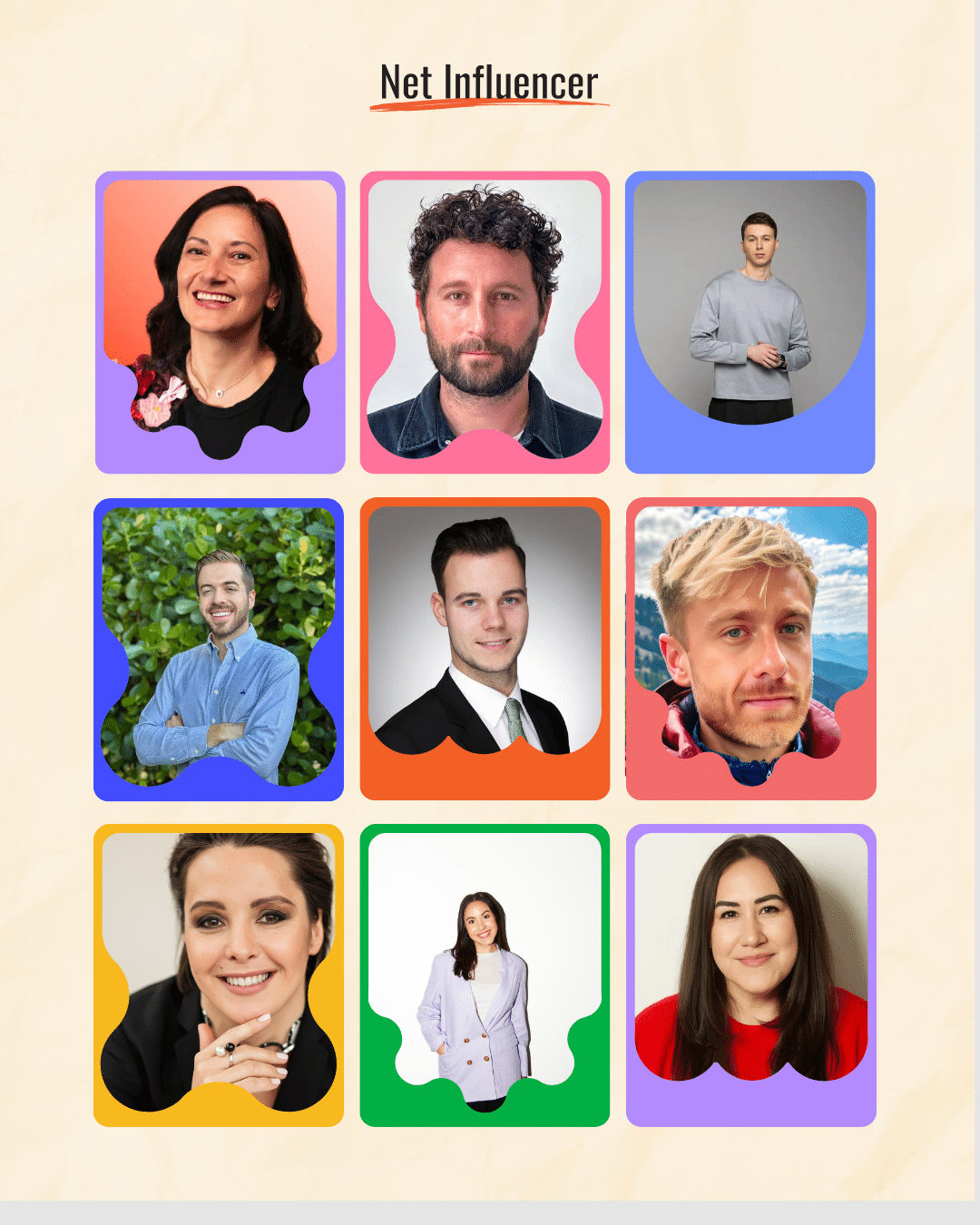
To understand the implications of Sora 2 for the creator economy, we asked nine industry experts to share their perspectives on whether AI-generated video will empower or undermine human creativity.
As AI video tools like Sora 2 make content creation effortless, the true differentiator in the creator economy won’t be output, but authenticity. Anyone can generate clips; few can build trust. Blair Richards (@getthegirliesricher) says it best: ‘You have three years to build your personal brand before AI takes your job … your personal brand is the only thing that’s going to protect you. Your digital assets are everything.’ Creators are activating their ehko, the conversational AI version of them, so their personal brand can connect, teach, and sell 24/7.
AI-generated video platforms like Sora 2 aren’t the end of the creator economy, they’re its next inflection point. If YouTube democratized distribution and TikTok democratized attention, Sora will democratize production.
But when production becomes frictionless, creativity alone stops being the differentiator. In an age of infinite content, taste, narrative depth, and IP ownership become the true scarcity. The creators who win won’t just generate clips, they’ll architect universes: recurring characters, storylines, aesthetics, and products that live beyond any single platform. This is the dawn of the Franchise Era, where AI is infrastructure, not identity. The real leverage lies in how creators turn algorithmic visibility into ownable worlds – ones that can scale across media, merchandise, and experiences. Those who combine AI’s efficiency with human authenticity and long-term IP thinking won’t just survive the next wave, they’ll define it.
I feel that access to the technology, as it relates to the implications on the creator economy, is largely a net neutral. As AI and AI-generated content become more prevalent, real users will be craving other real users. Human creativity will ultimately win out. The general public is over the cookie-cutter idea of content in general and wants substance, storylines, mess, and wants their algorithms to be a reflection of their interests and topics/issues they care about. People do not want unrealistic content made entirely by AI, even if the likeness is consented to by the user themselves. The creator economy was started to be empowered by creativity and it will continue to flourish being powered by creativity – from humans.
Ultra-accessible AI video is both a creative boom and an economic stress test. On the upside, it crushes production barriers, lets solo creators ship studio-quality work, and unlocks new formats, languages, and business models. It broadens who can create and how fast they can iterate.
The downside is a content deluge that shifts power to algorithms, compresses CPMs (Cost per Mille), and IP (Intellectual Property) risks. Authenticity gets murkier as synthetic personas proliferate, while IP, likeness rights, and data provenance become legal flashpoints. Traditional entry-level creative roles may be squeezed, narrowing talent pipelines.
The outcome hinges on platform incentives and policy: strong provenance and consent systems, discovery that rewards originality (not just engagement), and monetization that values verified identity and distinctive IP. Creators who use AI to automate drudgery while doubling down on community, live presence, and owned audiences will win.
In short: AI expands the pie but intensifies the fight for attention and trust.
Throughout 2025, AI sceptics have been proven right, with most video content produced by AI featuring humans with seven fingers and defying the laws of physics; however, Sora 2 changed the game.
For up-and-coming creators, their technical knowledge and access to large-scale productions may no longer limit what they can do. Want to create a Hollywood blockbuster with CGI? AI can now make your dream a reality. Can’t afford to travel to the ideal location for your YouTube video? Don’t worry, Sora can make it look like you’re there. AI models like Sora are about to supercharge the creator takeover of traditional media.
On the other hand, we’re also seeing the dangers. Several creators have begun to have their name, image, and likeness utilised by individuals on Sora to promote products and troll. Notably, creators like Jake Paul have jumped on the trend, re-posting videos mocking him and remixing for comedic effect (example). That said, not all creators will have the same reaction. While Sora currently contains watermarks, similar models will appear without them, which could result in significant issues that negatively affect popular personalities both mentally and reputationally.
Sora 2 is changing the game for influencers and creators, and it’s a mixed bag.
The app allows anyone to create, share, and comment on high-quality AI video, generating platform-specific behaviors like video remixes and AI memes. Expect Sora-specific creators to find niches and build audiences around their inventive use of the channel.
Some established influencers are already thriving. Jake Paul and lesser-known creators show up prolifically because they’ve offered their likeness to be used in the Cameo feature, which could also open up additional revenue streams for creators. Creators are sharing Sora 2 content to other platforms, so you’ll see more creator-led AI content on TikTok and other video platforms.
On the flip side, the advanced Sora 2 model could undermine the creator economy, whether it’s an AI persona recommending a product, or a deepfake of a well-known personality. Creators should stay up to date on OpenAI’s ever-changing copyright rules to stay in control of their image and creative output. It may additionally saturate the social platforms broadly, and creators may have to double down on human craft and storytelling in order to stand out in an even more crowded marketplace.
It’s hard not to be impressed by what Sora 2 can do. From a filmmaking and storytelling standpoint it opens a whole new road for creativity. Anyone with an idea can bring it to life instantly, and we’ll probably see new genres of entertainment pop up because of it. I wouldn’t be surprised if we see a new “AI Shows” category on Netflix within a year. That’s great for creativity and accessibility. But on social media, where real people go to share real experiences, I have concerns. I’ve seen one too many AI Logan Paul makeup tutorials to question what’s real anymore. If everything looks authentic, but isn’t, trust erodes, and without trust the creator economy feels hollow. Tools like Sora 2 are incredible for art and entertainment, but if they start replacing real human voices instead of amplifying them, we may be wandering into murky waters.
The Sora app is both groundbreaking and unsettling. It makes video creation instant and effortless – yet, at its core, it’s a deepfake platform where anyone can generate hyper-realistic clips featuring themselves or others. This will spark a surge of creativity and bring new voices online, but it also blurs the line between real and synthetic. The risk of identity misuse has never been higher.
We’ll be flooded with more content than ever, though not necessarily with more meaning. As human attention fails to scale with AI output, genuine creators will need to stand out through authenticity, emotion, and storytelling – qualities machines can’t truly mimic.
Sora also raises serious questions about trust, identity, and mental health, especially among younger audiences. While AI-made videos may attract views, a real connection will remain the ultimate differentiator. I expect a rise in live, unfiltered, human content – the kind that reminds us why people follow people.
At this stage, I wouldn’t consider Sora 2 a TikTok clone. It sits in a completely different category from influencer content. I got an invite and immediately jumped in to experiment, and while it’s fun and sparks creativity, it doesn’t yet have the ability to produce content that feels fully human or builds genuine connection beyond quick moments of laughter. Creating on Sora feels more like an exercise in creativity than connection. That said, it could become a great tool for creators to mock up ideas or test concepts before producing their own content. While some people are excited about what AI can create, just as many, if not more, are frustrated knowing content and likeness are being stolen.
Dragomir is a Serbian freelance blog writer and translator. He is passionate about covering insightful stories and exploring topics such as influencer marketing, the creator economy, technology, business, and cyber fraud.











OpenAI has entered a new phase of AI content development with its Sora app, a social platform powered by the company’s latest video generation model which allows users to create and share hyperrealistic AI videos featuring themselves. Since its September 30 launch, the invite-only iOS app has climbed to the top of Apple’s App Store charts while simultaneously raising significant concerns about copyright infringement and the future of human creativity.
According to OpenAI’s announcement, Sora 2 represents “the GPT-3.5 moment for video,” with capabilities far exceeding those of previous models, including synchronized dialogue, sound effects, and the ability to generate physically accurate scenes, such as “backflips on a paddleboard” or “Olympic gymnastics routines.” The platform’s “cameos” feature, which lets users insert themselves into AI-generated scenarios after a one-time identity verification, has become the app’s central draw.
However, the platform is already drawing legal scrutiny as users create videos featuring copyrighted characters from popular franchises, such as “SpongeBob SquarePants” and “Pokémon.” One video reportedly shows OpenAI CEO Sam Altman standing among Pokémon characters saying, “I hope Nintendo doesn’t sue us.” In response, OpenAI told CNBC that it will “work with rights holders to block characters from Sora at their request and respond to takedown requests,” according to company spokesperson Varun Shetty.
To understand the implications of Sora 2 for the creator economy, we asked nine industry experts to share their perspectives on whether AI-generated video will empower or undermine human creativity.
Nicolas Creus, Co-Founder, ehko.ai
As AI video tools like Sora 2 make content creation effortless, the true differentiator in the creator economy won’t be output, but authenticity. Anyone can generate clips; few can build trust. Blair Richards (@getthegirliesricher) says it best: ‘You have three years to build your personal brand before AI takes your job … your personal brand is the only thing that’s going to protect you. Your digital assets are everything.’ Creators are activating their ehko, the conversational AI version of them, so their personal brand can connect, teach, and sell 24/7.
Tobias Hoss, SVP Operations, Lunar X
AI-generated video platforms like Sora 2 aren’t the end of the creator economy, they’re its next inflection point. If YouTube democratized distribution and TikTok democratized attention, Sora will democratize production.
But when production becomes frictionless, creativity alone stops being the differentiator. In an age of infinite content, taste, narrative depth, and IP ownership become the true scarcity. The creators who win won’t just generate clips, they’ll architect universes: recurring characters, storylines, aesthetics, and products that live beyond any single platform. This is the dawn of the Franchise Era, where AI is infrastructure, not identity. The real leverage lies in how creators turn algorithmic visibility into ownable worlds – ones that can scale across media, merchandise, and experiences. Those who combine AI’s efficiency with human authenticity and long-term IP thinking won’t just survive the next wave, they’ll define it.
Victoria Bachan, SVP, Wasserman
I feel that access to the technology, as it relates to the implications on the creator economy, is largely a net neutral. As AI and AI-generated content become more prevalent, real users will be craving other real users. Human creativity will ultimately win out. The general public is over the cookie-cutter idea of content in general and wants substance, storylines, mess, and wants their algorithms to be a reflection of their interests and topics/issues they care about. People do not want unrealistic content made entirely by AI, even if the likeness is consented to by the user themselves. The creator economy was started to be empowered by creativity and it will continue to flourish being powered by creativity – from humans.
Nazar Babenko, Product Manager, Streams Charts
Ultra-accessible AI video is both a creative boom and an economic stress test. On the upside, it crushes production barriers, lets solo creators ship studio-quality work, and unlocks new formats, languages, and business models. It broadens who can create and how fast they can iterate.
The downside is a content deluge that shifts power to algorithms, compresses CPMs (Cost per Mille), and IP (Intellectual Property) risks. Authenticity gets murkier as synthetic personas proliferate, while IP, likeness rights, and data provenance become legal flashpoints. Traditional entry-level creative roles may be squeezed, narrowing talent pipelines.
The outcome hinges on platform incentives and policy: strong provenance and consent systems, discovery that rewards originality (not just engagement), and monetization that values verified identity and distinctive IP. Creators who use AI to automate drudgery while doubling down on community, live presence, and owned audiences will win.
In short: AI expands the pie but intensifies the fight for attention and trust.
Thomas Markland, Founder & CEO, HYDP
Throughout 2025, AI sceptics have been proven right, with most video content produced by AI featuring humans with seven fingers and defying the laws of physics; however, Sora 2 changed the game.
For up-and-coming creators, their technical knowledge and access to large-scale productions may no longer limit what they can do. Want to create a Hollywood blockbuster with CGI? AI can now make your dream a reality. Can’t afford to travel to the ideal location for your YouTube video? Don’t worry, Sora can make it look like you’re there. AI models like Sora are about to supercharge the creator takeover of traditional media.
On the other hand, we’re also seeing the dangers. Several creators have begun to have their name, image, and likeness utilised by individuals on Sora to promote products and troll. Notably, creators like Jake Paul have jumped on the trend, re-posting videos mocking him and remixing for comedic effect (example). That said, not all creators will have the same reaction. While Sora currently contains watermarks, similar models will appear without them, which could result in significant issues that negatively affect popular personalities both mentally and reputationally.
Anita Schillhorn van Veen, Executive Director of Strategy, McKinney
Sora 2 is changing the game for influencers and creators, and it’s a mixed bag.
The app allows anyone to create, share, and comment on high-quality AI video, generating platform-specific behaviors like video remixes and AI memes. Expect Sora-specific creators to find niches and build audiences around their inventive use of the channel.
Some established influencers are already thriving. Jake Paul and lesser-known creators show up prolifically because they’ve offered their likeness to be used in the Cameo feature, which could also open up additional revenue streams for creators. Creators are sharing Sora 2 content to other platforms, so you’ll see more creator-led AI content on TikTok and other video platforms.
On the flip side, the advanced Sora 2 model could undermine the creator economy, whether it’s an AI persona recommending a product, or a deepfake of a well-known personality. Creators should stay up to date on OpenAI’s ever-changing copyright rules to stay in control of their image and creative output. It may additionally saturate the social platforms broadly, and creators may have to double down on human craft and storytelling in order to stand out in an even more crowded marketplace.
Doni Goodman, Executive Creative Director, Bald
It’s hard not to be impressed by what Sora 2 can do. From a filmmaking and storytelling standpoint it opens a whole new road for creativity. Anyone with an idea can bring it to life instantly, and we’ll probably see new genres of entertainment pop up because of it. I wouldn’t be surprised if we see a new “AI Shows” category on Netflix within a year. That’s great for creativity and accessibility. But on social media, where real people go to share real experiences, I have concerns. I’ve seen one too many AI Logan Paul makeup tutorials to question what’s real anymore. If everything looks authentic, but isn’t, trust erodes, and without trust the creator economy feels hollow. Tools like Sora 2 are incredible for art and entertainment, but if they start replacing real human voices instead of amplifying them, we may be wandering into murky waters.
Vira Slyvinska, Head of Impact and Global Business Development, AIR Media-Tech
The Sora app is both groundbreaking and unsettling. It makes video creation instant and effortless – yet, at its core, it’s a deepfake platform where anyone can generate hyper-realistic clips featuring themselves or others. This will spark a surge of creativity and bring new voices online, but it also blurs the line between real and synthetic. The risk of identity misuse has never been higher.
We’ll be flooded with more content than ever, though not necessarily with more meaning. As human attention fails to scale with AI output, genuine creators will need to stand out through authenticity, emotion, and storytelling – qualities machines can’t truly mimic.
Sora also raises serious questions about trust, identity, and mental health, especially among younger audiences. While AI-made videos may attract views, a real connection will remain the ultimate differentiator. I expect a rise in live, unfiltered, human content – the kind that reminds us why people follow people.
Nycole Hampton, Brand Marketing Consultant, Nycole Hampton Consulting
At this stage, I wouldn’t consider Sora 2 a TikTok clone. It sits in a completely different category from influencer content. I got an invite and immediately jumped in to experiment, and while it’s fun and sparks creativity, it doesn’t yet have the ability to produce content that feels fully human or builds genuine connection beyond quick moments of laughter. Creating on Sora feels more like an exercise in creativity than connection. That said, it could become a great tool for creators to mock up ideas or test concepts before producing their own content. While some people are excited about what AI can create, just as many, if not more, are frustrated knowing content and likeness are being stolen.
Subscribe to Our Newsletter
Check Out Our Podcast