Agency
Accenture Song Goes All-In on Social With Acquisition of Leading Creator Agency Whalar

Accenture Song has agreed to acquire Whalar, the independent creator and social agency, from its parent Whalar Group, in what Whalar Group co-founder Neil Waller called the industry’s “largest creator economy transaction.” The deal, announced today, hands one of the world’s biggest professional-services firms a global, award-winning creator agency, and it marks the clearest sign yet that the creator economy’s next phase will be defined less by individual campaigns than by who controls the infrastructure underneath them.
Financial terms were not disclosed. For context, Publicis Groupe’s 2024 acquisition of the influencer agency Influential was reported at roughly $500 million, and Whalar Group was valued at $400 million in a funding round that closed in May 2025.
The Deal
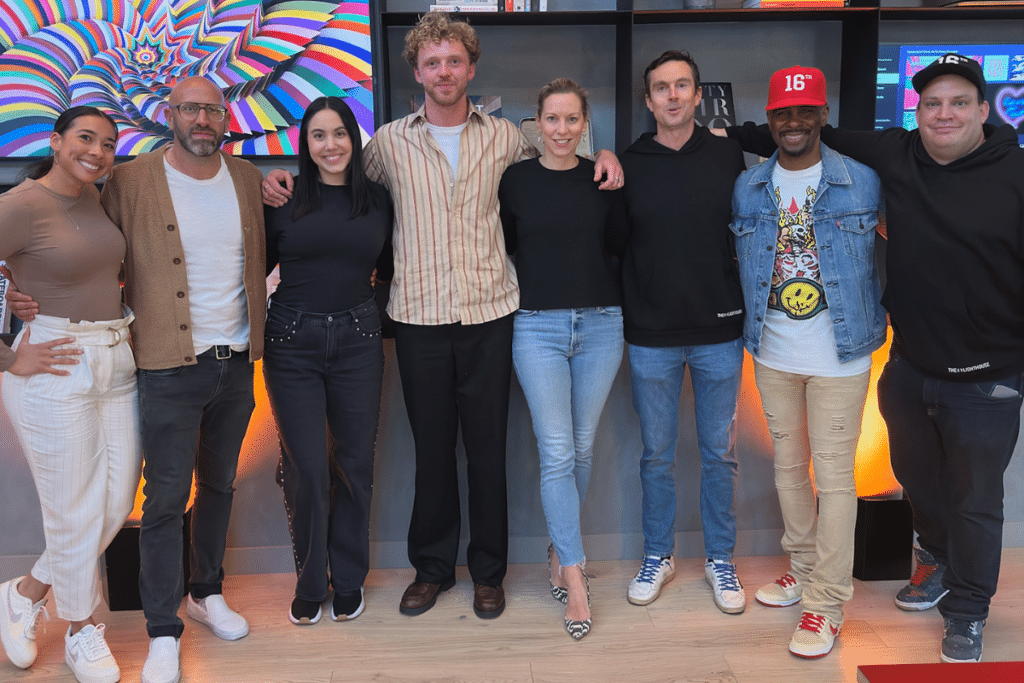
The acquisition transfers only the Whalar agency itself, not the wider Whalar Group umbrella. Whalar’s co-CEOs, Emma Harman and Jo Cronk, will keep their leadership roles, and the agency’s team of more than 170 people across the United States, United Kingdom, Ireland, Germany, and Spain will join Accenture Song.
The remaining five Whalar Group companies will continue to operate independently under co-founders Waller and James Street: Sixteenth, a 360-degree creator talent management firm; The Lighthouse, an in-real-life campus for creators; Foam, an operating system for managing digital talent; Moby Ventures, a creator-focused venture studio; and Umi Games, a gaming studio. Crucially, Whalar Group and Accenture Song will also enter a three-year strategic partnership, giving Accenture Song ongoing access to that broader ecosystem rather than just the agency it is buying. The deal is subject to customary closing conditions.
What Whalar Built
Founded in 2016 by Waller and Street, Whalar grew from a small UK influencer shop into a global agency that has run more than $600 million in creator campaigns, spanning tens of thousands of collaborations across more than 40 countries and 15 languages. It has been named Adweek’s Creator Agency of the Year, Campaign UK’s Agency of the Year, and Ad Age’s Social and Influencer Agency of the Year, and it counts Amazon, Estée Lauder, Google, PetSmart, and Spotify among its clients.
That scale is precisely the asset Accenture is buying. Accenture Song completed nine acquisitions across creative, design, and data in 2024 alone, including the human-understanding firm Unlimited, and it followed in 2025 with the social-first agency Superdigital. Whalar is the capstone, adding global creator relationships to a stack that already included Droga5 in creative, Work & Co in digital products, and The Stable in commerce.
Why Now: From One-Off Posts to Always-On Programs
The strategic logic behind the deal is the same shift that practitioners across the industry have been describing for two years. Brands are trying to move from sporadic influencer activations to continuous, deeply integrated creator programs, and most of them are not there yet.
The data explains the urgency. An average of 63 percent of brand-creator relationships are still one-off, according to The Influencer Marketing Factory’s Brand Deals Report 2026: a brand hires a creator, runs one post, and moves on. Accenture’s bet is that combining Whalar’s creator relationships with its own data, AI, commerce, and measurement infrastructure can convert those one-shot activations into always-on programs that plug into media mix modeling and third-party research. Accenture Song CEO Ndidi Oteh framed social as “where brands are discovered, where modern commerce is happening, and where consumer habits tell us what products and services are going to win next.” US creator economy ad spend is projected to reach $43.9 billion in 2026, per the IAB, making it one of the fastest-growing sectors in all of media.
The Part Accenture Did Not Buy May Be the Point
The most revealing detail of the deal is what Accenture chose to license rather than own. The three-year partnership keeps Foam, Sixteenth, and the rest of Whalar Group independent while giving Accenture access to them, and Foam in particular helps explain why.
Foam is the data layer beneath the agency. In an interview with Net Influencer, Simon Moss, who leads product for Whalar group, described it as “the platform that the managers and the agencies use daily to run their business,” built to solve a problem the rest of the industry had ignored. “If you look at the history of the influencer or creator economy from around 2015, the majority of the investment on the software has gone on what we would call demand-side technology,” Moss said, meaning tools that help brands find creators. “The founders of all of those software companies have naturally just deducted that the brands have the money.” Foam instead sits on the creator and manager side, capturing first-party, authenticated, real-time performance data, the opposite of what Moss called an industry that “benefited from obfuscating whether data is actually real or not.” For a buyer whose entire pitch is data, AI, and measurement, access to authenticated creator data is arguably as valuable as the agency’s client list. It is the difference between estimating a campaign’s reach and proving it.
Neil Waller, in His Own Words
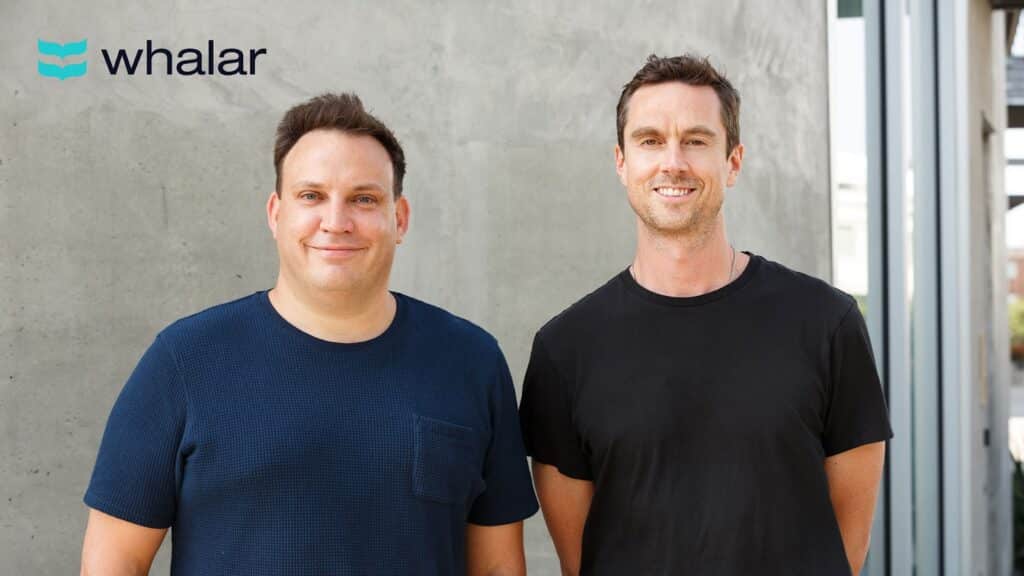
Waller has been telling Net Influencer where this was heading for the better part of a year. In a July 2025 interview, he argued that the creator economy was entering a phase in which creators would be treated as full-fledged companies. “I think the next five years will be about creators truly being media and entertainment companies at the leading edge of it,” he said, predicting that “the biggest thing we’ll see in the next few years is people joining creator companies in different fields of professions that then help a creator build out a successful business.” His framing of Whalar Group’s mission was expansive: “Help creators build big careers, become entrepreneurs, build big media companies, big e-commerce businesses, whatever are their dreams and hopes.”
He was also clear-eyed about why the wave of consolidation now sweeping the industry is happening, and it is not only about strategic fit. “Lots of people got investment five to seven years ago in their companies,” Waller said, “and those investors are now looking for a return, and therefore companies go on the market.” On the May 2025 round that brought in Salesforce founder Marc Benioff, Shopify, and Hollywood producer Neal H. Moritz at a $400 million valuation, he said the signal mattered more than the money. “With Shopify, it says a lot about the future of creators and commerce,” he said. “It says something about how Hollywood feels about the creator economy and creators’ ability to build valuable IP.” Whalar Group also acquired the creator education platform Business of Creativity for $20 million in May 2025.
The Holding Companies and Consultancies Are Circling
The Whalar deal does not stand alone. It is the highest-profile move in an accelerating contest among holding companies and consultancies to own scaled creator infrastructure. Publicis Groupe, which bought Influential for around $500 million in 2024, has since added the influencer software platform Captiv8 for roughly $150 million, the sports and culture agency 160over90 for more than $500 million, and the UK social agency Fabric Social, with CEO Arthur Sadoun stating the group’s goal of sitting “at the centre of the new media ecosystem.” Creator economy mergers and acquisitions totaled 81 deals globally in 2025, up 17.4 percent year over year, according to Quartermast Advisors data, with agencies representing 21 percent of transactions and commanding reported valuation multiples of 4.9 to 9.0 times EBITDA.
For the founders who built the independent agencies now being acquired, the math has become hard to argue with. Jennifer Quigley-Jones, who sold her agency Digital Voices to PMG in January 2026, put the pressure plainly to Net Influencer. “The space for independent agencies is really going to be squeezed,” she said. “Brands are seeing stronger results from integrating media and influencer. They really need tech and scale.” That is the same combination Whalar gains inside Accenture, and the same one the consultancy gains by absorbing Whalar.
What It Signals
The acquisition marks an inflection point. The creator economy is moving beyond campaign execution and into enterprise-grade, AI-powered, always-on creator commerce, and the largest buyers in the world now see scaled creator infrastructure as something worth competing for. By keeping Whalar Group’s talent management, technology, and venture arms independent while embedding the agency inside Accenture Song, the deal also models a structure others are likely to copy: acquire the client-facing scale, partner for the data and the talent pipeline, and leave the founders room to keep building. As Waller has argued, the companies creators are building are still early. The difference in 2026 is that the institutions buying into them are no longer early at all.
Subscribe to Our Newsletter
Check Out Our Podcast