


Agency
Earmax Media Arrives in the UK With a Fix for Podcast Advertising’s Wastage Problem

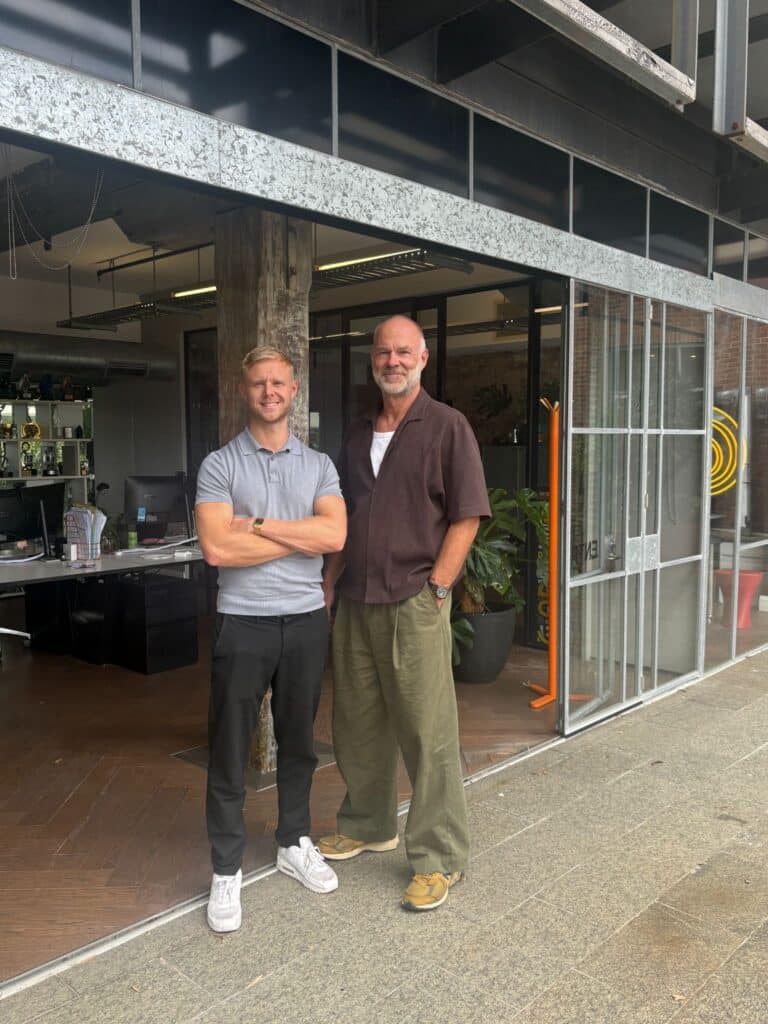
When Ralph van Dijk and Andy Maxwell founded Earmax Media in 2024, they were responding to the same problem from opposite ends. Ralph, whose audio advertising agency Eardrum has operated for more than three decades, was hearing podcast ads that had no business being there creatively. Andy, working in podcast media buying, was watching campaigns land on entirely the wrong audiences. The company they built was designed to fix both at once. In May 2026, they brought that model to the UK.
Earmax operates as a media agency specializing in podcast advertising, paired with Eardrum as its creative arm. The integration is intentional: media plans and ad creative are developed together from the first brief, rather than produced separately and reconciled later. Andy, whose career spanned a WPP-affiliated brand agency and branded podcast consultancy 4DC, handles the media strategy; Ralph, who launched Eardrum in London more than three decades ago, leads on creative.
Together they are targeting a UK market where 39% of adults listen to podcasts weekly, according to Edison Research, and where both founders argue the same structural problems they identified in Australia remain largely unaddressed.
For Ralph, those problems begin with what gets made before the question of where it runs. When he founded Eardrum, he says, most agencies were treating audio “as an afterthought, something knocked out by a junior on a Friday afternoon.” Podcast advertising has changed the stakes considerably since then.
“Great audio advertising has always needed craft,” Ralph says. “Now, it also needs genuine contextual intelligence. Those aren’t nice-to-haves anymore. They’re the price of admission.”
When Podcast Advertising Gets a Line Item but Not Real Attention
Andy identifies a resource asymmetry at the center of the industry’s execution problem. Podcast advertising typically represents 1 to 2% of a brand’s media budget. In his view, it also receives roughly that proportion of the agency’s attention, despite requiring considerably more.
“It’s such an intricate medium that, even if it’s only getting 1 to 2% of the budget, it still probably needs 10 to 20% of the time put into it,” Andy says. “Large media agencies are just seeing it as a line item on impressions as part of a wider media buy.”
That time pressure produces a predictable outcome: planners return to the same publishers. Andy says he was guilty of the same behavior at 4DC, defaulting to Spotify and Acast on every brief because there wasn’t time to look beyond them. The result was media plans that looked structurally identical from campaign to campaign, regardless of the brand’s audience or objective.
Andy points to the consequences firsthand. He was served ads by a menopause brand on a history podcast whose audience is 85% male. He heard that same ad dozens of times: “I shouldn’t be hearing those ads on a podcast that has such a large male audience. All those impressions were wasted. There’s a fundamental disconnect.”
Placement within a show compounds the problem further. Podcast listeners can skip ads, and will. “If you are in that third slot in a break, there’s a strong chance that someone is going to get bored and skip through to the podcast before they reach that ad,” Andy says. “These little nuances can make a huge difference in the actual results of a campaign.”
Why Siloed Planning Produces the Wrong Ads
When media buying and creative development happen in separate agencies with limited coordination, the audio execution tends to be built last. “Audio tends to be an afterthought to the rest of the creative,” Andy says. “There’ll be a TV ad, and then they take bits and pieces from that and produce the audio version.”
For Ralph, that approach misunderstands what a podcast listener has already agreed to. By choosing a show and returning to it repeatedly, a listener has built a specific relationship with a host. An ad that disrupts the tone or atmosphere of that relationship does more than annoy.
“It’s a bit like a slap in the face when the wrong brand with the wrong tone shows up in an intimate medium,” Ralph says. “The bar for being welcome in that moment is far higher than it ever was in traditional radio.”
Earmax integrates planning and creative from the outset through its Eardrum partnership. For Explore Worldwide, a global travel company, the team identified the true crime podcast category as a segment where the adventure travel brand’s audience over-indexed and competitive spending was low. The creative was written specifically for that context, opening with a reference to the genre that listeners would recognize. The alternative, Andy says, is an ad that might be in the right show but completely wrong in tone.
Why a Smaller Audience Can Deliver Bigger Results
Earmax measures performance against business outcomes rather than traditional media metrics. NordVPN campaigns track return on ad spend through branded discount links. FEELD, a dating app, measures app downloads. Campaigns for FEELD extend from branded podcast episodes into social content, boosted across TikTok and Instagram.
For ANZ Bank in Australia, the company tracked new subscribers generated for the bank’s own podcast by each sponsorship placement.
A campaign for Vanta, an enterprise compliance and security software company, put Earmax’s core argument to a direct test. The agency placed ads across several well-known technology podcasts and a smaller specialist show called “Talking Health Tech.” The larger shows had greater reach. The smaller one drove more conversions.
“For really niche products, it’s better to always go for those smaller, niche podcasts,” Andy says. “Even if it’s a slightly higher CPM or fewer downloads, the actual number of people converting can still be higher than something much bigger.” He describes the result as the first concrete evidence for an argument the agency had previously made by intuition.
Ralph frames the principle directly. “Five podcasts of 50,000 engaged listeners will outperform one podcast of 250,000 every time, if the context is right,” he says. “That’s the conversation the UK market needs to be having.”
The UK Launch and What It’s Ready For
Andy returned to London in late March 2026 after building the Earmax model in Australia, and found the UK market more mature than he expected. Publishers and networks had a sharper understanding of podcast advertising’s nuances and more openness to video and social extensions for campaigns than he had encountered earlier in his career.
“This genuinely feels like coming home for me,” Ralph says. “What the UK needs is what Australia needed when we started Earmax there: someone to join up the creative and the media buy.”
He adds that a shift in how the medium can be bought is also underway. Dynamic ad insertion, historically limited to audio, is now being extended to video podcasts, allowing campaigns to run across a show’s entire back catalog rather than only its most recent episodes. Andy describes this as the single most significant near-term change in how podcast inventory can be bought and measured, expanding both publisher revenue and brand reach without requiring new production.
A Bet on Less Volume and More Value
Andy points to how the most sophisticated podcast advertisers already treat the medium. “Brands like BetterHelp have been in podcasting for over five years and built a whole team just for concentrating on it,” he says. “The more brands can behave like that, the more it’s going to benefit the medium overall.”
Ralph measures the category’s progress by a single standard, one he says he has applied for more than three decades: whether the ads are worth listening to.
“In five years, I hope the category looks very different,” he says. “Less volume, more value. Fewer ads that exist simply because a brand bought a slot, and more that are genuinely worth listening to. The proof of concept is there. Clients have come back and doubled down, and that tells you something.”
Subscribe to Our Newsletter
Check Out Our Podcast