






Agency
Talent Veterans Behind Main Character Want Brands to Stop Buying Celebrity and Start Buying Culture

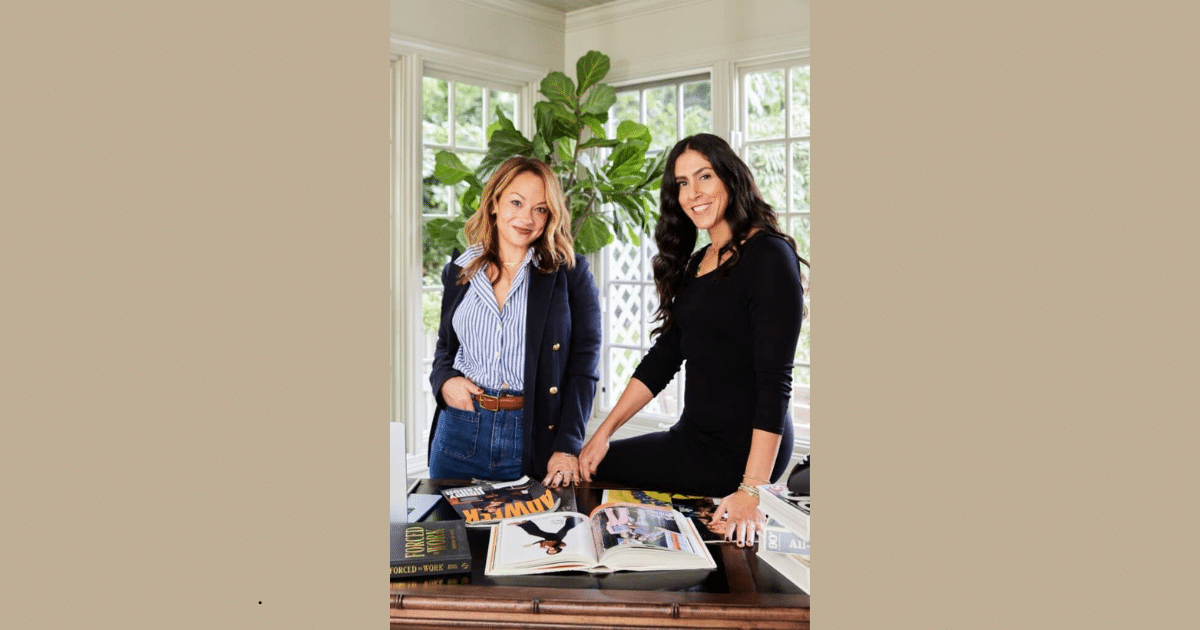
Courtney Worthman and Stacey Gersten built their careers along parallel paths that converged at a talent procurement agency, where they jointly opened the company’s New York office and built its brand and agency-partnerships practice from scratch. After years at firms including Alison Brod Marketing, Grey Group, Cogent Entertainment Marketing, and Authentic Brands Group, that experience gave them a template for what a boutique operation could accomplish when freed from the structural constraints of a larger parent.
In October 2025, the duo founded Main Character with a specific thesis: the brands winning today aren’t outspending competitors, they’re outpacing them.
Based in New York, Main Character serves brands and agencies seeking cultural traction through celebrity endorsements, influencer programs, and what the founders call “cultural moments”: strategies designed to keep brands in the conversation between major campaigns. The firm’s value proposition rests on two decades of institutional knowledge and the agility large agencies structurally cannot match.
20 Years of Instinct That Can’t Be Hired
The founders’ backgrounds are distinct, but complementary. Courtney came up through publicity before moving into endorsement and talent procurement. She developed, she says, a working knowledge of what motivates talent beyond the paycheck, which celebrities and creators will actually deliver on a brand’s brief, and how the Hollywood machinery operates behind a deal.
“All of my experience doing talent endorsement deals really gave a depth of knowledge about Hollywood and how it works and what makes celebrities tick,” Courtney says.
Stacey’s route moved through editorial, advertising, and licensing. At Grey Group, she managed talent and casting for major brand campaigns. A tenure at Authentic Brands Group gave her something less common: the experience of helping shape modern brand narratives for the Marilyn Monroe, Elvis Presley, and Muhammad Ali estates. That work, she notes, shaped how she thinks about what makes a brand or person genuinely last.
“I learned to appreciate what makes someone iconic, and that is the ability to remain relevant, even when they are no longer living,” Stacey says.
The two first crossed paths early in their careers, later worked together at Platinum Rye Entertainment, and eventually moved to New York. “We’re going this hard,” Courtney recalls thinking at the time. “We should be doing this for ourselves.”
Culture Moves Daily. Most Campaigns Don’t.
The structural argument behind Main Character’s launch is direct: the brand marketing calendar is badly misaligned with how culture actually moves. Brands used to build two major campaigns a year and assume those moments would do the heavy lifting. That model no longer fits.
“Culture moves daily, not quarterly,” Courtney says. “It’s become less about big, major campaigns and more about small moments throughout the year.”
That fragmentation puts large agencies at a structural disadvantage. Multiple approval layers and team handoffs make it difficult to respond to cultural openings before they close. Main Character pitches itself as the faster alternative, including for some large agencies themselves, which hire the firm as a specialized extension. “We’re filling the gap and making it possible for larger agencies to tack on our SWAT team to what they’re already doing,” Courtney says.
Their biggest asset? Speed, Courtney says. The firm’s institutional knowledge, she adds, allows it to apply that speed meaningfully: knowing which celebrities and creators are reliable execution partners, which respond quickly to agents, and which will actually commit to a campaign’s talking points is intelligence built over 20 years. “We can kill an idea within 10 minutes if it doesn’t sound like something that would work,” she says.
Creators Are Media Companies. Most Brands Haven’t Caught Up.
A recurring theme in how both founders describe brand mistakes is the tendency to treat celebrity talent as an overlay rather than a channel.

The prevailing assumption, Courtney argues, is that a celebrity appearance functions as a brand’s fallback when it has nothing more substantive to say. “You’ve seen commercials where they slap a celebrity in, and you’re like, ‘What was that?’” she says. What that view misses, she argues, is that the market has shifted. “These celebrities and these creators are their own media companies now,” she says. “Thinking of them in that way really illuminates what big opportunities are out there for brands.”
Stacey makes a sharper version of the same point from the creator side. Despite the volume of influencer activity, she argues, most brand-creator content doesn’t earn attention because it isn’t designed around what the creator’s audience actually wants. “When I’m scrolling through my feed, I am bombarded with ads via influencers, and most of the content feels like an ad,” she says.
The fix, in her view, is audience-first brief construction: tailoring each brief to what a specific creator’s community is actually seeking, whether education, entertainment, or inspiration, rather than distributing a generic brand message across a roster.
Being Unmissable Is a Package, Not a Tactic
When Courtney describes what clients request, two words come up consistently: unmissable and unavoidable. Brands want cultural presence across multiple moments throughout the year, not just around a major campaign launch.
Main Character’s answer is what she calls “surround sound”: a celebrity launch, a sustained creator program, and several targeted cultural activations timed to the brand’s calendar. “It’s more of a package than a one-tactic strategy,” she says.
Strategic restraint is built into that offer. Not every brand can anchor itself to the same large cultural events as the highest-spending competitors. “You can’t outspend the big spenders,” Courtney says. “So you have to focus on cultural bubbles, micro communities, and really get your message right.”
For brands that arrive with aspirations that don’t match their budgets or audience reality, the firm redirects. When one client requested a major film actress for a U.S. launch, Main Character identified limited social traction with the intended audience and proposed a roster of mid-tier creators with engaged followings instead. “We genuinely look for what’s the best bang for your buck,” Courtney says.
Small by Design
Main Character currently serves brands including Papa John’s, BMW, Hyundai, Macy’s, Apartments.com, and Bed Bath & Beyond across brand strategy, celebrity and influencer partnerships, and cultural moment planning. The firm is also developing a branded micro-drama offering, built in partnership with Google and Hollywood production partners, designed to give brands a tested entry point into the format without staffing it internally.
“Our goal is to be a place where brands can experiment with whatever the newest marketing trends are without hiring someone to lead a project where they are completely out of their realm,” Courtney says.
Scaling the firm is something both founders approach with deliberate caution. Courtney describes her primary concern as overpromising, a risk she controls by staying small enough to guarantee execution. “A lot of our clients come to us because they want experience, because they want it done right the first time,” she says. “We don’t want to become bloated or overly layered.”
For Stacey, the firm’s longer-term measure of success is harder to quantify than client counts or revenue. “I want to continue blending commerce and entertainment,” she says, “so that consumers forget they are experiencing advertising.”
Subscribe to Our Newsletter
Check Out Our Podcast