Many B2B companies have more owned content than they know what to do with. Almost none of it earns citations in AI-generated answers.
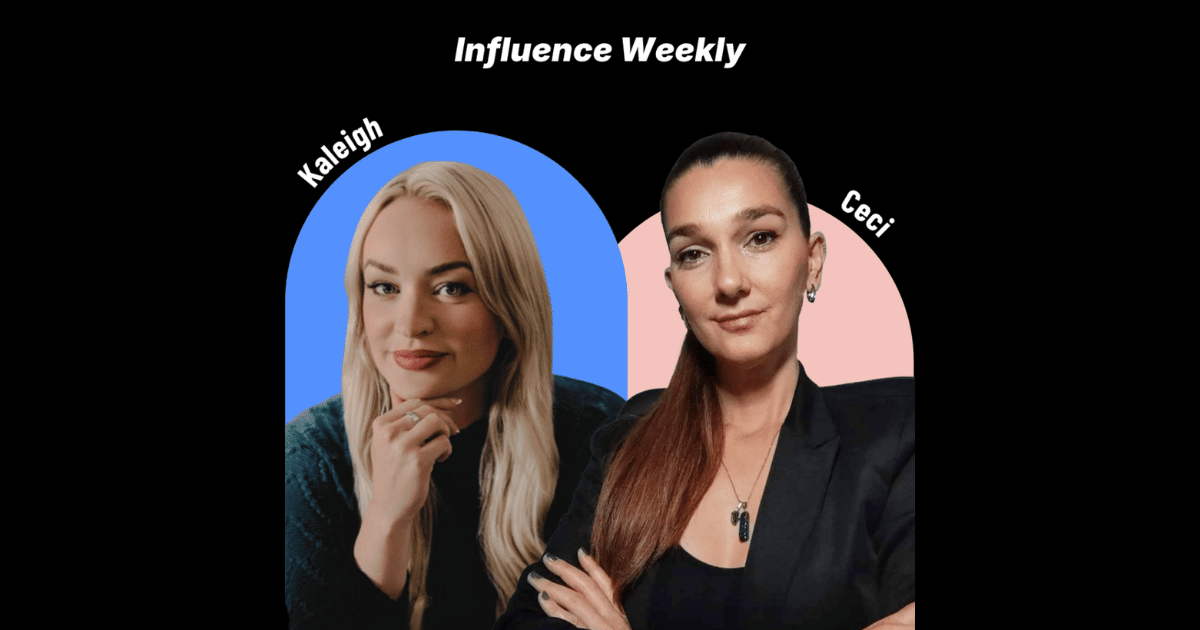
Kaleigh Moore, writer, AEO (Answer Engine Optimization) strategist, and B2B creator, sat down with Net Influencer Senior Editor Ceci Carloni to discuss why brand-owned content has lost ground in AI search. Based in Austin, Kaleigh has run a content and strategy agency since 2013, serving enterprise software clients including Stripe, Shopify, IBM, and Amazon Business. She has contributed to Forbes, Vogue Business, and ADWEEK. Over the last 18 months, as the content marketing work began to dry up, she pivoted toward answer engine optimization and started building her own audience as a creator.
The conversation covered how LLMs evaluate source credibility, LinkedIn’s growing role as a B2B citation platform, what separates a credible B2B creator from a high-follower account, and why most creator programs are structured the wrong way.
1. Why the Content B2B Brands Already Have Won’t Earn AI Citations
The problem is not content quality. It is provenance.
“LLMs, kind of in the same way that an editor wouldn’t trust a press release, they don’t always necessarily trust super heavily brand-issued content,” Kaleigh said. That includes the blog, the newsletter, and the company LinkedIn page. The research she tracks points elsewhere: so much of AI citation generation is happening on off-site platforms, Reddit, YouTube, and LinkedIn, the community forums where creators publish independently of brand infrastructure.
“The further that a source is from brand control, the more trustworthy it is,” she said. That is also why Kaleigh developed the Source Signal Stack, a diagnostic framework that explains why B2B content programs can rank well in traditional search and still fail to earn AI citations. LLMs were built on the same logic journalists have always used. A decade of keyword-optimized content on owned domains has produced an asset base that AI engines are structurally inclined to discount.
2. Creator AEO Treats Creator Partnerships as Citation Infrastructure
The strategic response Kaleigh describes is creator AEO.
“Creator AEO is basically tapping into the idea that LLMs weigh and cross-verify information the same way that humans do,” she said. Brands mobilize creators, whether employee creators, external influencers, or customer advocates, to generate the independent, third-party cross-verification that AI engines prioritize. The creator’s audience trust, topical authority, and platform standing serve as the credibility signal a brand cannot manufacture through owned channels.
The categories serve different functions. Employee creators are close to the product and capable of producing specific, technical insights that external creators cannot replicate. External creators contribute independent standing and audience relationships built entirely outside the brand. Customer advocates carry the weight of lived experience. Each layer addresses a different tier of the citation stack.
The effect is to pull creator partnerships into B2B conversations where they had been largely absent. Marketing teams focused on AI visibility now have a structural rationale for putting influencer strategy in the same room as search and content planning.
3. LinkedIn Has Positioned Itself as the Primary B2B Citation Source
Among off-site platforms, LinkedIn has become the focal point for B2B creator AEO activity.
“The articles that you publish on LinkedIn or as a newsletter can be cited in as little as 24 hours,” Kaleigh said. By her account, LinkedIn’s domain authority is high enough that it ranks as the second or third most-cited off-site source in major AI engines. For B2B companies targeting professional buyers, the citation opportunity concentrates there.
The platform has reinforced this through a series of creator-focused investments: thought leader ads, creator payments, and expanded creator tools. Kaleigh reads these moves as LinkedIn recognizing where it sits in the AI citation stack and building toward it. “This is LinkedIn’s chance to become that sales channel. But for B2B,” she said, pointing to how Instagram played the equivalent role for B2C brands over the last decade.
4. The Most Effective Programs Combine Internal Experts and External Creators
No single creator type covers the full citation surface area a B2B company needs.
“My favorite version of this equation is you have an internal employee roster of creators who are kind of the anchor to this type of program,” Kaleigh said. Internal experts establish the topics the brand is working to own. Their proximity to the product and customers produces specific, technical content that external creators cannot get close enough to generate.
External creators amplify. They appear in comments, co-author reports, present at webinars, and develop use cases that internal teams would not have generated independently. “There are moments for these teams to overlap with each other,” she said. Running both as separate programs with separate budgets misses the compound value that overlap produces.
Not every company has resources for both. Many B2B organizations are investing fully in externally hired creators, and Kaleigh says that path works. The programs she has seen perform best treat the two tracks as a single integrated initiative.
5. Follower Count Is the Wrong Metric. Citation History Is the Right One.
Finding the right creator partner is itself a strategic decision, and most brands are using the wrong filter.
Kaleigh is direct about what not to use. “Follower count is becoming pretty irrelevant at this point,” she said. The metrics that matter are engagement rate and publishing consistency. Is the creator a reliable presence on the platform, or do they disappear for months at a time?
For brands investing in creator AEO specifically, the sharper selection question is citation history. “Who’s showing up in the things that you are trying to rank for, whose videos, whose LinkedIn articles?” she said. Reverse-engineering who already earns citations in the topics a brand wants to own is a more targeted starting point than any follower count.
6. One-Off Campaigns Are the Most Common and Most Damaging Mistake
The single-post campaign is not a neutral experiment. It works against the program.
“It feels to me as an audience member like a cash grab,” Kaleigh said. For B2B, where purchasing decisions can run into six or seven figures and the sales cycle is long, that signal actively undermines the trust the partnership was supposed to build.
Long-term partnerships change the dynamic. Kaleigh recommends commitments of three to six to twelve months, with editorial latitude built in from the start. “You need to give them the editorial leeway to make it their own voice,” she said. Brands that script creators or mandate specific language undermine the independence that made the creator a credible source to begin with.
The selection criterion she returns to is pre-existing enthusiasm. Start with whoever is already posting organically about the product.
7. Measurement Is in Its Billboard Phase. That’s Not a Reason to Wait.
Attributing AI visibility impact to creator partnerships remains genuinely difficult.
“A lot of this work is still brand building,” Kaleigh said. “It’s demand generation. It is not necessarily demand capture at this point.” The tools for tracking off-site citation generation are emerging but not yet capable of the clean attribution B2B finance teams typically require. AI citation counts, share of voice in AI-generated answers, and inbound engagement on senior leadership LinkedIn profiles are the available proxies.
Better measurement is coming, and Kaleigh expects the picture to sharpen considerably over the next year. She recommends starting with an AEO audit to establish baseline citation share, a review of what competitors are testing, and a simple target, perhaps a 10% lift in ChatGPT citations over the next quarter. Entity authority compounds in AI search. The brands that start building now will not have to outbid competitors for the right partners later.
“You’ve already experimented, you have your people, you’ve scooped up the right influencers before the demand gets super crazy,” she said.
Listen to the full conversation on “The Big Three” podcast.
Dragomir is a Serbian freelance blog writer and translator. He is passionate about covering insightful stories and exploring topics such as influencer marketing, the creator economy, technology, business, and cyber fraud.










Many B2B companies have more owned content than they know what to do with. Almost none of it earns citations in AI-generated answers.
Kaleigh Moore, writer, AEO (Answer Engine Optimization) strategist, and B2B creator, sat down with Net Influencer Senior Editor Ceci Carloni to discuss why brand-owned content has lost ground in AI search. Based in Austin, Kaleigh has run a content and strategy agency since 2013, serving enterprise software clients including Stripe, Shopify, IBM, and Amazon Business. She has contributed to Forbes, Vogue Business, and ADWEEK. Over the last 18 months, as the content marketing work began to dry up, she pivoted toward answer engine optimization and started building her own audience as a creator.
The conversation covered how LLMs evaluate source credibility, LinkedIn’s growing role as a B2B citation platform, what separates a credible B2B creator from a high-follower account, and why most creator programs are structured the wrong way.
1. Why the Content B2B Brands Already Have Won’t Earn AI Citations
The problem is not content quality. It is provenance.
“LLMs, kind of in the same way that an editor wouldn’t trust a press release, they don’t always necessarily trust super heavily brand-issued content,” Kaleigh said. That includes the blog, the newsletter, and the company LinkedIn page. The research she tracks points elsewhere: so much of AI citation generation is happening on off-site platforms, Reddit, YouTube, and LinkedIn, the community forums where creators publish independently of brand infrastructure.
“The further that a source is from brand control, the more trustworthy it is,” she said. That is also why Kaleigh developed the Source Signal Stack, a diagnostic framework that explains why B2B content programs can rank well in traditional search and still fail to earn AI citations. LLMs were built on the same logic journalists have always used. A decade of keyword-optimized content on owned domains has produced an asset base that AI engines are structurally inclined to discount.
2. Creator AEO Treats Creator Partnerships as Citation Infrastructure
The strategic response Kaleigh describes is creator AEO.
“Creator AEO is basically tapping into the idea that LLMs weigh and cross-verify information the same way that humans do,” she said. Brands mobilize creators, whether employee creators, external influencers, or customer advocates, to generate the independent, third-party cross-verification that AI engines prioritize. The creator’s audience trust, topical authority, and platform standing serve as the credibility signal a brand cannot manufacture through owned channels.
The categories serve different functions. Employee creators are close to the product and capable of producing specific, technical insights that external creators cannot replicate. External creators contribute independent standing and audience relationships built entirely outside the brand. Customer advocates carry the weight of lived experience. Each layer addresses a different tier of the citation stack.
The effect is to pull creator partnerships into B2B conversations where they had been largely absent. Marketing teams focused on AI visibility now have a structural rationale for putting influencer strategy in the same room as search and content planning.
3. LinkedIn Has Positioned Itself as the Primary B2B Citation Source
Among off-site platforms, LinkedIn has become the focal point for B2B creator AEO activity.
“The articles that you publish on LinkedIn or as a newsletter can be cited in as little as 24 hours,” Kaleigh said. By her account, LinkedIn’s domain authority is high enough that it ranks as the second or third most-cited off-site source in major AI engines. For B2B companies targeting professional buyers, the citation opportunity concentrates there.
The platform has reinforced this through a series of creator-focused investments: thought leader ads, creator payments, and expanded creator tools. Kaleigh reads these moves as LinkedIn recognizing where it sits in the AI citation stack and building toward it. “This is LinkedIn’s chance to become that sales channel. But for B2B,” she said, pointing to how Instagram played the equivalent role for B2C brands over the last decade.
4. The Most Effective Programs Combine Internal Experts and External Creators
No single creator type covers the full citation surface area a B2B company needs.
“My favorite version of this equation is you have an internal employee roster of creators who are kind of the anchor to this type of program,” Kaleigh said. Internal experts establish the topics the brand is working to own. Their proximity to the product and customers produces specific, technical content that external creators cannot get close enough to generate.
External creators amplify. They appear in comments, co-author reports, present at webinars, and develop use cases that internal teams would not have generated independently. “There are moments for these teams to overlap with each other,” she said. Running both as separate programs with separate budgets misses the compound value that overlap produces.
Not every company has resources for both. Many B2B organizations are investing fully in externally hired creators, and Kaleigh says that path works. The programs she has seen perform best treat the two tracks as a single integrated initiative.
5. Follower Count Is the Wrong Metric. Citation History Is the Right One.
Finding the right creator partner is itself a strategic decision, and most brands are using the wrong filter.
Kaleigh is direct about what not to use. “Follower count is becoming pretty irrelevant at this point,” she said. The metrics that matter are engagement rate and publishing consistency. Is the creator a reliable presence on the platform, or do they disappear for months at a time?
For brands investing in creator AEO specifically, the sharper selection question is citation history. “Who’s showing up in the things that you are trying to rank for, whose videos, whose LinkedIn articles?” she said. Reverse-engineering who already earns citations in the topics a brand wants to own is a more targeted starting point than any follower count.
6. One-Off Campaigns Are the Most Common and Most Damaging Mistake
The single-post campaign is not a neutral experiment. It works against the program.
“It feels to me as an audience member like a cash grab,” Kaleigh said. For B2B, where purchasing decisions can run into six or seven figures and the sales cycle is long, that signal actively undermines the trust the partnership was supposed to build.
Long-term partnerships change the dynamic. Kaleigh recommends commitments of three to six to twelve months, with editorial latitude built in from the start. “You need to give them the editorial leeway to make it their own voice,” she said. Brands that script creators or mandate specific language undermine the independence that made the creator a credible source to begin with.
The selection criterion she returns to is pre-existing enthusiasm. Start with whoever is already posting organically about the product.
7. Measurement Is in Its Billboard Phase. That’s Not a Reason to Wait.
Attributing AI visibility impact to creator partnerships remains genuinely difficult.
“A lot of this work is still brand building,” Kaleigh said. “It’s demand generation. It is not necessarily demand capture at this point.” The tools for tracking off-site citation generation are emerging but not yet capable of the clean attribution B2B finance teams typically require. AI citation counts, share of voice in AI-generated answers, and inbound engagement on senior leadership LinkedIn profiles are the available proxies.
Better measurement is coming, and Kaleigh expects the picture to sharpen considerably over the next year. She recommends starting with an AEO audit to establish baseline citation share, a review of what competitors are testing, and a simple target, perhaps a 10% lift in ChatGPT citations over the next quarter. Entity authority compounds in AI search. The brands that start building now will not have to outbid competitors for the right partners later.
“You’ve already experimented, you have your people, you’ve scooped up the right influencers before the demand gets super crazy,” she said.
Listen to the full conversation on “The Big Three” podcast.
Subscribe to Our Newsletter
Check Out Our Podcast