



Influencer
Mafe Anzures Designed Her Creator Business for the Day Brand Deals Stop Being Enough

Mafe Anzures was 17 years old when five-figure ad deals began arriving in her inbox. She had no formal business training, no manager, and no playbook. She figured it out anyway.
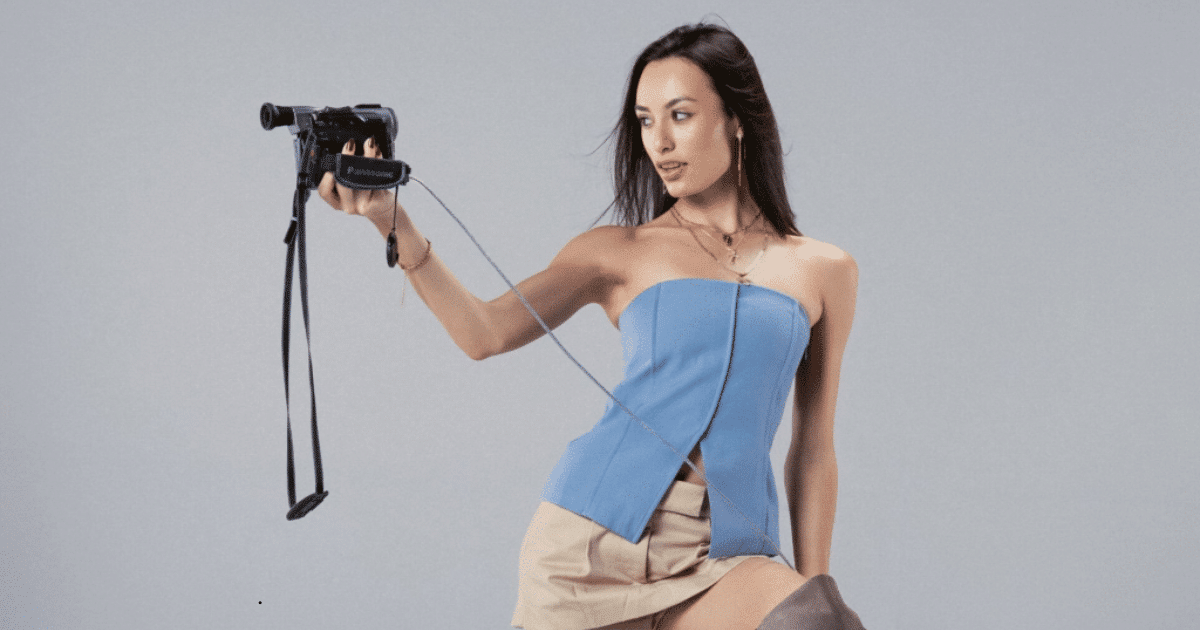
Today, at 22, Mafe is a Miami-based content creator, podcaster, and educator with a multi-stream business spanning brand partnerships, a Patreon membership, editing masterclasses, an Amazon storefront, and her “I MISSED ME PODCAST.” She is represented by Viral Nation and has partnered with brands including Walmart, American Eagle, TikTok, and YSL Beauty, most recently attending Coachella as a creator partner for Neutrogena.
What distinguishes Mafe from the majority of creators at her level is not the number of income streams, but the reasoning behind them. Brand deals are slow to pay and inconsistent. Social platforms are volatile. The market oversaturates faster than most creators can adapt. Her response to all three has been the same: build systems that continue working regardless of conditions she cannot control.
“If you want to get from a point A to a point B fast, exponentially, it is definitely through social media,” she says. “That’s what I’ve done with everything that I do.”
From Embroidery Machines to a Business Framework
The first proof of concept arrived when Mafe was 16. She and her best friend ordered embroidery machines, set them up at home, and began producing custom crewnecks. The clothing brand launched on social media, and within two weeks, it had taken off.
That speed reshaped her understanding of what distribution actually meant. The conventional path for a teenager selling handmade goods might involve local markets, school hallways, or word of mouth. Social media made all of that irrelevant.
“But social media was really the way that we figured out was the easiest to go worldwide,” Mafe says.
Revenue arrived quickly, and in amounts she hadn’t anticipated. Podcast ad deals came through, at a scale that changed the way she framed the work. “I started seeing ads that were five figures come in when I was 17,” she says. “They were paying me more than some people’s yearly salary.” The question was no longer whether social media could be a business. The question was how to run one. The answer, she began to understand, required thinking like a business owner rather than a content producer. Those two things are not the same.
Building Without a Blueprint
Mafe enrolled at Florida International University in 2023 to study marketing. She lasted four months. “I realized that college wasn’t for me,” she says. What came next was an unassisted education in running a company.
The curriculum covered tax obligations, LLC formation, payroll, banking structure, and investment mechanics, none of it taught formally. “It’s been a very self-discovery journey,” she says. “Only by having to figure out everything by myself is the way that I’m able to teach it now.”
That observation is central to how she frames her current work. The practical knowledge she accumulated under pressure, from reading contracts carefully to understanding exactly what the IRS expects from a self-employed creator, became the raw material for the educational side of her business. She has since built a full operation: management, accountants, and editors. She pays herself as an employee of her own LLC.
Her perspective on representation reflects the same earned caution. Signed with Viral Nation, Mafe is direct about what makes a management relationship work. “More than the agency,” she says, “it really is the manager.”
The partnership functions only when both sides understand that the goal is shared. “They’re not working for you, and you’re not working for them,” she says. “You’re working together.”

The Case Against Depending on Brand Deals
Mafe is specific about why brand deals cannot serve as a financial foundation. Payment timelines range from 30 to 120 days. Analytics fluctuate, and brands price work accordingly. The market grows more saturated with each quarter.
“One week, you can have millions of views, and then the next week, you can have thousands of views,” she says. “Brands do put a price based on your numbers. If your numbers are low, the price is going to be low, and you still have to pay the same amount of rent.”
Her solution is recurring revenue: Patreon subscriptions, course sales, and masterclass enrollment. Income that does not depend on algorithm performance or a brand’s quarterly budget. “My masterclasses, my courses, I already know how much is coming in through there,” she says. “Because I have that peace, I don’t really care how many brand deals come in today or tomorrow.”
Brand deals remain her largest single revenue source, and a strong campaign can cover six months of rent. The argument is not against partnerships but against an architecture that has no floor. When the market tilts, creators without alternative income find themselves repricing downward to compete. “The content that only you were able to make a year ago,” she says, “now 10 creators are able to create that same content, and they’re cheaper than you.”
The Five-Figure Rejection
Brand alignment, for Mafe, is not a positioning statement. It is an operational rule. She does not promote smoking, drinking, or drugs. She researches brand values before agreeing to anything. And she only promotes products she has genuinely used.
That last principle produced one of the more consequential decisions of her early career. A supplement brand she had worked with returned years later with a five-figure offer. She turned it down.
“I tried it back then, and I didn’t like it at all,” she says. “I wouldn’t even be able to take a sip of it. So unfortunately, I have to say no.”
The reasoning connects to how she understands her audience relationship. Her content is built to feel like proximity, like she and her followers are undergoing the same phase of life together. A sponsored post for a product she finds unconvincing breaks that contract at the foundation.
“If I’m promoting something that doesn’t really align with me,” she says, “I just feel like I would lose that authenticity, which I feel like is the most important and intimate part of my content.”
Why Millions of Followers Should Never Be Your End Goal
The educational side of Mafe’s business, developed through her “Influencer Bootcamp” and masterclass series, is built on an insight she says most creators are still processing. Follower count is no longer what brands are buying.
“A creator with 2,000 followers can have a great quality video, and a creator with 2 million followers can have a very average, just talking-to-the-camera video,” she says. “A brand will choose that high-quality content video first.”
In 2026, she is building “Creator University,” a platform that will consolidate her courses on editing, monetizing, and community development. The goal is not virality. It is business infrastructure: the financial decisions, the team structure, the long-view thinking that most creator content skips. “I just hope that I’m able to be that little educational corner on the internet that taught you more than how to go viral,” she says.
Her “I MISSED ME PODCAST,” which she has released nearly every week since age 18, runs in parallel. Where her social content surfaces brand trips and curated lifestyle moments, the podcast surfaces everything else, including the burnout that cycles through, the guilt of taking a day off, and the difficulty of building a routine when every day looks different. “You can be doing a lot, and the next day you’re not really doing anything,” she says. “Because your brain is so used to doing a lot, you feel guilty for not doing or for resting.”
“Find something that you’re good at, find a good way to communicate it, and change people’s lives,” she says. “No matter if it’s one person, 100, a thousand, or a million.”
Subscribe to Our Newsletter
Check Out Our Podcast