




Agency
Well Spirit Collective Bets That Trust Outlasts Scale in the Wellness Creator Market

Well Spirit Collective was built around a premise that runs counter to how most influencer agencies operate: that turning down deals is good for business. The Los Angeles-based wellness talent and marketing agency, founded in 2014, has grown by staying selective about the creators it represents and the brands it partners with, a model its Chief Operating Officer, Haley Oberon, argues is the only one that holds up in a category where audiences are unusually sensitive to misalignment.
“A traditional talent agency is focused on managing talent and securing deals,” Haley says. “A typical influencer agency is focused on executing campaigns at scale. We approach things differently because to us, quality is better than quantity.”
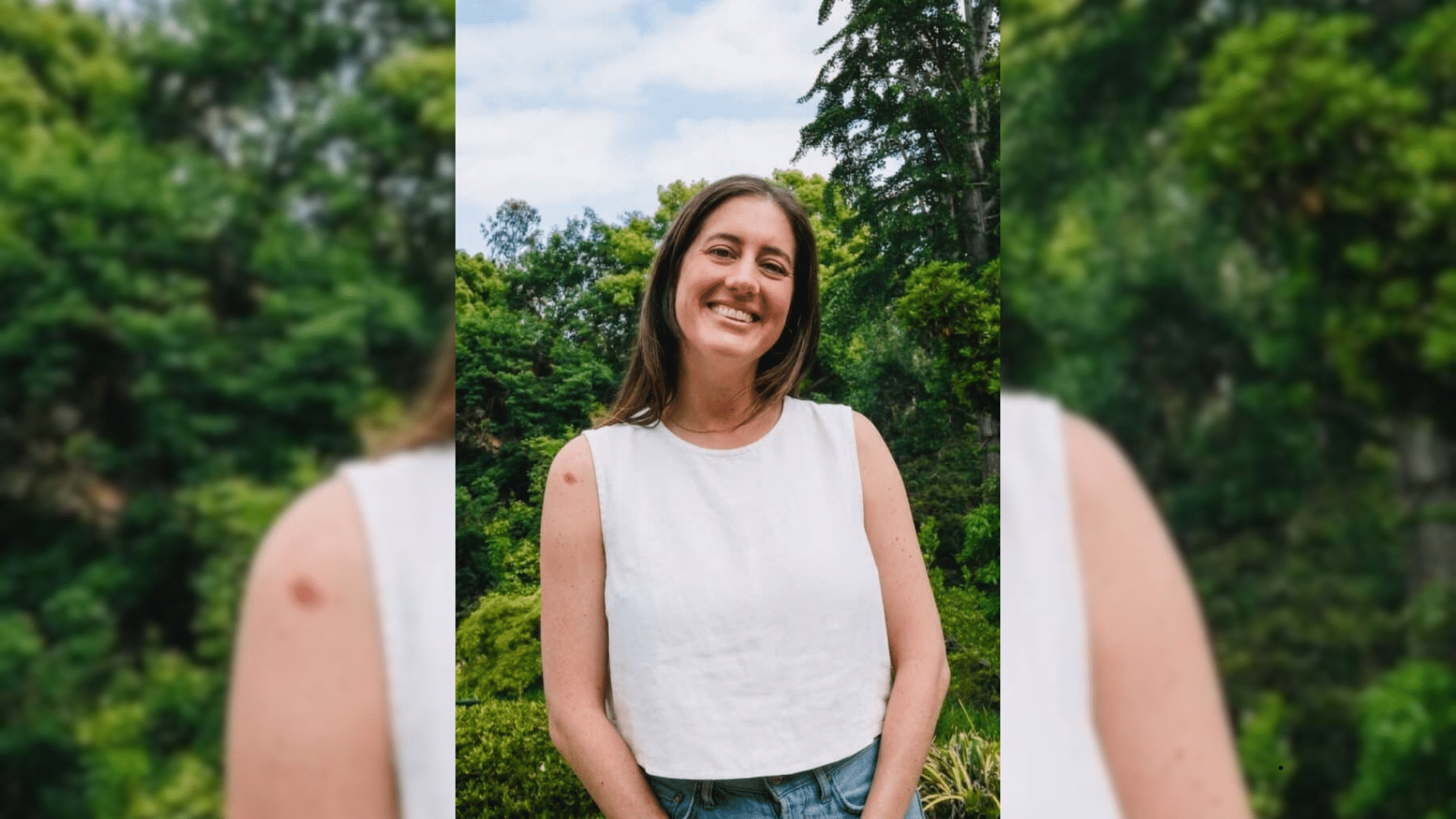
The company, which is women-owned and BIPOC-led, operates across influencer marketing, experiential events, podcasts, PR, paid social, and content strategy, with a roster focused on women’s wellness creators spanning diverse niches. When Haley joined in late 2021 as Director of Partnerships, the team numbered roughly five people. She has since helped scale revenue year over year, built operational systems from scratch, and expanded the talent roster while taking on the operations and strategy functions that now define her role as COO.
Before Well Spirit, Haley spent nearly a decade at traditional media planning and buying firms, including Razorfish, Starcom MediaVest, Mindshare, Carat USA, and OMG23, where she ran digital media strategy and multi-million-dollar campaigns for brands such as Disney, Nordstrom, and Electronic Arts. The move to a wellness creator agency was not purely professional.
“Working on media strategy and executing multi-million dollar campaigns for big brands like Disney is impressive on paper,” she says, “but I started asking myself whether I was actually connected to the work in any meaningful way.”
A family member’s terminal brain cancer diagnosis prompted a deeper shift in her priorities. She began following wellness creators, grew interested in supporting that ecosystem, and eventually found that her media background gave her a perspective most people in the creator space lack.
“The way I think about audience strategy, channel mix, full-funnel frameworks, what actually moves someone through a decision journey,” she explains, “gives me a different perspective than most people in the creator space. I think it makes us more thoughtful in how we approach partnerships on both sides.”
Why Intentionality Drives Every Partnership
Selectivity is the organizing principle at Well Spirit, and it applies to both sides of every partnership.
On the talent side, the agency evaluates creators not by follower count but by genuine engagement and alignment with its values. Creators who join the collective are regularly presented with opportunities they decline, which Haley describes as a feature rather than a problem.
“We bring a lot of opportunities that our talent passes on, and that’s completely fine with us,” she says. “We’d rather protect the relationship than close a deal.”
On the brand side, the agency maintains explicit limits. Pharmaceutical partnerships are off the table on principle, and the team has passed on financially meaningful deals when brand values conflicted with its positioning. “Passing on opportunities limits short-term revenue, but it can build trust,” Haley notes. “And I think that’s more sustainable and valuable in this space.”
That calculus has grown more relevant as wellness audiences have become more discerning. “Audiences can tell when something is a paid placement the creator doesn’t actually believe in,” she says. “The brands that get that are shifting toward longer-term, more integrated partnerships, and those are the conversations I love having the most.”

Photo: Well Spirit Collective CEO Bess O’Connor & Haley Oberon
Story Link Clicks Are Misleading Wellness Brands
One of Haley’s sharpest critiques of the current market concerns how brands measure creator campaign performance. As platforms have changed, she argues, the metrics most brands use to evaluate results have failed to keep pace with how audiences actually engage.
Story link clicks are her primary example. With DM-based tools like Manychat enabling high-intent audience activity through direct message flows, a significant portion of meaningful engagement no longer registers as a link tap. But many brands still use link click thresholds as a primary filter when selecting talent.
“We’re still having conversations with brands that are casting talent based solely on Story link click thresholds, while ignoring DM data and reply rates that would tell them a much more accurate story,” Haley says.
According to her, the issue is structural. Meta actively rewards content that keeps audiences on the platform through comments and DMs rather than directing them to third-party sites. Creators are seeing higher engagement with these strategies, but their link-click numbers are declining. Brands evaluating them on the old metric miss what is actually working.
“Brands need to be more flexible and curious about the data,” she says, “because the platforms are changing faster than most measurement frameworks.”
Her broader point is that influencer investment should be evaluated across the full purchase journey. “Social platforms aren’t inherently a shopping environment,” Haley explains. “People are there to consume content, discover things, be entertained, and learn. Awareness and engagement are real, valuable results even if people don’t immediately purchase.”

Photo: Well Spirit Collective x Anima Mundi Event
One Exposure Almost Never Converts
Despite growing evidence that sustained creator relationships outperform transactional activations, one-off campaigns remain the dominant model for many wellness brands. Haley argues the performance data is clear, even if most brands have not acted on it.
“One exposure almost never converts, and it’s not a fair test of what a creator can actually do for a brand,” she says. “When brands are willing to invest in a longer relationship, results are almost always stronger because the audience has heard about the brand more than once, in more than one context, from someone they already trust.”
Well Spirit raises the long-term relationship conversation early, even when a brand arrives with a single-activation brief. “Wellness is built on trust, and trust takes time,” Haley says. “A creator who has genuinely made your brand part of their life and talks about it authentically over time is a real partnership. And audiences know the difference.”
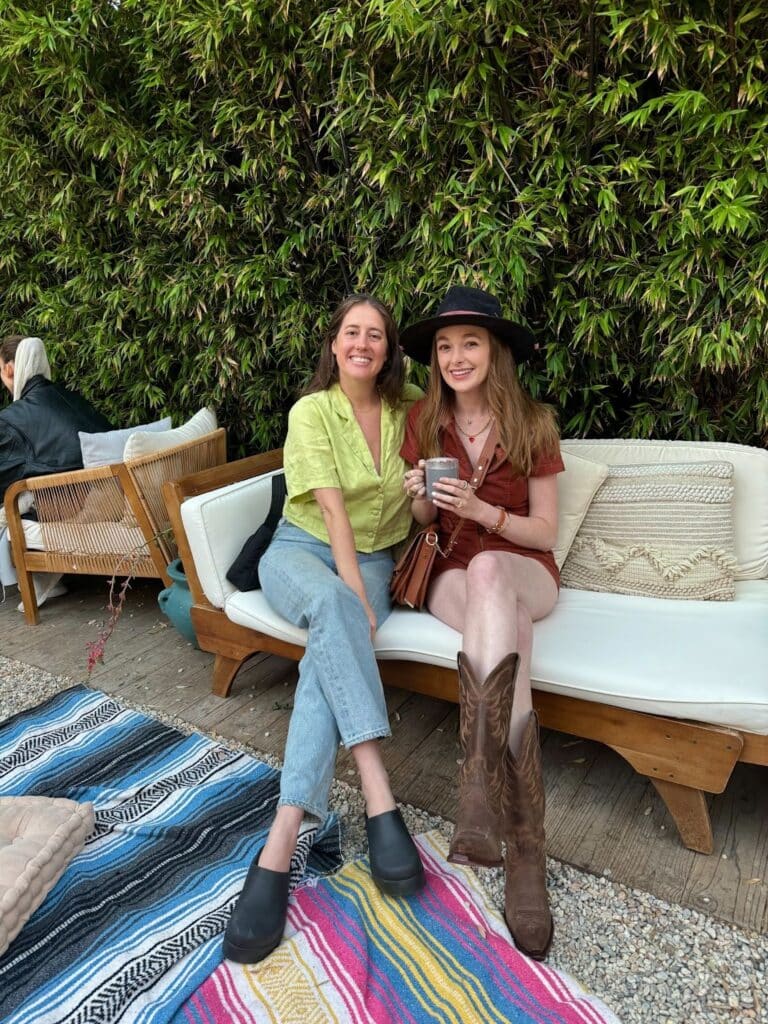
Photo: Haley Oberon & influencer Claudia Gilani
Niche Expertise Is Outperforming Scale in Wellness
Despite a more crowded creator market, Haley identifies clear patterns separating what works from what doesn’t. Niche expertise has emerged as a more reliable driver of commercial results than audience size.
In Haley’s view, creators who are genuinely knowledgeable about functional nutrition, nervous system regulation, or sustainable living have built the kind of credibility that translates into real audience behavior. “A highly engaged niche audience can be far more valuable than a larger general one,” she says. “That depth of knowledge and lived experience is what builds credibility over time.”
Haley also observes a counter-reaction forming against the optimization culture that has defined wellness content in recent years. “Consumers are overwhelmed. There’s a trend for everything, a supplement for everything, and now an AI tool for everything,” she notes. “The creators who are resonating are the ones not overcomplicating it, and are more selective about what they endorse.”
As AI-generated content increases across platforms, the trust between a human creator and their audience becomes a more valuable commercial asset. “What’s working is authenticity, probably more than ever,” Haley says.
Why Market Saturation Makes Trust More Valuable, Not Less
Well Spirit is expanding its focus toward online community building and in-person experience, a direction Haley identifies as the next meaningful frontier for wellness creators. She points to the growth of wellness clubs, retreats, and offline group experiences as signals of where creator-audience relationships are heading.
“There’s a strong pull toward in-person connection right now,” she says. “The creators fostering that kind of community are building something really meaningful, and we want to be part of supporting that.”
The broader challenge for the agency, she acknowledges, is maintaining intentionality as the market grows. More creators and more noise make it harder to stand out, but they also clarify what actually matters. When audiences have more options than ever, the trust they extend to a specific creator becomes more commercially significant.
“The agencies and talent that thrive over the next few years are the ones who build real trust with their audiences, their brand partners, and each other,” Haley says. “The ones who’ve chased scale at the expense of authenticity and integrity are going to feel that pressure more and more.”
Subscribe to Our Newsletter
Check Out Our Podcast