


Strategy
Syracuse University Wants to Be Where the Creator Economy Goes to College

Higher education has been slow to adapt to the Creator Economy. Most universities still treat content creation as a hobby rather than a curriculum. Syracuse University is now moving to change that.
In September 2025, Syracuse launched the Center for the Creator Economy, a joint initiative between the S.I. Newhouse School of Public Communications and the Martin J. Whitman School of Management. The university calls it the first academic center of its kind in the United States, and the ambition behind it is broad: courses, research, industry partnerships, on-campus incubators, executive education, and programming across Syracuse’s campuses in New York City, Los Angeles, and Washington, D.C.
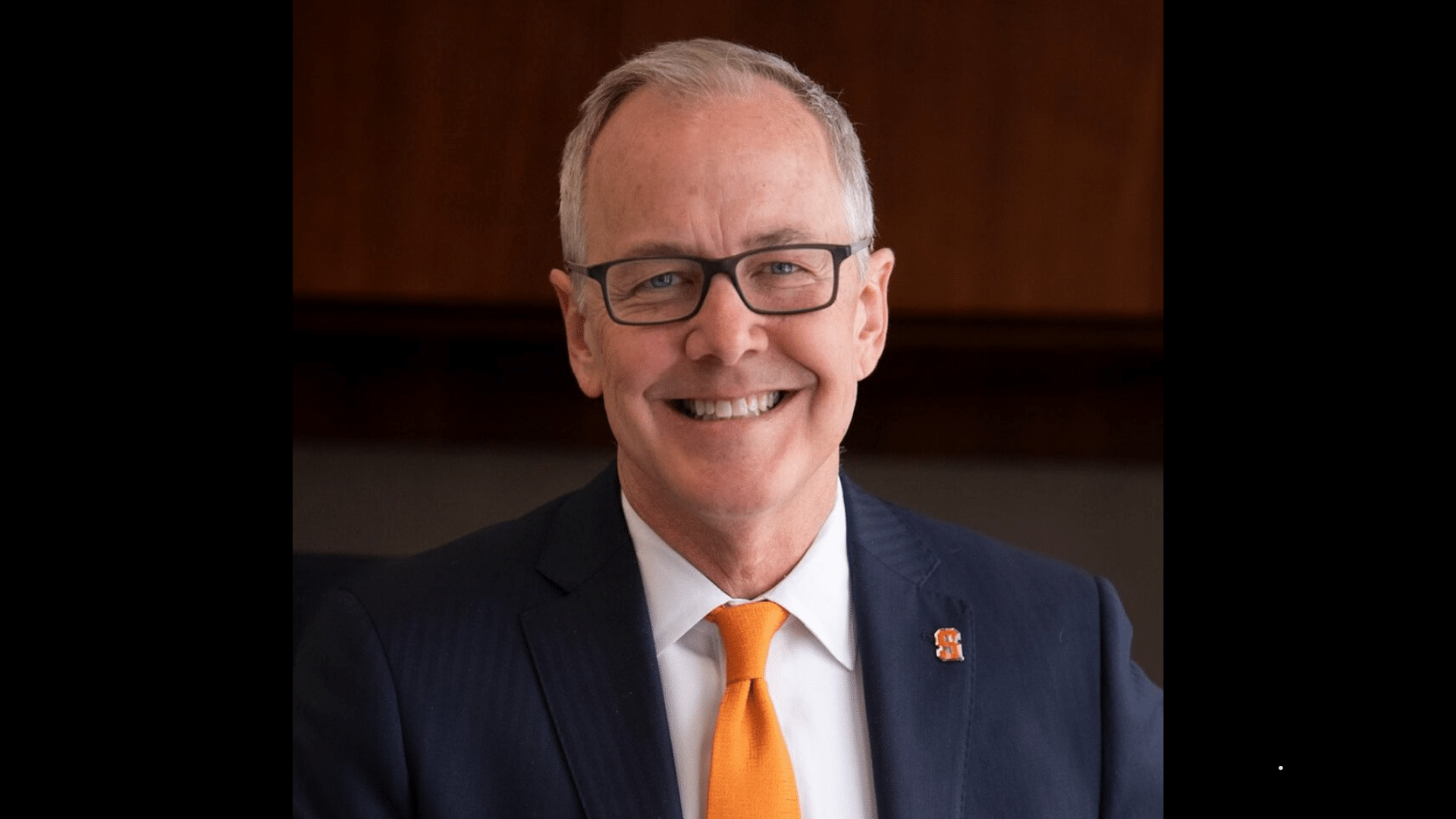
Mark Lodato, Dean of the Newhouse School since 2020 and a former Emmy-winning television reporter, is one of the architects of the center. He came to the role as an outsider to the Creator Economy, watching from the sidelines as advertising dollars migrated away from the outlets his school had long trained students to work for.
“Companies as large as Walmart and as small as shops around the corner are now pivoting toward the creator space and away from legacy media outlets,” Mark says. “The dollars are following, and one of the things we teach here is advertising. They’ll be the first to tell you that.”
The Student the Center Was Actually Built For
Mark expected the center to attract students interested in becoming creators. What he found was something more complex. Students with hundreds of thousands of followers, some with over a million, were already enrolled at Syracuse, pursuing degrees in fields unrelated to media. Their channels existed entirely outside the classroom.
“They may be majoring in something completely different, but they’ve built a following and an area of interest that is hugely successful,” Mark says. “What do we do with that student? What do we do for that student?”
The answer the center is developing is less about teaching people how to film or edit and more about what happens after an audience exists. Students, Mark says, consistently ask the same questions: How do I leverage a platform with 250,000 followers to set myself up after graduation? How do I handle the business side? How much do I charge a brand? Do I need an LLC (Limited Liability Company)?
“It’s much more about exposing our students to the right ecosystem,” he explains. “It’s less about equipment. Everybody can do so much with their phone. It’s about helping them answer the questions they have about setting up a network, being able to handle the business side.”

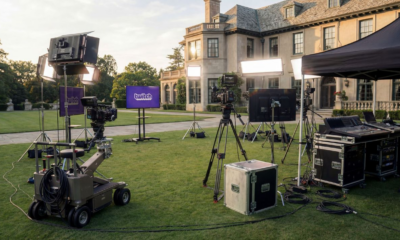
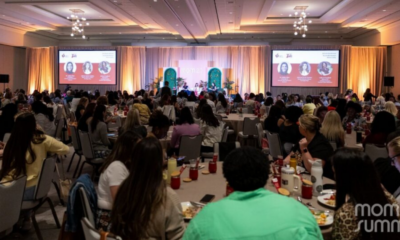
Photo: Syracuse campus, New York; November 2025 Launch Event of the Center for the Creator Economy Program
Credit: Chris Fiegel
A Minor, Not a Major: How Syracuse Is Structuring the Curriculum
The center does not offer a standalone degree. It is building a minor in the Creator Economy, drawing from courses across multiple schools and colleges, including the Falk College of Sport and the College of Visual and Performing Arts. The logic is that the Creator Economy skills can both layer on top of an existing expertise or become an area of expertise.
Mark uses an architecture student as his illustrative case: someone who knows they need to build a personal brand alongside their professional one and who wants to understand how platforms actually work. That student does not need a communications degree. They need targeted skills.
The same logic applies to student athletes and NIL deals. “We’re competing for athletes from other top universities across the country,” Mark notes, “and showcasing to our athletes that we can help them create their personal brands in a robust way, and have an understanding of the economics behind that, as well as the social skills to be able to pull it off online.”
“If you minor in the Creator Economy at Syracuse University, you’ll graduate with those skills as well, to be able to propel yourself in your own area of expertise,” he says.
The curriculum challenge is keeping pace with an ecosystem that changes faster than academic approval processes typically allow. Mark acknowledges that higher education is structurally slow. His solution is to build flexible course frameworks rather than prescriptive syllabi, giving faculty room to update content without triggering a full review cycle.
“We can build courses around aspects of communications in the Creator Economy or business within the Creator Economy, but not let ourselves get too bound by what is within those courses,” he says. “Enabling professors to have a degree of latitude to respond to the changing environment.”
Higher Education Has a ROI Problem, and This Is the Answer
The center is not purely an academic exercise. It is also a competitive move. U.S. colleges are facing what demographers call an “enrollment cliff,” a structural decline in the number of college-age students. Universities are under pressure to justify the cost of a degree to prospective students and their families, some of whom now openly question whether higher education is worth it.
Goldman Sachs projects the Creator Economy will approach half a trillion dollars by 2027, with the global creator community growing 10% to 20% annually. Nearly half of U.S. teenagers already earn income through digital channels. That is where Syracuse is positioning the center.
“If I know I want to move some of my advertising dollars as a marketer from traditional media to the influencer space, how do I find the influencers? How much do I pay? What are they expecting?” Mark says, describing the executive education component of the center’s mission. “We can teach industry as well.”
Mark sees a specific opportunity to serve a student and parents caught between two impulses: the desire to build something independently and the expectation that a degree still matters. “What if we can find a space where we can meet in the middle,” the Dean says, “come to a school like Syracuse University, learn something that underscores what you’re interested in, but also meets our concern about having a liberal arts education as well.”

Photo: Syracuse campus, New York; November 2025 Launch Event of the Center for the Creator Economy Program
Credit: Chris Fiegel
Creators Are Not Getting the Institutional Respect They Have Earned
One of Mark’s more pointed observations has nothing to do with curriculum. He argues that successful creators are being underestimated, not just by parents who question whether this is a real career, but also by professional circles that have yet to grasp how much the business has changed.
“There are outstanding influencers and creators in the world today that could use alignment with a university that brings a level of strength and reputation to the table,” he says. “Unfortunately, I don’t think some of our most successful creators and business people in this space get the respect that they deserve and that they have earned.”
Mark describes still having to make the case to parents whose children want to study Creator Economy subjects. The stigma, he says, has not fully dissolved. “That is something that I have and expect to continue to explain to parents sometimes who don’t quite see the space. They have children who say, ‘I want to study this,’ and you have to understand what the ‘this’ is.”
For the center, alumni are part of the credibility play in both directions. Andrew Graham, the Head of the Creator and Influencer Division at Creative Artists Agency, is a Newhouse School graduate. Buddy Valastro, the pastry chef and media personality behind the long-running baking franchise “Cake Boss,” has two children currently studying at the Whitman School and helped the university kick off the center’s announcement. Both connections reflect the kind of industry-to-campus bridge the center is trying to formalize.

Photo: Syracuse campus, New York; November 2025 Launch Event of the Center for the Creator Economy Program
Credit: Chris Fiegel
The Hire That Determines Whether This Works
The center has a physical space at the Newhouse School in Syracuse, an emerging course portfolio, and events already running in multiple cities. What it does not yet have is an executive director. The search is active, with applications already in review.
Mark is specific about what the role requires: someone from outside academia, with existing relationships across the Creator Economy, capable of fundraising, and willing to function as an external conduit between the university and industry.
“It is obviously focused on, in essence, growing this center from its infancy into what we envision it can be in the years ahead,” he says. “We’re really looking for someone with a high degree of professional connectivity. The business and social skills to make it happen, and also the drive to want to be that external conduit between the university and this professional community.”
Financial sustainability is part of the mandate. Mark wants the center to eventually cover its own costs through corporate partnerships, executive education, and event programming. “We want to create a self-sustaining entity here, and we think we can do that,” he says.
The Case for Acting Before the Playbook Is Written
Five years from now, Mark describes a center that runs executive education in cities across the country, publishes research on Creator Economy trends, maintains active corporate partnerships, and supports students across every school at Syracuse, not just Newhouse and Whitman. He acknowledges none of that is guaranteed.
The honest version of the center’s current state is that it is building in public. The curriculum is flexible because the field keeps changing. The executive director search is open because the right candidate has not yet arrived. The center has planted what Mark calls a flag, a signal to students, parents, and industry that Syracuse intends to be a leader in this space before one is obvious.
“Higher education is not always good at moving quickly,” Mark says. “And this is a space that is moving tremendously fast. If we truly want to lead, then we need to act fast. And frankly, we haven’t figured it all out yet. That’s part of the fun.”