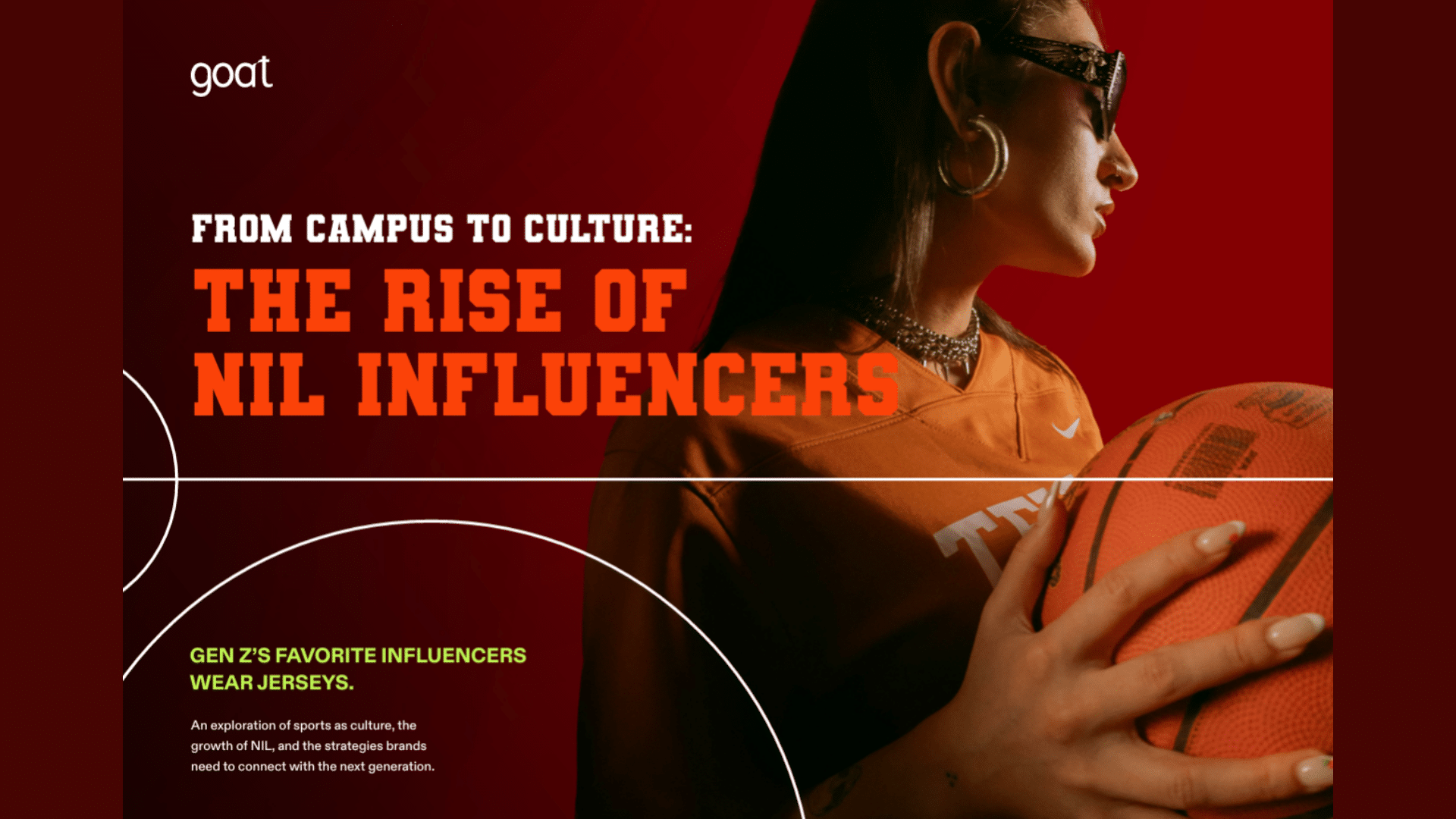
The rise of Name, Image, and Likeness (NIL) policies in collegiate athletics has created a new class of influencers who are reshaping how brands connect with Gen Z, according to a new report from The Goat Agency, a global influencer marketing firm.
The report, titled “From Campus to Culture: The Rise of NIL Influencers,” details how college athletes have moved beyond traditional sports endorsements to become cultural tastemakers with peer-level credibility that resonates with the next generation of consumers.
The NIL market is expected to surpass $2 billion by 2026, according to data from Opendorse cited in the report. This growth reflects the expanding influence of student-athletes beyond the playing field, with approximately 19.57 million college students in the U.S. by 2025 representing a significant consumer audience.
“This isn’t just NIL. It’s market share,” notes the report, positioning college athletes as cultural connectors who shape campus trends across fashion, technology, wellness, and lifestyle categories.
The Peer-to-Peer Influence Model
College athletes occupy a distinctive position in the influence economy that traditional influencers or professional athletes are yet to match, the report finds.
“Unlike traditional influencers or professional athletes, NIL athletes bring something different: they are peers. They live the same college campus life, making them some of the most trusted and powerful voices for Gen Z,” the report states.
This peer dynamic creates immediate shared experiences. The report describes it as, “I look up to you, I trust you – but you’re also a freshman trying to find the right laptop for note taking.”
Women Athletes and Brand Impact
The report highlights that female college athletes represent a particularly powerful opportunity for brands. According to a recent study on U.S. Women’s Sports cited in the report, “67% [of fans who regularly watch women’s sports] are more likely to choose products from sponsors of female athletes.”
The report emphasizes that “the more invested the fan, the stronger the brand impact – making female college athletes a uniquely powerful opportunity.”
Male Audience Engagement
The report highlights that NIL athletes provide a unique pathway to reach young male audiences, who often tune out typical sponsored content.
“In our previous ‘Male Influence Report,’ 64% of young men said it is clear when an influencer has been paid to represent a brand,” the report states. “College athletes break through as they’re athletes first, creators second, making their voice trusted… This makes college athletes a uniquely powerful way to engage a demographic that is notoriously hard to reach with standard influencer strategies.”
The Sports Audience Advantage
The report highlights the role of live sports as a cultural anchor, noting that in 2024, sports broadcasts comprised 75 of the 100 most-watched telecasts in the U.S., according to Variety.
Key viewership metrics cited include:
The 2024 College Football Playoff Semifinal peaked at 32.8 million viewers (Rose Bowl).
The 2025 NCAA Women’s Basketball National Championship peaked at 24.1 million viewers (Nielsen).
43% of Gen Z fans use social media while watching live sports (Greenfly).
67% of Gen Z prefer consuming sports content on their phones while on the go (Vizrt).
During the 2025 NCAA Women’s Basketball Tournament, ESPN’s social media content generated 42.7 million engagements and 396.7 million total views, demonstrating the digital amplification of sports moments.
Hyper-Local to National Influence
The report identifies a unique aspect of NIL influence: athletes have both strong local campus credibility and potential to scale nationally.
“Athletes have influence where it matters most: on campus and in surrounding communities. Local fans know them personally, which makes partnerships highly relevant and engaging,” the report states.
This hyper-local influence can be strategically valuable for regional brands targeting specific markets. Simultaneously, “Campus stars today can become national influencers tomorrow, allowing brands to grow alongside them,” creating opportunities for long-term partnerships that scale with an athlete’s career.
Content Beyond the Game
The report identifies that viral content from athletes often focuses on aspects of student-athlete life that are peripheral to athletic performance.
“The posts that typically go viral aren’t highlight reels or buzzer-beater moments, but everything around the game: game-day fits, reels of mic’d up players making unhinged comments on the field, or locker room interviews of players weighing in on pop culture,” the report says.
This creates year-round influence opportunities for brands, as athletes produce content consistently throughout academic terms, not just during competitive seasons. The report cites examples such as Maya Rodriguez, a track athlete at Cal Poly, whose “Day in My Life as a Student-Athlete” TikTok naturally incorporates multiple brands into her daily routine.
Cross-Industry Applications
The report also showcases examples of successful NIL partnerships across diverse industries:
BEAUTY: Hally Hair’s Campus Color Campaign – Hally Hair partnered with more than 100 Baylor student-athletes to promote Shade Stix temporary hair color, launching special editions in Baylor’s green and gold school colors. According to the report, “TikTok and Instagram engagement amplified reach, emphasizing self-expression and school spirit.” The campaign connected local athletes with student fans while highlighting individual expression through team-oriented styling.
FASHION: American Eagle x TK Line – NFL star Travis Kelce collaborated with American Eagle, specifically choosing NIL athletes to feature in his new clothing line, aiming to reach a younger, more diverse audience. Per the report: “The campaign featured athletes from football, basketball, tennis, and gymnastics, highlighting individuality, style, and a variety of backgrounds. Multi-platform social activations, lifestyle photography, and TikTok-ready content amplified reach while keeping it relatable to college students.”
TECH: DJ Lagway x Nintendo & Epic Games – Florida QB DJ Lagway partnered with Nintendo and Epic Games in what the report describes as “bringing the worlds of college football and gaming together in a big way.” The partnership used “Lagway’s rising star power to connect with a generation that lives online, plays hard, and craves cultural crossovers.” By featuring an athlete at the center of their campaign, the brands demonstrated how to “blur the lines between sports and gaming while unlocking new levels of fan engagement.”
WELLNESS: CELSIUS’ LIVE. FIT. GO. Campaign – CELSIUS expanded its LIVE. FIT. GO. campaign by signing six college football athletes, including Jeremiyah Love, Caleb Downs, and Bryce Underwood. The report details: “This growth reflects CELSIUS’ expanding presence across campuses, on the field and in the gym. The athletes’ dedication to performance embodies the ‘live fit’ mindset, giving fans a genuine look at their routines and how CELSIUS energizes their journey.” The activation featured TV spots, social content, and campus-focused events.
FINANCE: Nijaree Canady x Venmo – Texas Tech softball ‘phenom’ Nijaree Canady’s partnership with Venmo brought “the energy of team spirit and peer-to-peer culture into the spotlight.” The report explains: “Known for changing the game on the field, Canady now helps Venmo highlight how money moves just as easily between friends as it does between fans. This partnership showed how fintech brands can celebrate rising athletes while making their platforms feel personal and social.”
FOOD & BEVERAGE: Chipotle’s Athlete Meal Program – Chipotle provided approximately 1,000 Ohio State athletes, including both scholarship and walk-on players, with free meals during their seasons. The report notes: “By recognizing student-athletes as the stars their peers look up to, the brand positioned itself as the place where campus leaders eat. The move felt inclusive while embedding Chipotle into the everyday social fabric of student life. When athletes are seen grabbing burritos, it makes Chipotle a relevant part of the campus culture.”
LIFESTYLE: United Airlines’ NIL Deal with JuJu Watkins – United Airlines signed USC’s JuJu Watkins to an NIL deal, joining other athletes, such as Travis Hunter and Caleb Williams, to promote travel experiences. The report states: “This partnership highlighted the intersection of sports and lifestyle, with athletes serving as ambassadors for travel and exploration. By associating with athletes, United Airlines tapped into the aspirational lifestyles of college students, promoting travel as an integral part of their experiences.”
Winning Brand Strategies
The report outlines five key strategies for effective NIL marketing:
Engage athletes in their element – Activate in spaces where athletes naturally exist, such as dining halls, dorms, and gyms, not just during competitions.
Get in early with rising stars – Identify promising athletes before they achieve major recognition.
Combine micro and macro influence – Layer high-profile athletes with local campus creators to reach multiple audience segments.
Plan around key moments – Map campaigns to decision milestones that shape student behavior throughout the academic year.
Amplify creativity and style – Allow athletes to showcase their full identities beyond sports.
“Partnering with them gives brands a front-row seat, not only to influence younger audiences, but to grow alongside talent as they rise to national fame,” said Brian Vieira, Head of Campaigns at Goat Agency.
Year-Round Activation Opportunities
The report identifies eight key activation periods throughout the academic year where NIL athletes have a particularly strong influence:
December-January: College Bowl Games/Playoffs
March: NCAA Basketball Tournaments
April: Spring Break
May-June: Graduation/Senior Year
June-July: Off-Season & Off-Campus
August: Back to School
September-November: Tailgate Season
December: Winter Break/Holidays
These moments represent opportunities for brands to connect with students as they make independent purchasing decisions that can establish long-term brand relationships.
Conclusion
The report positions NIL athletes as a natural development in the creator economy, offering brands access to hyper-local influence, credible peer recommendations, year-round content opportunities, and scalable reach that can grow as athletes move from campus to broader platforms.
“Student-athletes with high NIL valuations are stars in their own right, cultivating fan bases across multiple worlds – from sports to fashion, beauty, and lifestyle,” said Ajalin Williamson, Strategy Director at Goat Agency. “With jam-packed schedules, they don’t always fit the mold of the ‘always-on’ influencer, which makes the glimpses they share into their daily lives, routines, and preferences even more special and exciting to fans.”
The report concludes that “NIL athletes give brands access to influence, culture, and audiences that few other channels can reach. With massive followings and lives that extend beyond the game, they shape trends, habits, and purchases. The opportunity is now, and brands can’t afford to miss it.”
Image credit: Goat Agency Get the full report here
Dragomir is a Serbian freelance blog writer and translator. He is passionate about covering insightful stories and exploring topics such as influencer marketing, the creator economy, technology, business, and cyber fraud.












The rise of Name, Image, and Likeness (NIL) policies in collegiate athletics has created a new class of influencers who are reshaping how brands connect with Gen Z, according to a new report from The Goat Agency, a global influencer marketing firm.
The report, titled “From Campus to Culture: The Rise of NIL Influencers,” details how college athletes have moved beyond traditional sports endorsements to become cultural tastemakers with peer-level credibility that resonates with the next generation of consumers.
The NIL market is expected to surpass $2 billion by 2026, according to data from Opendorse cited in the report. This growth reflects the expanding influence of student-athletes beyond the playing field, with approximately 19.57 million college students in the U.S. by 2025 representing a significant consumer audience.
“This isn’t just NIL. It’s market share,” notes the report, positioning college athletes as cultural connectors who shape campus trends across fashion, technology, wellness, and lifestyle categories.
The Peer-to-Peer Influence Model
College athletes occupy a distinctive position in the influence economy that traditional influencers or professional athletes are yet to match, the report finds.
“Unlike traditional influencers or professional athletes, NIL athletes bring something different: they are peers. They live the same college campus life, making them some of the most trusted and powerful voices for Gen Z,” the report states.
This peer dynamic creates immediate shared experiences. The report describes it as, “I look up to you, I trust you – but you’re also a freshman trying to find the right laptop for note taking.”
Women Athletes and Brand Impact
The report highlights that female college athletes represent a particularly powerful opportunity for brands. According to a recent study on U.S. Women’s Sports cited in the report, “67% [of fans who regularly watch women’s sports] are more likely to choose products from sponsors of female athletes.”
The report emphasizes that “the more invested the fan, the stronger the brand impact – making female college athletes a uniquely powerful opportunity.”
Male Audience Engagement
The report highlights that NIL athletes provide a unique pathway to reach young male audiences, who often tune out typical sponsored content.
“In our previous ‘Male Influence Report,’ 64% of young men said it is clear when an influencer has been paid to represent a brand,” the report states. “College athletes break through as they’re athletes first, creators second, making their voice trusted… This makes college athletes a uniquely powerful way to engage a demographic that is notoriously hard to reach with standard influencer strategies.”
The Sports Audience Advantage
The report highlights the role of live sports as a cultural anchor, noting that in 2024, sports broadcasts comprised 75 of the 100 most-watched telecasts in the U.S., according to Variety.
Key viewership metrics cited include:
During the 2025 NCAA Women’s Basketball Tournament, ESPN’s social media content generated 42.7 million engagements and 396.7 million total views, demonstrating the digital amplification of sports moments.
Hyper-Local to National Influence
The report identifies a unique aspect of NIL influence: athletes have both strong local campus credibility and potential to scale nationally.
“Athletes have influence where it matters most: on campus and in surrounding communities. Local fans know them personally, which makes partnerships highly relevant and engaging,” the report states.
This hyper-local influence can be strategically valuable for regional brands targeting specific markets. Simultaneously, “Campus stars today can become national influencers tomorrow, allowing brands to grow alongside them,” creating opportunities for long-term partnerships that scale with an athlete’s career.
Content Beyond the Game
The report identifies that viral content from athletes often focuses on aspects of student-athlete life that are peripheral to athletic performance.
“The posts that typically go viral aren’t highlight reels or buzzer-beater moments, but everything around the game: game-day fits, reels of mic’d up players making unhinged comments on the field, or locker room interviews of players weighing in on pop culture,” the report says.
This creates year-round influence opportunities for brands, as athletes produce content consistently throughout academic terms, not just during competitive seasons. The report cites examples such as Maya Rodriguez, a track athlete at Cal Poly, whose “Day in My Life as a Student-Athlete” TikTok naturally incorporates multiple brands into her daily routine.
Cross-Industry Applications
The report also showcases examples of successful NIL partnerships across diverse industries:
BEAUTY: Hally Hair’s Campus Color Campaign – Hally Hair partnered with more than 100 Baylor student-athletes to promote Shade Stix temporary hair color, launching special editions in Baylor’s green and gold school colors. According to the report, “TikTok and Instagram engagement amplified reach, emphasizing self-expression and school spirit.” The campaign connected local athletes with student fans while highlighting individual expression through team-oriented styling.
FASHION: American Eagle x TK Line – NFL star Travis Kelce collaborated with American Eagle, specifically choosing NIL athletes to feature in his new clothing line, aiming to reach a younger, more diverse audience. Per the report: “The campaign featured athletes from football, basketball, tennis, and gymnastics, highlighting individuality, style, and a variety of backgrounds. Multi-platform social activations, lifestyle photography, and TikTok-ready content amplified reach while keeping it relatable to college students.”
TECH: DJ Lagway x Nintendo & Epic Games – Florida QB DJ Lagway partnered with Nintendo and Epic Games in what the report describes as “bringing the worlds of college football and gaming together in a big way.” The partnership used “Lagway’s rising star power to connect with a generation that lives online, plays hard, and craves cultural crossovers.” By featuring an athlete at the center of their campaign, the brands demonstrated how to “blur the lines between sports and gaming while unlocking new levels of fan engagement.”
WELLNESS: CELSIUS’ LIVE. FIT. GO. Campaign – CELSIUS expanded its LIVE. FIT. GO. campaign by signing six college football athletes, including Jeremiyah Love, Caleb Downs, and Bryce Underwood. The report details: “This growth reflects CELSIUS’ expanding presence across campuses, on the field and in the gym. The athletes’ dedication to performance embodies the ‘live fit’ mindset, giving fans a genuine look at their routines and how CELSIUS energizes their journey.” The activation featured TV spots, social content, and campus-focused events.
FINANCE: Nijaree Canady x Venmo – Texas Tech softball ‘phenom’ Nijaree Canady’s partnership with Venmo brought “the energy of team spirit and peer-to-peer culture into the spotlight.” The report explains: “Known for changing the game on the field, Canady now helps Venmo highlight how money moves just as easily between friends as it does between fans. This partnership showed how fintech brands can celebrate rising athletes while making their platforms feel personal and social.”
FOOD & BEVERAGE: Chipotle’s Athlete Meal Program – Chipotle provided approximately 1,000 Ohio State athletes, including both scholarship and walk-on players, with free meals during their seasons. The report notes: “By recognizing student-athletes as the stars their peers look up to, the brand positioned itself as the place where campus leaders eat. The move felt inclusive while embedding Chipotle into the everyday social fabric of student life. When athletes are seen grabbing burritos, it makes Chipotle a relevant part of the campus culture.”
LIFESTYLE: United Airlines’ NIL Deal with JuJu Watkins – United Airlines signed USC’s JuJu Watkins to an NIL deal, joining other athletes, such as Travis Hunter and Caleb Williams, to promote travel experiences. The report states: “This partnership highlighted the intersection of sports and lifestyle, with athletes serving as ambassadors for travel and exploration. By associating with athletes, United Airlines tapped into the aspirational lifestyles of college students, promoting travel as an integral part of their experiences.”
Winning Brand Strategies
The report outlines five key strategies for effective NIL marketing:
“Partnering with them gives brands a front-row seat, not only to influence younger audiences, but to grow alongside talent as they rise to national fame,” said Brian Vieira, Head of Campaigns at Goat Agency.
Year-Round Activation Opportunities
The report identifies eight key activation periods throughout the academic year where NIL athletes have a particularly strong influence:
These moments represent opportunities for brands to connect with students as they make independent purchasing decisions that can establish long-term brand relationships.
Conclusion
The report positions NIL athletes as a natural development in the creator economy, offering brands access to hyper-local influence, credible peer recommendations, year-round content opportunities, and scalable reach that can grow as athletes move from campus to broader platforms.
“Student-athletes with high NIL valuations are stars in their own right, cultivating fan bases across multiple worlds – from sports to fashion, beauty, and lifestyle,” said Ajalin Williamson, Strategy Director at Goat Agency. “With jam-packed schedules, they don’t always fit the mold of the ‘always-on’ influencer, which makes the glimpses they share into their daily lives, routines, and preferences even more special and exciting to fans.”
The report concludes that “NIL athletes give brands access to influence, culture, and audiences that few other channels can reach. With massive followings and lives that extend beyond the game, they shape trends, habits, and purchases. The opportunity is now, and brands can’t afford to miss it.”
Image credit: Goat Agency
Get the full report here
Subscribe to Our Newsletter
Check Out Our Podcast