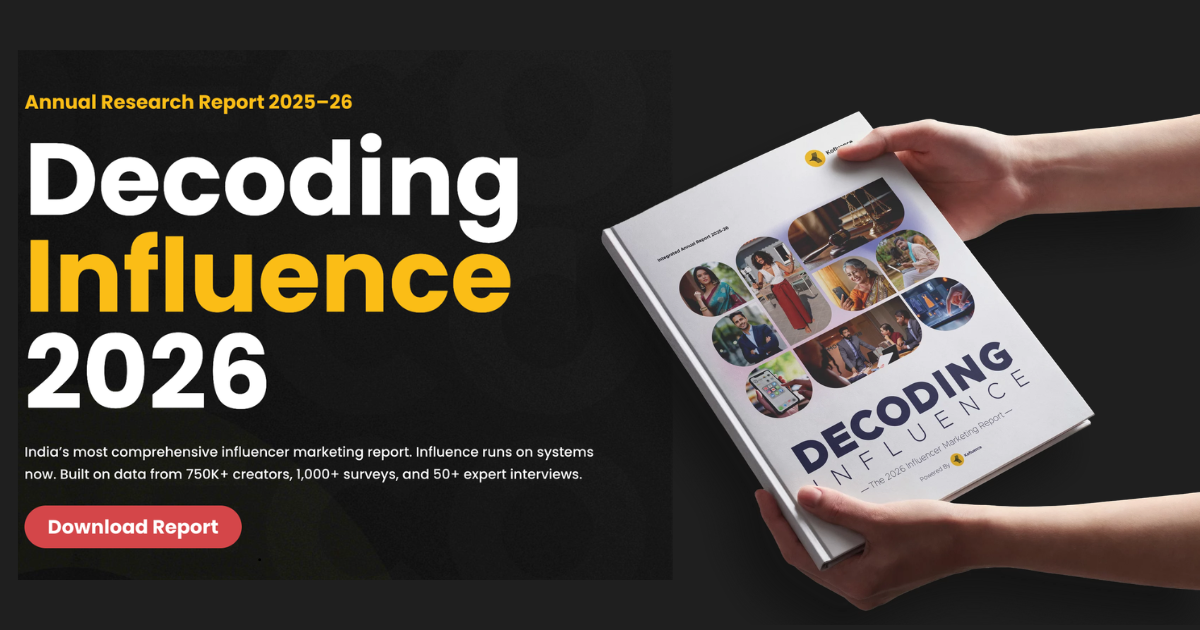
India’s Influencer Marketing sector reached an estimated ₹3,000 to 3,500 crore ($353 million to $412 million) in 2025, sustaining a 22% compound annual growth rate and tracking toward ₹4,500 to 5,000 crore ($529 million to $588 million) by 2027, according to Kofluence‘s annual research report published this year.
The report, which draws on surveys of 1,000 creators and 50 brand managers alongside data from more than 750,000 creator profiles on the Kofluence platform, identifies a structural shift away from informal, campaign-based spending toward long-term commercial partnerships and performance accountability.
The research finds that creators in Tier 3 and Tier 4 cities now account for 43 to 48% of all campaigns and deliver engagement rates of 4.5 to 5.5%, compared to 3 to 4% in metro markets, at campaign costs ranging from ₹35,000 to ₹90,000 ($410 to $1,060) versus ₹3.8 to 4.5 lakh ($4,470 to $5,290) in major cities. Despite that performance gap, the report notes that only 17.2% of brands maintain a dedicated regional budget allocation, with 41.4% integrating regional activity into national spending with no separate ring-fence.
“The mistake most digital marketers make is briefing a 200K lifestyle creator and slapping a regional language voiceover on it,” said Sayani Banerjee, Senior Manager of Digital Marketing at Emami Ltd. “Beyond the metros, you’re working with a 15K Bhojpuri or Odia creator whose audience trusts them like a family member.”
Short-Form Video and Platform Priorities
Short-form video continues to dominate creator revenue, with 84.4% of creators identifying Reels and Shorts as their highest-monetizing content format. Instagram remains the leading platform for brand investment, with 93.1% of surveyed brands prioritizing it, followed by YouTube at 65.5% and LinkedIn at 24.1%, though the report notes that LinkedIn’s figure is concentrated among BFSI respondents and may not reflect industry-wide adoption.
On content quality, 49.2% of creators report that audiences prefer raw, authentic content over high-production formats, with 35.3% saying the preference depends on category and intent. The report attributes this in part to Bharat audiences having a stronger sensitivity to inauthentic content than metro audiences.
AI tool adoption among creators has moved from early experimentation to standard workflow practice. The survey finds that 25.5% of creators use AI tools almost daily and 33.5% use them several times per week, leaving only 17.3% who report never using them. Content ideation and caption generation account for the leading use case at 64.4%, followed by creative design at 31.9% and trend analysis at 28.1%.
On the brand side, 29% of marketers report using AI for creative content generation, with 61% actively exploring tech platforms to streamline campaign operations.
Monetization Gaps and Business Formalization
Despite the sector’s growth, 88% of creators earn less than 75% of their income from social platforms. The report identifies discovery and brand collaboration access as the primary barrier, cited by 50.4% of creators, followed by unpredictable income at 14% and low or inconsistent engagement at 10.9%.
Formal business registration among creators remains limited, with 10.2% registered as business entities and 5% as GST-registered individuals, though the report notes this figure reflects creators with at least a two-year active monetization track record and likely exceeds the broader creator population. On the brand side, 13.3% directly link Influencer Marketing to formal revenue targets, while 46% tie it to performance metrics on at least some campaigns.
The report documents a growing preference for long-term creator partnerships on both sides of the market. Among creators, 47.1% strongly prefer ambassador-style arrangements over one-off campaigns. Among brands, 48% agreed, and 14% strongly agreed that long-term partnerships deliver better ROI than single campaigns, yet 41.4% of brand respondents describe their influencer investment as mostly campaign-based, with 33.3% running fewer than 25% of campaigns as long-term relationships.
Regulatory pressure is adding compliance requirements across the sector. The Securities and Exchange Board of India has pursued enforcement against unregistered financial influencers, removing more than 70,000 misleading posts by March 2025. The Advertising Standards Council of India’s updated disclosure mandates require creators to label paid partnerships at the beginning of content rather than within hashtags, with live streams requiring repeated disclosures. The Digital Personal Data Protection Act now applies explicit consent requirements to any creator, brand, or platform collecting Indian user data, with penalties reaching ₹250 crore ($29 million) per significant violation.
E-commerce leads Influencer Marketing spend by sector at 23 to 25% of the market, followed by FMCG at 18 to 20% and BFSI at 10 to 12%. BFSI shows the fastest year-over-year growth at 20 to 30%, which the report links to post-SEBI enforcement restructuring driving brands toward credentialed creators. New product launches account for the sharpest budget spikes, with more than 25% of brands increasing influencer spend during launch campaigns.
The Creator Survey carries a margin of error of ±3.1% at 95% confidence. The Brand Survey, with 50 respondents, carries a margin of plus or minus 13.9% at 95% confidence and should be read as directional. BFSI is over-represented in the brand sample at approximately 30%.
Karina loves writing about the influencer marketing space and an area she is passionate about. She considers her faith and family to be most important to her. If she isn’t spending time with her friends and family, you can almost always find her around her sweet pug.













India’s Influencer Marketing sector reached an estimated ₹3,000 to 3,500 crore ($353 million to $412 million) in 2025, sustaining a 22% compound annual growth rate and tracking toward ₹4,500 to 5,000 crore ($529 million to $588 million) by 2027, according to Kofluence‘s annual research report published this year.
The report, which draws on surveys of 1,000 creators and 50 brand managers alongside data from more than 750,000 creator profiles on the Kofluence platform, identifies a structural shift away from informal, campaign-based spending toward long-term commercial partnerships and performance accountability.
The research finds that creators in Tier 3 and Tier 4 cities now account for 43 to 48% of all campaigns and deliver engagement rates of 4.5 to 5.5%, compared to 3 to 4% in metro markets, at campaign costs ranging from ₹35,000 to ₹90,000 ($410 to $1,060) versus ₹3.8 to 4.5 lakh ($4,470 to $5,290) in major cities. Despite that performance gap, the report notes that only 17.2% of brands maintain a dedicated regional budget allocation, with 41.4% integrating regional activity into national spending with no separate ring-fence.
“The mistake most digital marketers make is briefing a 200K lifestyle creator and slapping a regional language voiceover on it,” said Sayani Banerjee, Senior Manager of Digital Marketing at Emami Ltd. “Beyond the metros, you’re working with a 15K Bhojpuri or Odia creator whose audience trusts them like a family member.”
Short-Form Video and Platform Priorities
Short-form video continues to dominate creator revenue, with 84.4% of creators identifying Reels and Shorts as their highest-monetizing content format. Instagram remains the leading platform for brand investment, with 93.1% of surveyed brands prioritizing it, followed by YouTube at 65.5% and LinkedIn at 24.1%, though the report notes that LinkedIn’s figure is concentrated among BFSI respondents and may not reflect industry-wide adoption.
On content quality, 49.2% of creators report that audiences prefer raw, authentic content over high-production formats, with 35.3% saying the preference depends on category and intent. The report attributes this in part to Bharat audiences having a stronger sensitivity to inauthentic content than metro audiences.
AI tool adoption among creators has moved from early experimentation to standard workflow practice. The survey finds that 25.5% of creators use AI tools almost daily and 33.5% use them several times per week, leaving only 17.3% who report never using them. Content ideation and caption generation account for the leading use case at 64.4%, followed by creative design at 31.9% and trend analysis at 28.1%.
On the brand side, 29% of marketers report using AI for creative content generation, with 61% actively exploring tech platforms to streamline campaign operations.
Monetization Gaps and Business Formalization
Despite the sector’s growth, 88% of creators earn less than 75% of their income from social platforms. The report identifies discovery and brand collaboration access as the primary barrier, cited by 50.4% of creators, followed by unpredictable income at 14% and low or inconsistent engagement at 10.9%.
Formal business registration among creators remains limited, with 10.2% registered as business entities and 5% as GST-registered individuals, though the report notes this figure reflects creators with at least a two-year active monetization track record and likely exceeds the broader creator population. On the brand side, 13.3% directly link Influencer Marketing to formal revenue targets, while 46% tie it to performance metrics on at least some campaigns.
The report documents a growing preference for long-term creator partnerships on both sides of the market. Among creators, 47.1% strongly prefer ambassador-style arrangements over one-off campaigns. Among brands, 48% agreed, and 14% strongly agreed that long-term partnerships deliver better ROI than single campaigns, yet 41.4% of brand respondents describe their influencer investment as mostly campaign-based, with 33.3% running fewer than 25% of campaigns as long-term relationships.
Regulatory pressure is adding compliance requirements across the sector. The Securities and Exchange Board of India has pursued enforcement against unregistered financial influencers, removing more than 70,000 misleading posts by March 2025. The Advertising Standards Council of India’s updated disclosure mandates require creators to label paid partnerships at the beginning of content rather than within hashtags, with live streams requiring repeated disclosures. The Digital Personal Data Protection Act now applies explicit consent requirements to any creator, brand, or platform collecting Indian user data, with penalties reaching ₹250 crore ($29 million) per significant violation.
E-commerce leads Influencer Marketing spend by sector at 23 to 25% of the market, followed by FMCG at 18 to 20% and BFSI at 10 to 12%. BFSI shows the fastest year-over-year growth at 20 to 30%, which the report links to post-SEBI enforcement restructuring driving brands toward credentialed creators. New product launches account for the sharpest budget spikes, with more than 25% of brands increasing influencer spend during launch campaigns.
The Creator Survey carries a margin of error of ±3.1% at 95% confidence. The Brand Survey, with 50 respondents, carries a margin of plus or minus 13.9% at 95% confidence and should be read as directional. BFSI is over-represented in the brand sample at approximately 30%.
Image source: Kofluence
Get the full report here
Subscribe to Our Newsletter
Check Out Our Podcast