

Agency
HardScope Wants to Be the Infrastructure Layer the Creator Economy Is Missing

Around 5% of the global digital ad market flows into the Creator Economy, even though youth audiences spend nearly 70% of their screen time on creator-driven platforms. HardScope, the vertically integrated creator media company and strategic agency founded in December 2025, was built around a single question: why?
The answer, according to Lars Bengston, HardScope’s Head of Agency, is that the infrastructure connecting creators to brands has been built by people who have never made anything.
“Brands are handing major marketing budgets to teams who have never been on the ground building shows, running streams, or developing talent,” he says. “That actual lived experience is invaluable to authenticity.”
Founded by Matt Kalish, co-founder of DraftKings, HardScope positions itself as a vertically integrated media company serving two constituencies: creators who need infrastructure to scale into media businesses, and brands that want a faster, more authentic path to Gen Z audiences. With 40 employees operating fully remotely across New York, Boston, and Los Angeles, the company is pre-raise and building toward what Lars describes as a creator agency-of-record model.
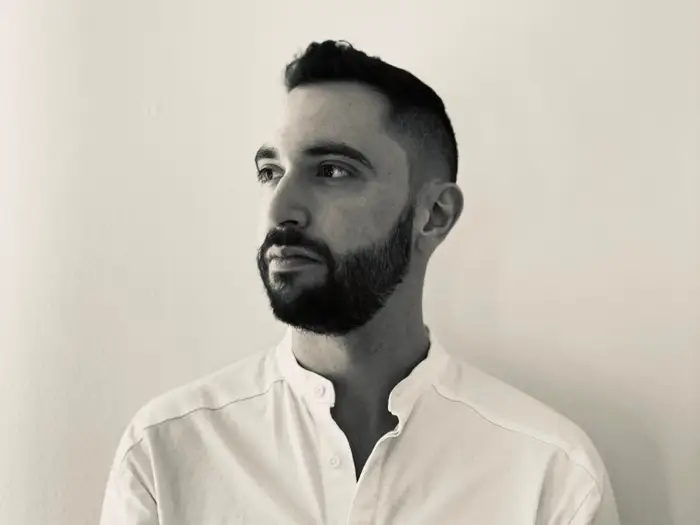
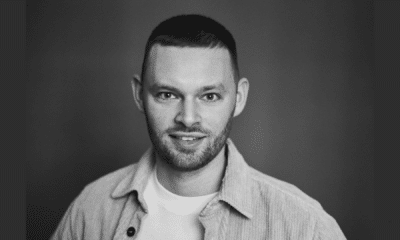
Lars Bengston
“For creators, we’re the infrastructure that helps transform their individual content production into scalable media businesses,” Lars says. “For brands, we’re the embedded partner for their entire creator marketing channel, from strategy through execution and distribution.”
The Team Is the Product
HardScope’s value proposition begins with its roster of operators. Addison Dailey, Head of Studio, spent nearly six years at FaZe Clan, starting as a production intern and rising to oversee content across YouTube, Twitch, Instagram, TikTok, and Snapchat. His entry into creator media was unplanned: a resume drop at a FaZe fan meet-and-greet on Melrose Avenue in Los Angeles, while the line of fans stretched around the block.
“I seemed to be the only one interested in meeting the people behind the scenes,” Addison recalls. “I introduced myself, handed them a resume, and the rest is history. I’m still not sure how I got so lucky to walk up and get a job at the most hyped brand in internet culture at the time.”
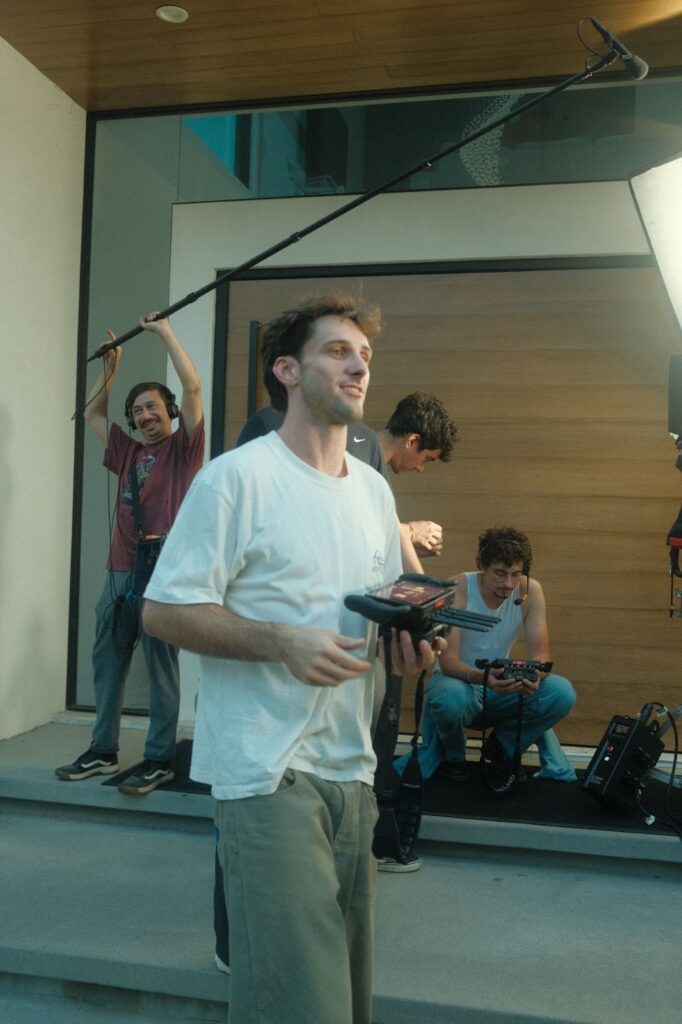
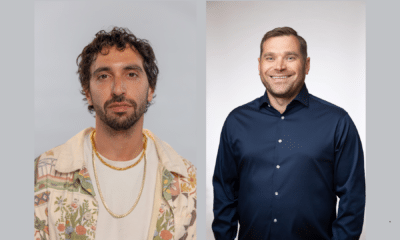
Addison Dailey
Lars’s path ran through a different part of media. He built his career at Vice, rising from development coordinator to publisher of Vice.com, before spending five years as Chief Content Officer at Havas. He also co-created “Some Good News” with John Krasinski during the early months of the COVID-19 pandemic, a show that reached 15 million viewers in its first episode and amassed over 20 million global fans within eight weeks.
The intentional collision of those backgrounds, legacy media, and native creator culture is what Lars calls HardScope’s structural edge. “A lot of our creatives, our producers, our designers, they literally were behind the camera,” he says. “They were developing ideas and some of the best streaming producers in the world. That’s the backbone of our entire business.”
Planning and Spontaneity Are Not Mutually Exclusive
The external perception of creator content, spontaneous, off-the-cuff, and unscripted, obscures the operational complexity required to produce it at scale. At HardScope, the studio function runs on two parallel tracks: creative development and production.
“When we’re talking about long-form series, there’s a lot of planning needed,” Addison says. “Creatives, platform strategists, producers, directors. But spontaneity and planning are not mutually exclusive.”
He points to FaZe Clan’s second “Subathon” as evidence. The 30-day, 24/7 live event was shaped through nightly planning sessions held for a month in advance, with a whiteboard mapping 31 blocks of content. Each block contained ideas for large-scale group segments, including game show formats, physical challenges, and IRL (In-Real-Life) productions. On-site execution required eight to ten dedicated production staff per day, not counting specialists building sets and custom challenge infrastructure.
According to Addison, the event generated 1.8 billion video views and drove FaZe’s creators to the top seven most-subscribed positions on Twitch during the campaign window. “When the creators are personally bought into these ideas and work with us on a daily basis to develop them, everything becomes 10x easier and 10x better,” he says.
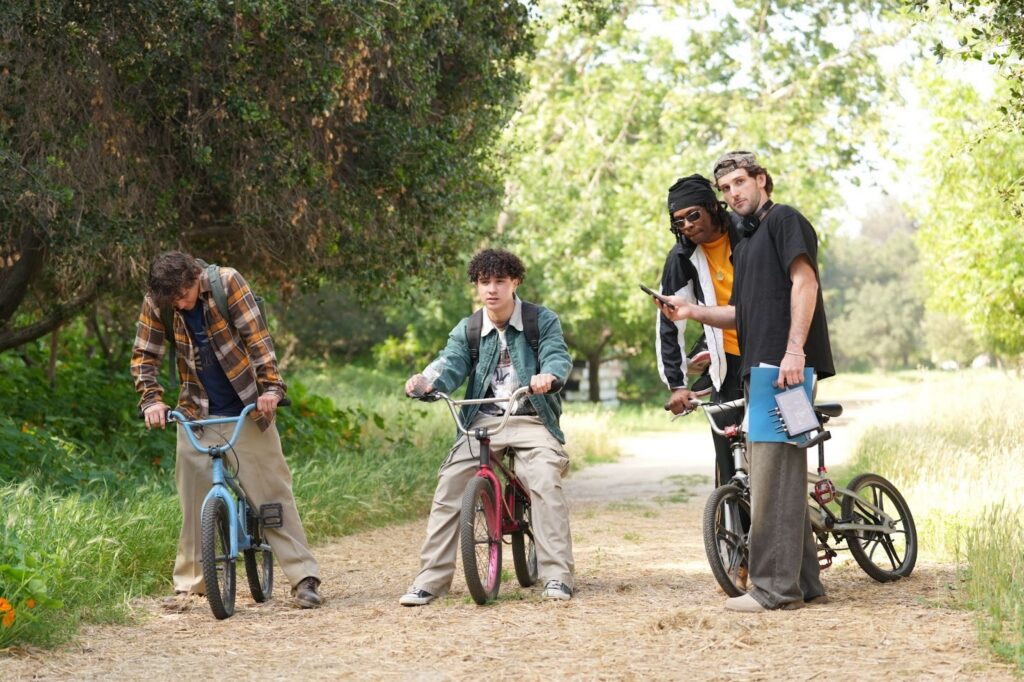
XPM: Turning Long-Form Content Into a Distribution Engine
Long-form live content presents a structural distribution problem. Hours of footage are generated, real-time audience reach is finite, and most of the content’s value is never redistributed. HardScope’s answer is XPM, a proprietary clipping and distribution system built to convert livestreams and VOD (Video on Demand) content into short-form assets across TikTok, YouTube Shorts, and Instagram Reels.
Lars describes the model as “engineered virality.” XPM operates through a decentralized network of micro-creators, incentivized on performance, who compete to clip and distribute content against impression and view thresholds. “These are massive amounts of clippers competing against themselves,” he says. “It’s pretty sophisticated, and it’s pretty awesome to have.”
Addison frames the multi-platform question through a flagship-versus-cutdown model. “A YouTuber focuses on their flagship content. The best, most clippable moments get selected and posted as standalone short-form content,” he says. “It’s a simple way to maximize distribution without needing time to produce original content on every platform.”
He cites Airrack as a reference for the higher ceiling: a creator who produces original long-form YouTube videos alongside original Shorts and Reels designed as standalone mini-challenges. “Anything can be done with the right team behind a creator,” Addison says. “That is what HardScope is aiming to support.”
Why Brand Campaigns Break at Creator Speed
Lars’s critique of the advertising holding company model is precise: traditional agency campaigns run through multiple rounds of review, lengthy approval chains, and production timelines that can stretch six months or more before launch.
“By the time a traditional campaign launches, the cultural moment it was designed for has already passed,” he says. “You spend six months in review cycles while the internet moves on.”
Lars explains that the problem compounds when agencies handle creator marketing as they would a television campaign: “Ad agencies don’t move at creator speed because they’re not built for it. When you add layers between the creator, the brand, and the audience, it shows up. The content feels mediated. Gen Z has been marketed to their entire lives. They’ve developed a finely tuned BS-detector. The only way through that filter is to stop trying to get around it. Make content that actually fits in a creator’s world, or don’t make it at all.”
Addison frames the brand-side solution in terms of creative integrity. Content has to feel like it belongs in a creator’s world, which requires a team capable of recognizing authentic integration. “Start with the creator when developing creativity,” he says. “The content needs to feel organic, or it will never resonate with audiences. A creator’s audience demands respect. They have a great BS sense.”
Mapping the Creator Franchise
HardScope’s most ambitious pitch to creators is long-term franchise thinking. HardScope calls it the “Scallop” framework: starting with the creator at the center and mapping natural extensions across show ideas, podcasts, merchandise, touring, licensing, commerce, and subscription.
“Does it have natural extensions, either this year or maybe next year? That’s what creators can expect when they come to work with us,” he says.
He uses Mark Rober as a benchmark. Beyond a major YouTube channel and a STEM toy line, Rober has built accredited science curricula now deployed in public schools. “It opens up a new revenue stream to governments, to individual state-level grants,” Lars notes. “That’s what vertical integration actually means. Not what’s your commerce strategy, but what is true to you and what channels might activate that for your audience.”
HardScope currently holds partnerships across sports, gaming, lifestyle, and fashion, with a music joint venture described as a potential near-term development. Addison’s mandate within that framework is to define how each creator brand shows up in culture. “It really boils down to being a guiding hand on the content we decide to make and who to make it with,” he says.
The Structures Are Forming
Lars is measured about where HardScope stands in early 2026. The company is pre-raise, in build mode, and focused on one near-term priority: publishing content that performs publicly. “We’re focused on getting shows live and performing demonstrating performance,” he says. “Once we have content in the market that’s working, everything else accelerates. We have to earn our place.”
His read on the broader market is that the Creator Economy’s hype era has given way to something more durable. “The volcano erupted a few years ago,” he says. “Now that lava has turned into magma, and that magma is starting to cool into rock. We’re starting to see the foundations and formations of the structures that are going to be the new media landscape.”
For Addison, the structural argument is grounded in the reality of production. Creator content looks improvised from the outside. From the inside, sustaining it at scale looks like any media business. “It takes a large village to do it,” he says. “When it comes together, the results speak for themselves.”
“The majority of brand spending will go to social and creator web media in the next three years,” Lars says. “We want to make sure brands are ready for that.”
Subscribe to Our Newsletter
Check Out Our Podcast