





Agency
How Go Places Brought Amazon’s Operating Discipline to TikTok Shop

Go Places was built around a specific absence in TikTok’s social commerce ecosystem: nearly every agency understood content and virality, and almost none had the operational discipline to run a major brand’s shop at scale. Jack Finger, its co-founder, arrived at the problem after six years at Amazon rather than from content creation, and built the agency accordingly.
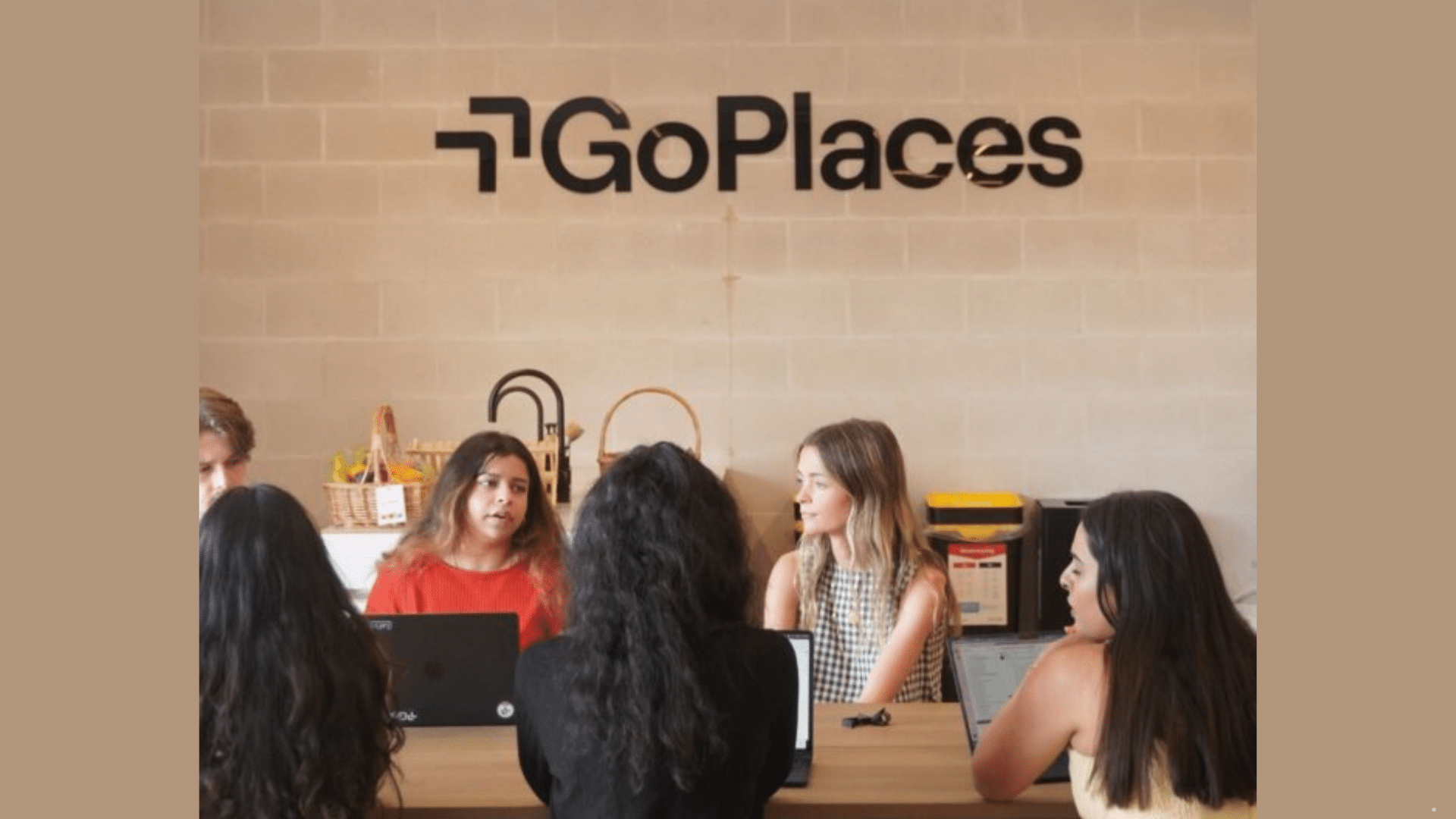
Launched in early 2024 and based in London, Go Places works exclusively with established consumer brands rather than the creators and challenger labels that defined TikTok’s early commerce ecosystem. Clients include TRIP Drinks, SharkNinja, and LG. The company manages the full operating stack of a TikTok Shop, from content production and affiliate management to shop setup, listing optimization, inventory forecasting, customer service, and returns.
“We are built specifically for brands that are already successful outside of TikTok,” Jack says. “We are not built for TikTok-native brands.”
What Jack and his co-founder, Sam Jacobs, found when researching the market before launch was that TikTok’s existing agency market was built almost uniformly around virality and reach, with little of the structured, data-driven discipline Amazon agencies applied to their platform. “All of the existing agencies or brands that were successful in the space were very creative-focused,” Jack says. “Very few of them were approaching it in a very structured way.”

For Established Brands, TikTok Requires Its Own Operating Stack
Large consumer brands come with requirements that TikTok-native agencies are not designed to meet: compliance infrastructure, brand safety standards, supply and demand forecasting, and reporting tools built for senior marketing leadership inside large organizations. Go Places invested in all of those from the beginning.
The full-service model is designed to replace an internal TikTok team entirely. Beyond content and campaign management, the agency handles customer messages, refunds, returns, and inventory levels across client SKUs. “The idea is that we should be able to operate the entire shop and channel for you with no internal resource or expertise,” Jack says.
Two proprietary tools underpin this. OnePlace is a reporting and analytics suite that gives clients a real-time view of platform performance, profitability, and cross-channel impact. Go Live is a scheduling platform with AI-assisted logistics, built to coordinate the agency’s 15 live shopping studios, its presenter network, and its roster of producers across simultaneous client engagements. “I can go in there and say, schedule 50 hours of Trip Lives for next month,” Jack explains, noting the platform then automatically groups assignments and sends SMS alerts to presenters. The feature is currently in beta and not yet active for all presenters and brands.
Commission-Only Creators Drive the Most Revenue on TikTok Shop
Within TikTok Shop’s toolkit, not all levers contribute equally to sales. Affiliate short video (posts by third-party creators working on commission) needs to represent 70% to 80% of a brand’s channel mix to reach the platform’s highest revenue volumes, according to Jack.
The reasoning is partly mathematical. Live shopping output is capped by hours in the day, while affiliates are not. “You can activate maybe 10,000 creators in a single month and 20,000 videos,” Jack says. “My overall reach is much higher.”
The other factor is perception. Consumers who encounter a product through a creator who appears to have no relationship with the brand tend to experience it as an organic recommendation rather than an advertisement, which, as Jack notes, drives conversions that branded content typically cannot match.
The creators who perform best are not simply prolific. Jack says the top affiliates study the platform methodically, prepare content carefully, and iterate consistently. A creator may produce ten nearly identical videos before the tenth one generates substantial sales. “You have to be willing to continue to iterate in order to be successful,” he says.
Live Shopping’s Real Value Is Not the Transaction
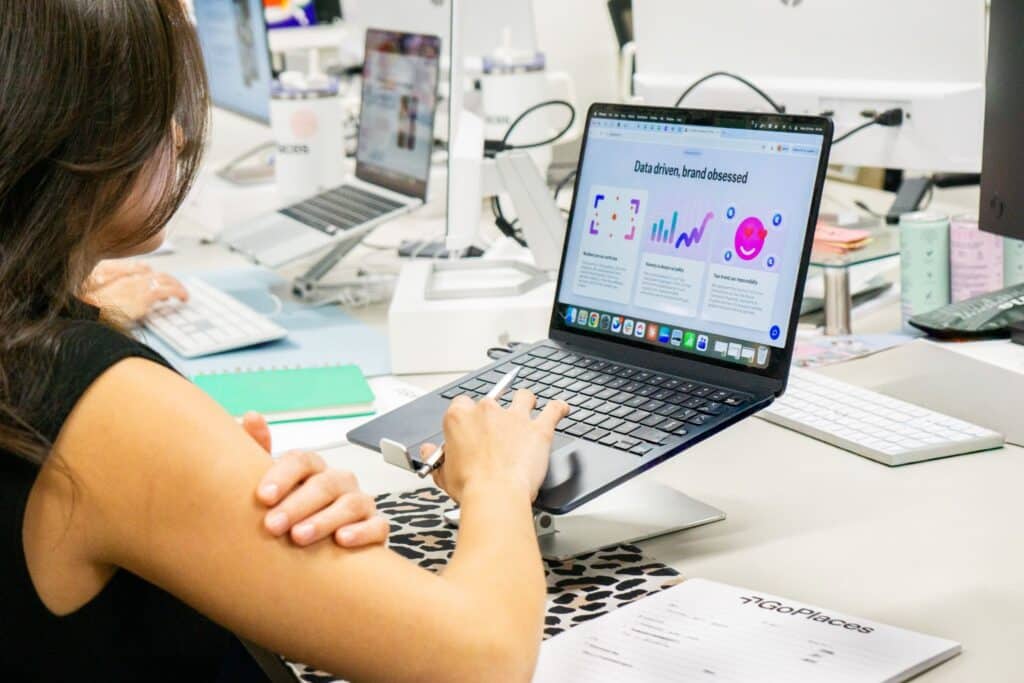
Go Places runs 15 live shopping studios in the UK, each configured for a specific client’s set design and presenter preferences, coordinated through the Go Live platform.
For Jack, live shopping’s most important contribution is not revenue. It is direct, two-way dialogue with consumers at scale, something that becomes harder to achieve as physical retail shrinks. One of the agency’s clients uses live events as a product development feedback mechanism, having presenters poll viewers on preferred flavors and formats in real time. “Brands these days, it’s very difficult to have a two-way conversation with your consumers at scale in a branded environment,” Jack says. “Live shopping is kind of the next best thing.”
Presenter selection matters as much as presentation skill at Go Places. The agency runs a training and accreditation program designed to develop and retain performers who build community relationships with returning viewers. “The top presenters have people that come to their lives with no intention of buying something, just because they want to check in with the presenter,” Jack says.
TikTok’s Halo Effect on Offline Sales Is Traditional Advertising
For Jack, TikTok’s contribution to purchases made outside the platform is not a novel discovery. It is advertising. “We talk about it as this special halo effect thing that happens on TikTok,” he says. “This is just traditional advertising.”
His argument: brands ran influencer campaigns for years without measurable direct sales returns, operating on the assumption that visibility and brand association eventually translated into purchases in other channels. The same logic applied to TV and sports sponsorships. TikTok does not change that dynamic. What changes is that some brands now measure only in-platform sales, causing them to undercount what the channel is actually delivering.
“The upper funnel piece has not gone away,” Jack says. “You’re still nudging customers down the funnel, and they may convert in other places.”
Measurement is improving. Jack cites research from WorkMagic on tracking TikTok’s halo effect across Amazon, Shopify, and bricks-and-mortar retail. TRIP Drinks, among Go Places’ earliest clients, continues to use live shopping as a core pillar of its TikTok strategy two years after launch, with the agency reporting consistent revenue from each event.

Social Commerce Will Outlast Any Single Platform
Go Places has announced a formal partnership with YouTube as its first move beyond TikTok. Jack says the company waited for a platform capable of supporting genuine social commerce at scale before expanding, and for now the YouTube work is focused on recruiting creators and building shoppable content programs rather than packaging services for brands.
TikTok and YouTube serve different positions in the purchase funnel, and Jack treats the distinction as operationally significant. TikTok drives impulse and discovery: a consumer scrolling for entertainment encounters a product and buys on instinct. YouTube reaches consumers already at the consideration stage, where viewers are researching a specific purchase. “If you see a shoppable link in that review video, there’s a very good chance that you’ll check out and buy,” Jack says, though he notes that the buyer was likely already in market, making the sale less incremental than a TikTok conversion.
The case for multi-platform, Jack argues, rests on an inevitable shift rather than TikTok-specific risk. eBay Live Shopping is growing in the UK. Whatnot has scaled in the U.S. China already operates with four or five major social commerce platforms at significant volume, and physical retail there has begun merging with live shopping. Go Places ran a version of that model in the UK, hosting live shopping events from Body Shop store locations.
TikTok recently invited Go Places to train other agencies entering the platform, a signal Jack reads as confirmation that the market is large enough for new entrants without threatening the agency’s position. “We’re so early in the S curve of adoption on social commerce that the pie is big enough for lots of players to win,” he says.
For Jack, the expansion does not reframe the company’s core thesis. The brands most in need of a structured social commerce partner are the same ones Go Places already serves, regardless of which platform carries the volume.
“Whether it happens on TikTok or not, it will happen somewhere,” he says. “And the fundamentals are the same.”
Subscribe to Our Newsletter
Check Out Our Podcast