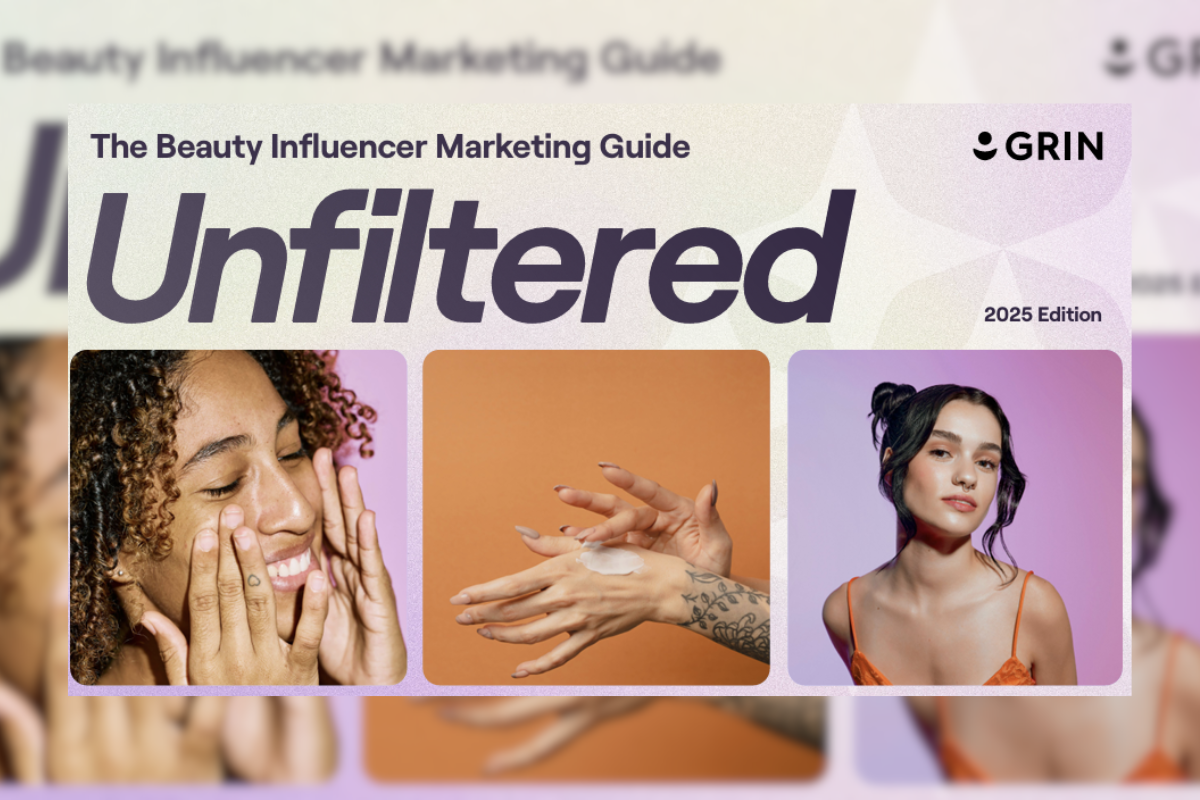
Beauty e-commerce sales reached $33.9 billion in 2024, marking a 14% increase from the previous year, according to a new report from GRIN. Social media has supplanted traditional marketing channels, with creators now wielding considerable influence over consumer purchasing decisions in an industry projected to exceed $44 billion by 2027.
The report, “Unfiltered 2025 Edition: The Beauty Influencer Marketing Guide,” indicates that 48.2% of Gen Z and Millennial consumers find influencers to be the most trustworthy source for beauty product recommendations, surpassing both friends and family (40.2%) and celebrities (11%).
“For decades, beauty expertise was controlled by a select few. Magazine editors, celebrity endorsements, and professional makeup artists dictated trends—mostly spotlighting large, legacy brands,” the report states. “Today, the playing field is more level than ever. And it’s creators who decide which brands get to own the beauty conversation.”
Digital Discovery
The traditional beauty buyer journey has undergone a dramatic compression, with purchase decisions that once took weeks now occurring within seconds. According to GRIN’s research, 81% of consumers have discovered a new beauty brand through social media or influencer content, and 44% have changed their skincare or makeup routine based on creator recommendations.
Instagram leads as the primary platform for product discovery at 30.4%, followed by TikTok (23.2%), Google (18.8%), and YouTube (14.5%). When researching beauty products specifically, 26.4% of consumers turn to social media first, compared to 20.3% who use Google, 21.5% who consult friends and family, 16.3% who visit brand websites, and 15.4% who go to physical stores.
The report highlights that social platforms serve as both discovery and purchasing channels, with 69.5% of Gen Z shoppers making purchases directly through social media apps at least once a month. Approximately 74% of beauty shoppers say discount codes or links from creators make them more likely to purchase from a brand.
Creator Authenticity and Lifestyle Alignment
Consumer research indicates that lifestyle alignment is the most valued attribute when evaluating creator recommendations, with 48.4% of respondents citing this as a key factor. Similar appearance and beauty goals (40.7%), industry expertise (38.6%), and professional-looking content (35.4%) follow as important trust factors.
“Thanks to social media, consumers can easily find people who share their exact beauty concerns,” the report notes. “Extra dry skin, fine lines, rosacea—these might not be challenges shared by friends and family members or celebrities.”
The data suggests that traditional aspirational beauty content has lost effectiveness. Megan Vasquez, an influencer marketing strategist with 15 years of experience in the beauty industry, advises brands to study audience engagement: “The best place to learn about how the audience perceives the influencer’s content is to dive in the comments section and see what format/messaging/product category gives the best, most positive engagement.”
In-Store Sales Still Influenced by Creator Content
While e-commerce growth is substantial, physical retail remains relevant, with creator content also driving in-store purchases. GRIN’s survey found that 31.7% of consumers discovered products through social media but chose to make their purchases in physical stores.
“Don’t expect your influencer marketing strategy to capture every beauty shopper online. Even young consumers still crave in-store experiences,” the report states. “But here’s the shift: influencers are now driving those in-store purchases, too.”
The data suggests that retail has transitioned from being a discovery channel to serving as a final confirmation point in the buying process. Consumers often arrive at stores having already decided what to purchase based on online research and creator recommendations.
Viral Trends
The report highlights how viral beauty trends now emerge and spread almost instantaneously, requiring brands to adapt quickly. Examples include skin cycling, cold girl makeup, and mob wife makeup—trends that started with creators before driving significant product sales.
“Trends don’t start in boardrooms—they start in the hands of creators,” the report observes. “The biggest beauty moments don’t wait for brands to catch up. They happen in real time. The brands that win are the ones tuned into early signals, ready to move when the moment strikes.”
GRIN emphasizes that modern virality isn’t about reaching everyone but rather connecting deeply with the right audience. Scarlette Tidy, founder of Sure Thing Consulting, recommends that brands approach trending content strategically: “If a trend feels off-brand, approach it differently. Can you use the trending audio, but in a way that aligns with your messaging? Can you parody it, subvert it, or reframe it to introduce something new?”
Best Practices for Beauty Brands
The report outlines several actionable strategies for beauty brands looking to leverage creator partnerships effectively:
Partner with category experts: Focus on creators who specialize in specific beauty concerns and can offer genuine education, not just promotion.
Prioritize long-term relationships: Trust builds over time, with before-and-after content and consistent messaging yielding better results than one-off collaborations.
Allow for honest reviews: Authenticity drives credibility, as the report suggests that brands should “work with influencers who give both pros and cons” and “allow side-by-side comparisons.”
Optimize for social commerce: Remove friction from the purchasing process by ensuring products are shoppable directly through social platforms.
Create social-first retail experiences: Design in-store environments with content creation in mind, including good lighting, selfie stations, and branded mirrors.
Predictions for Beauty Influencer Marketing
GRIN forecasts several trends in the beauty influencer marketing landscape:
TikTok will further cement its position as both a passive discovery engine and an active search platform for beauty products.
Social commerce will continue to replace traditional e-commerce, potentially diminishing the importance of standalone brand websites.
Personalization will advance through co-branded landing pages and creator-led storefronts tailored to specific consumer segments.
Retail spaces will become content creation hubs, featuring design elements specifically tailored for filming and sharing.
The demand for authentic, unfiltered content is expected to increase in response to the growing presence of AI-generated material.
“For brands, the message is clear: success in beauty marketing means embracing creators, building authentic partnerships, and making it as easy as possible for consumers to discover and buy,” the report concludes. “The brands that stay ahead of trends, integrate seamlessly with social commerce, and build trust through creators will be the ones that define the future of beauty.”
All images are credited to GRIN. The full report is available here.
Cecilia Carloni, Interview Manager at Influence Weekly and writer for NetInfluencer. Coming from beautiful Argentina, Ceci has spent years chatting with big names in the influencer world, making friends and learning insider info along the way. When she’s not deep in interviews or writing, she's enjoying life with her two daughters. Ceci’s stories give a peek behind the curtain of influencer life, sharing the real and interesting tales from her many conversations with movers and shakers in the space.













Beauty e-commerce sales reached $33.9 billion in 2024, marking a 14% increase from the previous year, according to a new report from GRIN. Social media has supplanted traditional marketing channels, with creators now wielding considerable influence over consumer purchasing decisions in an industry projected to exceed $44 billion by 2027.
The report, “Unfiltered 2025 Edition: The Beauty Influencer Marketing Guide,” indicates that 48.2% of Gen Z and Millennial consumers find influencers to be the most trustworthy source for beauty product recommendations, surpassing both friends and family (40.2%) and celebrities (11%).
“For decades, beauty expertise was controlled by a select few. Magazine editors, celebrity endorsements, and professional makeup artists dictated trends—mostly spotlighting large, legacy brands,” the report states. “Today, the playing field is more level than ever. And it’s creators who decide which brands get to own the beauty conversation.”
Digital Discovery
The traditional beauty buyer journey has undergone a dramatic compression, with purchase decisions that once took weeks now occurring within seconds. According to GRIN’s research, 81% of consumers have discovered a new beauty brand through social media or influencer content, and 44% have changed their skincare or makeup routine based on creator recommendations.
Instagram leads as the primary platform for product discovery at 30.4%, followed by TikTok (23.2%), Google (18.8%), and YouTube (14.5%). When researching beauty products specifically, 26.4% of consumers turn to social media first, compared to 20.3% who use Google, 21.5% who consult friends and family, 16.3% who visit brand websites, and 15.4% who go to physical stores.
The report highlights that social platforms serve as both discovery and purchasing channels, with 69.5% of Gen Z shoppers making purchases directly through social media apps at least once a month. Approximately 74% of beauty shoppers say discount codes or links from creators make them more likely to purchase from a brand.
Creator Authenticity and Lifestyle Alignment
Consumer research indicates that lifestyle alignment is the most valued attribute when evaluating creator recommendations, with 48.4% of respondents citing this as a key factor. Similar appearance and beauty goals (40.7%), industry expertise (38.6%), and professional-looking content (35.4%) follow as important trust factors.
“Thanks to social media, consumers can easily find people who share their exact beauty concerns,” the report notes. “Extra dry skin, fine lines, rosacea—these might not be challenges shared by friends and family members or celebrities.”
The data suggests that traditional aspirational beauty content has lost effectiveness. Megan Vasquez, an influencer marketing strategist with 15 years of experience in the beauty industry, advises brands to study audience engagement: “The best place to learn about how the audience perceives the influencer’s content is to dive in the comments section and see what format/messaging/product category gives the best, most positive engagement.”
In-Store Sales Still Influenced by Creator Content
While e-commerce growth is substantial, physical retail remains relevant, with creator content also driving in-store purchases. GRIN’s survey found that 31.7% of consumers discovered products through social media but chose to make their purchases in physical stores.
“Don’t expect your influencer marketing strategy to capture every beauty shopper online. Even young consumers still crave in-store experiences,” the report states. “But here’s the shift: influencers are now driving those in-store purchases, too.”
The data suggests that retail has transitioned from being a discovery channel to serving as a final confirmation point in the buying process. Consumers often arrive at stores having already decided what to purchase based on online research and creator recommendations.
Viral Trends
The report highlights how viral beauty trends now emerge and spread almost instantaneously, requiring brands to adapt quickly. Examples include skin cycling, cold girl makeup, and mob wife makeup—trends that started with creators before driving significant product sales.
“Trends don’t start in boardrooms—they start in the hands of creators,” the report observes. “The biggest beauty moments don’t wait for brands to catch up. They happen in real time. The brands that win are the ones tuned into early signals, ready to move when the moment strikes.”
GRIN emphasizes that modern virality isn’t about reaching everyone but rather connecting deeply with the right audience. Scarlette Tidy, founder of Sure Thing Consulting, recommends that brands approach trending content strategically: “If a trend feels off-brand, approach it differently. Can you use the trending audio, but in a way that aligns with your messaging? Can you parody it, subvert it, or reframe it to introduce something new?”
Best Practices for Beauty Brands
The report outlines several actionable strategies for beauty brands looking to leverage creator partnerships effectively:
Predictions for Beauty Influencer Marketing
GRIN forecasts several trends in the beauty influencer marketing landscape:
“For brands, the message is clear: success in beauty marketing means embracing creators, building authentic partnerships, and making it as easy as possible for consumers to discover and buy,” the report concludes. “The brands that stay ahead of trends, integrate seamlessly with social commerce, and build trust through creators will be the ones that define the future of beauty.”
All images are credited to GRIN.
The full report is available here.
Subscribe to Our Newsletter
Check Out Our Podcast