





Brand
Kidscreen Summit 2026: Where The Kids Creator Economy Meets Traditional Media

Children’s entertainment is no longer confined to a single distribution model. Characters now debut on YouTube, grow inside Roblox, gain traction on TikTok, and extend into streaming, gaming, and consumer products. As a result, the economics of kids’ IP are being reworked in real time.
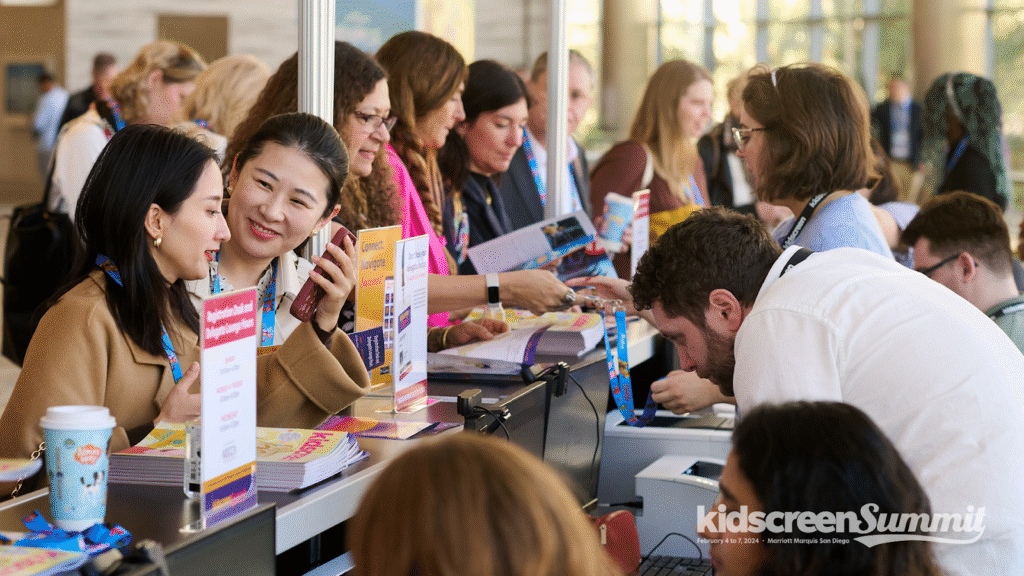
In response to these shifts, Kidscreen Summit 2026 brought more than 1,600 delegates to the Sheraton San Diego Resort from February 22-25. Buyers, producers, distributors, digital creators, gaming executives, and consumer products leaders from more than 30 countries attended, reflecting the increasingly cross-platform nature of the kids media ecosystem.
“In 2026, Kidscreen Summit represents clarity and connection in a complex market,” says Jocelyn Christie, EVP & Publisher of Kidscreen. “It brings together buyers, producers, creators, distributors, and brand leaders across streaming, digital, gaming, and consumer products. It’s evolved beyond a traditional broadcast event into a true cross-platform marketplace.”
For Jocelyn, the Summit’s growth mirrors a broader shift in how kids content is built, financed, and scaled, particularly as creator-led IP and platform-native storytelling reshape the industry’s power dynamics.
Jocelyn’s Role in Shaping the Summit
Jocelyn has been with Kidscreen for more than two decades, joining in 1998 and taking responsibility for the Kidscreen Summit in 2007. Today, she oversees editorial coverage, brand strategy, and event programming across the Kidscreen portfolio.

“The Summit is a direct extension of [our editorial] work,” Jocelyn explains. “Because we’re in daily conversation with the industry, we have a strong sense of the pressures and opportunities shaping the kids business.”
Founded in 2000, the Summit originally centered on broadcasters and distributors. Over time, Jocelyn has guided its expansion to reflect the growing influence of digital platforms, creator-led franchises, and gaming ecosystems. The shift, she notes, isn’t cosmetic. It reflects where power and audience attention have moved.
“At a time of tighter budgets and shifting models, the Summit reflects where the industry is going – not where it’s been.”
The Core Theme of 2026: Adaptation
This year’s edition was structured around a single unifying theme: adaptation.
“The core theme for 2026 is adaptation – how the kids business is recalibrating in response to structural change,” Jocelyn says.
She identifies three major conversations shaping the programming:
“First, how kids are actually consuming content today, across YouTube, Roblox, TikTok, gaming, and streaming, and what that means for IP development. Second, how projects are being financed and monetized in a tighter market. And third, how regulation, AI, and shifting global dynamics are reshaping strategy.”
Unlike previous years marked by expansion and aggressive platform investment, Jocelyn describes 2026 as more strategic.
“In past years, there was more expansion energy. This year, the tone is sharper and more strategic. Companies are being more deliberate about where they invest, how they partner, and what success looks like.”
Creator Economy Day: From Adjacent to Central
Perhaps the most visible signal of the Summit’s development was the dedicated “Creator Economy Day,” headlined by Jordan Matter.
“Creators are no longer adjacent to the kids business. They’re central to it,” Jocelyn says.
She points directly to platform-native discovery patterns. “Platforms like YouTube, Roblox, and TikTok are where many kids are discovering characters and stories first. Creators are building franchises, not just channels, and they’re doing it with a deep understanding of audience behavior and platform mechanics.”
For traditional studios and broadcasters, this has prompted a strategic recalibration. “There’s a clear shift from skepticism to collaboration,” Jocelyn says. “Traditional players recognize that creators often have something incredibly valuable: direct, ongoing relationships with young audiences.”
At the same time, creators are increasingly seeking traditional infrastructure. “Creators are looking for the infrastructure that traditional companies provide: production scale, international distribution, and licensing expertise.”
Jocelyn sees the most compelling opportunities emerging “at that intersection, where creator authenticity meets established media infrastructure.”
Globalization and the New IP Lifecycle
Beyond platform fragmentation, Jocelyn highlights another structural force: globalization.
“Kids entertainment is more globally fluid than ever,” she says.
Genres such as anime, K-pop, webtoons, and micro dramas now influence global development pipelines. Jocelyn notes that companies are thinking internationally from day one.
“We’re seeing companies think internationally from day one, whether that’s through co-productions, cross-border financing, or building IPs that are culturally specific but globally resonant.”
Deal structures are changing accordingly.
“Partnerships are more collaborative, rights are more strategically segmented, and companies are looking for footholds in new territories earlier in the lifecycle of a project.”
Growth in a Fragmented Ecosystem
At the center of today’s pressures, Jocelyn sees a single defining issue: “Sustainable growth in a fragmented ecosystem.”
She elaborates: “Kids are spending time across more platforms than ever, while budgets are tighter and competition is fiercer. The challenge isn’t just making great content. It’s building IPs that can travel across platforms, generate multiple revenue streams, and maintain trust with families.”
That final point, trust, anchored another key conversation at the Summit: digital well-being.
“There’s a clear recognition that trust is non-negotiable,” Jocelyn says. “As concerns around screen time and digital health grow, companies are investing more in safety tools, age-appropriate design, and transparent practices.”
What Makes Kidscreen Summit Distinct
While panels drove programming, Jocelyn emphasizes the Summit’s density of decision-makers as its differentiator.
“It’s the concentration of decision-makers in one place,” she says. “The Summit isn’t just a content conference. It’s a marketplace and a meeting ground.”
Companies attending ranged from Disney and DreamWorks Animation to Netflix, LEGO, Roblox, PBS Kids, Warner Bros. Discovery, and YouTube Kids, as well as producers, game developers, and digital-native creators.
“The formal programming matters, but so do the hallway conversations, the scheduled (and unscheduled) meetings, and the spontaneous introductions.”
From Inspiration to Action
Jocelyn is clear about what success looks like for attendees.
“Practically, new relationships and concrete next steps, meetings booked, partnerships explored, ideas validated.”
Strategically, she hopes for something more focused. “I hope they leave with clarity. A clearer sense of where kids are spending time, how the market is shifting, and how their business needs to adapt. The goal isn’t just inspiration, but actionable insight.”
Amid platform fragmentation, global dealmaking, and creator-led franchises in children’s entertainment, Jocelyn sees adaptation as the defining capability.
“The companies that succeed in 2026 will be the ones that can adapt quickly, think globally, and build strategically, without losing sight of what kids actually love.”
Photo source: Kidscreen
Subscribe to Our Newsletter
Check Out Our Podcast