



Agency
How Fallen Media Turned Cultural Instinct Into A Repeatable Short-Form Studio For Creators

Back when short-form video was still dismissed as a playground for trends and throwaway clips, Sol Betesh was already thinking about structure. As co-founder and CEO of Fallen Media, Sol has spent the past five years building a social content studio that treats TikTok, Instagram Reels, and Shorts less like chaotic feeds and more like programmable entertainment platforms, i.e., places where original formats can be developed, tested, and scaled with intention.
Founded in New York in mid-2020, Fallen Media began as a meme-driven experiment and has since grown into a short-form studio producing serialized shows, including “What’s Poppin? With Davis!” and “Street Hearts.” Today, the company operates with a development slate, casting process, production team, and sales operation that resembles a traditional TV studio, adapted for vertical video and algorithmic distribution.
“We look at ourselves as a studio – no different than a TV studio or a movie studio,” Sol says.
As the company increases its focus on YouTube in 2026, Sol’s attention has shifted toward format longevity, intellectual property (IP) expansion, and what it means to build an internet-native media company with staying power.

Photo: Sol Betesh
Source: Fallen Media
Building a Studio for Where Attention Actually Lives
Sol describes Fallen Media as a response to a structural gap he noticed coming out of college. “People are watching TikTok the same way they were watching TV,” he says. “They’re just not watching traditional TV.”
Yet, in 2020, most professionally produced content on social platforms was still being repurposed from longer-form formats. “A lot of the more produced content was cut down from YouTube or TV shows,” he explains. “The thinking was: why isn’t anyone making series for TikTok?”
That question shaped Fallen Media’s founding thesis. Rather than building around individual creator channels, the company focused on creating original short-form “shows” with recurring hosts, narrative arcs, and daily or near-daily episodes – formats designed to be bingeable inside social feeds.
The goal, Sol notes, was not virality for its own sake, but consistency and recognition. “We’re really good at making content that lives in the zeitgeist,” he says, “that people recognize and pay attention to.”
From Meme Pages to Original IP
The company’s earliest iteration looked very different. In January 2020, before Reels or Shorts existed, Sol partnered with his co-founder Rowan Winch, a teenage meme-page operator whom he met through a New York Times article. At the time, memes were the dominant short-form media unit on Instagram. “Memes were the form of consumption,” Sol recalls. “TikTok had maybe just launched.”
The initial plan was straightforward: build a meme marketing business that connects brands with large meme pages. But that model quickly revealed its limits. “We very quickly realized two things,” he says. “One, we wanted to create strong IP. And two, we wanted to take advantage of video.”
By June 2020, TikTok had exploded, and Fallen Media pivoted toward original short-form video formats, starting with “What’s Poppin? With Davis!,” a daily pop-culture show built specifically for vertical feeds.
That shift marked a turning point, according to Sol. Rather than chasing brand deals across distributed pages, Fallen Media began investing in formats it could control and grow over time. The studio model became the company’s organizing principle.
Why a Studio Model Works in the Creator Economy
From the beginning, Sol pushed back against the prevailing assumption that successful creators needed to build full production companies themselves. “People told us, ‘You can’t do that. It’s the creator economy,’” he says. “They thought every creator needed to be MrBeast, hiring 100 people and running a business.”
Fallen Media took a different view. The studio supplies the infrastructure (development, production, editing, sales) while creators focus on what they do best. “Creators are best at creating,” Sol says. “They don’t necessarily want to run a business.”
Sol believes that the model has allowed Fallen Media to pair emerging on-camera talent with established production systems. Hosts like Davis Burleson (“What’s Poppin”) and Tiff Baira (“Street Hearts”) had modest followings (often between 100,000 and 300,000 followers) but gained broader recognition through serialized shows.
“When you put a creator in the right show, that’s what takes them to the next level,” Sol says.
Turning Instinct Into Process
While Sol resists the idea of a rigid playbook, Fallen Media has gradually translated creative instinct into repeatable systems. New shows typically begin with two to three pilots, each adjusted based on early performance.
“We post them and get feedback pretty quickly,” he says. Audience comments, watch time, drop-off rates, engagement, and follower growth all factor into greenlighting decisions.
Follower growth, in particular, remains a key signal. “You can get hundreds of thousands of views, but if the follower count doesn’t grow, it means people aren’t connecting,” Sol explains. “If you’re getting views and growing followers, you have a healthy show.”
Ideas that feel derivative rarely make it past the first review. “If it’s just another man-on-the-street interview with no hook, we don’t pay attention,” he says, adding that what stands out are creators who bring a distinct skill or perspective.
Inside Fallen Media’s Operating Structure
Five years in, Fallen Media employs roughly 20 people and operates across three core functions:
- Sales and Account Management, responsible for packaging shows for brands and agencies and executing integrated campaigns.
- Production, which manages existing series, talent, brand integrations, and audience growth.
- Development, a newer team focused on piloting new formats, scouting talent, and exploring acquisitions or partnerships.
“This is the content engine of the business,” Sol says of development. The structure allows Fallen Media to continuously test new ideas while scaling what works, which resembles an approach borrowed directly from traditional studios, but adapted for social distribution.
Monetization Without Chasing Every Trend
Brand partnerships remain the company’s primary revenue driver. Fallen Media positions its shows as advertising environments that feel closer to entertainment than traditional influencer placements. “We push the envelope on production,” Sol says, “creating ads that don’t feel like ads.”
He is skeptical of creator merch as a default monetization strategy. “Unless you’re making something special – not just another hoodie – it’s a very tough business,” he says.
By contrast, he believes live, in-person activations are undervalued, particularly when treated as content engines that feed social platforms before and after events.
Expanding Beyond Short-Form Feeds
As platforms mature, Fallen Media’s goals are expanding with them. In 2026, the studio is increasing its focus on YouTube, where Sol sees an appetite for higher-quality, format-driven programming.
The strategy is not to simply stretch short-form concepts into longer videos. “We’re not taking a 60-second show and making it 10 minutes,” he says. “We’re leveraging our beloved existing shows and building new stories around them.”
This approach reflects how Fallen Media thinks about IP: ownership matters, but association matters more. “It’s not necessarily IP ownership. It’s being associated with it,” Sol says, pointing to hosts who build value by anchoring recognizable formats across platforms and even into traditional media.
Lessons From Five Years of Volatility
Sol reveals that operating inside algorithm-driven platforms has required emotional discipline. “There have been times where I’d get nervous; views are down, we’re having a bad two weeks,” he admits. “And then a week later, we’re back.” Over time, he’s learned to focus less on short-term volatility and more on long-term momentum.
Relationships with talent have also shaped the company’s durability. Fallen Media has worked with many of its hosts for years, which Sol notes is uncommon in an industry often defined by churn. “It’s about building with people long-term,” he says, “not sweating the small stuff.”
A Studio Model for the Next Era
When it comes to defining success, Sol doesn’t hedge: “We’re looking to build the Warner Brothers of today,” reframed for platforms where audiences already spend their time. Not a movie studio, but a format studio. Not built for one distribution channel, but adaptable to whatever comes next.
“How do you build a studio that can make the best content for all the platforms people are spending their time on?” he asks. For Sol, the answer lies in resisting sameness, investing in structure, and treating short-form not as chaos, but as a system worth mastering.
“Don’t make what everyone else is making,” Sol concludes. “If you’re trying to copy everyone else, you’re going to lose.”
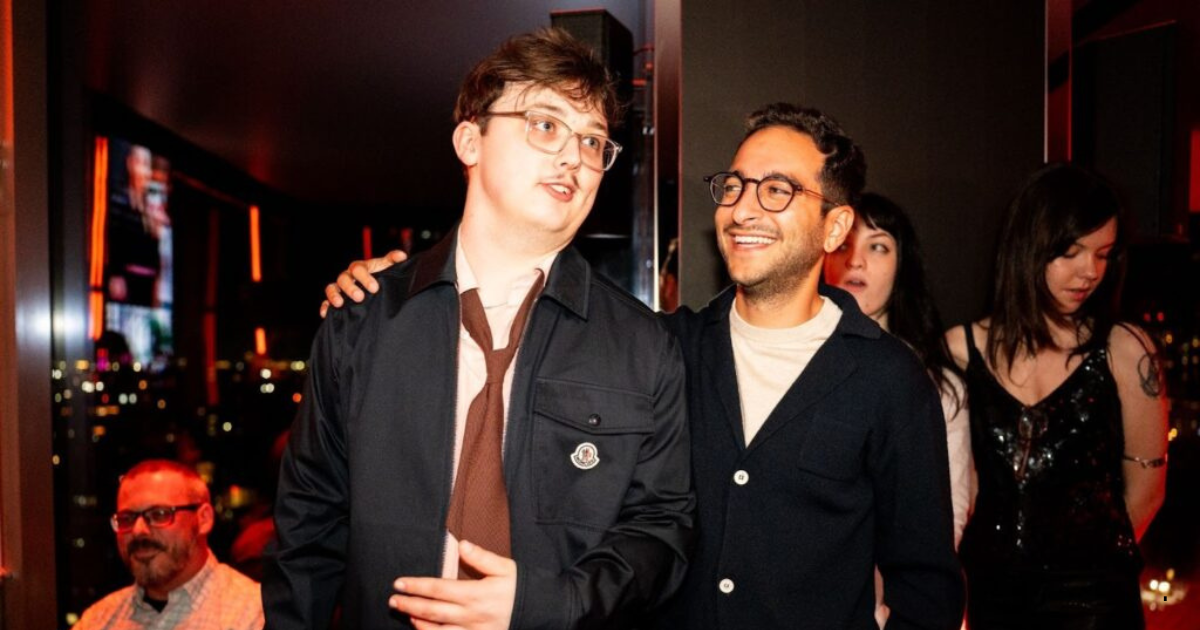
Cover photo: Fallen Media co-founders Rowan Winch & Sol Betesh
Source: Fallen Media
Subscribe to Our Newsletter
Check Out Our Podcast