



Agency
How Adolescent Content Turned Self-Expression Into Strategy For IPSY’s ‘I Play Beauty’ Campaign

When IPSY, one of the largest beauty memberships in the United States, set out to reposition its brand, the goal wasn’t to sell more lipstick, but to shift perception. The 20-million-member community already treated makeup as a form of creative expression, but the broader culture still saw it as vanity.
To challenge that bias, the company turned to Adolescent Content and its Chief Creative Officer, Ramaa Mosley, a filmmaker and creative strategist known for transforming advertising into entertainment that resonates with Gen Z audiences.
“We’d never worked together before,” Ramaa recalls. “Jennifer [McDonnell], the VP of Marketing, reached out through our Chief Growth Officer, Beth Grieve, and invited us to participate in an RFP [Request for Proposal]. The moment we heard it was IPSY, our team was all in. We’re a company full of beauty enthusiasts, so this one felt personal.”

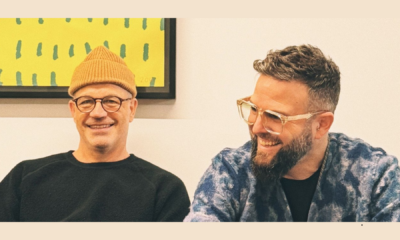
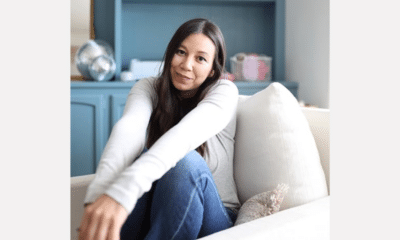
Ramaa Mosley
IPSY’s brief was simple: help the brand reach Gen Z and introduce a new framing around beauty. What Adolescent Content delivered went beyond a campaign. “They came to us with an initial provocation: ‘What do you think about beauty as a hobby?’” Ramaa says. “That question lit something up for our entire team at Ado. We are serious beauty lovers. We did our own research through our Gen Z network to see if people resonated with that idea, and what we heard was incredibly moving.”
The research uncovered a shared emotional tension. “Many people told us they never considered beauty a hobby because they weren’t allowed to, including our creative and strategy team,” Ramaa explains. “They saw hobbies like gaming or sports being legitimized while beauty was often shamed or dismissed. One participant said, ‘When I was little, all I did was play with makeup. My parents pushed me to do sports, but if you ask what my favorite hobby is, I want to say I play beauty.’ We all got chills. That’s when the campaign was born.”
“Our original brief to Adolescent centered around creating breakthrough social-first content, building a deep connection with our community, and sparking beauty discovery,” explains Stacey Politi, Chief Marketing Officer at IPSY. “We felt confident reframing beauty as a hobby because of what we uncovered in our research with Gen Z and Millennial audiences. We found that so many people engage with beauty the same way others engage with music, art, or sports: it’s about self-expression, exploration, and joy.”
For Ramaa and her team, this was the creative pivot point. Rather than producing a conventional ad, they built “I Play Beauty” as a brand platform, a long-term foundation that could evolve through future campaigns. “We created something that could live on for years,” she says. “It wasn’t just a slogan. It was a movement. We wanted to give beauty lovers the same validation that society gives to other forms of play.”
Creating a Movement, Not a Moment
For Ramaa, who previously worked on “13 Reasons Why” for Netflix and the “#LikeAGirl” campaign, successful movements share one trait: they emerge from a pain point. “A movement is about changing something that needs to be rectified,” she says. “Here, the change was going from people feeling shame about beauty to feeling pride and claiming it. That emotional truth was the foundation.”
“We positioned ‘I Play Beauty’ as a movement because it reflects a cultural shift in how people think about identity and self-expression, not just a campaign moment,” adds Stacey. “Beauty today is about play, connection, identity, and self-expression – and like music or art, it deserves to be recognized as a powerful creative outlet.”
The resulting hero film captures everyday beauty moments; touching up lip gloss in a bodega mirror, applying mascara on the subway, completing a skincare routine mid-flight, each ending with the declaration, “Some people play music. Some people play basketball. I Play Beauty.”
“We wanted it to feel real, not performed,” Ramaa notes. “Everyone in that film is a creator, not an actor. They’re beauty hobbyists. Directing them to act while staying authentic was challenging, but our director, Caro Knapp, and the team pulled out honest, nuanced performances.”

Casting the Real Hobbyists
The casting process mirrored the campaign’s message. Adolescent Content’s social team sourced a mix of emerging and micro-influencers rather than high-profile names. “These weren’t the usual faces,” Ramaa says. “Some had half a million followers, some had two thousand. What mattered was that they embodied the spirit of play.”
That diversity extended beyond follower count. “We wanted people who weren’t doing beauty for perfection,” she explains. “It was about trying and failing. The ones who’d put on makeup just to wash it off after. When you’re listening to culture rather than dictating it, you learn that experimentation—not perfection—is what drives authentic connection.”
One creator’s scene, filmed during a camping trip, particularly stood out to Ramaa. “She took out her makeup bag while camping and started applying it. That’s something she actually does,” she says. “If someone brought a basketball camping, no one would question it. So why not makeup? That’s the heart of this message: it’s okay to play.”
Production Challenges and Innovation
Filmed across multiple U.S. locations under tight timelines, the production relied on virtual coordination between three separate crews.
“It felt like ground control in a spaceship,” Ramaa jokes. “We had cameras running in different places, and we were directing remotely, making real-time approvals. It was complex, but it made the campaign feel alive.”
The multi-platform rollout spanned YouTube, TikTok, Instagram, Amazon, and connected TV. While Ramaa acknowledges that execution across all channels is still ongoing, she emphasizes that the creative framework was intentionally modular. “The campaign was designed to flex. Each piece of content could adapt to its platform, from short-form TikToks to long-form storytelling.”

Beyond KPIs: Measuring Connection
Early results have exceeded expectations, as Ramaa shares. “We’ve already surpassed our subscription and engagement goals by about 30%,” she says. “But we’re not just looking at numbers. We’re measuring success through ad views, engagement rates, and sentiment in the comments, the stories people share about how they relate to it.”
Stacey echoes that sentiment: “We’re looking at a mix of signals to measure the success of ‘I Play Beauty.’ From the quantifiable, like ad views and engagement rates, to qualitative signals, like sentiment in the comments and the stories people share. We hope people feel seen, recognized, and inspired—and that, over time, we start to feel a real shift in how beauty is talked about.”
Ramaa adds that audience reactions have validated the emotional core. “We’re seeing people finally feel seen for treating beauty as something creative and joyful,” she says. “That’s the ROI [Return on Investment] you can’t quantify.”
Building ‘Cultural Intelligence’
For Ramaa, “I Play Beauty’s” strength lies in something she calls “cultural intelligence,” a practice rooted in empathy and listening.
“On the surface, people might see a well-made film,” she says. “But the real work was in cultural listening; mining our global youth networks for insights that traditional research misses entirely. That’s cultural intelligence: understanding what’s emerging in youth culture now will shape mainstream behavior in 4-6 months. It’s predictive, not reactive.”
She sees it as an antidote to one-way marketing. “If you’re not understanding what people are feeling and carrying in their hearts, you’re missing empathy,” she says, adding that brands need to stop talking at audiences and start conversing with them.
Ramaa argues that this approach is vital in today’s creator-driven marketing. “Good community management is listening, responding, and building on what you hear,” she says. “You can’t enter a social space shouting about your product when the audience just told you something else. The conversation has to be reciprocal.”
Key Takeaways
Reflecting on her work with IPSY, Ramaa believes the campaign offers a broader blueprint for brands. “Every brand says, ‘We want something that appeals to Gen Z, but doesn’t alienate our base,’” she says. “That thinking doesn’t work. Youth culture isn’t a niche demographic. It’s a leading indicator. When you understand what’s resonating with Gen Z today, you’re seeing what will shape everyone’s behavior in six months. That’s not youth marketing; that’s cultural intelligence.”
“For a long time, we’ve seen our IPSY community embody what it means to treat beauty as a hobby,” Stacey adds. “Because of this, ‘beauty as a hobby’ isn’t a new direction for us—it’s something that has been shaping our narrative from the very start. Going forward, this idea will continue to guide our broader brand narrative, as it speaks to the heart of who we are and what our community values.”
Ramaa contrasts this with brands that focus solely on product features. “I recently had a client stop me mid-presentation and ask, ‘But how does this sell the fruit peeler?’” Ramaa laughs. “If your audience doesn’t care about your story, they won’t care about the product either. You have to connect first. People buy into brands they trust and relate to, not single SKUs [Stock Keeping Unit].”
This principle underpins how Adolescent Content operates. The agency’s dual network of 50,000 youth respondents (“Youthtellers”) and 6,000 creators (“Storytellers”) helps brands identify trends before they reach the mainstream.
“What we do is cultural intelligence. It’s a closed-loop system that helps brands predict trends before they hit mainstream,” Ramaa says. “We listen to young audiences globally, identify what’s bubbling up, then turn that insight into entertainment that resonates because it’s rooted in where culture is actually moving.”
Beauty for the Next Generation
Ultimately, Ramaa frames “I Play Beauty” as a cultural repositioning. “IPSY is now positioned to own ‘beauty as a hobby,’” she notes. “It’s theirs to lose. This framing reshapes the entire narrative, giving beauty enthusiasts permission to explore and play. It’s not about pressure or performance; it’s about joy and self-expression.”
She hopes other brands will follow suit by investing in empathy-driven storytelling. “Doing this kind of work can feel risky for brands,” Ramaa admits. “But it’s also the most meaningful. It’s how you build a real connection with your audience.”
“What excites me most is the chance to help reframe how people think about beauty and to shine a light on the creativity and self-expression already happening in our community every day,” Stacey says. “The response I’m most hoping to see is our community feeling seen, validated, and inspired to experiment even more freely, and to connect through beauty in ways that feel authentic and joyful.”
As the conversation around creativity, self-expression, and community continues to shift, Ramaa sees “cultural intelligence” as the future of brand storytelling. “Authenticity is overused. We need to be empathetic. It’s cultural intelligence,” she points out. “It’s how you stop marketing at people and start talking with them.”